How a Carpet Runner on Tile Stairs Accumulates Soil Differently
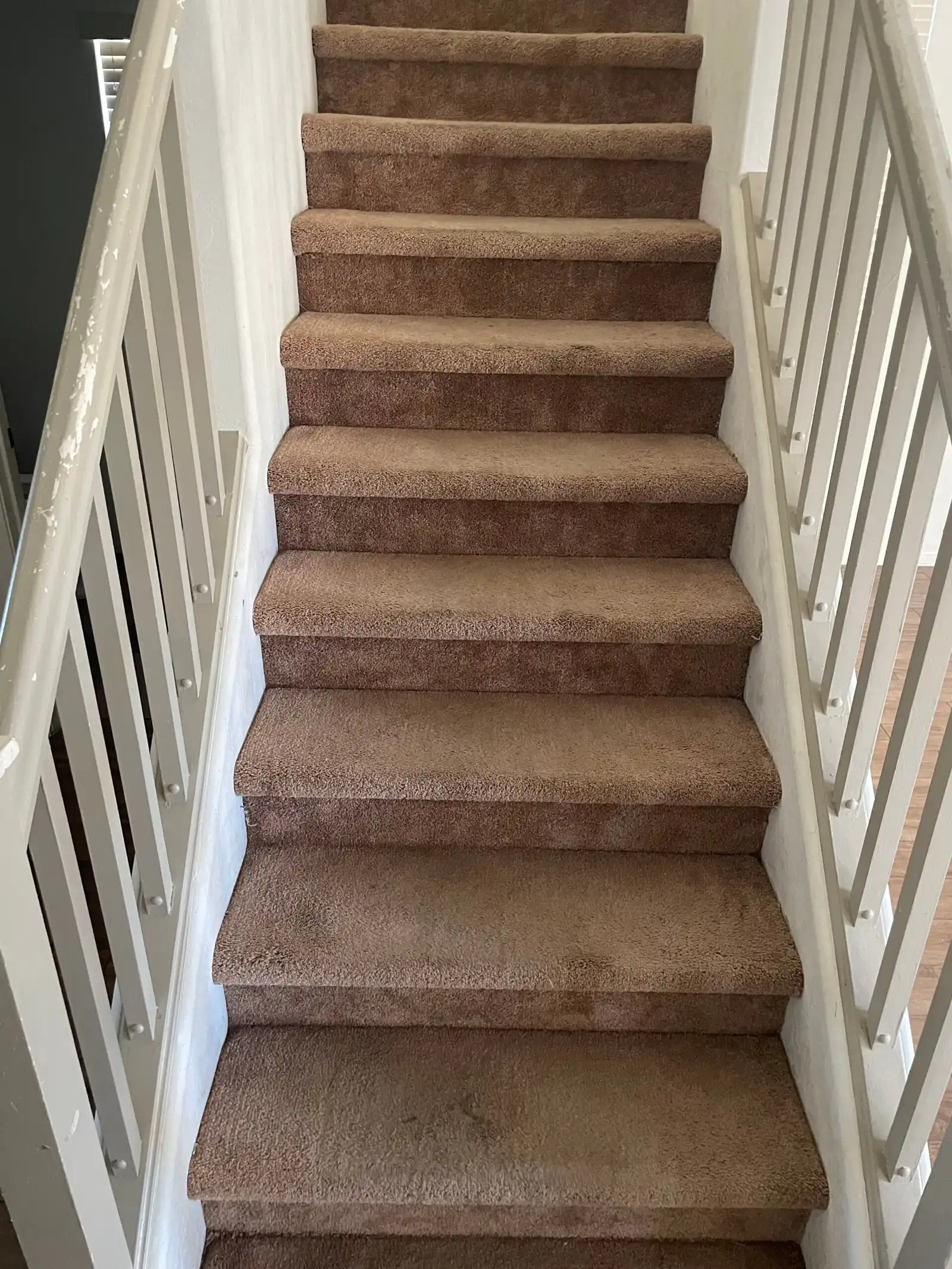
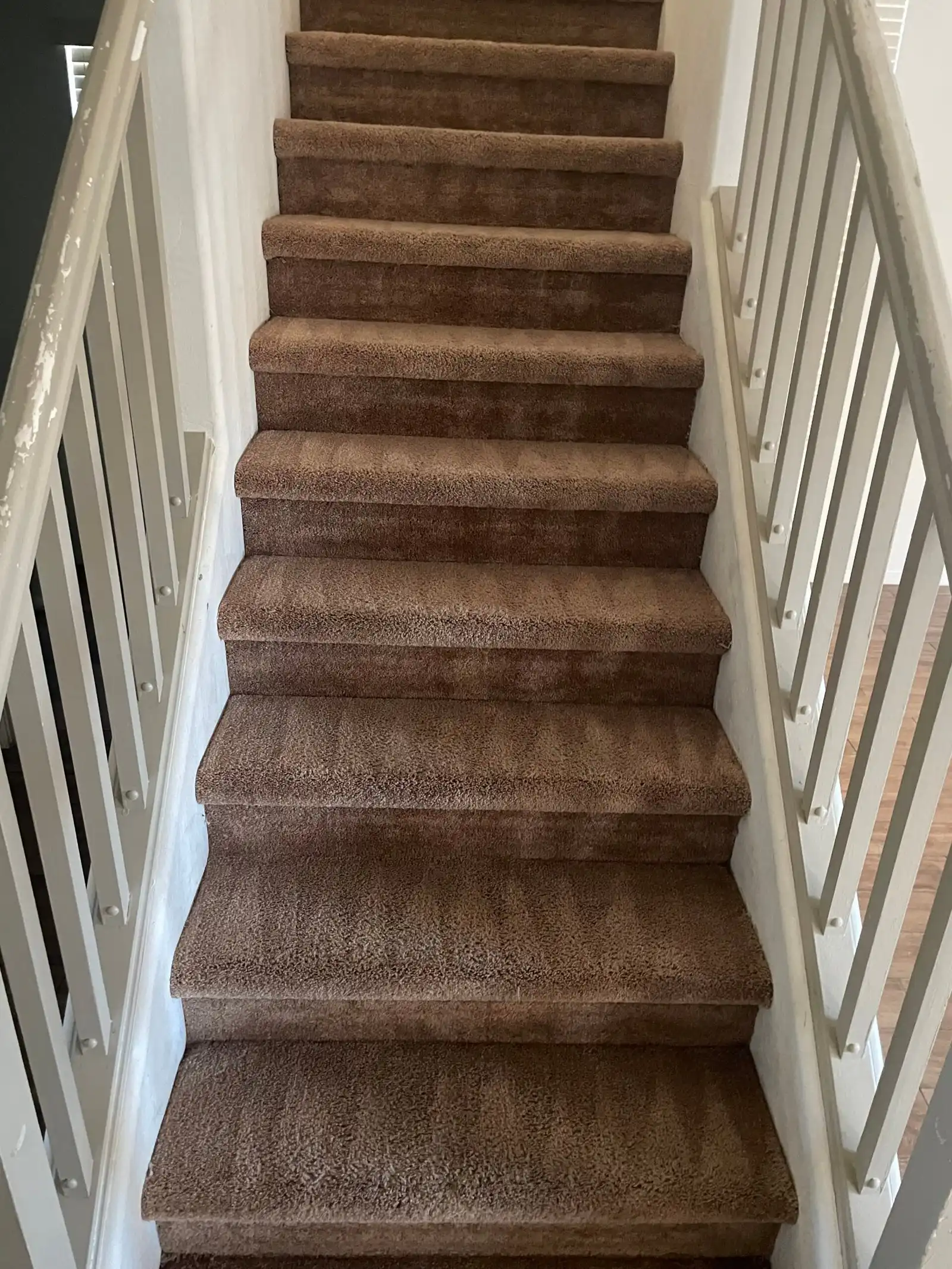
A carpet runner on tile stairs has two distinct soil accumulation zones that behave differently and require different attention during cleaning. The tread center is the zone that looks most obviously soiled because it receives direct foot traffic. Each step deposits whatever is on the shoe sole or bare foot onto the carpet pile at the ball-of-foot contact zone on the tread. This produces the characteristic darkening at the tread center that is familiar from any type of stair carpet.
The edge zone is different and more specific to the runner configuration. At the edge of the runner where the carpet pile ends and the tile surface begins, there is a transition that creates a soil concentration mechanism that does not exist in fully carpeted stairs. Fine particulate and dirt on the tile surface adjacent to the runner migrates to the runner edge through foot contact and air movement. When a shoe steps on the tile portion of the tread adjacent to the runner, the contact pushes material from the tile surface toward the runner edge. Repeated over many steps across many months, this creates a darkened edge zone along both sides of the runner where soil has been deposited from the adjacent tile surface rather than from direct foot contact with the carpet itself.
This edge darkening is often more pronounced than the tread center darkening in homes where the runner is narrow enough that significant tile tread surface is exposed on both sides. The edges of the runner look darker than the center, which reverses the pattern you see on fully carpeted stairs where the tread center is the darkest zone. Understanding which zone is actually dirtier and why changes the pre-treatment approach and the order in which the cleaning addresses different parts of the runner surface.
Pad Migration: What Happens Under the Runner Over Time
The pad underneath a carpet runner on tile stairs prevents the runner from sliding on the tile surface, provides cushioning that protects both the runner backing and the tile surface from the mechanical impact of foot traffic, and creates a slight air gap between the runner backing and the tile that allows moisture to dissipate rather than trapping it between two impermeable surfaces.
Over time, the repeated mechanical force of foot traffic on a sloped surface causes the pad to migrate. On flat floor runners, pad migration is a minor issue that shows up as bunching at the edges. On stair runners, the slope of the stair surface and the directional nature of foot contact, consistently applying force in the downhill direction on the tread, causes the pad to shift incrementally toward the base of each step with every use. After a year or two of regular stair use, the pad that was originally centered under the runner tread may have migrated enough that it is no longer providing even coverage across the full tread width.
Uneven pad coverage means that zones where the pad has migrated away from have less cushioning and more direct contact between the runner backing and the tile surface. This accelerates wear in the backing at those zones and can cause the runner to develop a slightly different texture or appearance in the under-supported areas as the pile above compresses differently without the cushioning support from below. The pad migration check is part of the pre-cleaning assessment for every runner installation, and migrated sections are repositioned during the cleaning visit.
How to Read Your Runner's Soil Pattern Before Calling
Check these things before the appointment so you know what you are working with:
- Look at the runner edge versus the tread center in the same light. If the edges look darker than the center, tile surface migration is the primary soil source and edge pre-treatment is the most important step
- Check the bottom two or three treads compared to the upper treads. Darker lower edges in a cart-active household indicate grit and rubber compound residue migrating up from the main floor
- Lift the runner edge at a few points along the installation. If the pad has shifted toward the front edge of the tread or bunched at one side, it needs repositioning before or during the cleaning
- Compare face and back of a runner tread. If the back looks significantly cleaner or brighter than the face, the pile is accumulating soil from above (normal) rather than from below (pad condition issue)
The Edge Zone Soil in Detail
The edge zone soil on a carpet runner is a specific composition that differs from the tread center soil and requires targeted pre-treatment to address effectively. The primary component is the fine grit and mineral particulate that sits on the tile tread surface adjacent to the runner and migrates to the runner edge through foot contact and air movement. In Litchfield Park homes with golf cart activity, the tile surface on the tread and landing areas may carry the same cart path grit and rubber compound residue that the main floor tile accumulates. Foot contact pushes this material toward the runner edge repeatedly, and over time it embeds into the pile at the runner edge from both the lateral migration and from foot contact that spans the runner edge, stepping partially on tile and partially on runner simultaneously.
The edge zone pile has a different mechanical condition from the tread center pile. The tread center pile is compressed downward from foot traffic and recovers partially between uses. The edge pile is compressed both downward from occasional foot contact and laterally from the shoe sole spanning the runner edge and applying sideways force to the pile at the boundary. This lateral compression over time causes the pile at the runner edge to lean outward, away from the runner center, which opens the pile structure and allows soil to work into the base of the fiber more readily than upright pile would allow.
For a client in one of the Litchfield Park Greens custom homes with a wool runner on tile stairs that had not been professionally cleaned in three years, the edge zone soil at the bottom two or three treads was noticeably darker than the upper treads. This is the pattern you see when the main floor tile is carrying cart-derived grit that migrates to the runner edge at the ground level transition. The pre-treatment at those lower tread edges needed the solvent component in addition to the standard wool cleaning chemistry to address the rubber-derived content in the edge soil, while the upper treads responded to the standard approach. Zone-by-zone differentiation based on what was actually in the soil at each point is what the assessment makes possible.
Cleaning a Carpet Runner Without Removing It from the Stairs
For most runner installations in Litchfield Park homes, cleaning in place is the appropriate choice. The installation is often secured with rods or clips that make removal a significant undertaking, and the in-place cleaning produces a result that fully addresses the soil level in most cases. Removal for flat-surface cleaning is worth considering for runners with very heavy soiling that would benefit from more aggressive agitation on a flat surface, or for runners with backing or pad conditions that need assessment and repair.
For in-place cleaning, working up the stairs rather than down keeps the cleaning direction against the pile lean that downhill traffic produces and ensures that loosened soil and chemistry do not flow downward over already-cleaned tread surfaces. The edge zone cleaning on each tread requires positioning the cleaning tool so that it can work into the pile right up to the runner edge without the tool making contact with the adjacent tile surface. The tile surface needs to be protected from the carpet cleaning chemistry because the chemistry appropriate for carpet pile may affect polished tile or natural stone finishes.
Moisture management is more important on a stair runner than on flat carpet because the slope allows liquid to run. Low-moisture application is a functional requirement on stairs because excess moisture applied at the tread runs toward the base of the step and can pool at the riser-tread junction before it can be extracted. Multiple shorter extraction passes with thorough contact on each tread are more effective than longer passes that span multiple treads, because the slope changes the extraction geometry significantly from tread to tread.
Runner Pile Type and Construction: What Matters for the Cleaning
Wool runners are common in premium installations in the Village at Litchfield Park because wool is durable, naturally soil-resistant at the fiber surface level, and produces the visual quality that suits a custom home staircase. Wool runners require pH-appropriate chemistry, low moisture, and minimal agitation compared to synthetic fiber runners. Natural dye stability testing before any chemistry is applied is standard for wool runner cleaning. Patterned runners with multiple color zones get dye stability testing at several points across the pattern before cleaning, because different dyes in the pattern may have different stability profiles.
Synthetic fiber runners, typically nylon or polypropylene, are more tolerant of cleaning chemistry and agitation. Nylon runners hold color well and respond to a wider range of cleaning chemistry than wool. Polypropylene runners are hydrophobic and tend to hold soil at the fiber surface rather than absorbing it into the fiber body, which makes them somewhat easier to extract if the chemistry has adequate dwell time to break the surface tension. Loop pile runners require tool selection and agitation levels appropriate to a loop structure. Aggressive agitation on loop pile can snag and pull individual loops, and the cleaning tool needs to work across the pile rather than into it.
Tile Stair Construction in Litchfield Park Custom Builds
Tile stair construction is a design choice that comes with custom and semi-custom home building at the price point common in Litchfield Park. It is more expensive to install than standard carpeted stairs because it requires tile work on every tread and riser surface, and it produces a staircase that reads as a premium architectural element in the entryway or main living area of the home. The carpet runner then adds warmth, sound dampening, and the safety function of providing grip on a polished tile surface that would otherwise be slippery underfoot.
In the Village at Litchfield Park and throughout the Litchfield Park Greens neighborhoods, this stair construction type comes up regularly. The homes in those areas range from original mid-century builds that have been renovated with tile stair installations to newer custom construction where tile stairs were specified from the original design. Both contexts produce the same runner cleaning situation with slightly different runner ages and soil histories. The golf cart culture in Litchfield Park adds a soil source to the stair runner edge zones that is not a factor in most other cities, making the edge zone pre-treatment more important here than it would be in a comparable home elsewhere in the West Valley.
Keeping a Carpet Runner in Good Condition Between Cleanings
Regular vacuuming of the runner is the primary ongoing maintenance step, and technique matters on a stair runner more than on flat carpet because the slope complicates how the vacuum makes contact with the pile. Working from the top tread downward with a handheld or hose attachment, making a downhill pass along each tread and then a separate pass against the pile direction, is more effective than trying to use an upright vacuum on the stairs. The edge zones of each tread benefit from a specific pass with a crevice tool that can reach into the pile right up to the runner edge where the soil concentration is highest.
Vacuuming the tile tread surface adjacent to the runner is as important as vacuuming the runner itself. The tile surface is the primary source of edge zone soil migration, and keeping it clean directly reduces the rate at which material migrates to the runner edge. A dry pass with a microfiber cloth or a vacuum on the tile portion of each tread once a week intercepts the accumulation before it reaches the runner. The pad condition check should happen every six to twelve months depending on stair use frequency. Lift the runner edge at several points along the installation and verify that the pad is still centered under the tread portion of the runner. Professional cleaning every 12 to 18 months keeps the edge zone soil at a manageable level and the runner looking consistent across its full width.
Learn more about our staircase carpet cleaning, or explore other cleaning services we offer in Litchfield Park.

 (602) 429-9602