What Hard Water Actually Does to Oriental Rug Fringe
The fringe on an oriental rug is almost always cotton, occasionally wool, and in either case it is a highly absorbent natural fiber that holds moisture longer than the rug pile above it. When a fringe strand gets wet, whether from a damp foot walking across it, from cleaning that was not fully extracted at the fringe zone, or from moisture tracked in from outside, it holds that moisture in the fiber long enough that evaporation is the primary way it dries.
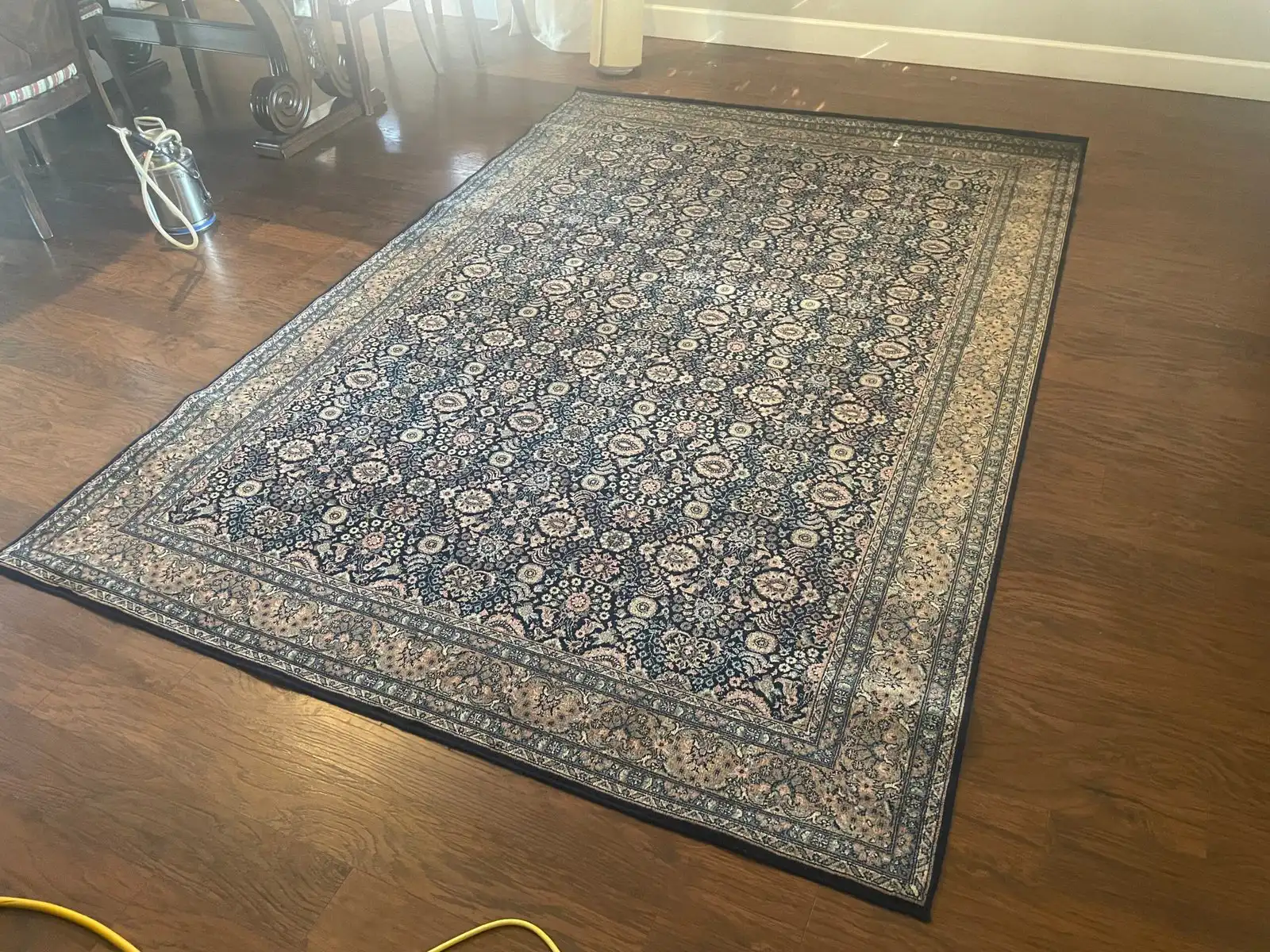
As the water evaporates from the fringe fiber, the dissolved minerals it was carrying do not evaporate with it. They stay behind, bonded to the fiber surface as the water is no longer there to keep them in solution. Calcium carbonate, the primary mineral in West Valley hard water, deposits as a whitish or grayish crystalline residue at the fiber surface level. Magnesium compounds add to this. Over multiple wetting and drying cycles, these deposits layer on top of each other. The fringe that was originally white or cream-colored starts to look yellowish or grayish, and the fiber feels stiffer and slightly coarse to the touch.
In homes along the Camelback Road corridor and in neighborhoods like Wigwam Creek where the water source and mineral content are consistent with the rest of the West Valley, this is a gradual, cumulative process. A rug near a bathroom doorway, a pool entry, or any area where the homeowner walks barefoot with slightly damp feet will accumulate this deposit faster than a rug placed in a room with purely dry foot traffic. The rate of accumulation is directly related to water hardness and frequency of wet-foot contact. A rug placed in the master bedroom near the bathroom threshold, where the homeowner walks across it regularly after showering, can show noticeable fringe yellowing within two to three years.
Mineral Deposit vs. Dye Bleeding vs. Age Yellowing: How to Tell Them Apart
The reason mineral deposit on oriental rug fringe matters as a distinct topic is that it is frequently misdiagnosed. There are three conditions that produce discolored fringe on an oriental rug, and they look similar enough from across the room that you need to actually test to know which one you are dealing with.
Mineral deposit from hard water produces yellowing or grayish discoloration concentrated on the outer surface of the fringe fiber. The fiber is not soft the way clean fringe is. It has a slightly coarse, slightly stiff texture from the crystalline deposit on the surface. When you wet a small section of the yellowed fringe with plain water and let it sit for thirty seconds, mineral deposit will partially dissolve and the color will lighten slightly in that area, because you are rehydrating the crystalline deposit back into solution.
Dye bleeding occurs when dye from the pile foundation or border areas migrates into the fringe fiber under wet conditions. The discoloration in that case tends to follow the color of the adjacent dye, so fringe near a red border may show a pinkish or reddish cast rather than the yellowish-gray of a mineral deposit. The texture of the fringe fiber in a dye bleed situation is not stiff the way mineral deposit makes it, and wetting the fiber does not cause the color to partially dissolve.
Age-related yellowing in cotton fringe comes from oxidative degradation of the natural fiber compounds over time, independent of water or dye contact. This is an even, diffuse yellowing that tends to affect the entire length of the fringe strand rather than concentrating at areas of consistent wet-foot contact. It also does not respond to wetting the way mineral deposit does. Knowing which of these three conditions you are dealing with before you start any cleaning is the assessment that protects the rug.
Quick Field Test for Mineral Deposit
Before calling anyone, you can get a reasonable read on whether mineral deposit is your primary fringe issue:
- Wet a small section of the yellowed fringe with clean tap water and press a white cloth against it for thirty seconds
- If the fringe color lightens slightly in the wet area, mineral deposit is dissolving back into solution: deposit is the primary issue
- If the color stays the same but the cloth picks up a colored cast matching the adjacent rug border, dye bleeding is the issue
- If the fringe color is an even diffuse yellow with no stiffness and no response to water, age oxidation is the likely cause
Each of these needs different chemistry. The wrong approach on the wrong condition causes additional damage rather than improvement.
What Treatment for Hard Water Mineral Deposit Actually Looks Like
The chemistry for dissolving calcium carbonate deposit is acid-based. Calcium carbonate is an alkaline compound, and it dissolves in mild acid. This is a well-established chemical reaction and it is the same reason that descaling products for appliances and fixtures work. The application of dilute acidic chemistry to mineral-deposited fringe dissolves the crystalline calcium layer and allows it to be flushed out of the fiber rather than remaining bonded to the surface.
The challenge with applying this to an oriental rug is that natural dyes used in many hand-knotted oriental rugs are themselves pH-sensitive. The mordant bonds that fix natural dyes to wool fiber are stable in a neutral to mildly acidic environment but can be disrupted at either extreme of the pH range. Using acidic chemistry near natural-dyed wool pile requires working carefully at the fringe zone, keeping the treatment isolated from the dyed pile body of the rug, and testing the adjacent dye zones for stability before starting.
The process starts with a dye stability test on the wool pile adjacent to the fringe zone. A very dilute mild acid solution is then applied to the fringe zone, worked into the fiber with a soft brush to ensure contact with the deposit throughout the strand length, and allowed to dwell long enough for the calcium carbonate to dissolve into solution. Thorough rinsing with clean water removes the dissolved mineral and the acid chemistry from the fringe before either can migrate into the pile body. Extraction at the fringe zone then removes residual moisture.
The result depends on how long the deposit has been building. Recent deposit from one to two years of accumulation responds well and the fringe color returns close to its original appearance after drying. Older, heavier deposit that has been layering for five or more years may require more than one treatment session, because very thick crystalline buildup does not fully dissolve in a single application without risking over-exposure of the fiber to the acid chemistry.
When the Deposit Is in the Pile, Not Just the Fringe
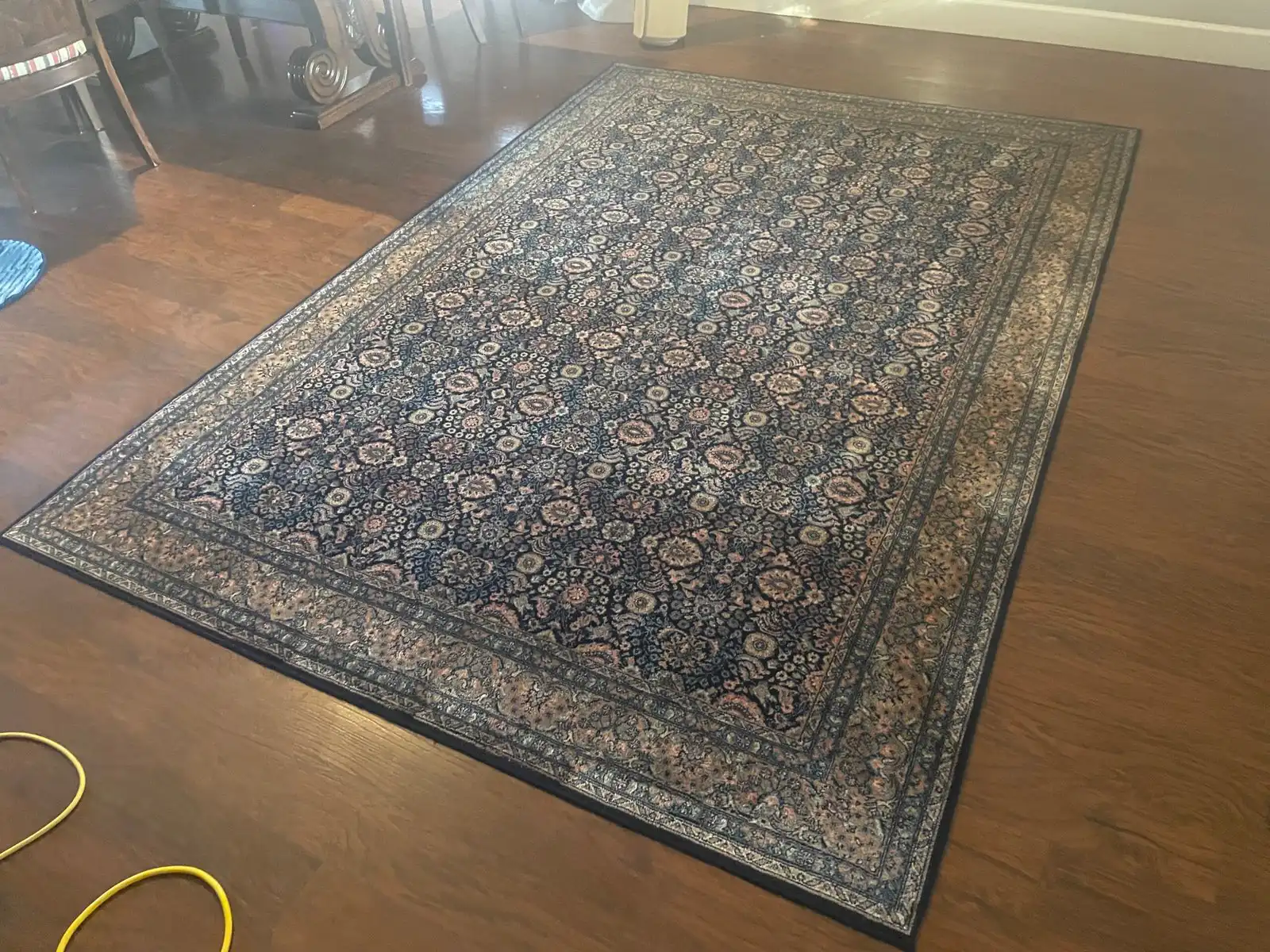
Fringe is the most visible place hard water mineral deposit shows up on an oriental rug, but it is not the only place. The face pile in areas of consistent wet-foot contact develops a similar deposit over time. In pile, mineral deposit makes the fiber tips feel slightly coarser than the rest of the rug and suppresses the light reflection from the pile surface. A clean pile with good fiber quality catches and reflects light in a way that gives the rug visual depth and sheen. Pile with a mineral coating on the fiber surface scatters light rather than reflecting it, which produces a flatter, slightly duller appearance in the affected zone.
The practical way to check whether dullness in a specific pile zone is mineral-related is to dampen a small area with clean water and blot immediately. If the color in that damp area looks slightly more vibrant or saturated than the dry area adjacent to it, the deposit is partially dissolving in the water and the color underneath is cleaner than it appears dry. Once it dries, the deposit is back and the dullness returns. This is not a permanent fix but it is a diagnostic confirmation that mineral deposit is contributing to the appearance issue.
Oriental Rugs in Litchfield Park Homes: What Else the Assessment Covers
Hard water mineral deposit is the primary topic of this page, but it is rarely the only thing going on with an oriental rug in active use in a Litchfield Park home for several years. The pre-cleaning assessment covers the full picture, not just the fringe situation.
Soil accumulation in the pile body is present in any rug in active daily use. In Litchfield Park homes, the fine desert particulate from the West Valley environment is a consistent contributor, along with foot traffic soil, skin cell and body oil accumulation from barefoot use, and pet-related material in homes with animals. Dye stability across the rug is tested before any chemistry goes down. Oriental rugs with natural dyes, which includes most hand-knotted Persian, Afghan, and Turkish pieces, have dye bonds that are more vulnerable to pH extremes and extended wet exposure than synthetic dyes in machine-made rugs.
For homeowners in Wigwam Creek and the surrounding neighborhoods who have heirloom or high-value oriental pieces that have not been professionally cleaned in several years, the assessment conversation is the most important part of the job. It tells both of us what we are actually dealing with before I commit to a specific approach and before you commit to the cleaning.
Keeping Hard Water Mineral Deposit from Building Up Between Cleanings
The most effective prevention for fringe mineral deposit is keeping damp feet off the fringe zone. That sounds simple but it requires thinking about where the rug is placed relative to the room's traffic patterns. A rug positioned so the fringe runs across a path where residents commonly walk from the bathroom or pool entry is going to accumulate deposit faster than one where the fringe is against a wall or under furniture. If the rug placement is not flexible, a small bath mat or entry mat placed over the fringe in the highest wet-contact zone intercepts the majority of the damp foot traffic before it reaches the rug fiber.
For rugs near pool entries, which applies to a good portion of Litchfield Park households given pool ownership rates in this zip code, keeping a dedicated towel or absorbent mat at the point of pool entry reduces how much chlorinated, mineral-heavy pool water gets walked onto the rug fringe. Chlorinated water has an additional chemical interaction with some natural dyes beyond the mineral deposit issue, so limiting that contact is worth the small amount of effort.
For the pile body in areas of wet-foot contact, blotting any damp spots immediately rather than letting them air-dry is the most practical prevention step. When wet feet contact the pile and you blot the moisture out of the fiber before it evaporates, you remove most of the dissolved mineral with the moisture rather than leaving it behind as the water evaporates. Professional cleaning every 12 to 18 months for an oriental rug in active use in a Litchfield Park home keeps the mineral deposit from reaching the level where it becomes difficult to treat.
Learn more about our oriental rug cleaning, or explore other cleaning services we offer in Litchfield Park.

 (602) 429-9602