All Ways Organic Citrus Carpet & Upholstery Cleaning - Home
🇺🇸 Made in USA
🍋 Citrus Based
🌵 Eco-Friendly
Hours
Mon – Sat
7AM – 7PM
Book Online
Book
Online
📍 Serving the Greater Phoenix Valley
🕐 Mon – Sat  7AM – 7PM
👨‍👩‍👧‍👦 Family Owned & Operated
🇺🇸 Made in USA
🍋 Citrus Based
🌵 Eco-Friendly
Book Online
Sectional Cleaning in Litchfield Park Arizona - All Ways Organic
Litchfield Park, Arizona

Litchfield Park AZ
Sectional Cleaning

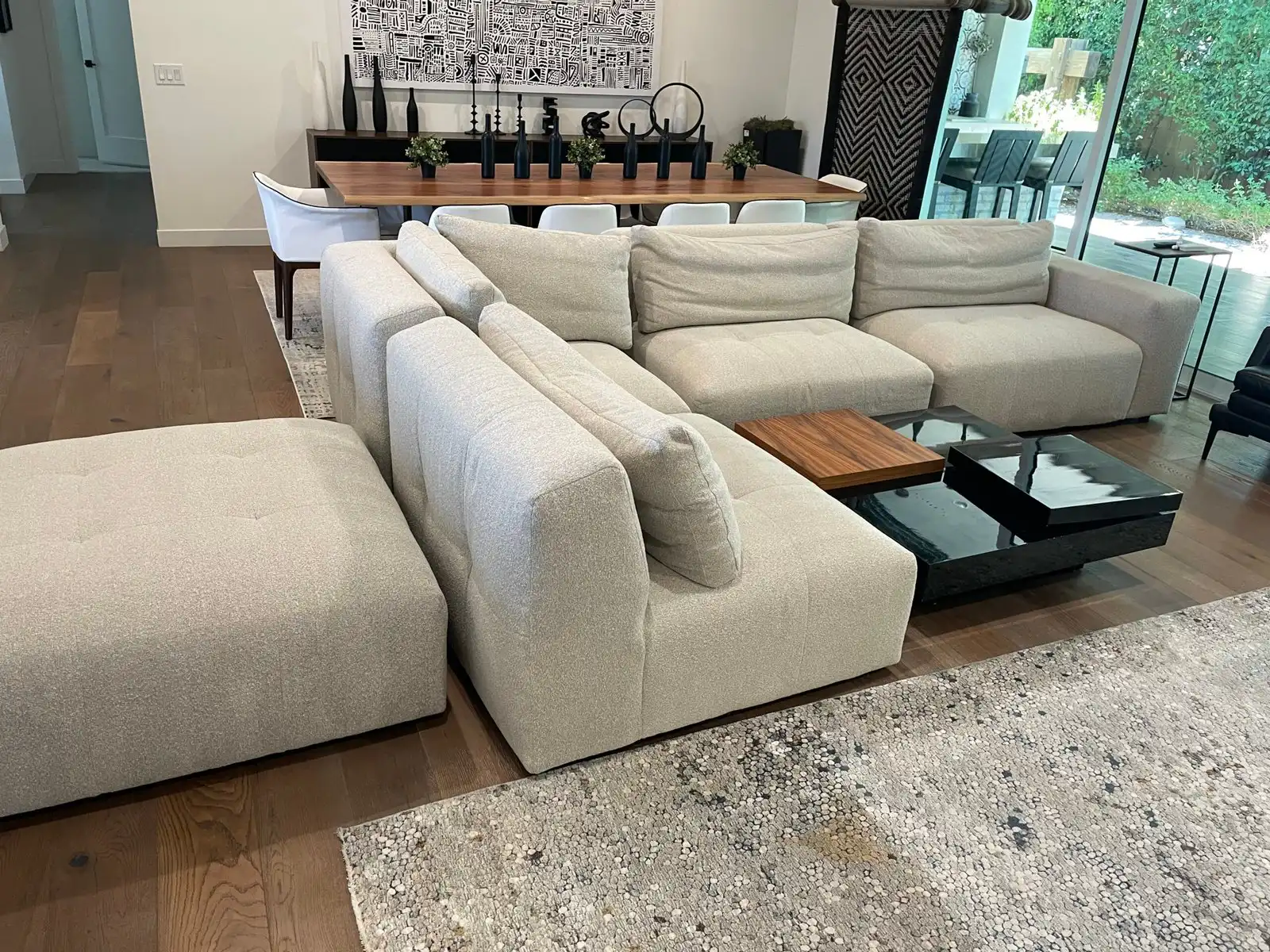
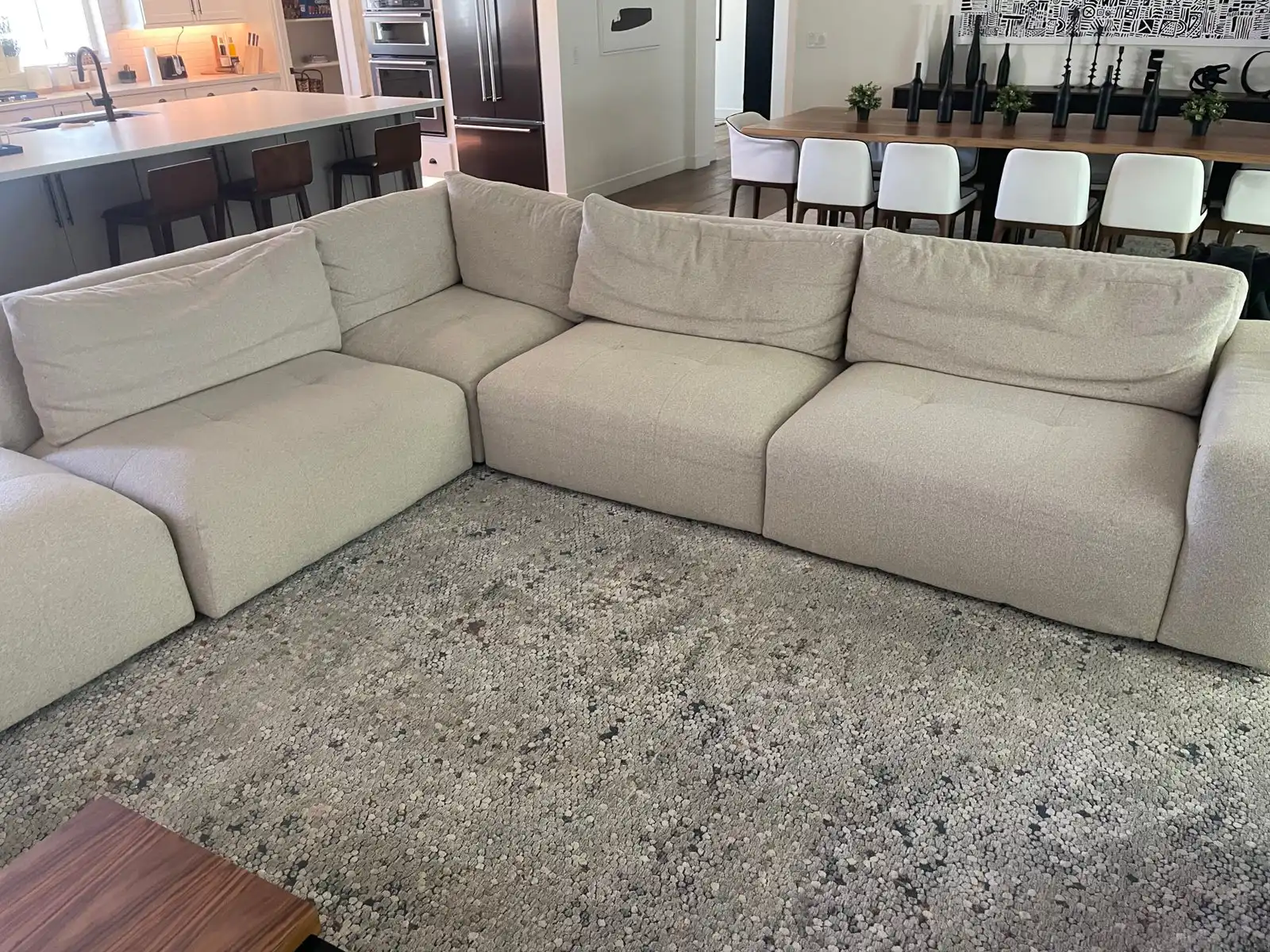
Premium sectionals in Litchfield Park great rooms face a compound problem: UV surface change and body oil accumulation building on the same piece at the same time. The assessment before cleaning matters as much as the cleaning itself. Owner-operated, dry in 45 to 60 minutes.

Google
5.0 / 5.0
Google Reviews
Organic
100% Organic
Citrus-based products
Owner operated
Owner-Operated
Kyle shows up every time
UV assessment
UV Assessment Included
Honest read before we start
No hidden fees
No Hidden Fees
Price quoted = price paid
Schedule Your Cleaning
Book Your Litchfield Park Sectional Cleaning
Pick a date, build your clean, and confirm - takes about 60 seconds
1Date
/
2Build
/
3Book
Your Clean
$0

When works for you?

Pick a day and time. We'll handle the rest.

Build your clean

Tap a category, then add what you need.

Need commercial cleaning? Call (602) 429-9602 for a custom quote.

Confirm your cleaning

Almost there. Fill in your details and lock in your spot.

📅
Driveway parking available?
Tap any item above to adjust add-ons or remove it.

You're All Set!

Booking #

Confirmation sent to your email.

What to expect: I'm Kyle, the owner, and I'll be the one showing up. Carpets dry in about 1 hour. Your home will smell like fresh citrus. Safe for kids and pets immediately after cleaning.

Questions? Call or text (602) 429-9602

Need help?(602) 429-9602
SMS Consent: By providing your phone number when booking, you consent to receive appointment reminders and follow-up messages via SMS from All Ways Organic. Msg frequency varies. Msg & data rates may apply. Reply STOP to opt out at any time. Privacy Policy · Terms
Transparent Pricing

No Hidden Fees. No Surprises.

UV condition assessment, oil zone pre-treatment at headrest and armrest areas, and cushion face and back cleaning are all included in the standard rate. Final quote after walkthrough.

Sofa
Sofa
3-seat, any configuration
$125
Per piece
Book Now >
Sectional
Sectional
Seats 4 or more people and cushions are not removable
$225
Per piece
Book Now >
Modular Sectional
Modular Sectional
Has removable cushions, all sides cleaned
$295
Per piece
Book Now >
Optional Upgrade Treatments
Available at checkout to customize your cleaning
Deodorizer
Deodorizer
Extra odor elimination for a deeper fresh
High Traffic
High Traffic
Targeted treatment for heavy-wear zones
Pet Treatment
Pet Treatment
Neutralizes pet odors at the source

Dry time approximately 1 hour. Litchfield Park's low humidity generally keeps dry time as short as possible.

What Our Customers Say

Real Reviews, Real Results

The organic soil comes out. The UV color change does not. Knowing which is which before the cleaning starts is what lets you make an informed decision about whether to clean or replace.

About This Service

When UV Exposure and Body Oil Accumulation Hit the Same Piece at the Same Time

The great rooms in homes along the Wigwam golf courses and in the custom builds throughout Dreaming Summit are designed around the view. Large south or west-facing windows, sometimes floor-to-ceiling, positioned to bring the course or the desert landscape into the room. The sectional goes in front of or adjacent to those windows because that is where you want to sit, and because a room that size needs a piece that can anchor it. It makes sense aesthetically and it works well as a living arrangement for years.

What it also means is that the sectional in that room is receiving afternoon sun at the same time that family members are using it daily. Two things accumulate on that fabric simultaneously, and neither one is obvious in the early stages. Body oil from daily contact with the headrest areas, armrests, and seat cushions builds up gradually. UV exposure from the afternoon sun begins to affect the face of the fabric at the surface fiber level over months and years. These two conditions interact in a way that makes the fabric look worse than either one would on its own, and they require an assessment before cleaning that looks at both of them together rather than treating the piece like a standard upholstery job.

I'm Kyle with All Ways Organic. A sectional in a sun-exposed Litchfield Park great room is not the same cleaning job as a sectional in a shaded family room, even if the fabric type and the household use pattern are identical. The assessment before I touch a piece covers what the UV has done to the fiber surface, what the organic soil history looks like, how those two conditions are interacting, and what a professional cleaning will and will not accomplish given that combined picture. That conversation is worth having before anything starts.

Why It Matters
Four Things That Make a Sun-Exposed Litchfield Park Sectional Different
UV
UV Does More Than Fade Color
UV radiation breaks down molecular bonds in synthetic polymer fibers, making the surface microscopically rougher than intact fiber. That rougher surface traps and holds fine particulate soil more efficiently than new fabric does. A sectional that has been in direct afternoon sun for two or three years is actually accumulating airborne dust faster than it did when it was newer.
Body oil
Body Oil and UV Compound Each Other
The microscopically rougher fiber surface from UV degradation holds onto oxidized body oil more tenaciously than intact fiber does. The two conditions are not independent: UV exposure makes the oil accumulation worse, and the oil accumulation makes the UV shift harder to see clearly. Neither shows the full picture without accounting for the other.
Honest limits
One Condition Is Fixable. One Is Not.
The organic soil, body oil, ambient desert dust, and airborne particulate, comes out with proper cleaning chemistry and extraction. The UV color change in the dye is permanent. Cleaning removes the soil that was compounding the appearance of the fading, which often makes the piece look meaningfully better. But the dye shift that UV has caused is still there after the soil is removed.
Assessment
The Cushion Flip Test Tells You Everything
Removing a seat cushion and comparing the face fabric that has been exposed to the room with the back of the cushion fabric that faces away from the light shows exactly how much UV color shift has occurred. If the back is noticeably more vibrant than the face, UV dye degradation has happened and that difference is permanent. This is the first step of every sun-exposed sectional assessment.

How UV Exposure Affects Upholstery Fabric Beyond Just Fading

Most people think about UV damage to upholstery fabric as a color problem. The fabric fades, the color looks washed out, and the piece looks older than it is. That is real, and it happens in Litchfield Park great rooms with consistent afternoon sun exposure more quickly than most homeowners expect. But UV damage to upholstery fabric is not only a color problem. It changes the surface characteristics of the fiber itself in ways that affect how the fabric feels, how it responds to soil, and how it behaves during cleaning.

UV radiation breaks down the molecular bonds in synthetic polymer fibers, which includes the polyester, nylon, and acrylic blends used in most upholstery fabric. At the fiber surface, this shows up as a gradual change in texture where the fabric that started with a specific hand feel becomes slightly different, sometimes slightly rougher or slightly more matte in appearance than it was when new. The fiber surface becomes more microscopically irregular from the molecular degradation, which has a practical consequence: irregular fiber surfaces are more effective at trapping and holding fine particulate soil than smooth, intact fiber surfaces. A sectional that has been in direct afternoon sun for two or three years is accumulating airborne dust and fine desert particulate more efficiently than it did when it was newer.

In natural fiber upholstery fabrics, which include linen, cotton, and wool blends, UV affects the dye chemistry rather than the polymer backbone. The dye degradation shows up as color shift in the exposed face fibers while the back of the cushion fabric, which faces away from the window, retains the original color. This difference between face and back of the cushion is one of the diagnostic comparisons that tells you how much UV has accumulated on the piece. In a Litchfield Park great room with west-facing glass and afternoon sun from roughly 1 pm through sunset, the UV accumulation on a sectional placed near those windows over two years represents a significant cumulative dose compared to what the same piece would receive in a room with north-facing or shaded exposure.

Body Oil Accumulation on a Premium Sectional in Daily Use

Simultaneously with the UV accumulation, daily use of the sectional deposits body oil into the fabric at every contact zone. The headrest areas where people lean their heads, the armrests where arms and hands rest consistently, and the seat cushion surfaces where the most body contact occurs all accumulate sebaceous oil, sweat compounds, and skin cell material over time. In a household where the sectional is used daily by two or more people, this accumulation is substantial after a year of use and significant after two or three years.

Body oil in upholstery fabric does not sit on the surface the way a liquid spill does. It penetrates into the fiber structure through body heat and the mechanical pressure of contact, working its way from the surface of the fiber down toward the weave structure. At the surface, fresh oil may be barely visible or invisible to the eye. Oil that has been accumulating for months darkens as it oxidizes, attracts additional soil particles because of its adhesive character, and produces the characteristic darker appearance at headrest and armrest zones that most homeowners eventually notice and wonder about.

In a home where the sectional is also near the windows getting afternoon sun, the oil that accumulates in the headrest and armrest zones is in a fabric that the UV has already been working on at the surface level. The microscopically rougher fiber surface from UV degradation is more efficient at holding onto the oil than an intact fiber surface would be. The two conditions are not independent. They compound each other, which is part of why a piece in this situation often looks worse than the homeowner expects given how well they thought they were maintaining it.

The Cushion Flip Test: Do This Before You Call Anyone

This takes thirty seconds and tells you exactly what you are dealing with before any cleaning conversation starts:

  • Remove a seat cushion from the section of the piece that gets the most direct afternoon sun
  • Hold the face fabric and the back fabric side by side in the same light
  • If the back is noticeably more vibrant or saturated in color than the face: UV dye degradation has occurred and that difference is permanent regardless of cleaning
  • If face and back look essentially the same: the piece has not experienced significant UV color shift and cleaning will address the full visible soil load
  • If the face is darker in specific zones like the headrest area but not uniformly across the whole cushion: that is body oil accumulation, not UV, and it responds well to cleaning

The cushion flip test is the first thing I do on any sun-exposed sectional in a Litchfield Park great room. It sets accurate expectations before anything else is discussed.

The Assessment That Has to Happen Before Any Cleaning Starts

Before I start any cleaning on a sectional that has been living in a Litchfield Park great room with significant sun exposure, the assessment covers the full picture. The UV assessment starts with the cushion flip test described above. The oil accumulation assessment involves looking at the headrest zones, armrests, and seat cushion surfaces in raking light, which means holding a light source at a low angle to the fabric surface. Body oil zones show up in raking light as slightly darker, slightly shinier areas even before they are visible in normal room lighting. This gives a map of where the heaviest organic soil concentration is before the cleaning starts, which determines where pre-treatment chemistry needs dwell time and where the cleaning can move more quickly.

The fiber condition check involves pressing the fabric surface gently and observing how it recovers. Fiber that has significant UV degradation has less resilience than intact fiber and recovers more slowly from compression. Fabric that has both UV degradation and significant oil accumulation sometimes feels slightly tacky in the heavily soiled zones because the oxidized oil on the UV-roughened fiber surface has an adhesive character. All of this information together gives the accurate picture of what the cleaning will accomplish, and in some cases it gives me what I need to have an honest conversation about what the cleaning will not accomplish.

What the Cleaning Process Looks Like for This Specific Situation

The cleaning approach for a sun-exposed premium sectional is calibrated to the fiber condition that the assessment revealed. A fabric with significant UV degradation at the surface has less mechanical resilience than new fabric, which means the agitation level appropriate for a newer piece in good structural condition would be too aggressive for a piece where the surface fiber is already compromised. Lower agitation, more dwell time on the chemistry, and thorough extraction are the adjustments that account for reduced fiber strength.

Pre-treatment in the oil-accumulation zones, the headrest areas and armrests, is where the organic soil work begins. The citrus-based solution with d-limonene chemistry breaks down the sebaceous oil and the oxidized compounds that have been building in those zones. For zones with heavy accumulation, extended dwell time before agitation gives the chemistry time to penetrate into the fiber structure where the oil has migrated rather than just addressing the surface layer. This is the step most consumer cleaning attempts miss: applying solution and immediately working it rather than allowing the chemistry time to dissolve the oil before attempting to lift it.

Extraction removes the chemistry and the dissolved soil together. In the zones with heavy oil accumulation, a second pass of extraction after the main cleaning pass often pulls additional dissolved material that the first pass did not fully capture. The result on the organic soil component is usually significant. Oil that has been accumulating for one to three years in the headrest and armrest zones responds well to proper pre-treatment and extraction chemistry. The color of the fabric, whatever the UV has left of it, comes forward as the soil layer that was further suppressing it is removed.

The Golf Course Property Sectional Up Close

The pattern I see most often in Wigwam-adjacent homes and the custom builds near the golf courses is a premium fabric sectional, often light to medium in color, that has been in the great room for three to five years. The homeowner has been keeping the room clean, vacuuming the cushions occasionally, maybe using a fabric spray now and then for freshness. From the entry to the room, the piece looks fine. Decent color, no obvious stains, reasonable appearance.

When you look at it more closely in raking light, the headrest areas show the characteristic darkening from oil accumulation. The armrest panels have a slightly shinier appearance from the same cause. The cushion faces in the seating zones are slightly flatter in color than the back of the cushion. And in the section of the piece closest to the window, particularly if there is a chaise or a lounger element that catches the most direct afternoon light, the fabric face is slightly different in tone from the rest of the piece.

I had a conversation with a homeowner in Dreaming Summit about this exact situation before a cleaning last year. She had a premium linen-blend sectional in a great room with significant west-facing glass and had been wondering for a while whether the piece needed cleaning or replacing. The assessment showed meaningful organic soil accumulation and moderate UV shift in the section nearest the windows. After cleaning, the soil came off and the piece looked genuinely better across the whole surface. The slight UV tone difference in the window section was still there, but softer in appearance than it had been when it was competing with the soil layer on top of it. She was glad she cleaned it rather than replacing it.

Protecting a Premium Sectional in a Sun-Exposed Litchfield Park Great Room

UV-filtering window film is the most effective long-term protection for a premium sectional in a west or south-facing Litchfield Park great room. Standard window glass does not block UV effectively. Even newer construction with low-E glass reduces infrared but not necessarily the UV spectrum that degrades fabric dye. Window film rated for UV rejection, installed by a professional, reduces the UV load on the fabric without significantly changing the visual character of the glass or the view. For a sectional that represents a meaningful investment, UV film is the most practical and durable protective measure available.

Rotating cushions is worth doing regularly on a sectional where some sections receive more direct sun than others. If one end of the sectional is closer to the window than the other, the cushions from that end age faster under UV than cushions from the shaded end. Swapping cushions periodically distributes the UV exposure more evenly across all the cushion fabric, so no single cushion develops a dramatically different appearance from the rest.

For the organic soil side of the equation, washable throws or covers on the headrest areas and armrests slow the rate of direct body oil contact with the face fabric. Cotton or linen throws that you launder weekly intercept the oil before it reaches the upholstery and protect those zones from the compounding effect of UV exposure and oil contact simultaneously. Professional cleaning every 12 to 18 months for a sectional in active daily use is the right interval. A piece with significant direct sun exposure and regular family use should lean toward the 12-month end of that range because the UV and the organic soil are both accumulating faster than in a shaded room with lighter use.

Learn more about our sectional cleaning, or explore other cleaning services we offer in Litchfield Park.

Common Questions

FAQs About Litchfield Park Sectional Cleaning

Almost certainly worth cleaning, and the assessment before we start will tell you exactly what to expect. Sun-exposed sectionals in Litchfield Park great rooms typically have both UV surface change and organic soil accumulation at the same time. Cleaning addresses the organic soil fully and produces a real improvement across the whole piece. The UV shift in the dye is permanent, but removing the soil layer that was compounding the appearance of the fading usually makes the piece look meaningfully better than the homeowner expected. Most homeowners who go through the assessment and understand what to expect before cleaning choose to clean rather than replace, and are satisfied with the result.

Most likely from use. The darkening at headrest zones is almost always body oil accumulation from daily contact, not UV damage. UV tends to reduce color saturation more evenly across the exposed fabric surface rather than creating concentrated dark zones. Oil accumulation concentrates at contact points where body oil is deposited repeatedly in the same area. The headrest darkening is the kind of organic soil accumulation that responds well to proper pre-treatment and extraction chemistry. It is one of the most noticeable improvements in a sectional cleaning because the before and after difference in those zones is usually significant.

The most reliable way to check is to remove a seat cushion and compare the face fabric, the side that faces the room and has been receiving the light, to the back of the cushion fabric, which has been facing away from the windows. If the back is noticeably more vibrant or saturated in color than the face, UV dye degradation has occurred in the face fabric and that difference represents the actual color shift from UV exposure. This is the assessment I do before any cleaning on a sun-exposed piece. It tells both of us what the cleaning will be working with before I start.

Yes, those properties are a regular part of my Litchfield Park service area. The great rooms in those homes often have the exact combination of premium fabric and significant afternoon sun exposure that this page covers. The pieces in those homes tend to be higher quality construction with premium fabric, which means the cleaning approach needs to account for the specific material rather than applying a standard process. The assessment before each job is how I make sure the approach is right for what is actually in front of me.

Light-colored fabric often shows UV-related changes differently than darker fabric. In lighter colors, UV degradation can sometimes produce a slight yellowing or warmth shift in the fabric tone rather than an obvious fade, because there is not a deeply saturated color to lose in the same way. The organic soil accumulation on light fabric is also more visible because the contrast between the soil and the fabric color is higher. Light and cream-colored sectionals in sun-exposed Litchfield Park great rooms tend to show both conditions more clearly than darker fabrics, which makes the assessment before cleaning particularly important for setting accurate expectations.

For fresh spills, blotting immediately with a clean dry cloth to absorb as much liquid as possible before it penetrates is always the right first step. For the body oil accumulation at headrest and armrest zones, attempts with consumer cleaning products typically produce inconsistent results and can introduce new problems. Alkaline cleaning products used on premium fabric can affect the fabric finish or create residue that attracts more soil. Store-bought upholstery sprays mask the problem temporarily without removing the oil. The organic soil in those zones responds to proper professional chemistry in a way that consumer products do not replicate effectively.

Probably yes if it has been receiving regular afternoon sun and daily use. The oil accumulation in the headrest and armrest zones builds well before it becomes obvious from across the room, and cleaning it at a moderate accumulation stage produces better results and is easier on the fabric than waiting until the oxidized oil is heavily embedded and darkened. The same is true for the UV side of the equation. Cleaning at a moderate soil stage means the organic soil is not yet deeply embedded in a fiber surface that UV has already been compromising. Waiting until the piece looks dirty means waiting longer than you should have.

This is a real consideration and worth understanding before the cleaning starts. Removing the soil layer from a piece with both UV fading and organic accumulation can make the UV shift in the most-exposed sections more apparent, because the soil that was spread evenly across the fabric was partially masking the tone difference between the UV-exposed face and the protected areas. This effect is more pronounced on pieces with heavy UV shift and is part of what I explain during the pre-cleaning assessment. In most cases the overall improvement from soil removal outweighs the increased visibility of the UV difference, and the piece looks better in the room even if it looks slightly less consistent up close than it did before cleaning.

Ready to Clean Your Sectional?
Free UV assessment before we start - No hidden fees - Pay after you're happy
What Our Customers Say

Real Reviews, Real Results

All Litchfield Park Services
What We Clean in Litchfield Park
All 14
Carpet
Upholstery
Area Rugs
Tile & Commercial
Decorative desert cactus illustration growing from the desert floor