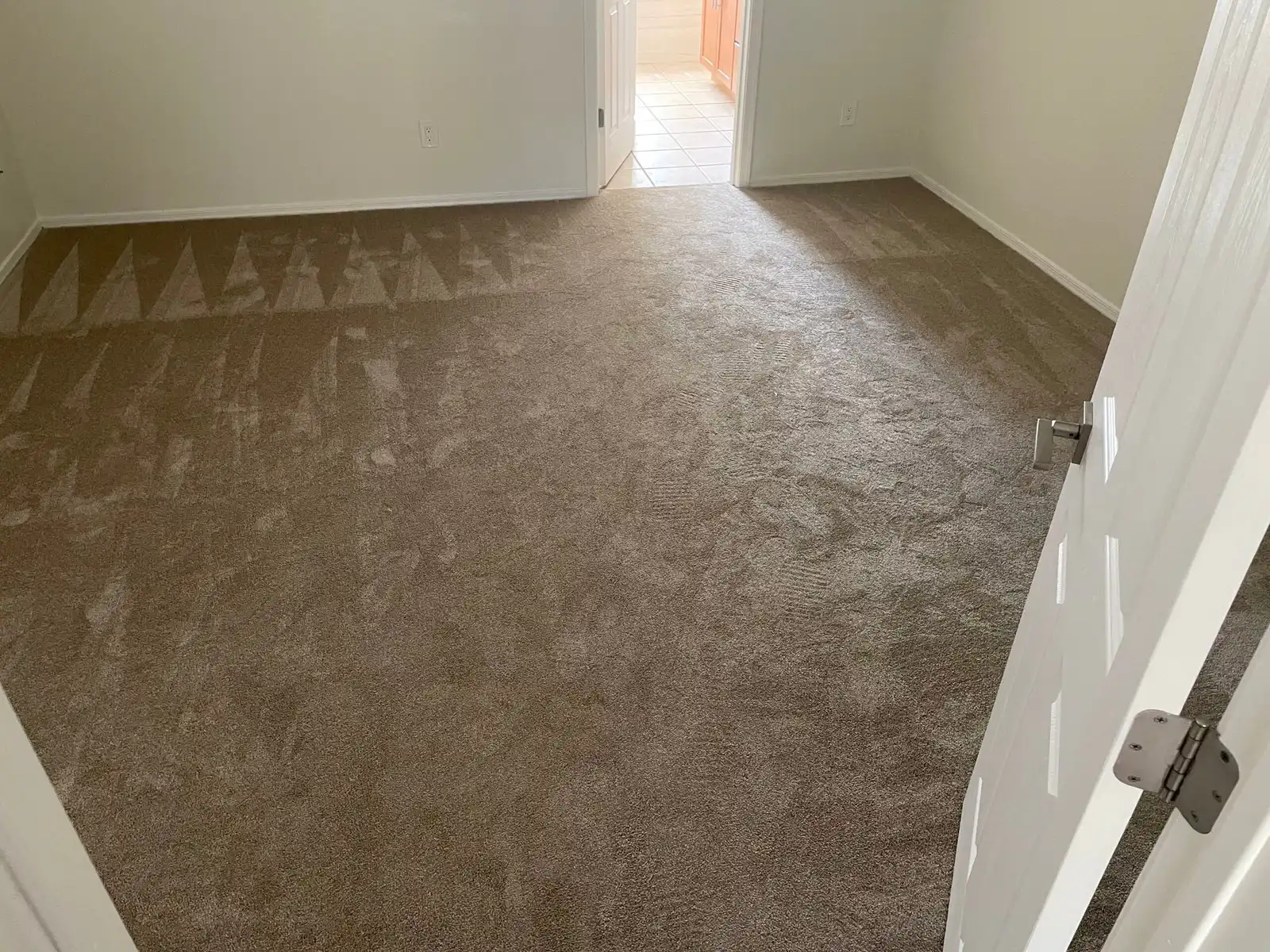
What Golf Cart Tires Actually Leave Behind
Golf cart tires are not the same as car tires. The compound is softer, designed for low-speed use on packed crushed granite, asphalt cart paths, and fairway turf. That softer compound sheds micro-particles at the contact surface much more readily than a vehicle tire running at highway speed. Every time a cart rolls across a path and then into a garage, it carries two things: fine mineral grit from the path surface itself, and a residue from the tire compound that is slightly different in chemistry from shoe sole rubber.
The mineral grit is similar in some ways to what you see in homes near open desert. It is fine, it is angular under a microscope, and it works its way down into carpet pile rather than sitting on top of the fiber. Regular vacuuming moves the loose surface material but does not pull the embedded grit out from the base of the pile. Over a long period of time, that abrasive material sitting against carpet fiber causes physical wear that no amount of cleaning can undo, which is why getting it out matters and waiting does not help.
The rubber residue is a different problem. Tire compounds include carbon black and various plasticizers that give the rubber its flexibility and durability. When these compounds transfer onto carpet fiber from foot contact, they do not behave like organic soil. They are more chemically inert, they do not respond to enzyme treatment the way body oils do, and they create a slightly darkened, slightly tacky surface in the carpet pile near the transfer zone. This is the part that trips up homeowners who try to clean it themselves and find that their usual spray cleaner does not make a dent.
What you end up with in a Litchfield Park home with active cart use is a compound problem. Mineral grit embedded in the pile base, rubber-derived darkening toward the fiber surface, and on top of that the normal household soil that accumulates in any carpet. Each component needs to be addressed in the right order. Pulling the grit out first matters, because trying to address surface soil when the abrasive foundation layer is still there just moves the problem around.
Where the Transfer Happens in Litchfield Park Homes
The heaviest concentration of this type of soil in any Litchfield Park home is almost always in the immediate transition zone from the garage into the living space. In most homes, that means the carpet in the hallway or bedroom closest to the garage entry door, or the area near the main living room entry if the home has carpet closer to the front.
Garage floors accumulate cart path grit and tire residue over months and years. When a resident walks from the cart to the garage and then into the house, they are picking up that material on their shoes or bare feet with every step. Even homes that have tile or hard flooring through the main areas still see the transfer zone problem because the grit rides on feet and shoes all the way to wherever the carpet starts. If the carpet begins at the bedroom hallway, that is where the soil concentrates.
I have cleaned carpet in a few of the older homes off Old Litchfield Road where the cart culture goes back years and the carpet has not been professionally cleaned in a while. The entry zone in those homes looked noticeably different from the rest of the carpet, often darker with a gritty texture you could feel by running your hand through the pile in the right direction. In one case the homeowner thought the carpet near the garage entry was just old and worn, but after cleaning it was clear that the fiber itself was in decent shape. The appearance was almost entirely soil-driven, not wear-driven.
The distinction matters because worn carpet and heavily soiled carpet look similar from across the room but have completely different outcomes after cleaning. Wear is permanent. Soil, even compacted, abrasive grit from years of cart activity, is removable. Not always completely, not always down to the original factory appearance, but the difference after a proper cleaning is usually significant.
How to Tell Soil from Wear Before Calling Anyone
Run your hand through the carpet pile near the garage entry, going against the grain. These are signs you are looking at soil rather than permanent wear:
- The pile feels gritty or slightly resistant, not just flat
- The darkened area has a slightly different texture than the color alone would suggest
- Carpet in other low-traffic areas of the same home looks noticeably cleaner by comparison
- The discoloration follows the path from the garage door rather than showing up evenly across the room
If the fiber feels intact but the appearance is the problem, cleaning is worth doing. If the pile is physically broken or matted flat with no spring, that is a wear conversation.
How Cart Path Grit Behaves Differently from Regular Household Dust
Most carpet soil in a bedroom or a living room that gets normal foot traffic is a combination of outdoor particulate tracked in on shoes, skin cells and body oils from bare feet, pet dander if there are animals in the home, and airborne dust that settles into the pile over time. All of that responds reasonably well to a standard cleaning approach: agitate the pile to loosen the soil, apply the right chemistry to break down organic compounds, extract thoroughly.
Cart path grit is more mechanically stubborn than that. It is denser than household dust, it has sharper particle edges, and it works its way physically further down toward the carpet backing because of the repetitive foot pressure that carries it in. You need more agitation to break it loose from the pile base, and you need thorough extraction to actually pull it out rather than just redistributing it within the fiber.
The rubber residue component adds another layer. Standard organic cleaning chemistry, including enzyme-based products, is designed for biological soil: proteins, oils, sugars, urine compounds. It works well on those materials. Carbon black and tire plasticizers are a different category of soil. A solvent-based component in the cleaning approach handles that more effectively than enzyme chemistry alone. This is part of why the carpet near a garage cart entry point in Litchfield Park needs a slightly different pre-treatment approach than the bedroom carpet in the same home.
The other thing worth understanding is the abrasion angle. Fine angular grit sitting in the pile base is actively cutting against carpet fiber every time someone walks through that zone. The longer it sits, the more it works. This is not a reason to panic about a few months of cart activity, but it is a real argument for cleaning that entry zone more frequently than the rest of the carpet. Every six months for a high-traffic cart household is a reasonable interval for that specific zone.
What the Cleaning Process Looks Like for This Specific Problem
Before I start any carpet cleaning in Litchfield Park, I do a walkthrough of the space. For cart-active households, that means paying specific attention to the garage entry point and following the probable path from there into whatever carpeted areas exist in the home. Usually that means the entry hallway, the adjacent bedroom threshold, and sometimes a living room or sitting area if the home's layout puts carpet close to the garage.
Pre-treatment in the entry zone is where the work really begins. Dry extraction first, to pull out loose surface grit before applying any moisture. Adding liquid to a pile full of fine grit without loosening it mechanically first just creates a paste situation that makes the soil harder to remove, not easier. A pass with the dry vacuum extraction tool, focused on the entry zone, takes out the majority of the loose surface particulate before anything else happens.
Then a targeted pre-treatment with a solvent-compatible component addresses the rubber residue before the main cleaning solution goes down. The VLM encapsulation process handles the organic soil load across the rest of the carpet. In the entry zone specifically, I allow longer dwell time before agitation because the soil is more mechanically embedded and needs more time for the chemistry to work before agitation pulls it out.
Agitation on the entry zone is more thorough than on bedroom carpet. More passes, more deliberate pile penetration. The goal is to make sure the cleaning solution reaches the base of the pile where the grit is concentrated, not just the surface of the fiber. Extraction immediately after agitation, while the soil is in suspension, gets it out before it has a chance to settle back down. For homes where the entry zone has not been professionally cleaned in a while, a second pass of agitation and extraction in that specific area is often the difference between a good result and a great one. Dry time with the VLM method is around an hour, sometimes a little less in the dry Litchfield Park air.
Honest Expectations: What Cleaning Fixes and What It Does Not
Carpet cleaning is not carpet restoration. There are things it fixes very well, things it improves partially, and things it cannot touch. Knowing which category your carpet falls into before we start is part of how I do every job.
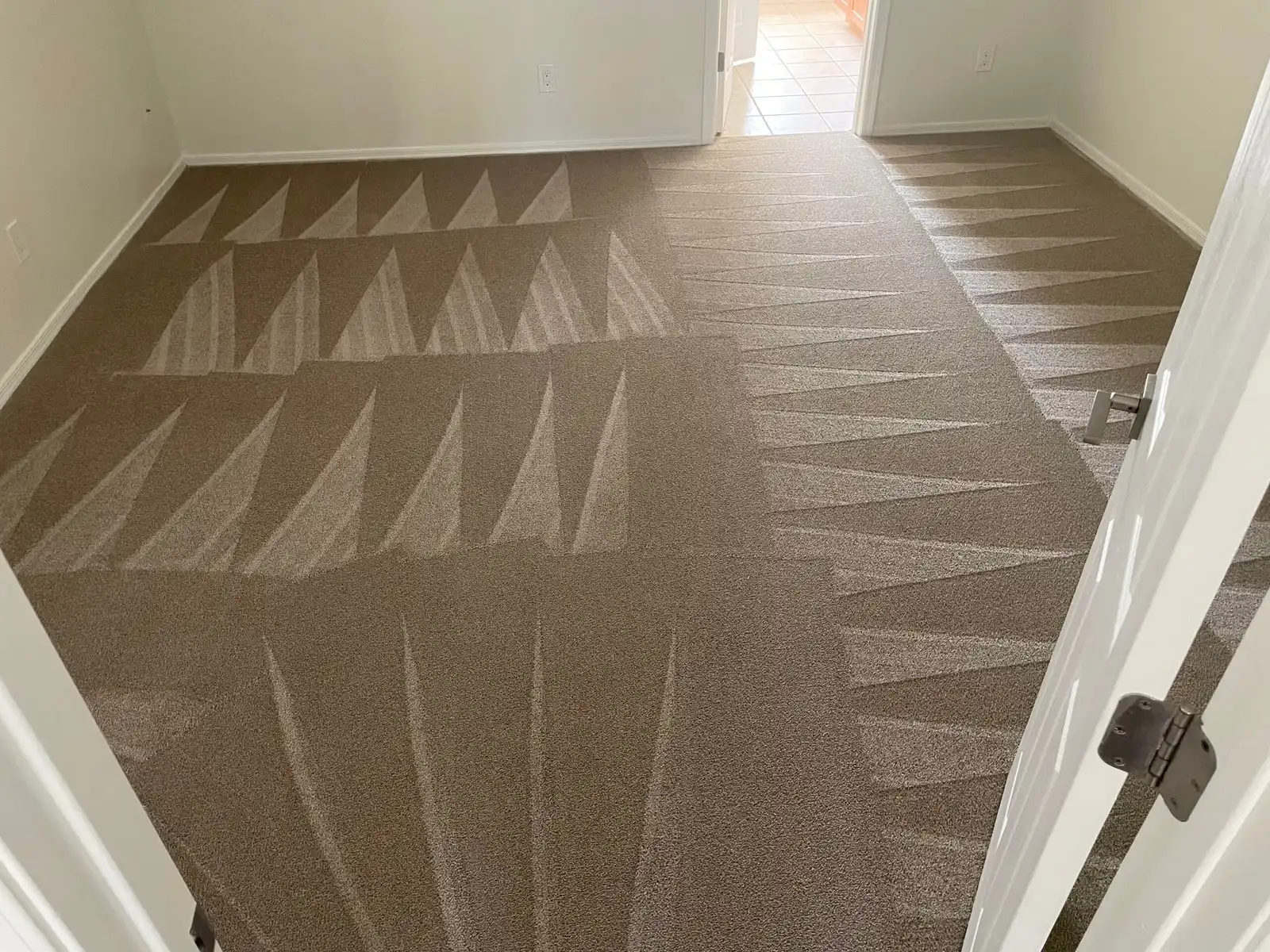
Soil, even heavy and long-standing soil from years of cart activity, responds well to a proper cleaning. The entry zone that looks gray and gritty, the darkened carpet near the garage hallway, the tracked path from the garage to the first bedroom: most of that is removable. Not always to factory-new, but the difference after cleaning is usually significant enough that the carpet looks like it belongs in the home again.
Physical fiber damage is different. If the angular grit from cart path material has been sitting in the pile long enough and under enough foot pressure, it does cause actual abrasion to the yarn surface. That shows up as a slightly matted, slightly different texture in the pile that does not fully recover after cleaning. The fiber is still intact but the surface has changed at the microscopic level. Cleaning removes the soil, and the area looks better, but it will not look identical to carpet in a low-traffic area of the same home that has not had the same abrasion history.
The walk-through before I start is how I give you an honest read on what outcome to expect in your specific situation. I would rather tell you upfront that a zone is at the point where replacement is worth considering than take your money for a cleaning that disappoints you. That conversation costs me nothing, and clients appreciate it more than they would appreciate a promise that cannot be kept.
The Difference Between Old Litchfield Ranch Homes and Newer Builds
Litchfield Park is not one kind of home. The older ranch homes along Old Litchfield Road from the 1950s through the 1970s have a completely different character than the newer Spanish-style stucco homes in Litchfield Park Greens or the custom builds near the Wigwam golf courses. That difference matters for carpet cleaning in ways worth understanding before you call anyone.
The older homes on Old Litchfield Road tend to have carpet throughout much of the house, not just the bedrooms. Larger lots, different layouts, and the original design preference for wall-to-wall carpet means these homes often have significantly more carpet than a newer 21st-century build in the same zip code. They also tend to have carpet that has been in place for many years, sometimes decades, and may not have been professionally cleaned regularly. In those situations, what you are dealing with is a layered soil history on top of fiber that may have some age to it. The cleaning process still works, but expectations need to be calibrated to the age of the material.
The newer builds in Litchfield Park Greens and the Village at Litchfield Park area follow the standard modern West Valley construction pattern: large format tile or LVP through the main living areas, carpet in the bedrooms and sometimes a carpeted second floor. The carpet in those homes is generally newer, in better structural condition, and more responsive to cleaning. The golf cart transfer problem still applies if the household uses carts, but the carpet itself has less accumulated history and typically cleans up closer to its original appearance.
Golf course custom homes near The Wigwam are their own category. Premium finishes, sometimes specialty carpet or Berber in specific areas, and in some cases full carpet in main living areas as a design choice. The cleaning approach in those homes has to account for the material, because what is appropriate for a standard polyester builder carpet is not necessarily appropriate for a premium loop pile or a specialty weave. This is another reason the walkthrough matters before I quote anything.
Keeping Cart Path Grit from Winning Between Cleanings
The most effective single thing a Litchfield Park homeowner can do to slow cart-related carpet soil is to put a quality entry mat inside the garage entry door, right before the transition to carpet or the main living space. Not a decorative mat, a real high-pile carpet entry mat with enough depth to actually pull grit and residue off the bottom of a shoe before the foot reaches the carpet. Shake it out or vacuum it every week. Replace it when it stops having pile to do its job, usually every year or two depending on cart frequency.
If the home has a hard floor transition between the garage entry and the carpeted areas, keep that section mopped or swept more frequently than the rest of the home. Cart path grit on tile or hard floor acts as a conveyor for the material into carpet the moment someone walks across it barefoot or in socks. Keeping the hard floor section clean means less material available to transfer.
For carpet in the garage entry hallway specifically, vacuuming more frequently than you vacuum bedroom carpet makes a real difference. The bedroom carpet in a low-traffic room might get vacuumed once a week and be fine. The entry zone near the garage in a cart household benefits from vacuuming three or four times a week, even if it does not look dirty. The loose surface grit that has not yet embedded into the pile is the easiest to remove, and getting it before it gets walked in further keeps it from becoming the harder compacted problem.
Finally, if garage organization allows for it, keeping the cart parked away from the entry door reduces how much tire residue ends up at the threshold. Cart tires leave a faint deposit wherever they sit for extended periods. A cart parked directly in front of the door means every trip into the garage covers that residue zone before entering the house. Moving the cart even a few feet changes that.
Learn more about our carpet cleaning, or explore other cleaning services we offer in Litchfield Park.

 (602) 429-9602