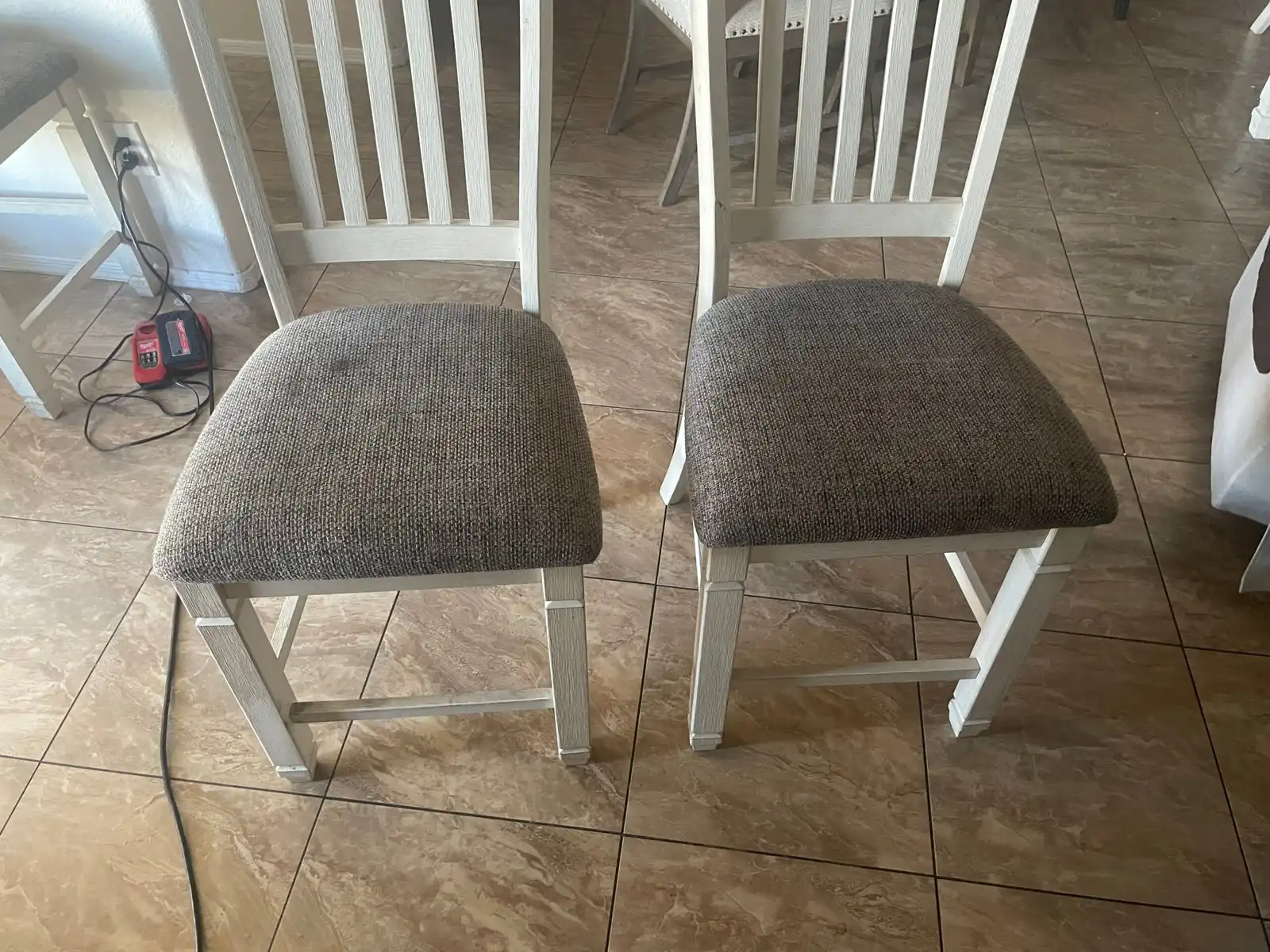
What Accumulates in Fabric That Is Not Being Used Regularly
Most people think of upholstery soil as something that builds from use. The more the piece is used, the dirtier it gets. That is true for body oil, food contact soil, and the mechanical wear that comes from regular human contact with fabric. But there is a category of soil that accumulates independently of whether the piece is being sat on, and formal dining chairs in occasional-use rooms carry a significant amount of it.
Airborne particulate settles onto every horizontal surface in a home continuously. Dust, fine desert grit from the West Valley environment, skin cell material carried by air movement, pet dander if there are animals in the house, and combustion particulate from cooking and candles. All of this settles onto the cushion surfaces of dining chairs in the same way it settles onto any other horizontal surface. The difference between a dining chair and a kitchen counter is that when the kitchen counter gets dusty you wipe it down. When the dining chair seat cushion gets dusty it tends not to get the same attention, partly because low-pile upholstery does not look obviously dusty the way a glass or wood surface does.
In a formal dining room in a Litchfield Park home near Dreaming Summit or Veranda where the room is used four to six times per year, the chair cushions sit in the accumulating dust for months between uses. Fine particulate works its way from the surface of the upholstery pile toward the base of the fiber with every HVAC cycle that moves air through the room. Over two or three years of this pattern, the fabric has accumulated a significant layer of environmental particulate in the fiber body without a single drop of food or beverage ever touching it.
The chair fabric also develops a surface film over time from VOCs and other airborne compounds that polymerize slowly on the fabric surface. These are invisible but they affect how the fabric reflects light, contributing to a subtle flatness in the color and appearance that is not dramatic enough to look dirty but is noticeable when the fabric is compared to its condition after cleaning.
Event-Use Staining: What Happens During the Occasions the Room Gets Used
When the formal dining room does get used, it gets used hard for a few hours. A Thanksgiving dinner, a holiday party, a dinner for twelve before the spring Art and Wine Festival. The room goes from months of quiet accumulation to full table activity, candles lit, multiple courses, wine poured, and guests seated for two or three hours.
The soil that enters the chair fabric during these events is concentrated and varied. Wine, which is a combination of tannin, natural pigment, and acid, is one of the more challenging fabric stains when it dries, and it makes it onto chair cushions with some frequency during multi-person dining events. Food oils from sauces and dressings splash or drip onto the upholstered seat pad. Coffee and tea follow the meal. In some cases, candle wax drips contribute a different type of soil that solidifies on the fabric surface.
The timing dynamic with event-use staining is what makes it more challenging than the equivalent stain on a daily-use piece. When something spills on a kitchen chair used every day, the homeowner sees it immediately and addresses it while it is fresh. When something drops onto a formal dining chair cushion during a dinner party, it often does not get the immediate attention it would get in a casual kitchen setting. The event continues, the stain sets for the duration of the dinner, and then when the cleanup happens the chair gets a quick wipe rather than a proper treatment. By the next morning, what was a fresh stain that would have responded easily to immediate blotting has begun to bond into the fabric.
Wine tannin left to dry in upholstery fabric undergoes a chemical change over the following hours and days. Fresh wine tannin is water-soluble and responds to gentle treatment. Dried tannin bonds more tenaciously to protein fibers and begins an oxidation process that shifts the stain color from red toward brown or brownish-gray over time. A wine stain that was not addressed immediately at the dinner party and then sat in the chair fabric for three months until the next occasion the room was used is in a meaningfully different and more difficult state than fresh tannin would have been.
Signs Your Dining Chairs Need Cleaning Before the Next Occasion
Formal dining chairs rarely look dramatically dirty even when they are ready for cleaning. These are the signs that tell the real story:
- Fabric color looks subtly flatter or less saturated than it did when the chairs were newer
- Any area of the cushion looks slightly darker or has a different texture after a past event
- The fabric feels slightly different in the main seating area compared to the sides or back where contact is lighter
- The chairs have not been professionally cleaned since the dining room was last used regularly
If you have a gathering coming up, cleaning before the event rather than after ensures the chairs look their best for the occasion and removes any previous event staining before new soil layers over it.
The Compound Soil Picture: Environmental Accumulation Plus Event Staining
What makes the formal dining chair cleaning job interesting is that the piece has two completely separate soil histories layered on top of each other, and they require different approaches to address.
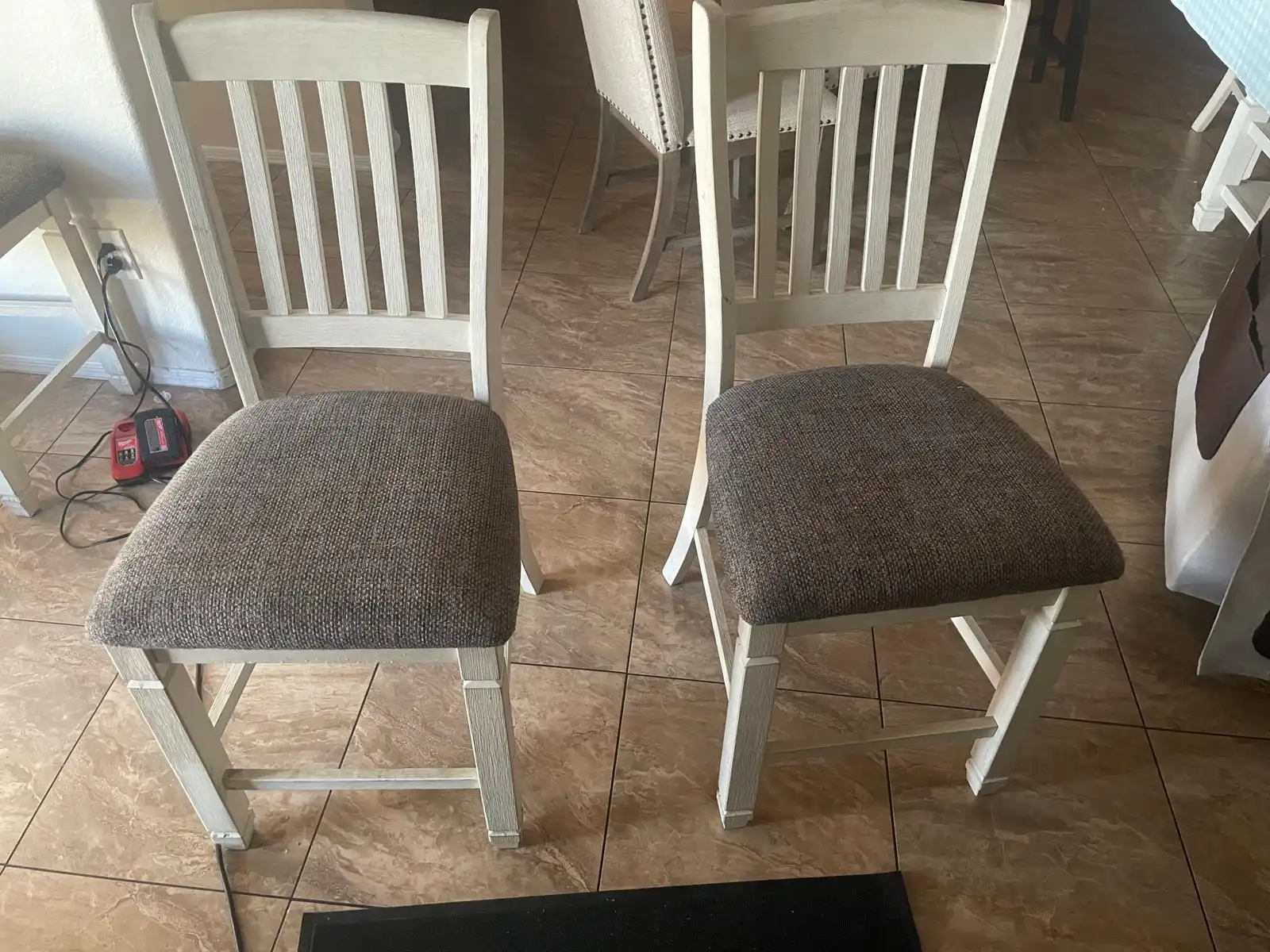
The environmental accumulation is diffuse, invisible, and distributed evenly across the fabric surface. It is the ambient dust, the airborne particulate, and the VOC surface film that built up during the months the chairs sat unused. This layer does not show up as a stain. It shows up as a general flatness in the fabric color and a slight dulling of the upholstery texture that is not dramatic enough to look dirty but is clearly present when you compare the before and after of a cleaning.
The event staining is localized and concentrated at specific points on the cushion where contact occurred during the dining events. These are the tannin stains from wine, the food oil deposits, the coffee and sauce residue that may be visible as slightly darker areas on the cushion if the fabric is light enough to show them.
Cleaning a formal dining chair properly means addressing both layers. The approach starts with the event staining, using targeted pre-treatment chemistry appropriate to the specific stain type, because the staining is the more chemically specific problem and needs to be treated correctly before the general cleaning chemistry goes over the whole surface. Then the general cleaning addresses the environmental accumulation across the full cushion face and the back panel fabric. Using the same approach consistently across all chairs in the set ensures the finished appearance is uniform, which is what a matched formal dining set should look like.
The Assessment Before Cleaning a Set of Formal Dining Chairs
The assessment of a set of formal dining chairs before cleaning covers several things that affect the approach and the outcome conversation. Fabric type and dye stability is the first consideration. Formal dining chairs in Litchfield Park homes often have fabric chosen for its appearance in a formal setting rather than its performance characteristics. Velvet, damask, silk blend, and woven brocade fabrics that look elegant in a formal room have different cleaning tolerances than the performance fabric on a family room sofa. Velvet pile can be crushed by improper cleaning and agitation. Silk blends are pH sensitive. Dye stability testing before any chemistry is applied tells me how the fabric will respond and what approach is safe.
The stain history on the cushion faces is mapped during the assessment. Under UV light, dried protein stains from food contact fluoresce differently from clean fabric, showing the location and extent of event-use staining that may not be fully visible in normal lighting. This mapping tells me where targeted pre-treatment is needed before the general cleaning chemistry goes down.
Chair age and condition matters. A set of formal dining chairs that was purchased decades ago has fabric with a different tensile strength than a newer set, and the cleaning approach has to account for fiber that may be more fragile than it looks. In older sets with significant age, the assessment includes the same fabric tension check used for antique upholstery to identify zones that need reduced agitation.
Honest Expectations: What Cleans Up and What Does Not
Environmental accumulation from months of ambient dust and airborne particulate responds very well to professional cleaning and produces a clear, visible improvement in the overall appearance of the fabric even when the chairs did not look visibly dirty before the cleaning. This is the component that surprises most homeowners when they see the before and after, because they did not realize there was anything significant to remove.
Event staining from wine and tannin is the most variable outcome, and the result depends heavily on how long the stain has been in the fabric and what the fabric type is. Recent tannin staining from an event in the past few months clears very well in most cases. Tannin that has been in the fabric for a year or more and has gone through full oxidation to the brown stage may only partially respond to cleaning, improving significantly but not clearing completely. The pre-cleaning assessment tells me the oxidation stage of any specific stain before I start, which allows me to give you a realistic expectation for each stained area rather than a blanket promise.
Food oil staining similarly depends on age. Recent food oil clears well. Oil that has polymerized over many months partially responds to solvent chemistry but may leave a lighter remnant that does not fully clear in a single cleaning session. Fabric surface changes from years of VOC film accumulation may not return the fabric to its exact original appearance if the film has been in place long enough to affect the fiber surface characteristics, but the color comes forward, the texture recovers, and the fabric looks better in a way that is noticeable to anyone who knows the chairs.
Keeping Formal Dining Chairs in Good Condition Between Professional Cleanings
The most practical protection for formal dining chairs between uses is light covers or slipcovers that sit over the seat cushions during the months the room is not being used. These intercept the ambient dust accumulation that happens regardless of use. They are easy to remove before an occasion and replace after, and they reduce the rate of environmental soil accumulation in the seat cushion fabric significantly. Linen or cotton covers that can be laundered periodically are the right material for this purpose.
For occasions when the dining room is being used, having a designated spot treatment approach ready before the event means that any spill can be addressed immediately rather than waiting until the guests leave. A clean dry cloth for immediate blotting and a small bottle of appropriate mild cleaner for protein or tannin staining, kept in the dining room or kitchen, means the first response to any spill during a dinner event happens within seconds rather than hours. Immediate blotting of wine, sauce, or beverage contact before it sets is the single most effective thing you can do for tannin and protein staining.
After every entertaining occasion, a light vacuuming of the seat cushion surfaces removes loose crumbs, fine food debris, and any surface material that was deposited during the event before it has a chance to work its way into the fabric. A quick pass with an upholstery attachment after the table is cleared takes two minutes per chair and removes the bulk of the surface soil while it is still loose.
Professional cleaning for a formal dining chair set in a Litchfield Park home every 18 to 24 months is appropriate for a room that sees four to six entertaining events per year. If a significant staining event occurred at a specific occasion, addressing that staining soon after rather than waiting for the scheduled interval produces better results on that specific staining.
Learn more about our dining room chair cleaning, or explore other cleaning services we offer in Litchfield Park.

 (602) 429-9602