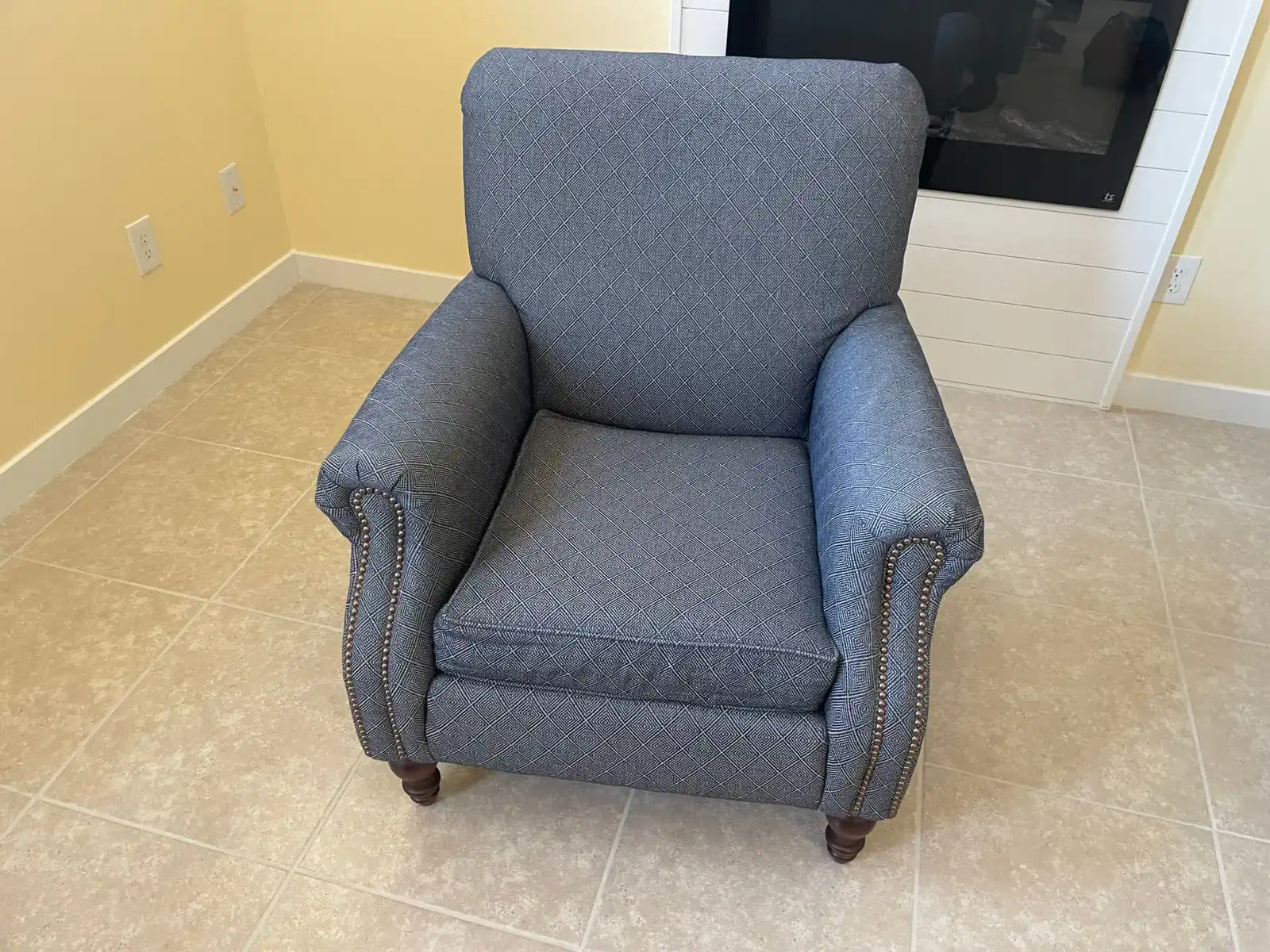
If You Have a Leather Recliner: What It Needs in Arizona's Climate
We do not clean leather. The information below is provided as a helpful resource so you understand what genuine leather needs in an Arizona desert climate and what questions to ask a leather care specialist. None of this is a service we offer.
The recliners in Litchfield Park's luxury custom builds and the golf course residential properties along The Wigwam courses tend to be a different category of furniture than what you encounter in most West Valley cities. Genuine leather, not the bonded or split leather composite that has become common in mid-range furniture retail, but full-grain or top-grain leather that was chosen deliberately and cost accordingly. A piece like that responds well to proper care and poorly to the wrong approach, and Arizona's climate makes the care question more important here than it would be in a more temperate part of the country.
Genuine leather in a desert climate faces two conditions simultaneously that work against the natural properties of the material. Heat, which in Litchfield Park means a home being air-conditioned for seven months of the year from an exterior that reaches 115 degrees in summer, pulls moisture out of leather continuously through the thermal gradient across the piece. Low humidity, a year-round condition in the West Valley, means the ambient air is not replacing that lost moisture the way air in a more humid climate would. Leather that is losing moisture faster than it can absorb it becomes drier over time, loses suppleness, develops surface cracking at the grain level, and eventually cracks more deeply at flex points like the armrests and the hinge areas of the mechanism.
Homes in the Bel Fleur and Veranda developments and throughout the luxury custom builds near The Wigwam are well air-conditioned, which is necessary and appropriate, but AC air is extremely dry and represents one of the most moisture-depleting environments for leather that exists in any climate. A genuine leather recliner in a well air-conditioned Litchfield Park home without regular conditioning is on a slow, quiet trajectory toward surface cracking that most homeowners do not notice until it has progressed to the point where it is difficult to reverse.
Genuine Leather vs. Bonded Leather: How to Tell Them Apart
This distinction matters because the care approach for each is completely different, and the failure mode for each is completely different. Genuine leather dries and cracks from moisture depletion over time. Bonded leather, which is a manufactured composite of leather scraps and synthetic binders on a fiber backing, fails through adhesive delamination: the polyurethane top coat separates from the composite middle layer and peels. No amount of conditioning prevents bonded leather delamination once it begins, because the problem is in the adhesive bond between layers, not in the surface finish.
How to Tell Genuine Leather from Bonded Leather
Check any cut edge of the material, such as the back of a cushion flap or the underside of an armrest where the material wraps around the frame:
- Genuine leather shows a fibrous, suede-like hide structure at the cut edge where you can often distinguish individual fibers
- Bonded leather shows a smooth, composite-looking cross-section with what appears to be a fabric or paper backing beneath a thin surface layer
- Press a small area firmly with your thumb and release: genuine leather has a natural, slightly irregular surface response; bonded leather often shows a very uniform, slightly plasticky response
- If the surface is already peeling or flaking in thin sheets: that is bonded leather delamination, not genuine leather cracking
Knowing which you have determines everything about how to care for it and whether any professional cleaning or conditioning service can help.
What Genuine Leather Actually Needs: Cleaning and Conditioning
Genuine leather has a natural pH that sits in the mildly acidic range, typically between 4.5 and 5.5. Cleaning products that are alkaline, which includes most general upholstery cleaners, fabric sprays, and even some products marketed for leather, disrupt this pH balance when applied repeatedly. Alkaline chemistry applied to leather over time strips the natural oils from the hide surface and contributes to the same drying and cracking that the Arizona climate produces on its own. The correct chemistry for cleaning genuine leather is pH-balanced, typically a mild surfactant system formulated for leather that sits in the neutral to slightly acidic range.
Conditioning is not optional in Arizona's climate. A properly formulated leather conditioner penetrates the surface finish of top-grain leather or works directly into the grain of full-grain leather, depositing emollient compounds that maintain the suppleness of the hide and slow the moisture depletion process. The products that get conditioning wrong are silicone-based: silicone produces an immediate shine but coats the surface rather than penetrating it, preventing proper moisture exchange in the hide. The correct conditioner is a water-based emollient formulation. For a leather recliner in a luxury home near The Wigwam with significant AC exposure and UV from west-facing windows, twice per year conditioning is appropriate.
Early-stage surface cracking, the fine lines at the grain level that appear when the leather has dried significantly, can be stabilized and partially improved through proper conditioning. Advanced cracking where the surface finish has separated and the hide has developed deep splits is permanent damage that cleaning and conditioning cannot meaningfully reverse. The sooner early cracking is addressed the better, because it responds to conditioning much better than cracking that has progressed further.
What We Can Help With: Fabric Recliner Cleaning in Litchfield Park
If your recliner is fabric, the service is straightforward. Organic, low-moisture cleaning chemistry addresses the headrest and armrest oil zones with targeted pre-treatment, works through the mechanism fold soil that accumulates in the crease where the footrest folds, covers the footrest surface, and extracts the ambient dust load that has settled into the fabric body between cleanings. Dry time is approximately 45 to 60 minutes for a standard fabric recliner. The booking widget above is the fastest way to schedule.
If you are not sure whether your piece is fabric or leather, call or text (602) 429-9602 before booking and I can help you identify the material. There is no point booking a fabric cleaning appointment for a leather piece, and I would rather spend two minutes on the phone getting that sorted than show up and not be able to help.
Learn more about our recliner cleaning, or explore other cleaning services we offer in Litchfield Park.

 (602) 429-9602