What West-Facing Rooms in Litchfield Park Actually Do to a Rug
Phoenix metro sits at a latitude and elevation combination that produces one of the highest UV index readings in the continental United States. That is not a minor variable when talking about dye stability in a quality area rug. Most natural dyes and many synthetic dyes used in hand-knotted, hand-tufted, and quality machine-woven rugs have a finite capacity to absorb UV radiation before the molecular bonds that hold the color in place begin to break down.
The rooms in homes near the Wigwam golf courses, and in the newer builds out along Village Parkway, tend to be oriented to take advantage of golf course views and afternoon light. That is west or southwest facing in most cases. The afternoon sun in Litchfield Park from roughly 1 pm through sunset in summer hits those windows at the angle that concentrates UV most intensely on whatever is on the floor directly inside. A rug placed in that light path receives the equivalent of many times more annual UV exposure than the same rug in a shaded or north-facing room.
The change in a rug's color from UV exposure does not look like a stain. It looks like the color is slightly less itself. The reds are a little less red, the blues have shifted toward a greener or grayer tone, the overall vibrancy is lower than it was when the rug was placed. In a room you see every day, you may not notice it happening because the change is gradual. Place the rug next to a photograph of itself from a few years ago and the difference is often stark.
Synthetic dyes used in machine-made rugs tend to be more UV-stable than natural dyes, but they are not immune. Solution-dyed fiber, where the color is in the fiber itself rather than applied to the surface, holds up better than surface-dyed material. But a significant portion of the quality rugs that end up in Litchfield Park homes are not solution-dyed. They are hand-knotted or hand-tufted pieces with natural or acid dyes chosen for their depth of color and visual quality, which is exactly the characteristic that makes them more vulnerable to UV.
Fading vs. Soil Masking: The Assessment That Changes Everything
One of the more important conversations I have with Litchfield Park rug owners before any cleaning starts is about the difference between a rug that has faded and a rug that looks faded because it is dirty. These two things can look almost identical from standing height, and they have completely different outcomes after cleaning.
A rug that looks washed out, dull, or lower in color saturation than it used to be might be that way because UV has degraded the dye. Or it might be that way because years of accumulated fine particulate, foot traffic soil, and ambient dust have coated the fiber surface and are sitting between your eye and the actual color underneath. A filthy rug can look faded. When that rug is properly cleaned, the soil comes off and the color comes back. If the rug was actually UV-faded rather than soiled, cleaning removes the surface layer but the dye itself does not recover because the molecular change is permanent.
This matters practically because a homeowner who has a rug they believe is faded and ruined may actually have a rug that is just heavily soiled and will respond very well to cleaning. And a homeowner who assumes their rug just needs a good clean and will come back to its original color may be disappointed if UV damage is the real issue underneath the soil.
The way I assess this before cleaning is by looking at areas of the rug that have been consistently protected from light. If the rug has been under furniture, or if it has a pad underneath that extends slightly past the rug edge protecting a strip of fiber, or if the rug was rolled up against a wall for any period of time, those protected areas hold the original color. Comparing the protected zones to the exposed zones tells you exactly how much UV shift has occurred. That comparison is the honest answer to whether cleaning alone addresses the color situation or whether the dye change is permanent.
What Cleaning Actually Accomplishes on a Sun-Exposed Rug
Cleaning a rug that has been in a high-sun Litchfield Park room for several years typically produces a meaningful improvement, even when some UV damage exists. The reason is that the two conditions, dye fade and soil accumulation, are almost always present together. The UV-faded rug has also been collecting foot traffic soil, fine desert particulate, and ambient dust during the same period it was fading. When the soil layer comes off during cleaning, the rug looks better on two counts: the true dye color, whatever UV has left of it, is no longer obscured by soil, and the pile texture recovers from the compression that soil accumulation contributes to.
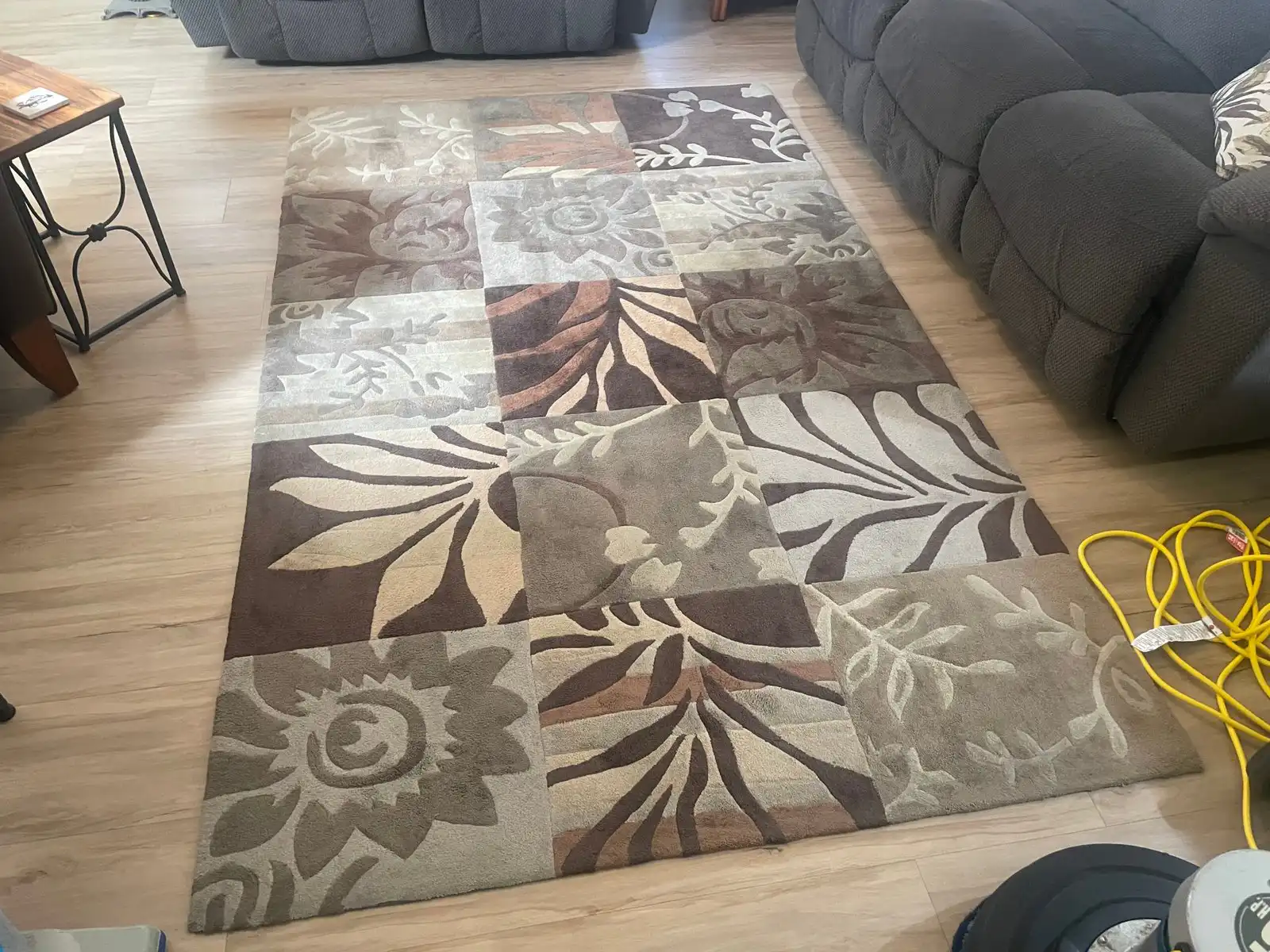
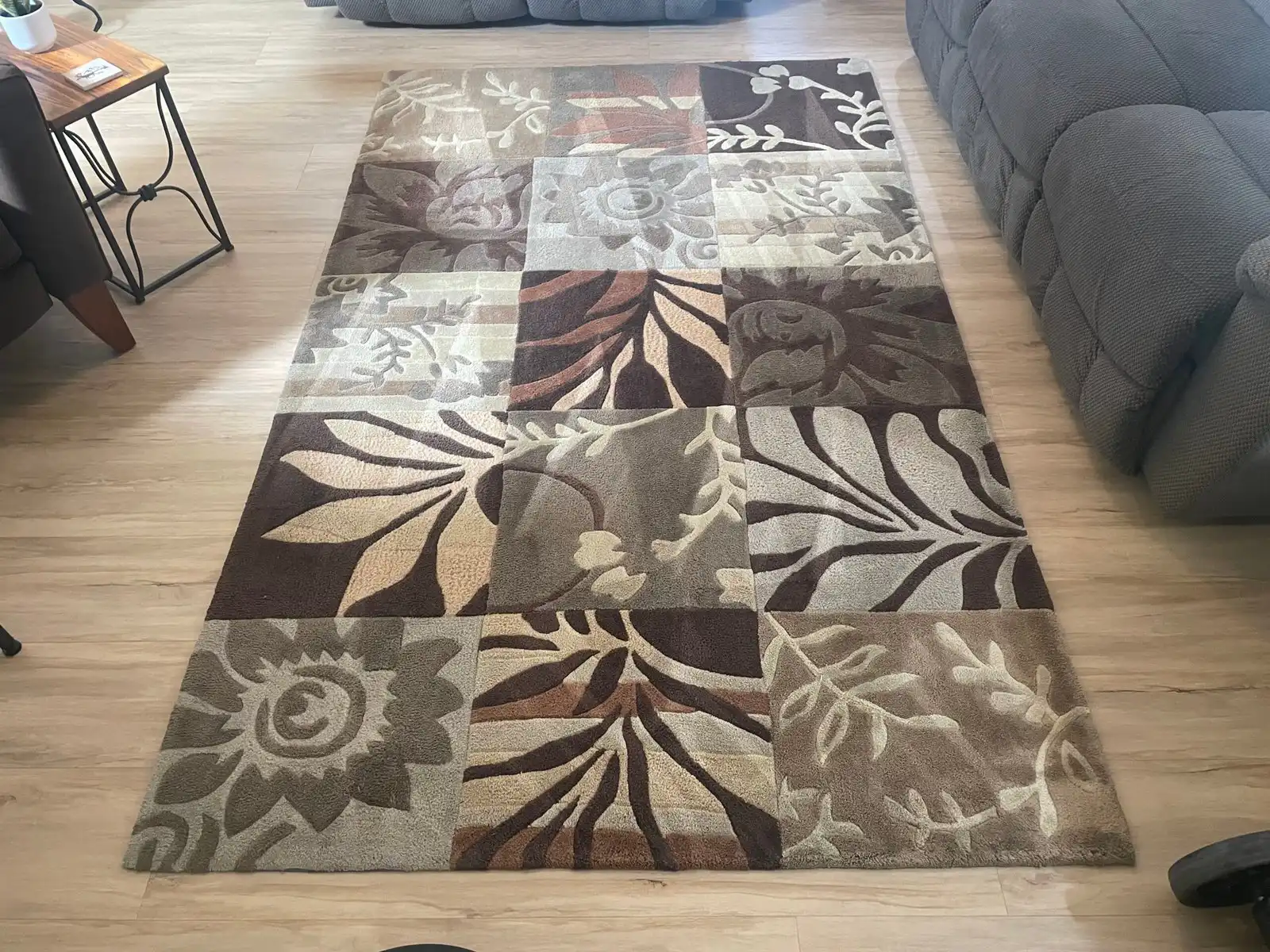
A rug I cleaned for a client in one of the homes off a golf course fairway is a good example. The rug had been in a room with significant west-facing glass for about four years. The homeowner thought it had faded badly and was not sure it was worth cleaning. The assessment showed genuine UV shift in the exposed center compared to the protected edges under the sofa. But it also showed a very heavy soil load across the whole surface. After cleaning, the dye shift was still visible if you compared the center to the edges, but the overall appearance was dramatically better because the soil that was making everything look flat and washed out was gone. The rug looked like itself again, a slightly changed version of itself, but genuinely good in the room.
What cleaning does not do is restore dye that UV has degraded. That molecular change is not reversible through cleaning chemistry. Some rug restoration specialists offer overdyeing services for rugs with significant UV fading, which is a different process from cleaning and one I would refer you to a textile specialist for. But cleaning should come before that conversation anyway, because you cannot accurately assess the true extent of the UV damage until the soil is removed and you can see the actual fiber color.
The other thing cleaning addresses on a sun-exposed rug is fiber condition. Prolonged UV exposure does affect the tensile strength of natural fiber over time, particularly wool. A rug that has been in direct afternoon sun for many years may have fiber that is more brittle than a rug that has been properly protected. The cleaning process for a rug in that condition needs to account for reduced fiber strength, which means lower agitation levels and shorter dwell times to avoid stressing fiber that does not have the same resilience it had when the rug was newer.
The Soil Profile of a Rug in a High-Traffic Litchfield Park Great Room
Beyond the UV question, the soil that accumulates in a quality rug in a Litchfield Park great room or sitting room has a specific profile worth understanding. These are not the same as a rug in a high-traffic utility area. The soil sources are different, the chemistry is different, and the cleaning approach reflects that.
Fine desert particulate settles into rug pile regardless of how clean the home is. Litchfield Park's hard West Valley municipal water carries mineral content that contributes calcium and magnesium deposits on fiber surfaces over time, particularly in any area where the rug gets wet foot contact after a shower or pool use. In households with pets, dander and hair embed into pile fibers. In rooms that get daily barefoot use, skin cell accumulation and sebaceous oil build up in the pile base.
None of this is visible the way a stain is visible. It is a diffuse, even accumulation that changes the overall appearance of the rug by reducing pile clarity, compressing the pile height, and making the colors look slightly flatter and less saturated than they were when the rug was newer. In a high-quality hand-knotted rug with good pile depth, this accumulated soil can represent a meaningful amount of material embedded in the lower portion of the pile where surface vacuuming does not reach.
The cleaning process for this type of accumulated soil starts with thorough dry extraction before any liquid chemistry is applied. This pulls the loose particulate out of the pile before moisture causes it to bind more firmly to the fiber. The citrus-based solution then addresses the organic soil component, the skin oils, the foot traffic residue, and any biological material. Extraction removes the dissolved soil along with the solution. In premium rugs with significant pile depth, a second pass of light agitation and extraction in the body of the rug is often worth the extra time to make sure the deeper pile layers are addressed, not just the top surface.
Signs Your Rug Needs Cleaning Before the Fading Gets the Blame
A rug in a west-facing Litchfield Park room is almost always carrying both problems at once. These are the signs soil is the bigger factor:
- Color looks flat across the whole rug, including areas that have been under furniture
- Pile feels slightly stiff or gritty underfoot rather than soft
- The rug smells faintly musty when walked on, even in a dry home
- Vacuuming no longer seems to make a visual difference
If the protected areas under furniture are still noticeably more vibrant than the rest, that is UV shift. If the color is dull everywhere, cleaning will bring it back.
Pad Condition and What It Tells You About the Rug Above It
Every quality rug on a hard floor should have a pad under it. In Litchfield Park homes with tile or LVP main floors, that pad is doing several jobs at once. It keeps the rug from shifting and bunching, it adds cushion underfoot, and it creates a slight air gap between the rug backing and the hard floor surface that lets moisture evaporate rather than trap.
What most homeowners do not realize is that the pad degrades over time, and a degraded pad creates problems for the rug above it. Natural rubber pads last years and hold their grip well. Synthetic pads with PVC or recycled materials tend to harden and become brittle in Arizona's heat. A brittle pad does not cushion the rug effectively, which means the rug pile compresses more severely under foot traffic because there is no give underneath. It also stops gripping the floor properly, so the rug shifts and the pile gets stress along the edge zones from the rug moving under foot contact.
When I clean a rug on-location in a Litchfield Park home, I always pull the rug back and look at the pad before I start. A pad that has gone hard, that has crumbled at the edges, or that has developed a waffle pattern permanently pressed into it from extended compression is past its useful life. The rug can be cleaned and returned to the floor looking great, but if it goes back down on a failed pad, the problems caused by poor pad performance continue.
There is also a soil conversation that happens when you lift a rug from a floor that has not been cleaned in a while. Dust and fine particulate migrate underneath rugs over time, particularly near the edges where there is slight air movement. What accumulates under the rug does not stay under the rug. It works back up through the pile from below, particularly in rooms with HVAC airflow. Cleaning the floor surface under the rug and replacing the pad when needed is part of the full system approach to rug care, not just cleaning the top surface of the rug itself.
Honest Limitations: What a Cleaning Company Cannot Do for a Sun-Damaged Rug
I want to be direct about this because it saves everyone time and sets the right expectations going into the job. Cleaning is not rug restoration. Those are two different services and I only do one of them.
UV dye degradation is permanent at the molecular level. Cleaning removes soil and can make a sun-faded rug look meaningfully better by eliminating the soil that was further suppressing the remaining color. But the dye bonds that UV has broken do not come back through any cleaning process. If you have a rug where the center has shifted significantly in color compared to the protected edges, cleaning will close some of that gap by removing the soil contribution to the dullness, but it will not close all of it. The color shift that remains after cleaning is the UV damage itself.
Fiber brittleness from extended UV exposure is also permanent. Cleaning carefully, with lower agitation and appropriate chemistry, avoids stressing brittle fiber. But it does not repair the fiber strength that UV has reduced over time. A rug with very brittle pile is a candidate for gentle cleaning with realistic expectations, not aggressive extraction that would stress the fiber further.
Pile height loss from years of compression and foot traffic is partially recoverable. Cleaning and the moisture in the process helps the pile stand up somewhat. A rug that has been heavily trafficked and compressed for years will not fully return to its original pile height, but the improvement is usually noticeable.
For rugs with significant UV damage beyond what cleaning addresses, overdyeing is the restoration path. I do not do that work, but I can refer you to textile specialists who do it properly if cleaning reveals that the UV shift is more extensive than soil removal can compensate for.
Protecting a Quality Rug from Arizona Afternoon Sun
The most effective protection for a quality rug in a west-facing Litchfield Park room is UV-filtering window film or UV-blocking window treatments. Standard window glass does not block UV effectively. Low-E glass, which is common in newer construction, blocks some infrared but not necessarily the full UV spectrum that damages dye. Window film specifically rated for UV rejection, applied by a professional installer, is the most practical and reversible intervention. It does not significantly change the appearance of the glass and it dramatically reduces the UV load reaching the floor. For a rug that represents a meaningful investment, this is the most cost-effective protective measure by a wide margin.
Rotation is the second most important practice. Rotating a rug 180 degrees every six months ensures that no single section of the rug faces the strongest afternoon sun consistently. The fading that does occur distributes more evenly across the whole rug rather than concentrating in the area closest to the windows. It also moves the area of highest foot traffic to a different section of the rug each time, which distributes pile wear and soil accumulation more evenly. This is especially important in rooms where the furniture arrangement creates a fixed traffic path across one portion of the rug.
For rooms where the afternoon sun is very direct, furniture placement matters. A sofa or a large piece placed over the section of the rug that would otherwise receive the most intense direct light protects that section of the pile from UV during the hours of peak exposure. The furniture does compress the pile underneath it, which is its own maintenance consideration, but that is a more reversible condition than UV dye degradation.
Regular vacuuming with a proper setting for the pile type is the basic maintenance step that keeps loose surface particulate from working its way down into the pile base between professional cleanings. Beater bar or rotating brush settings should be avoided on hand-knotted and hand-tufted rugs, which have pile that can be damaged by aggressive mechanical contact. A suction-only setting or a low-speed brush setting is appropriate. Weekly vacuuming, including the edges and the area just inside the rug border where soil concentrates, keeps the surface soil load manageable until the next professional cleaning.
Professional cleaning for a quality rug in active use in a Litchfield Park great room is worth doing every 12 to 18 months. A rug in a lower-traffic sitting room or a formal space that sees occasional use can go to 24 months. The right interval depends on the actual soil load in that specific room, and I am happy to give you an honest read on that during the assessment before the job.
Learn more about our area rug cleaning, or explore other cleaning services we offer in Litchfield Park.

 (602) 429-9602