All Ways Organic Citrus Carpet & Upholstery Cleaning - Home
🇺🇸 Made in USA
🍋 Citrus Based
🌵 Eco-Friendly
Hours
Mon – Sat
7AM – 7PM
Book Online
Book
Online
📍 Serving the Greater Phoenix Valley
🕐 Mon – Sat  7AM – 7PM
👨‍👩‍👧‍👦 Family Owned & Operated
🇺🇸 Made in USA
🍋 Citrus Based
🌵 Eco-Friendly
Book Online
Tile and Grout Cleaning in Litchfield Park Arizona - All Ways Organic
Litchfield Park, Arizona

Litchfield Park AZ
Tile and Grout Cleaning

Golf cart tire residue tracked onto interior tile creates a gray haze that standard mopping chemistry cannot break down. If your tile looks dull right after you mop it, this is probably why. Owner-operated, walkable in about 30 to 45 minutes.

Google
5.0 / 5.0
Google Reviews
Organic
100% Organic
Citrus-based products
Owner operated
Owner-Operated
Kyle shows up every time
Quick walkable
30-45 Min Walkable
Grout fully dry in ~90 min
No hidden fees
No Hidden Fees
Price quoted = price paid
Schedule Your Cleaning
Book Your Litchfield Park Tile and Grout Cleaning
Pick a date, build your clean, and confirm - takes about 60 seconds
1Date
/
2Build
/
3Book
Your Clean
$0

When works for you?

Pick a day and time. We'll handle the rest.

Build your clean

Tap a category, then add what you need.

Need commercial cleaning? Call (602) 429-9602 for a custom quote.

Confirm your cleaning

Almost there. Fill in your details and lock in your spot.

📅
Driveway parking available?
Tap any item above to adjust add-ons or remove it.

You're All Set!

Booking #

Confirmation sent to your email.

What to expect: I'm Kyle, the owner, and I'll be the one showing up. Carpets dry in about 1 hour. Your home will smell like fresh citrus. Safe for kids and pets immediately after cleaning.

Questions? Call or text (602) 429-9602

Need help?(602) 429-9602
SMS Consent: By providing your phone number when booking, you consent to receive appointment reminders and follow-up messages via SMS from All Ways Organic. Msg frequency varies. Msg & data rates may apply. Reply STOP to opt out at any time. Privacy Policy · Terms
Transparent Pricing

No Hidden Fees. No Surprises.

Cart residue pre-treatment in the entry zone and grout-focused detail work in high-concentration zones are included in the standard rate. Final quote after walkthrough.

Bathroom tile and grout
Bathroom
Floor and wall tile, all grout lines
$50-100
Per bathroom
Book Now >
Kitchen tile and grout
Kitchen
Floor tile and grout, backsplash available
$100-175
Per kitchen
Book Now >
Living room tile and grout
Living Room
Full floor tile and grout cleaning
$100-250
Per room
Book Now >

Natural stone tile (travertine, marble, limestone) requires a different approach than ceramic and porcelain. If your home has natural stone in any area, mention it when booking. Tile is walkable within 30 to 45 minutes. Grout lines fully dry in approximately 60 to 90 minutes.

What Our Customers Say

Real Reviews, Real Results

Standard mopping is formulated for organic soil. Carbon black and plasticizers from cart tires are not organic soil. That is why the floor still looks dull right after you mop it.

About This Service

Golf Cart Tire Residue on Interior Tile: The Soil Problem That Mopping Does Not Fix

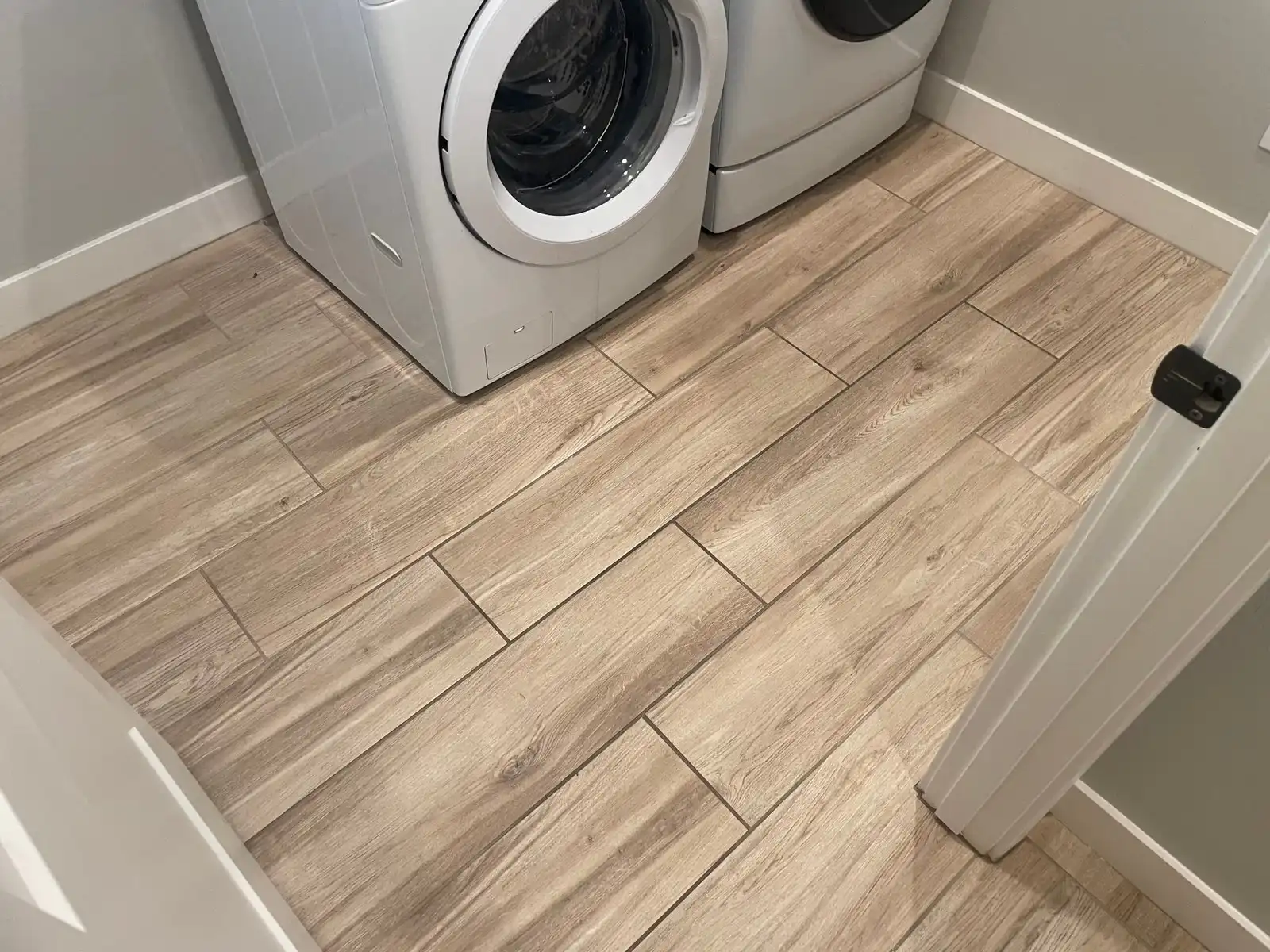
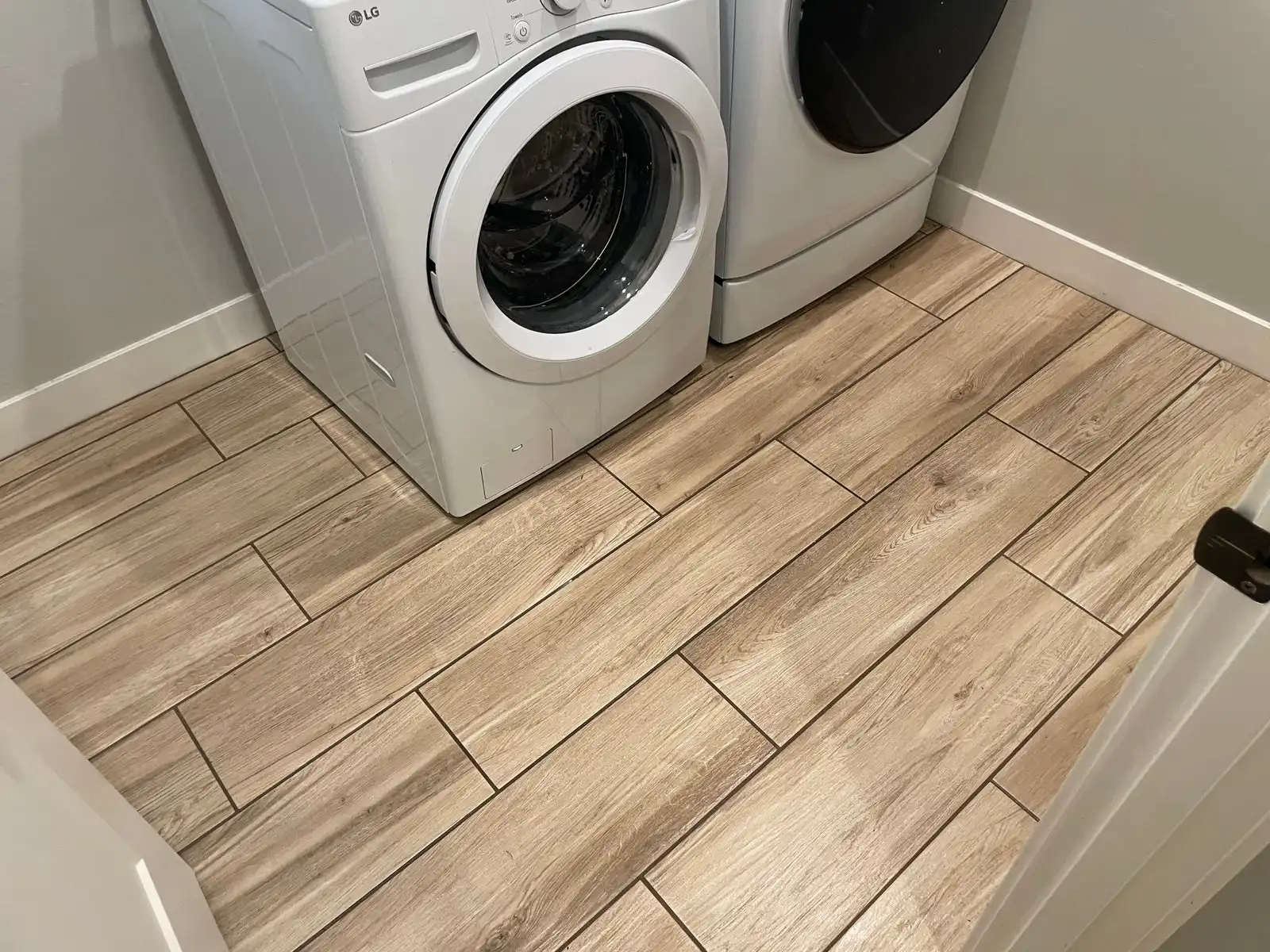
If you live in Litchfield Park and you use a golf cart, you already know the routine. You roll the cart in from the Wigwam Boulevard strip or back from a round at The Wigwam, pull into the garage, and walk into the house. What you may not have connected is that the cart tires leave a faint residue on the garage floor wherever they sit, and that residue gets picked up on the bottom of your shoes or bare feet the moment you walk past the cart toward the door. From there it goes directly onto whatever flooring is inside, and in most Litchfield Park homes built in the last two decades, that means large-format porcelain or ceramic tile through the main living areas.

The residue from golf cart tires is not the same as ordinary shoe sole soil. Shoe soles pick up outdoor dirt, sand, and organic material from the ground. Cart tires shed a specific combination of carbon black, which gives the rubber its dark color and durability, and plasticizer compounds that keep the rubber flexible. That combination, when it transfers onto a polished or semi-polished tile surface, creates a dark, slightly greasy mark that does not respond the way normal floor soil does. Mopping with standard floor cleaner moves it around but does not break it down. It tends to spread and become a general haze on the tile surface rather than lifting cleanly.

I'm Kyle with All Ways Organic. Tile and grout cleaning in Litchfield Park is something I approach differently than in other cities because of the cart culture here. The soil on the tile in a Litchfield Park main floor is often a combination of ordinary household soil and the carbon and plasticizer compounds from cart tire contact, and addressing both components in the right order is what produces a result that actually lasts.

Why It Matters
Four Things That Make Litchfield Park Tile Cleaning Different
Cart residue
Cart Tire Residue Does Not Respond to Standard Mopping
Surfactant-based floor cleaners are formulated for organic soil. Carbon black and petroleum-derived plasticizers from cart tires are not organic soil and do not dissolve in surfactant chemistry. Mopping spreads this residue around without removing it, which is why the tile still looks dull right after cleaning.
Polished tile
Polished Tile Shows This Soil Most Obviously
A polished tile face reflects light uniformly when it is clean. When carbon black and plasticizer compounds are distributed across that surface in a thin, uneven layer, the reflection becomes inconsistent. The tile looks dull in some areas and slightly shinier in others, which is exactly what Litchfield Park homeowners describe when they say the floor looks dirty right after mopping.
Grout darkening
Grout Near the Garage Entry Gets a Different Soil
Kitchen grout darkens from cooking oil and food residue. Garage entry grout darkens from carbon black and rubber residue that accumulates with a different character. The cleaning chemistry and approach differs between those two zones even within the same home. Treating them identically means one of them is not being addressed correctly.
Solvent chemistry
The Right Sequence Matters as Much as the Right Chemistry
Dry sweeping first removes loose carbon black before it becomes suspended in mopping liquid and spreads further. Solvent-compatible pre-treatment addresses the plasticizer that bonds the carbon black to the tile. Mechanical agitation lifts what chemistry dissolves. Wet extraction removes it before it can re-deposit as the solution dries.

What Golf Cart Tire Residue Actually Is and How It Gets on Your Tile

Golf cart tires are formulated differently from vehicle tires. They use a softer rubber compound designed for low-speed operation on smooth cart paths, turf, and paved surfaces around a course or community. That softer compound sheds micro-particles of rubber at the contact surface more readily than a harder vehicle tire running at higher speed. Every time a cart is driven and then parked, the tire surface has deposited a thin layer of rubber compound on whatever it rolled across and on the garage floor where it sits.

The two main components of that deposit that matter for tile cleaning are carbon black and plasticizers. Carbon black is a fine particulate used in rubber manufacturing that provides UV resistance, strength, and the characteristic dark color. It is chemically inert, meaning it does not react with water or standard cleaning chemistry, and it bonds to smooth tile surfaces through a combination of physical adhesion and the oily plasticizer compounds that accompany it. Plasticizers are petroleum-derived chemicals added to rubber to maintain flexibility. They are oily in character and help the carbon black adhere to surfaces rather than sitting as loose particulate that could be swept away.

The transfer path into your home starts at the garage floor. A cart that is driven regularly deposits its tire compound onto the garage floor over time. When you walk across that area, you pick up a thin film of this material on the bottom of your shoes or bare feet. It then transfers to the interior tile at the garage entry threshold and gets walked further into the main floor with every step. In a home along Wigwam Boulevard or near the Litchfield Road golf cart underpass where carts are a regular part of daily life, this transfer happens consistently enough that the tile in the main living areas develops a general gray haze that does not come up with regular mopping.

Why Standard Mopping Makes This Specific Problem Worse

Most homeowners who have a cart tire residue problem on their tile have already tried to solve it with regular floor cleaning products. Fabuloso, Pine-Sol, standard mopping solutions, steam mops. The result is usually the same: the tile looks better for about ten minutes after mopping while it is still wet, and then as it dries it looks exactly the same as before, sometimes slightly worse.

Surfactant-based floor cleaners are formulated for organic soil. Food residue, foot traffic dirt, cooking grease, and biological material all respond to the surfactant mechanism, where the cleaning molecule surrounds the soil particle and lifts it off the surface into the mop water. Carbon black is not organic soil and does not respond to surfactant chemistry. The mop water picks up some of the loose surface particulate and moves it around, but the carbon and plasticizer compounds that have bonded to the tile surface stay put. When the mop water dries, the residue is still there, now redistributed in a slightly different pattern.

Steam mops have a similar limitation in this context. Steam softens some types of organic soil and loosens deposits that respond to heat and moisture. Carbon black and petroleum-derived plasticizers do not respond to heat and moisture in a way that lifts them from the tile surface. The cleaning approach that works for this specific soil starts with solvent-compatible chemistry rather than surfactant chemistry, applied with enough dwell time for it to work into the plasticizer compound that is acting as the bonding agent. Once the plasticizer is addressed, the carbon black no longer has the adhesive medium holding it to the tile surface. Mechanical agitation lifts the loosened material. Wet extraction pulls it out of the cleaning solution before it can re-deposit on the tile surface as the solution dries.

Signs You Have Cart Residue on Your Tile

These are the specific patterns that distinguish cart tire residue from ordinary tile soil:

  • The tile looks dull or gray right after mopping, then returns to looking clean while wet but dull again as it dries
  • The tile closest to the garage entry is consistently duller than tile in rooms farther from the entry
  • The grout near the garage door is noticeably darker and grayer in tone than kitchen grout, which tends toward a browner color from cooking oil
  • Running a white cloth across the tile in the entry zone picks up a faint gray residue even on a floor that was mopped recently
  • Previous professional cleaning helped for a few weeks then the dullness returned: the residue layer was not fully addressed

The Cleaning Process for Cart-Residue Tile in Litchfield Park Homes

The cleaning process starts with an assessment of where the residue concentration is highest. In virtually every cart household, the highest concentration is at the garage entry threshold and in the path from that threshold through the main floor toward the primary living areas. Secondary concentration zones are wherever residents walk most consistently after coming in from the garage, which varies by home layout but usually includes the kitchen entry and the hallway toward the master bedroom.

Dry sweeping or vacuuming the floor before any wet chemistry goes down removes loose particulate and prevents it from becoming suspended in the cleaning solution and spreading across a larger area. This step matters more with cart residue soil than with standard floor soil because the carbon black component is fine enough to migrate in liquid and re-deposit if it is not removed from the surface before wet cleaning begins.

Pre-treatment with solvent-compatible chemistry in the high-concentration zones addresses the plasticizer component first. Dwell time of several minutes allows the chemistry to work into the bonding compound before mechanical agitation. Agitation with appropriate brush pressure at the tile surface level physically breaks the bond between the residue and the tile face. The grout lines get their own focused detail work with a grout brush and thorough extraction. For grout that has been accumulating cart residue for several years, the result is a meaningful lightening of the grout color in the high-traffic zones. The grout near the garage entry will almost always show more improvement than areas of lighter traffic, because that is where the heaviest accumulation has been.

Honest Expectations: What the Cleaning Fixes and What It Does Not

Professional tile and grout cleaning with the right chemistry for cart residue soil produces a meaningful result in most Litchfield Park homes. The tile surface looks more like itself again, the grout lines lighten in the high-traffic zones, and the dull haze that mopping was not removing clears. In most cases the improvement is significant enough that homeowners are surprised by how different the floor looks compared to their expectations going in.

Grout that has been accumulating carbon black and plasticizer residue for many years without professional cleaning will show meaningful improvement but may not fully return to its original color in the highest-concentration zones near the garage entry. Grout is porous, and residue that has been working into that porosity for a long time has penetrated more deeply than a single cleaning session can fully address. A second cleaning six to eight months after the first one typically produces additional improvement.

Tile surface etching is a different situation from residue soil and is worth checking during the assessment. Some tile cleaning products that homeowners have tried over the years can leave micro-etching on polished tile surfaces, where the chemistry has slightly dulled the glaze. Residue removal does not fix etching because etching is physical surface damage to the glaze, not a coating on top of it. If the tile has been etched by previous cleaning attempts, the floor will look cleaner after the residue is removed but the glaze surface itself will remain slightly different from the original finish. I check for this during the walkthrough and let you know before we start.

The Full Soil Picture on Litchfield Park Tile Floors

Cart tire residue is the soil component in Litchfield Park homes that is specific to this city and not addressed by standard cleaning chemistry. But it is layered on top of the soil that every tile floor in the West Valley accumulates, and the cleaning process addresses all of it together.

Kitchen tile in these homes accumulates cooking oil vapor that absorbs into grout porosity around the cooking area. Desert particulate from the Litchfield Park environment settles into grout lines throughout the main floor. Hard West Valley municipal water leaves mineral deposits on the tile face in bathroom areas and near any water source where evaporation leaves minerals behind. In homes with pools, which is a meaningful percentage of Litchfield Park households, calcium and chlorine compounds from pool water track in on feet and contribute their own layer to the main floor tile near the outdoor entry.

The Spanish-stucco homes throughout the incorporated city and in the unincorporated areas with Litchfield Park addresses tend to have similar tile specifications because they were often built by the same developers in the same construction period. Large-format porcelain in the main floor, smaller tile in bathrooms and utility areas, and the same West Valley water supply. The cleaning approach for these homes is consistent enough that I can work through a full main floor efficiently once the assessment tells me what the soil composition is.

Keeping Cart Residue from Rebuilding Between Cleanings

The most effective single prevention step is a quality entry mat inside the garage entry door with enough pile depth and surface area to remove the thin film of tire residue from the bottom of shoes and bare feet before they reach the tile. A flat rubber mat does not do this effectively. A high-pile carpet entry mat that you can feel pulling at the shoe sole is what actually intercepts the material. Shake or vacuum it weekly. Replace it annually or when the pile is compressed enough that it no longer has scrubbing capacity.

Keeping the garage floor clean in the cart parking area reduces the volume of residue available for transfer. A light sweep of the garage floor near the cart parking spot once a week removes the accumulated tire deposit before it builds up enough to become a significant transfer source. For the tile floor itself, dry sweeping or vacuuming before any wet mopping is more important in a cart household than in a home without that soil source. Wet mopping over loose carbon black particulate spreads it across a larger area. Removing the loose surface material dry first keeps the wet cleaning focused on what is actually bonded to the tile.

Professional tile and grout cleaning every 12 to 18 months for a Litchfield Park home with active cart use is a reasonable interval. The high-traffic entry zone near the garage may benefit from attention every 10 to 12 months if the cart frequency is high. The less-trafficked areas of the main floor can go longer between full professional cleanings as long as the regular maintenance routine is keeping the loose surface soil managed.

Learn more about our tile and grout cleaning, or explore other cleaning services we offer in Litchfield Park.

Common Questions

FAQs About Litchfield Park Tile and Grout Cleaning

Most likely yes, if you park a cart in the garage and walk across the garage floor regularly. Cart tire residue, specifically the carbon black and plasticizer compounds in the rubber, transfers onto the tile through foot contact and does not respond to standard mopping chemistry. Surfactant-based floor cleaners are formulated for organic soil and they move this residue around without breaking it down, which is why the tile still looks dull immediately after you have cleaned it. The gray haze that mopping does not remove is a characteristic presentation of this specific soil type.

Steam softens some types of organic soil and loosens deposits that respond to heat and moisture. Carbon black and petroleum-derived plasticizers, which are the main components of cart tire residue, do not respond to heat and moisture in a way that lifts them from the tile surface. The steam adds moisture without providing the chemical mechanism or the mechanical agitation needed to break the bond between the rubber compounds and the tile face. The result is that the steam treatment leaves the residue in place and sometimes redistributes it slightly, but does not remove it.

Probably yes, with a different accumulation profile. Grout near the garage entry gets the heaviest cart residue deposit because that is where the transfer from foot contact is most concentrated. Kitchen grout gets a different mix of soil, primarily cooking oil vapor and food residue, which darkens it differently. The garage entry grout in a cart household tends to have a darker, slightly grayer tone from the carbon black component, while kitchen grout in an oil-heavy cooking area tends toward a browner tone from oxidized cooking fat. The cleaning chemistry and approach differs between those two zones even within the same home.

You can absolutely clean specific zones rather than the whole floor. In many Litchfield Park homes the entry zone and the main traffic path from the garage get the heaviest cart residue while the tile in rooms used less frequently is in better shape and does not need the same level of attention. Targeting the high-accumulation zones is more cost-effective than cleaning the entire floor to the same standard when only part of it has the problem. During the walkthrough I identify which zones need what level of attention so the job scope matches the actual condition of the floor.

Yes, that is a significant part of the tile cleaning work I do in this city. The Spanish-stucco builds throughout the incorporated city and in the surrounding unincorporated 85340 areas tend to have similar large-format tile specifications, and the cart residue problem is common across all of those neighborhoods because the golf cart culture extends throughout the whole community. Whether the home is near Wigwam Boulevard, in one of the newer builds, or in an established neighborhood, if there is a cart in the garage the entry tile situation is usually similar.

The chemistry I use is appropriate for ceramic and porcelain tile, which covers the vast majority of what I encounter in Litchfield Park main floors. Natural stone tile, which includes travertine, marble, limestone, and similar materials, requires a completely different approach because natural stone is acid-sensitive and the solvent pre-treatment chemistry appropriate for ceramic and porcelain can damage stone surfaces. During the assessment I identify the tile type before any chemistry is selected. If you have natural stone in any part of your home, I will let you know specifically what approach is appropriate for that area.

It more likely means that the previous cleaning addressed the organic soil on the floor but not the rubber-derived residue that is the primary cause of the dull gray appearance in a cart household. Standard tile cleaning that uses surfactant chemistry removes food soil, general foot traffic residue, and surface dust effectively. It does not remove carbon black and plasticizer compounds because those do not respond to surfactant chemistry. If the floor looked cleaner for a few weeks and then returned to the same appearance, the organic soil that was removed grew back as new foot traffic deposited fresh material on the residual rubber-derived layer that was never addressed. The right cleaning approach has to target both components or the result does not last.

For a home with regular daily or near-daily cart use, every 12 months for the full main floor with the entry zone getting attention every 10 months is a reasonable interval. For a home where the cart is used occasionally rather than daily, 18 months is usually appropriate. The entry zone always accumulates faster than the rest of the floor because it is the transfer point, so it benefits from more frequent attention than the kitchen or living area tile regardless of overall cart frequency.

Ready to Clean Your Tile and Grout?
Free walkthrough assessment - No hidden fees - Pay after you're happy
What Our Customers Say

Real Reviews, Real Results

All Litchfield Park Services
What We Clean in Litchfield Park
All 14
Carpet
Upholstery
Area Rugs
Tile & Commercial
Decorative desert cactus illustration growing from the desert floor