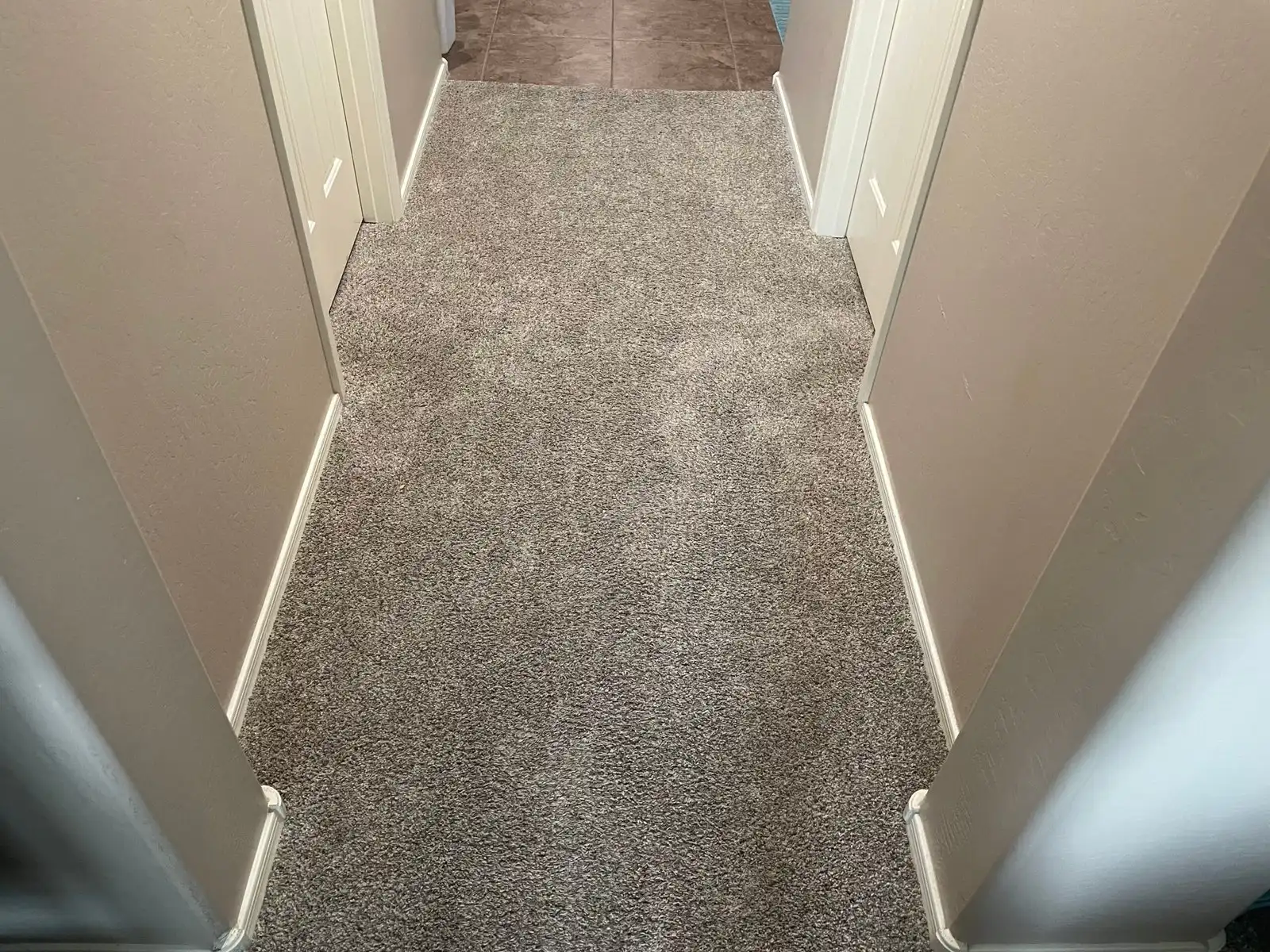
How Hard Floor Particulate Ends Up in the First Inches of Carpet
The soil transfer at a carpet-to-tile threshold is a simple mechanical process that happens with every step and is cumulative in its effect over time. A foot or shoe that is on a tile or LVP surface picks up whatever is sitting on that surface at the point of contact. Tile floors accumulate particulate on their surface between cleaning events, including fine mineral dust from the West Valley desert environment, skin cell material from bare foot contact, fine grit from outdoor shoe contact, and in Litchfield Park homes with cart activity, the carbon and rubber compound residue from golf cart tire transfer.
When that foot or shoe lifts from the tile and steps onto the carpet at the threshold, two things happen. The sole-to-surface contact changes from a smooth hard surface to a yielding fibrous surface, and the change in surface characteristics releases some of the material that was adhering to the sole. At the same time, the pile of the carpet at the threshold physically wipes the bottom of the shoe or foot as it steps in, the same way a doormat wipes shoes, except the carpet is not a doormat and the material being wiped into it accumulates there.
The concentration of this transfer at the first few inches of carpet is the result of the transition geometry. The primary wiping action happens at the moment the foot crosses from hard surface to carpet, which concentrates the deposited material at the transition zone. Someone walking from a bedroom into the hallway is depositing material from their bedroom tile floor onto the hallway carpet at the bedroom threshold with every pass, not at the far end of the hallway.
In a home with four bedrooms, each threshold is an independent transfer point with its own accumulation profile based on how much time the residents spend in that room. The master bedroom threshold in a home where the homeowners walk to and from the bathroom on tile before stepping into the hallway carpet gets the most concentrated transfer, because that transition happens multiple times every morning and evening.
What the Threshold Zone Soil Actually Consists Of
The soil in the first few inches of carpet at a threshold is compositionally different from the soil in the body of the hallway carpet, and that difference affects which cleaning approach addresses it most effectively.
The hallway body soil is primarily traffic soil from normal foot movement through the corridor. This includes the organic components of foot contact, plantar sebaceous oil from bare feet, sweat compounds from sock-covered feet, skin cell material, plus the general airborne dust that settles into any carpet surface. This is the standard hallway carpet soil profile and it responds well to the standard cleaning approach.
The threshold zone soil has all of that plus the hard floor transfer component. In Litchfield Park homes the hard floor transfer is typically a combination of fine mineral grit from the desert environment, skin cell material and skin oil from bare foot contact with the tile, and in cart-active households, the carbon and rubber residue from cart tire contact with the garage floor that has been tracked through the main living areas to the tile adjacent to the bedroom hallway.
The mineral grit component in the threshold soil is the mechanically abrasive element that makes the threshold zone a higher-priority cleaning zone than the hallway body. Fine angular mineral grit embedded in carpet pile at the fiber base cuts against the yarn surface with every step. At the threshold where the mineral grit from the tile surface is continuously being deposited, the carpet fiber is under ongoing abrasion pressure that is not present a foot further into the hallway.
Reading the Visual Pattern Before Any Cleaning Starts
The threshold darkening in Litchfield Park homes has a specific visual signature that is worth knowing how to read before any cleaning starts, because the appearance tells you which soil components are present and how long they have been accumulating.
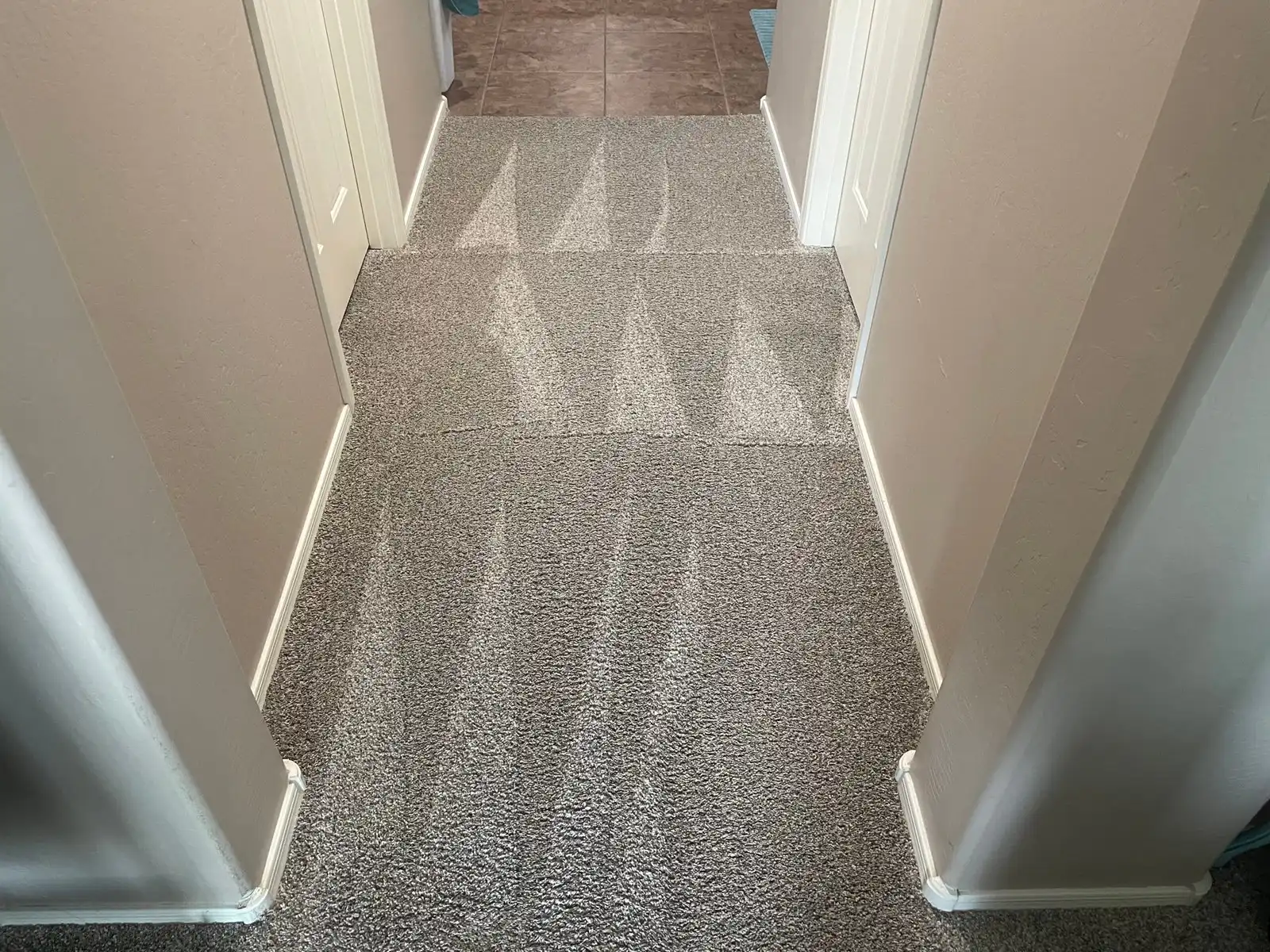
The darkening is concentrated in a band across the full width of the hallway carpet at the transition point, typically the first two to four inches of carpet past the threshold bar or the floor material transition. In heavily trafficked transitions like the master bedroom threshold, this band can be quite distinct, several shades darker than the carpet even a few inches further into the hallway. In lighter-use thresholds like guest rooms, the band is more subtle but still present if you look for it.
A grayish-brown darkening with a slightly gritty texture when you run a hand through the pile against the lay indicates the mineral grit component from hard floor transfer is a significant contributor. A gray darkening with a slightly different visual texture, almost a film-like quality at the fiber surface, indicates the cart-derived rubber and carbon component is present. A brownish darkening with an organic, warmer tone indicates that the primary transfer from the hard floor is organic material from barefoot contact, skin oil and skin cell transfer, more common at transitions from bathroom tile.
How to Read Your Thresholds Before Calling Anyone
Run your hand through the carpet pile at a bedroom threshold, going against the grain. These signals tell you what you are dealing with:
- Gritty resistance and a grayish-brown tone: mineral grit from tile surface transfer, the most common Litchfield Park threshold pattern
- Film-like surface appearance with a slightly gray cast: cart tire rubber residue has reached this threshold through the main floor chain
- Warm brownish tone, smoother feel: organic transfer from bare foot contact on bathroom tile, concentrated at the master bedroom threshold
- All three together: common in an active family household with golf cart use and a high-frequency master bedroom routine
The distinction matters because each component needs a different step in the pre-treatment sequence. A single-chemistry approach addresses one and leaves the others.
The Zone-Specific Approach That Gets Both Right
Cleaning a Litchfield Park hallway with carpet-to-tile threshold zones works best when the threshold zones are treated as a distinct pre-treatment step before the main hallway cleaning proceeds. Applying the same chemistry and the same approach uniformly across the threshold zone and the hallway body treats two different soil profiles identically, which means neither is addressed correctly.
The threshold zone pre-treatment starts with dry extraction specifically in the threshold band. The mineral grit component in threshold soil is mechanically lodged in the pile and needs to be loosened and extracted before moisture is introduced. Adding moisture to a pile full of mineral grit without first loosening it dry creates a temporary paste condition that makes the grit harder to remove. A slow, thorough dry pass at the threshold zone with adequate suction reaches into the pile base where the grit has settled.
After the dry extraction, targeted pre-treatment chemistry at the threshold zone addresses the remaining components. If the threshold soil includes cart-derived rubber and carbon residue, a solvent-compatible component in the pre-treatment addresses that material before the main organic cleaning chemistry goes down. The sequence matters because the solvent component works on the rubber-derived material while it is dry and concentrated at the fiber surface, and applying the water-based organic cleaning chemistry first would dilute the soil and make it harder for the solvent component to reach it.
Extended dwell time at the threshold zones, longer than the dwell time appropriate for the hallway body, gives the pre-treatment chemistry time to work through the compound soil before agitation and extraction. The main hallway cleaning then proceeds from the threshold zones through the body using the standard approach appropriate for the organic traffic soil profile.
Family Homes Near Litchfield Elementary and Western Sky Middle School
The homes in the Litchfield Elementary and Western Sky Middle School neighborhoods represent a significant portion of the family households I clean carpet in throughout Litchfield Park. These are established neighborhoods with school-age children, active daily household routines, and the standard Litchfield Park floor plan of tile main floors with carpeted bedroom hallways.
In a family home in these neighborhoods, the master bedroom threshold gets the most concentrated soil transfer because the parents make that crossing multiple times daily, often barefoot or in socks after showering on bathroom tile. The kids' bedroom thresholds get a different soil profile because children tend to wear shoes more often in the house and because their foot traffic patterns include running, which concentrates more mechanical force at the threshold crossing than an adult walking pace does.
The hallway carpet in a home with school-age children accumulates at a faster rate than in a household without children, not because children are dirtier but because the foot traffic frequency is higher and the soil load per crossing at the threshold is higher during the school year when outdoor activity is at its peak. For an active family home in the elementary and middle school neighborhoods the cleaning interval should lean toward the 8 to 10 month end of the range rather than the 12 to 18 months appropriate for a lower-traffic household.
Weekend outdoor activity near the community parks and green spaces in these neighborhoods means weekend mornings often produce the highest soil load at threshold crossings. The threshold zones at the main entries and bedroom hallway transitions accumulate their heaviest weekly deposits during Saturday and Sunday morning activity cycles in these households.
The Connection Between Threshold Soil and Golf Cart Activity
Cart path grit and tire residue that enters through the garage transfers to the main floor tile through foot contact. The main floor tile then becomes the source for the threshold transfer mechanism. Every bedroom threshold crossing by someone who has walked across the main floor tile since it was last cleaned carries material from the tile surface to the threshold zone carpet. In a home with active cart use, the main floor tile carries a higher mineral grit and rubber residue load between mopping events, and the threshold zone carpet accumulates that material at a proportionally higher rate.
This creates a chain that runs from the golf cart tire on the cart path, to the garage floor, to the main floor tile, to the hallway carpet threshold, all through ordinary foot contact movement through the home. The threshold darkening in a Litchfield Park cart household is typically more pronounced than in a non-cart household with identical floor plans and use patterns, because the main floor tile carries a higher particulate load that transfers to the threshold carpet with every crossing.
Recognizing this chain is part of the pre-cleaning assessment for any Litchfield Park hallway carpet job. A home with active cart use needs the threshold zone pre-treatment to include the solvent component for the rubber-derived residue element, in addition to the mineral grit dry extraction and organic soil chemistry sequence, because all three components are typically present in the threshold soil in that household.
Slowing Threshold Soil Accumulation Between Professional Cleanings
The most effective ongoing prevention for threshold soil accumulation is keeping the tile surface adjacent to the threshold clean between mopping events. The tile floor is the primary source of the material that ends up in the threshold carpet. A quick dry sweep or vacuum of the tile in the bedroom and the tile section immediately outside each bedroom door a few times per week removes the accumulated loose particulate before it gets carried to the threshold carpet on the next foot crossing. This takes about thirty seconds per transition and reduces the transfer rate.
Vacuuming the threshold zone more frequently than the hallway body is a simple maintenance practice that takes almost no extra time. When you vacuum the hallway, make an extra slow pass at each threshold zone with adequate suction to reach into the pile base where the transferred grit settles. Two or three additional slow passes at each threshold per vacuuming session is the difference between surface maintenance and actually interrupting the accumulation cycle.
Keeping the main floor tile mopped on a consistent schedule directly reduces the threshold transfer rate. A tile surface cleaned twice weekly has a lower particulate load available for transfer at any given crossing than one mopped every two weeks. For Litchfield Park households with active cart use where the main floor tile carries a higher particulate load, a more frequent tile cleaning schedule has a direct positive effect on the hallway carpet threshold condition.
Learn more about our hallway carpet cleaning, or explore other cleaning services we offer in Litchfield Park.

 (602) 429-9602