The Sources of Etching Damage in Goodyear Homes
Acid etching on indoor natural stone in Goodyear homes comes from several specific sources, some from cleaning products and some from household acids that contact the stone during normal use. Cleaning product etching is the most common cause of stone surface damage in residential settings. Bathroom cleaners, tile sprays, grout cleaners, and multi-surface cleaners that are safe and effective on ceramic tile are frequently acidic formulations, including citric acid-based, phosphoric acid-based, or vinegar-based products. Applied to a marble or travertine surface in a Goodyear bathroom or kitchen, these products produce etching at the application zone.
Food and drink acid etching occurs on natural stone kitchen surfaces, shower ledges, and bathroom vanity surfaces where citrus juices, vinegar, wine, soft drinks, and other acidic substances contact the stone surface. In Goodyear family homes with young children, the beverage and snack contact on stone surfaces is frequent. Orange juice, apple juice, and lemonade are all acidic enough to produce etching on polished marble or travertine if left in contact with the surface. In Goodyear's warm home environment where spills evaporate faster than in cooler climates, the acid concentration in an evaporating spill increases as the water evaporates, which intensifies the etching effect. The etch from food acid contact is typically localized to the contact zone and is often ring-shaped where a glass or bottle sat on the stone.
What Professional Cleaning Achieves and What It Does Not
Professional cleaning removes surface soil from natural stone effectively. The accumulated desert particulate from Goodyear's Estrella Mountain environment, the body oil and soap scum from bathroom stone surfaces, the cooking residue from kitchen stone backsplashes: all of these surface deposits respond to professional cleaning with pH-neutral stone-appropriate chemistry and thorough extraction. After professional cleaning of a soiled stone surface in good physical condition, the stone looks significantly better. The natural color and pattern are visible without the opacity of accumulated soil, and the surface has its natural reflective quality where the polish is intact.
Professional cleaning does not address etching. If the hazy, dull areas on a stone surface are etch damage rather than surface soil, cleaning will not improve them. Cleaning a dull surface that is actually an etch mark makes no visible difference because there is no soil to remove: the dullness is in the stone surface itself. Professional cleaning also does not re-seal stone. Cleaning and sealing are separate processes. Cleaning removes surface deposits; sealing fills the stone pore structure with a penetrating sealer that prevents future staining and liquid penetration. Sealing is recommended after cleaning, when the stone surface is at its cleanest and the pore structure is most receptive to the sealer chemistry. When the primary condition present is etch damage rather than surface soil, the honest assessment includes a referral to a stone restoration specialist.
Grout Care in Natural Stone Tile Installations
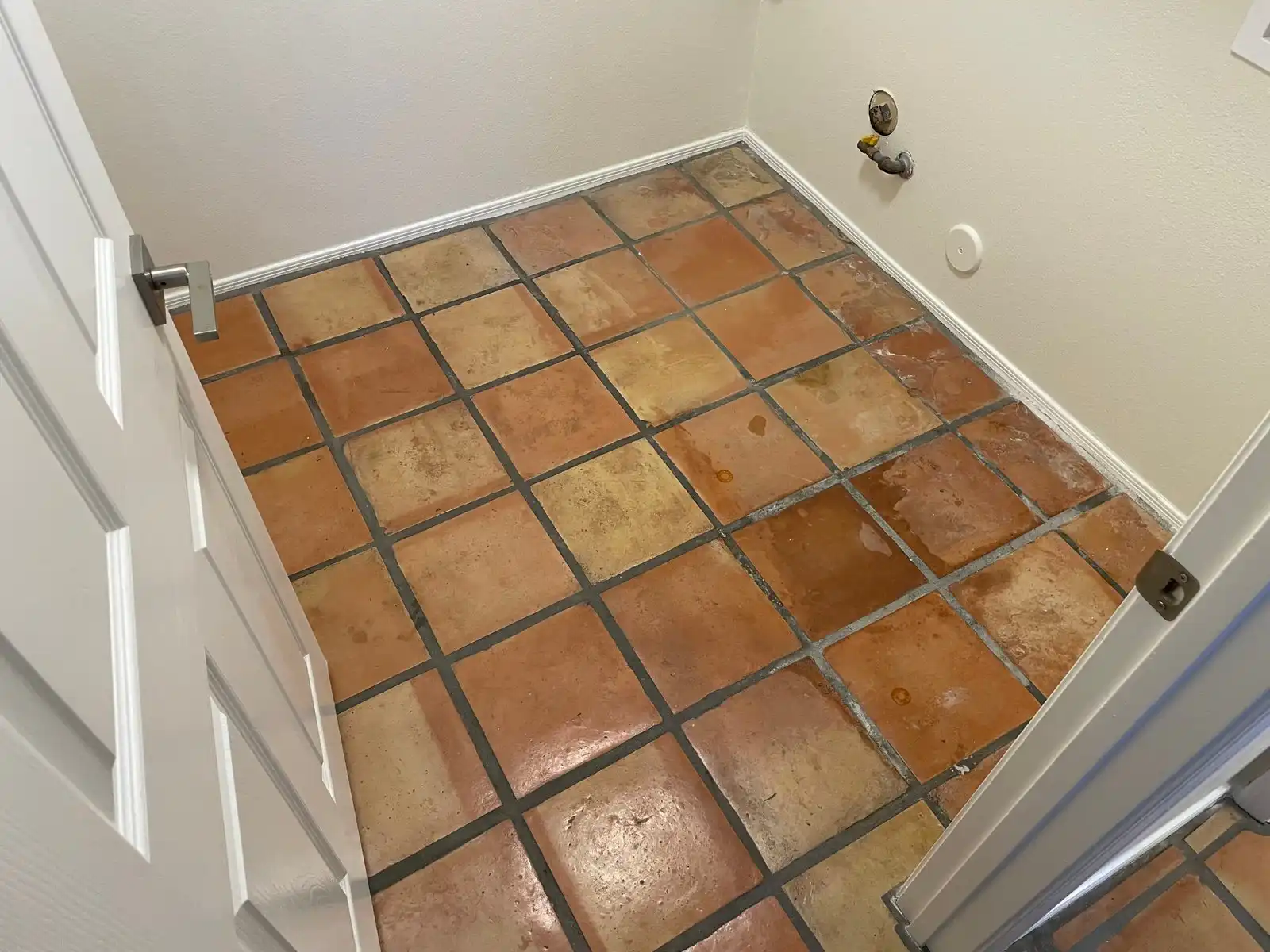
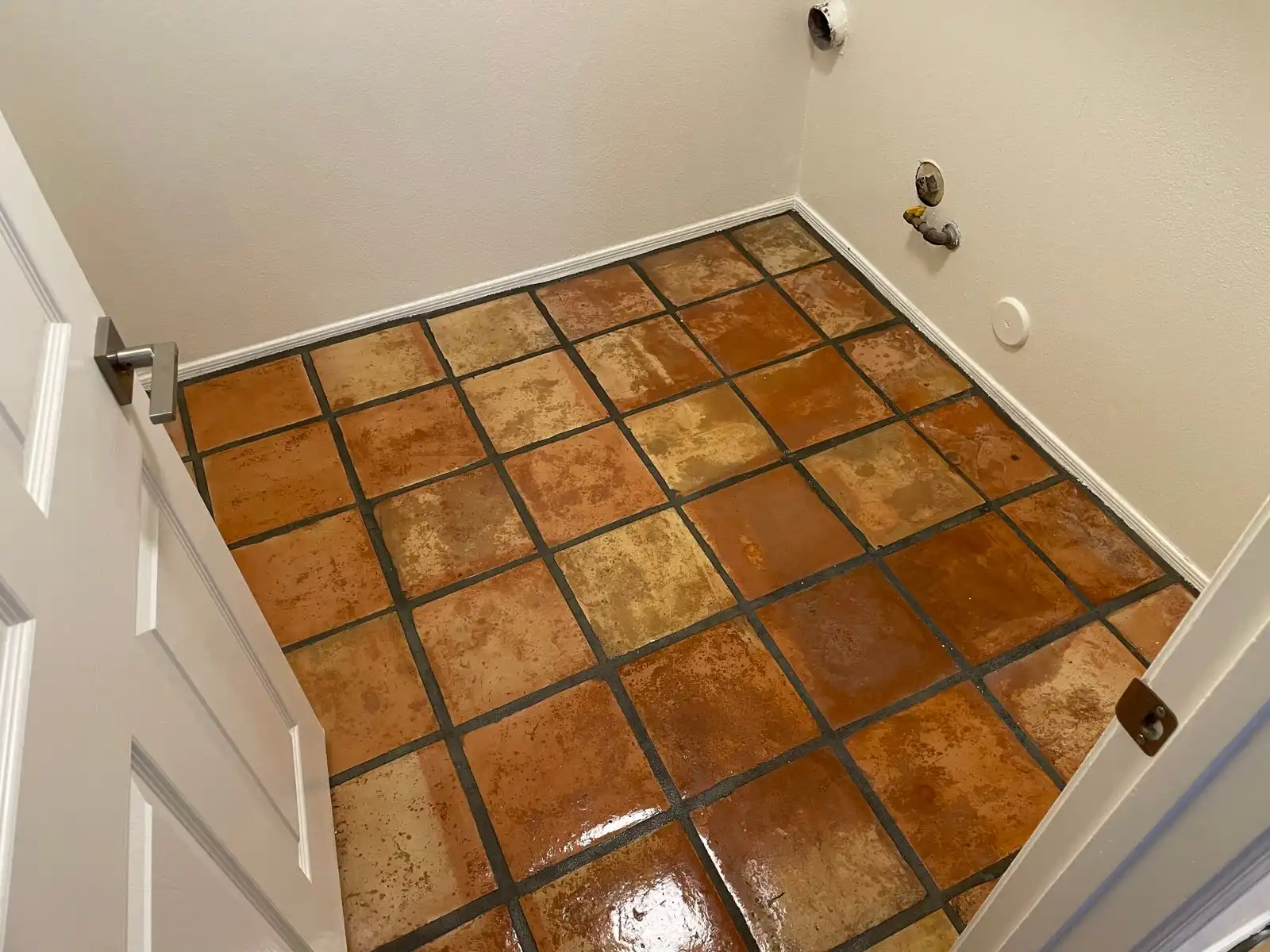
The grout lines in a natural stone tile installation present a specific cleaning challenge because the grout needs cleaning and the stone needs protection from the chemistry that cleans grout effectively on ceramic installations. The grout in a natural stone installation is typically standard cement-based grout: the same porous compound that accumulates soap scum, body oil, and soil. The cleaning challenge is that effective grout cleaning must be applied in a way that minimizes contact between the cleaning chemistry and the natural stone tile surfaces adjacent to the grout lines.
pH-neutral stone-specific grout cleaners address grout darkening without the acid risk to adjacent stone. These formulations use surfactant and enzyme chemistry that breaks down organic soil and soap scum deposits in grout without the acid component that would etch natural stone surfaces. The limitation is that pH-neutral grout cleaners are less aggressive than acid-based grout cleaners: they address organic soil and light mineral deposits effectively but may be less effective on heavily set grout staining that acid chemistry would address more thoroughly in a ceramic tile installation. Mechanical agitation is applied specifically in the grout channel with a small soft-bristle grout brush rather than a wide agitation tool that would contact the stone surface.
The Three Tests That Identify Which Intervention the Stone Needs
The water absorption test: place a few drops of water on the stone and wait 5 minutes. If the water absorbs into the stone rather than beading on the surface, the sealer is depleted and resealing is needed. The cleaning response test: clean a small test area with pH-neutral stone cleaner and assess whether the appearance improves. If it does, the primary condition is surface soil that cleaning addresses. If it does not improve, the dullness is likely etching rather than soil. The raking light test: hold a torch at a low angle across the stone surface in a darkened area. Scratching and etching show as localized surface geometry changes in the raking light that soil alone does not produce. These three tests together identify the primary condition and the appropriate intervention before any chemistry is applied to the full surface.
Protecting Natural Stone in an Active Goodyear Family Home
The single most important daily maintenance rule for natural stone: never use any cleaning product without confirming it is pH-neutral and stone-safe. This means reading product labels before use, not just assuming a general tile cleaner is safe because it is marketed for bathroom or kitchen use. Products that state they are for ceramic and porcelain specifically, that mention acid-based cleaning, or that claim to remove mineral deposits or hard water scale should not be used on natural stone. The only cleaning chemistry for routine natural stone maintenance is a pH-neutral stone-specific cleaner or plain warm water.
Immediate response to food and beverage spills is critical for preventing etching from household acids. In Goodyear family homes with young children, the primary demographic in Canyon Trails and the Estrella communities, juice spills and citrus contact on stone surfaces are a daily reality. The stone sealer provides a brief window for spill response before the acid contacts the stone surface directly. Blotting spills immediately and rinsing the contact zone with plain water before the acid can etch through the sealer protects the stone from the food acid etching that is common on residential natural stone. Felt pads under all objects placed on stone surfaces prevent scratching from hard-based objects being slid across the stone: the stone sealer protects against liquid penetration but does not protect against mechanical scratching.
Learn more about our tile and grout cleaning services, or explore other cleaning services we offer in Goodyear.
 (602) 429-9602