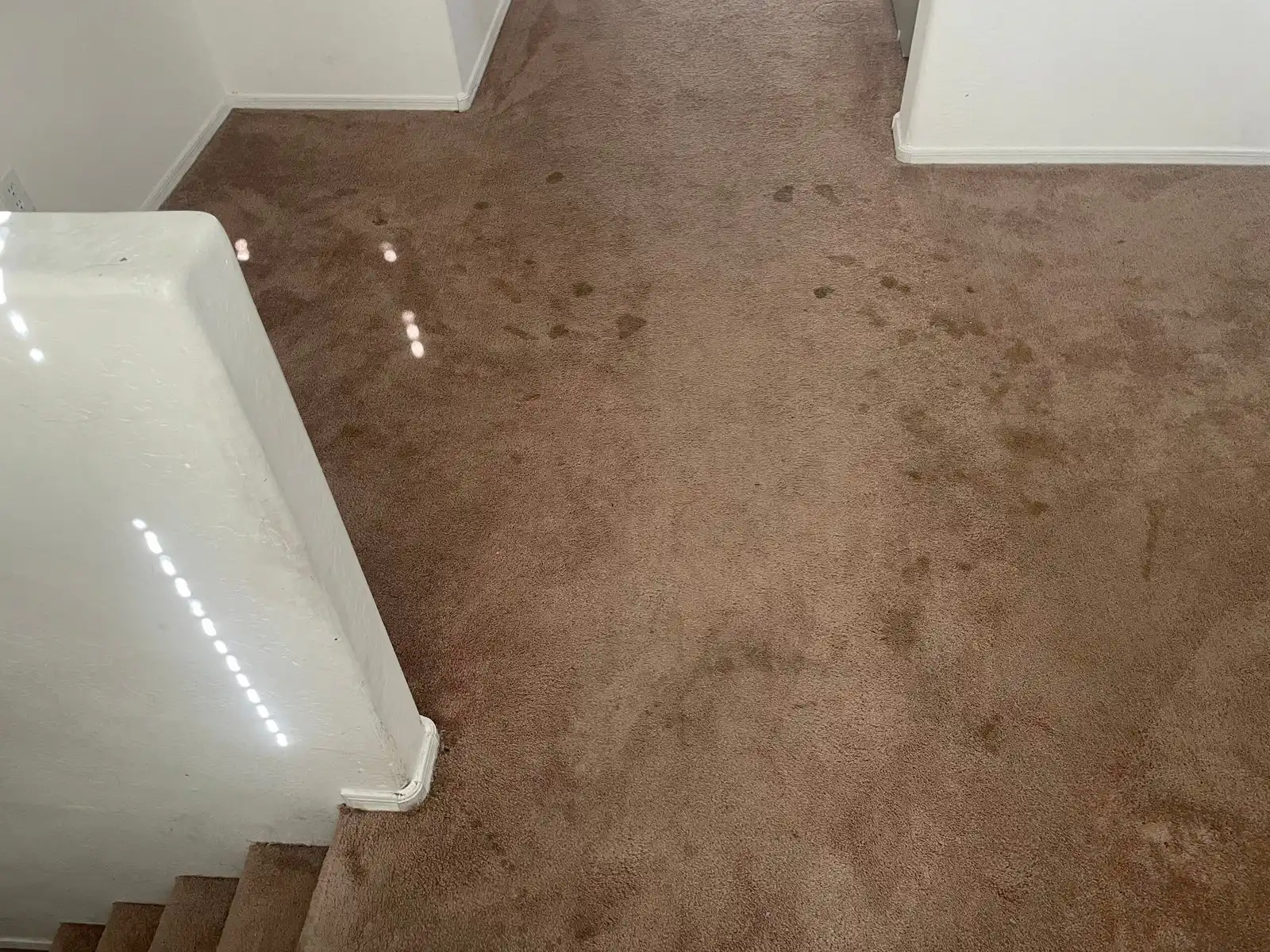
Where Dog Traffic Concentrates in a Goodyear Home
Human traffic patterns follow the architecture of the home. People walk from the bedroom to the bathroom, from the hallway to the kitchen, and through doorways along the practical routes between rooms. Dog traffic patterns follow the dog's daily routine instead, organized around sleeping spots, food bowl locations, and back door access. A dog that sleeps in the master bedroom and eats in the kitchen travels the same route dozens of times per day, often cutting diagonally across rooms or taking paths that human traffic does not follow.
The back door access zone is typically the most concentrated dog traffic carpet area in a Goodyear home. Dogs travel to the back door multiple times daily and return from outdoor surfaces through the same entry point each time. The carpet within 10 to 15 feet of the back door receives concentrated paw contact from dogs returning with desert dust, yard soil, and the mineral particulate of Goodyear's Estrella Mountain environment. This zone develops a heavy accumulation of bonded mineral particulate alongside the organic paw pad deposits, and it benefits from the most intensive pre-treatment attention in the cleaning process.
In Goodyear's typical two-story home configuration, dogs with stair access develop a concentrated traffic path at the base of the stairs where they transition between floors. This stair base zone receives paw contact from every descent, creating a deposit concentration that human family members may not walk through at the same frequency.
Pool Households and the Additional Paw Pad Layer
Approximately 40 to 50 percent of Goodyear homes have pools, and dogs with pool access bring both the standard outdoor paw pad soil and additional pool-related deposits. Pool water carries chlorine and other treatment compounds on wet paw pads. Pool deck surfaces shed fine mineral material that adheres very effectively to wet paws and then transfers to carpet. The back door carpet zone in a Goodyear pool household with dog access carries pool deck particulate, pool water treatment compounds, and the standard paw pad organic soil all at once. That combination benefits from the most consistent between-cleaning paw wiping routine and the most intensive treatment at each cleaning appointment.
Spring and early summer in Goodyear adds pollen and fine biological material from desert plant species to the outdoor mix. Dogs collect this on their paws and coats during outdoor activity. Spring pollen in carpet fiber requires specific chemistry that the standard mineral particulate approach does not fully address, which is another reason the enzyme pre-treatment step matters for Goodyear dog households.
The Enzyme Cleaning Sequence for Dog-Traffic Carpet
Pre-cleaning dog traffic pattern mapping identifies the specific zones of concentrated dog traffic before any chemistry is applied. Walking the carpet with attention to where the darkest, most soil-loaded areas are, and noting whether those zones match the human traffic pattern or follow a different route, reveals the dog traffic lanes and the outdoor entry zones that need the most intensive pre-treatment. In Goodyear homes with back door carpet access, the zone within 10 to 15 feet of that door almost always needs specific identification as a primary treatment zone regardless of how it looks to the eye, because the paw pad deposits there are often bonded below the visible surface layer.
Enzyme pre-treatment is applied to the identified dog traffic zones with a dwell time of 10 to 15 minutes. This longer dwell is necessary because the paw pad deposits in established dog traffic zones have bonded to fiber surfaces over many months of accumulation. Protease enzymes break down the protein compounds in paw pad sweat. Lipase enzymes break down the lipid compounds from interdigital sebaceous glands. Neither standard surfactant cleaning chemistry nor a short dwell enzyme product addresses the bonded organic compound layer in the way a full dwell enzyme treatment does.
Standard encapsulation cleaning chemistry follows the enzyme pre-treatment. This sequence matters: enzyme first for the biological organic component, then encapsulation for the mineral particulate and general surface soil. Applying them in reverse order or simultaneously reduces the effectiveness of both. Thorough extraction at the dog traffic zones, with multiple passes at the back door entry zone and the primary dog lane concentrations, removes the dissolved organic compounds and prevents residual material from wicking back to the surface during drying.
Included at Every Goodyear Pet Household Appointment
Dog traffic pattern mapping before cleaning, enzyme pre-treatment at identified pet household zones, and multiple extraction passes at concentrated dog lanes are all included at no additional charge. The traffic mapping step ensures enzyme pre-treatment is concentrated where the dog soil is actually heaviest, not applied uniformly across all carpet.
What Cleaning Can and Cannot Achieve in Dog-Traffic Carpet
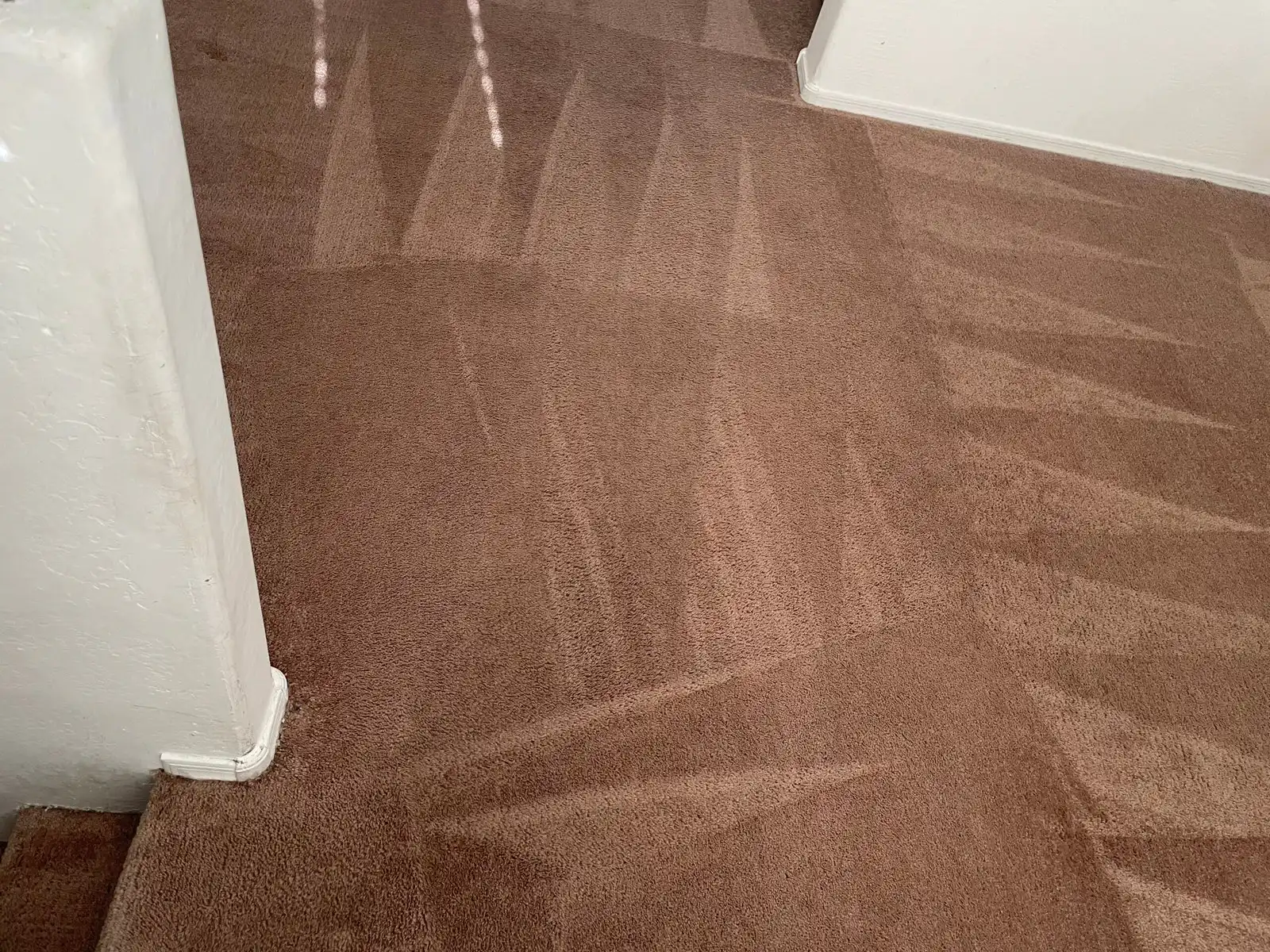
Dog-traffic carpet that has been professionally cleaned within the past 12 months and is being maintained at an appropriate interval responds very well to enzyme treatment and encapsulation cleaning. The paw pad organic deposits have not had extended time to fully bond to fiber surfaces, and thorough extraction produces clean results in the traffic zones that match the surrounding carpet. The dog traffic lanes are not visually prominent in the post-cleaning carpet.
Carpet that has not been professionally cleaned for two or more years, or that has never received enzyme-specific treatment, has developed a more bonded compound soil layer. Professional cleaning at this accumulation stage produces meaningful improvement, but the most deeply bonded paw pad organic compounds may require a second treatment cycle for complete resolution. The honest expectation for heavy accumulation is very good improvement rather than complete restoration in a single cleaning.
Carpet where the dog traffic lanes have received years of repeated paw contact alongside abrasive desert mineral particulate may show permanent fiber surface damage in the most concentrated zones. The micro-abrasive action of Estrella Mountain mineral particulate being ground into fiber under repeated paw pressure progressively damages the fiber surface in those areas. This physical change is not addressable by cleaning. It is structural, and it produces a subtle appearance difference from the surrounding undamaged carpet that persists after cleaning. Maintaining a regular cleaning interval is the most effective way to prevent this abrasive process from advancing.
Learn more about our carpet cleaning services, or explore other cleaning services we offer in Goodyear.

 (602) 429-9602