How Multi-Directional Traffic Creates the Center-vs-Edge Condition
In a hallway or narrow room, foot traffic follows a defined directional path. The fibers are repeatedly compressed along the same axis, producing the characteristic dark lanes described in the Avondale carpet page. In an open-concept living space, foot traffic approaches the rug from all directions and crosses it at constantly varying angles. The pile in the high-traffic central zone becomes uniformly flat rather than compressed in any specific direction -- individual fibers pushed in different directions develop a chaotic, matted orientation at the base that no longer has the organized upright structure of undisturbed pile.
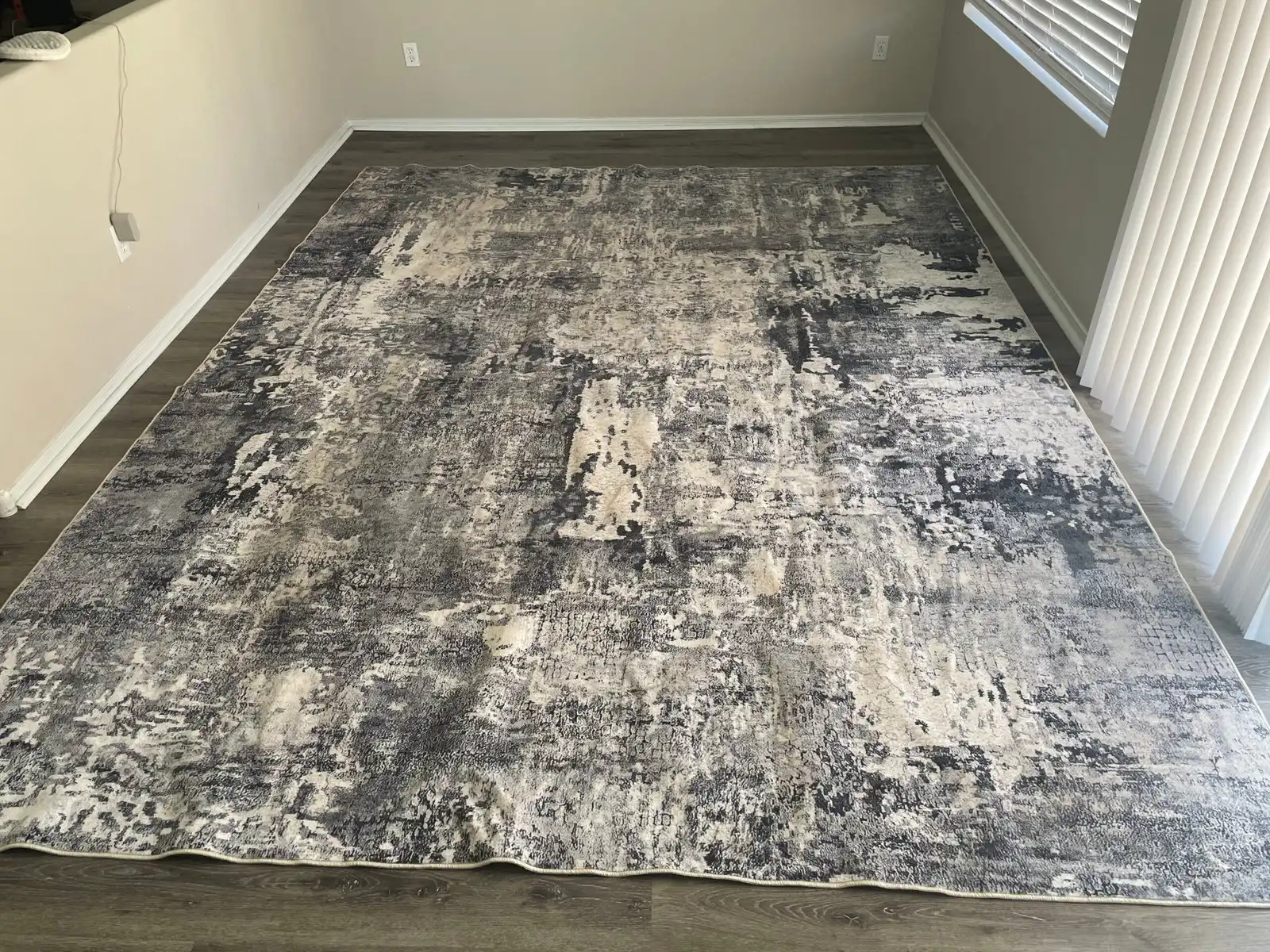
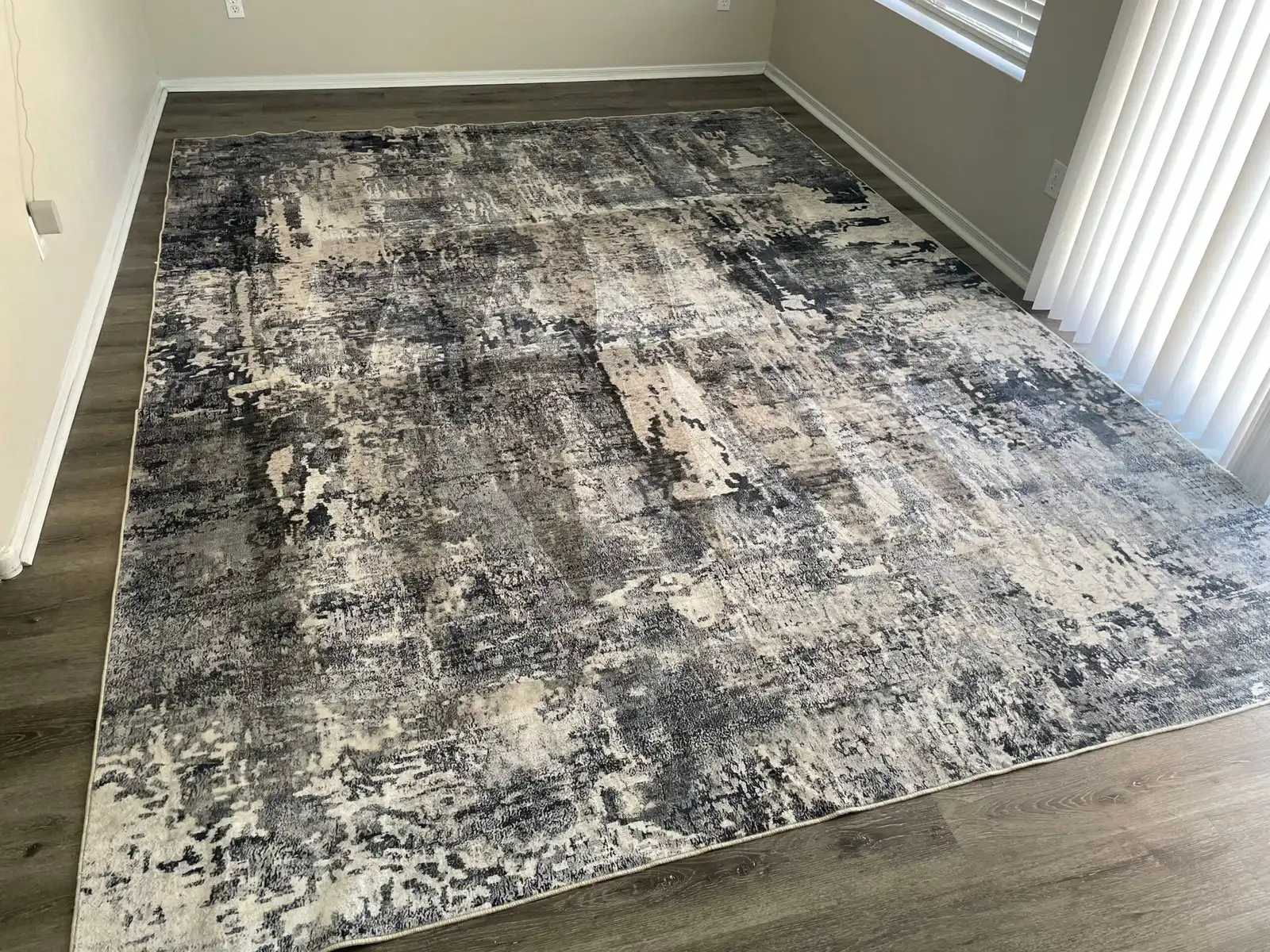
The edges of a large area rug in an open-concept space are in significantly better condition than the center. Traffic rarely reaches the outer 6 to 10 inches of a large rug. The pile at the rug edge retains its original upright, textured character because it has not been subjected to the multi-directional compression loading of the central zone. This edge-versus-center condition difference is the signature visual characteristic of open-concept traffic compression on large area rugs in Goodyear homes.
Goodyear Home Layouts and Where Compression Concentrates
Goodyear's newer home construction -- the approximately 10-year-old homes throughout the established neighborhoods and the new builds in areas near Sarival Gardens and Estrella Vista - predominantly features open-plan main floor layouts. The kitchen-to-living room crossing is the highest-frequency path, happening dozens of times daily at varying angles. The back door to living area path is the second most active, particularly in the active dog households common throughout the city. In two-story home configurations, the stair base delivers family members directly toward the open-concept rug, creating a defined compression entry point at a specific edge location.
Recovery Expectations by Compression Stage
Early-stage compression - noticeable central zone pile height difference but fiber still in reasonable structural condition -- responds very well to professional cleaning with moisture-assisted grooming. The pile recovers to close to the original height after a single cleaning with appropriate grooming, and the visual difference between center and edge is substantially reduced. This is the most common outcome for large Goodyear living area rugs cleaned at annual or semi-annual intervals.
Moderate-stage compression recovers meaningfully but less completely than early-stage. The cleaning and grooming produces visible improvement, less matting, more vibrant color, but the fiber in the compressed zone does not return fully to its original upright height. A second cleaning cycle at the next appointment produces additional improvement as the fiber continues to respond to moisture-assisted recovery over multiple cycles.
Advanced-stage compression - where the pile fiber has developed permanent compression set from extended sustained multi-directional traffic loading - has limited structural recovery potential. Cleaning removes the soil and improves the color vibrancy, but the fiber orientation cannot be meaningfully restored by grooming because the polymer structure has taken a permanent set. For advanced compression, the honest recommendation is that cleaning maintains the rug in its best achievable condition while rotation habits going forward redistribute the traffic load.
The Cleaning and Grooming Process
When I clean a large area rug with open-concept traffic compression in a Goodyear home, the process integrates soil removal and texture recovery as two complementary goals. Pre-cleaning assessment maps the compression zone and evaluates the pile type and fiber for recovery potential - this takes five minutes and produces the outcome conversation before any cleaning begins.
Dry pre-extraction of the full rug surface - with specific attention to the compressed central zone where soil concentration is highest - removes loose particulate before moisture is introduced. This step is particularly important for Goodyear rugs in dog households where paw pad organic compounds are mixed with desert mineral particulate. Introducing moisture before dry extraction creates a mineral paste in the pile rather than allowing particulate to be suspended for extraction.
Post-extraction grooming at the compression zones while the pile is at maximum moisture content works the compressed fibers toward their upright orientation using a firm pile brush or grooming tool. The grooming direction works against the compression, lifting fibers toward upright rather than following the compressed lay. Multiple passes from different directions address the multi-directional nature of the open-concept compression. In Goodyear's dry desert climate, moisture evaporates quickly and helps the pile set in the groomed position.
Included at Every Goodyear Area Rug Appointment
Traffic compression zone assessment, moisture-assisted pile grooming for compression recovery, and post-cleaning rotation assistance are all included at no additional charge. No add-on fees for the steps that matter most.
Slowing Compression Between Professional Cleanings
Rug rotation is the single most effective compression management measure. Rotating the rug 180 degrees every 6 months moves the previously highest-traffic central zone to a different position relative to the room's traffic flows, distributing the compression load more evenly over time. The most convenient time to rotate is at the professional cleaning appointment - the rug is moved for cleaning anyway, making it the natural opportunity to reposition it in the rotated orientation.
Furniture arrangement can redirect primary crossing traffic away from the rug's most vulnerable central zones. In some Goodyear living room configurations, placing a coffee table or ottoman in the central zone limits direct foot traffic across that area. Regular pile lifting in the high-traffic crossing zones - running a wide-tooth comb or carpet rake through the central zone weekly - disrupts early-stage compression before it becomes moderate-stage. This takes 2 to 3 minutes after vacuuming and meaningfully slows the rate at which visible matting develops.
Learn more about our area rug cleaning services, or explore other cleaning services we offer in Goodyear.

 (602) 429-9602