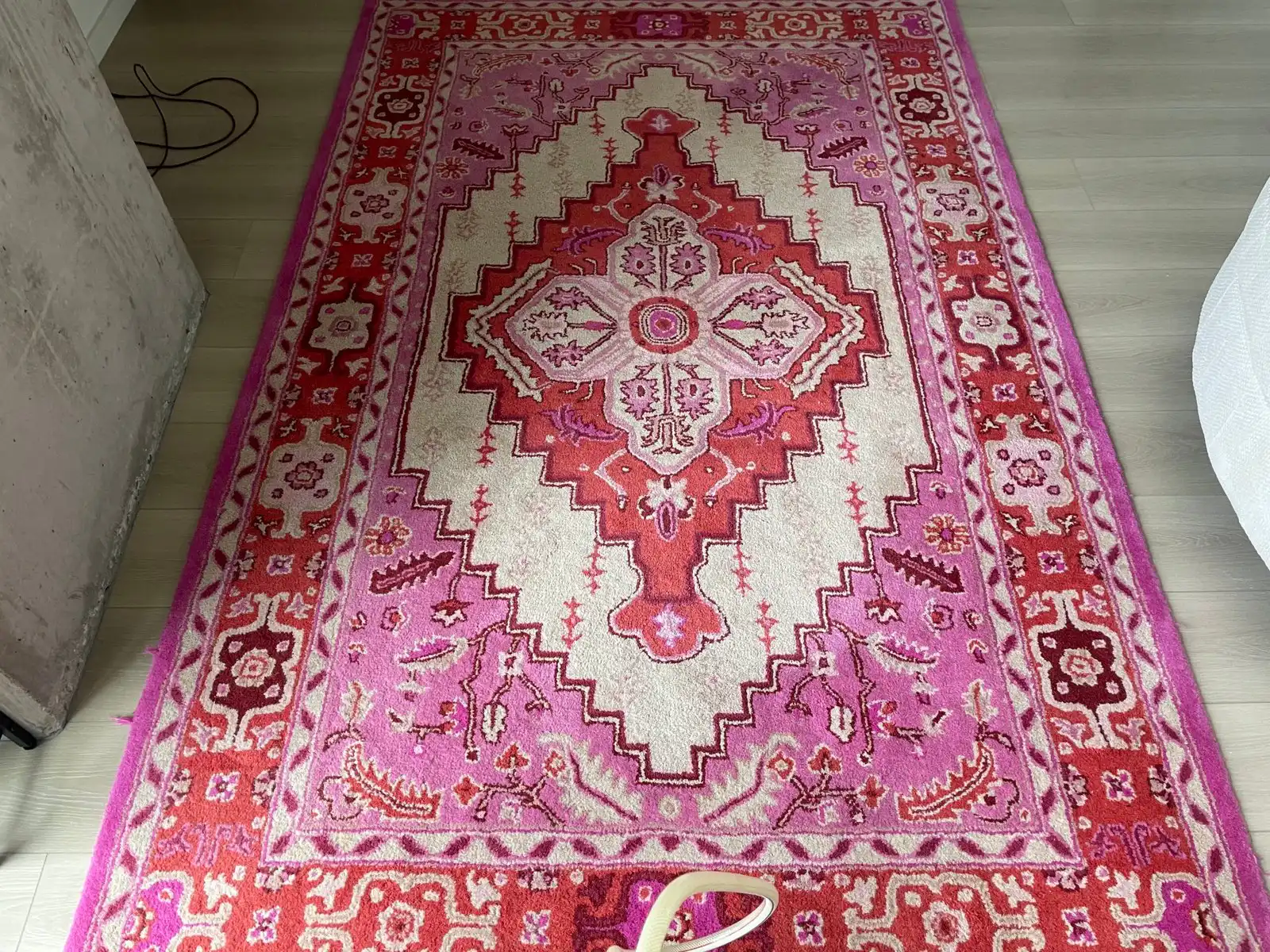
Home Treatment Mistakes That Make Wool Stains Permanent
The most damaging wool rug stain outcomes in Goodyear family homes are not from the stains themselves but from treatment attempts using approaches appropriate for synthetic rugs that cause permanent changes to the wool fiber. Alkaline cleaning products applied to wool produce several problems. Most household multi-surface cleaners, kitchen cleaners, and standard carpet and upholstery cleaners are alkaline at pH 8 or above. Applied to tannin stains on wool, alkaline chemistry can oxidize the tannin to produce a more intensely colored and permanently set compound. Applied to protein stains on wool, alkaline chemistry disrupts the wool fiber protein structure itself, producing swelling, color shift, and potential felting at the stain zone. The correct chemistry for wool stain treatment is pH-neutral to mildly acidic.
Vigorous scrubbing at the stain zone produces mechanical stress on wool fiber scales that can cause localized felting at the stain area: exactly the irreversible matting that makes the treated zone look permanently different from surrounding pile. Wool fiber scales are microscopic overlapping structures that, under friction and moisture, interlock with adjacent fiber scales. Scrubbing a wet wool stain zone applies both friction and moisture simultaneously. The correct physical approach is gentle blotting: pressing a clean cloth against the stain and lifting rather than moving the cloth across the fiber surface.
Standard enzyme cleaners sold for general carpet and upholstery use are frequently not wool-safe. These formulations contain protease enzymes at concentrations appropriate for breaking down protein stains on synthetic fiber. On wool, protease enzymes do not selectively target the stain protein: they can also act on the wool fiber protein itself. Wool-safe enzyme products are specifically formulated with enzyme concentrations and pH levels that are effective on protein stains while being safe for protein fiber. If a product label does not specifically state that it is safe for wool or natural fiber, do not use it on a wool rug.
The Professional Treatment Sequence
When I treat food stains on a wool rug in a Goodyear home, the process begins with stain type identification and fiber condition assessment before any chemistry is applied. Tannin stains from juice and fruit contact have a characteristic appearance: tan to brown with reddish undertones for berry tannins, yellow-brown for apple or grape tannins. Protein stains from dairy have a white to cream character when fresh and a slightly yellowish set character when dry. Sugar residue stains are often invisible until caramelization has produced discoloration. The homeowner's knowledge of what caused the stain is the most reliable identification source.
Fiber condition assessment at the stain zone checks whether any previous treatment attempts have produced fiber damage. A zone that has been scrubbed shows pile disturbance or localized felting. A zone that has had alkaline cleaner applied may show slight color shift or fiber stiffening at the treatment area. These pre-existing treatment effects shape the expectations for the professional treatment outcome: damage from previous wrong-chemistry treatment is not fully reversible. Chemistry selection is specific to the identified stain type: mildly acidic tannin remover for tannin stains, wool-safe enzyme solution at cool temperature for protein stains, reducing agent or mild acid for set caramelized sugar stains. All chemistry is tested on a concealed area of the rug for dye stability before application to the stain zone.
The Caramelized Sugar Timeline Is Specific to Goodyear
A sugary spill on a sun-exposed rug zone in a Goodyear home that is not addressed the same day may have already received enough sun-generated heat to begin the caramelization process. In Goodyear's sun-intensive West Valley environment, the gentle heating through south- and west-facing windows is more intense than in most other climates. A sugar residue that would take months to visibly caramelize in a northern climate may develop visible discoloration within weeks in a Goodyear home. Rotating the rug every six months distributes the sun exposure across the full rug surface and ensures no single zone is continuously in the highest sun exposure position, reducing the heat intensity experienced by any sugar residue that may be present in the pile from unnoticed spills.
What to Do at Home Before Professional Cleaning
For any food spill on wool, follow this sequence. First, blot immediately with a clean dry white cloth using press-and-lift technique rather than wiping or scrubbing. Remove as much of the spill material as possible while it is still wet. Second, apply a small amount of cool water to the stain zone and blot again, still cool and still press-and-lift. For juice and fruit spills, a small amount of dilute white vinegar solution after the initial cool water blot interrupts tannin bonding before it progresses. For milk or dairy spills, cool water blotting only: no enzyme cleaner, no warm water. For sugary spills, cool water blotting and then keep the rug zone out of direct sun until professional treatment can address any remaining sugar residue.
Wool-safe fabric protection applied after professional cleaning creates a surface treatment on the wool fiber that slows the penetration of liquid stains and provides a brief window for blotting before the stain compounds contact the bare fiber surface. Wool-compatible fabric protectors use chemistry formulated specifically for protein fiber, not the fluoropolymer treatments designed for synthetic fiber. Applied professionally after cleaning, wool-compatible protection reduces the urgency of stain response without eliminating the need for prompt blotting.
Learn more about our wool rug cleaning services, or explore other cleaning services we offer in Goodyear.
 (602) 429-9602