What Eccrine Sweat Actually Deposits in the Fabric
Eccrine sweat is the primary temperature-regulating sweat from eccrine glands distributed across the human skin surface. It is approximately 99 percent water with a dissolved content of sodium chloride, lactic acid, urea, amino acids, and trace minerals including potassium, magnesium, and calcium. When eccrine sweat deposits in recliner fabric and the water evaporates in Goodyear's dry desert air, these dissolved compounds concentrate and eventually crystallize or remain as residues in the fabric fiber.
Sodium chloride is the most abundant dissolved compound and the one responsible for the hygroscopic behavior. Sodium chloride crystals absorb moisture from the surrounding air when ambient humidity rises above approximately 75 percent and release that moisture as humidity drops. In Goodyear, ambient humidity oscillates dramatically: very low during the dry winter and spring months, significantly higher during monsoon season from July through September. Sodium chloride deposits in recliner fabric cycle through absorption and release phases as the humidity changes, keeping the fabric in the primary contact zones in a state of periodic elevated moisture that is not present in fabrics without salt deposits.
Lactic acid, the second significant eccrine sweat compound, contributes a mildly acidic pH environment at the primary contact zones when it concentrates in the fabric fiber after sweat evaporation. Urea, the metabolic waste product excreted in sweat, contributes a specific odor profile. Bacterial metabolism of urea in the fabric fiber produces ammonia: the same breakdown product that aged urine produces, but at much lower concentration from the far smaller urea content of sweat relative to urine.
How to Distinguish Salt Deposits From Body Oil in Your Recliner
Correctly identifying whether the primary soil in a Goodyear recliner's contact zones is sweat salt deposits, sebaceous body oil, or a combination of both shapes the cleaning chemistry selection. The distinguishing indicators are specific and identifiable with a brief pre-cleaning assessment.
The tactile test distinguishes the two deposit types. Lightly dampen a finger with clean water and press it against the primary contact zone fabric for a few seconds, then lift and assess. Oil-loaded fabric leaves a slight oily residue on the fingertip. Salt-loaded fabric feels slightly sticky or slightly cool to the dampened fingertip as the salt draws moisture from it rather than depositing oil. A mixed deposit produces both a slightly oily and slightly tacky tactile result.
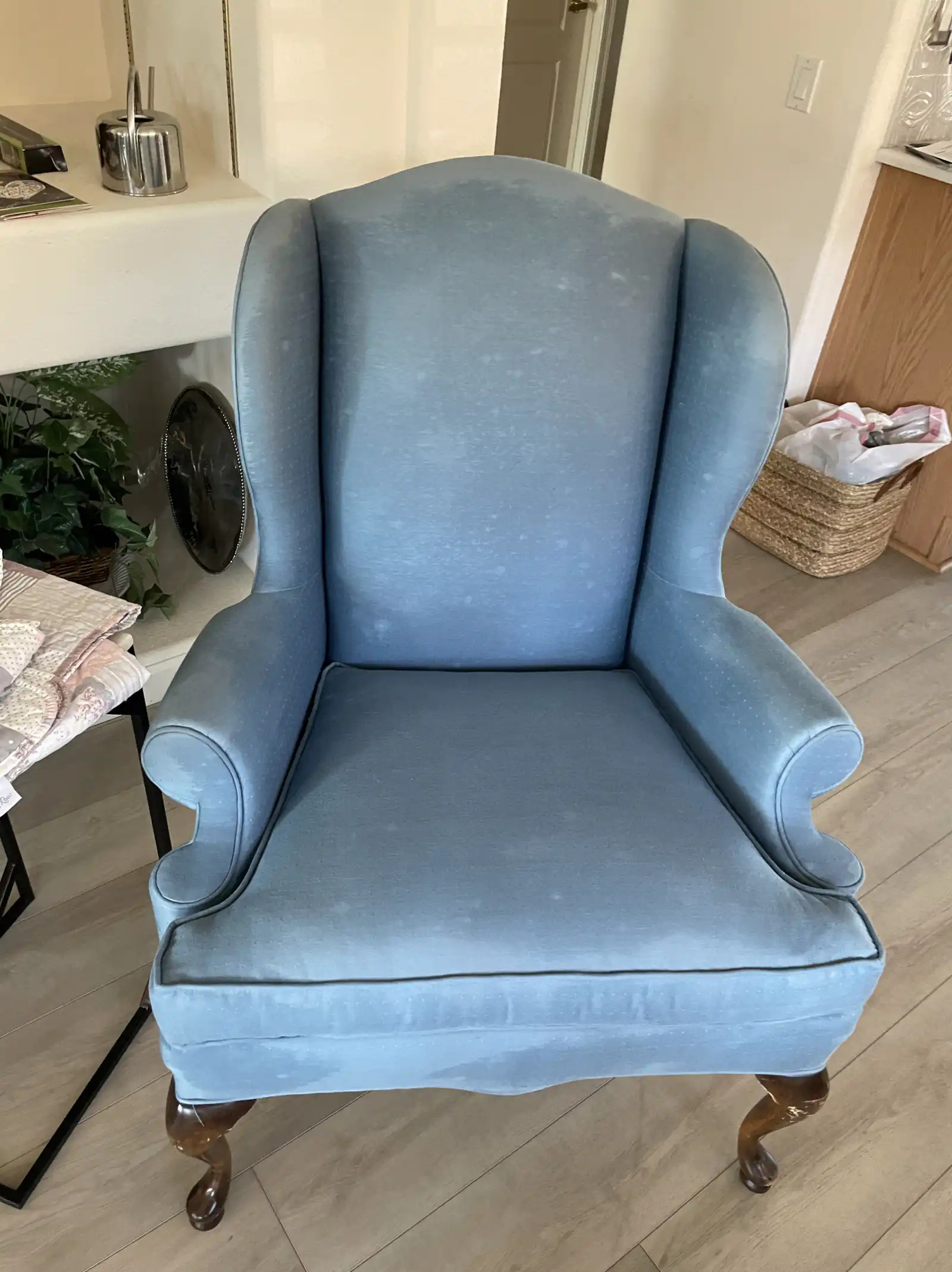
The humidity response test provides seasonal context. If the recliner feels more damp or tacky during Goodyear's monsoon months and drier in the winter months, hygroscopic salt deposits are contributing to the moisture cycling behavior. Body oil does not produce this seasonal variation. The water response test provides additional confirmation: oil-loaded fabric resists moisture absorption because the oil film creates a hydrophobic surface, while salt-loaded fabric accepts moisture rapidly as the hygroscopic salt draws the water in immediately. The visual signature in raking light also differs: oil produces smooth darkening, while salt deposits produce a slightly mottled or irregular darkening pattern from the crystallization and rehydration cycles redistributing the deposit unevenly.
Why Salt and Oil Require a Specific Sequence
The distinction between eccrine sweat salt deposits and sebaceous body oil matters because they require different chemistry and because treating only one while leaving the other produces incomplete results. Sebaceous body oil is a lipid compound that requires degreaser chemistry. Eccrine sweat salt deposits are mineral and organic compounds in a water-based matrix: sodium chloride, lactic acid, urea, and amino acids that dissolve readily in water and can be re-dissolved and extracted. Degreaser chemistry is not specifically helpful for mineral salt deposits.
A recliner in a Goodyear household typically has both deposit types in the primary contact zones. Water-based chemistry applied first re-dissolves the salt deposits and allows extraction to remove the mineral and organic compounds. Degreasing chemistry applied second addresses the lipid oil layer that remains after salt removal. Applying degreaser first before salt extraction creates a situation where the oil-removal chemistry is working through a salt-laden fabric environment rather than clean fiber contact.
Pre-Monsoon Timing Is the Ideal Cleaning Window
Scheduling recliner cleaning in late spring or early summer, before Goodyear's monsoon season arrives, removes the salt deposits that have accumulated through the warm spring season before they begin their July through September hygroscopic cycling phase. This timing produces the best outcome because the salt deposits are in their dry crystalline state and most accessible to water pre-rinse and extraction. The cleaned fabric enters the monsoon season without the established salt deposits that would otherwise drive accelerated soil attraction during the humidity spike. Pre-monsoon cleaning is the most strategically effective timing for Goodyear recliner maintenance.
The Cleaning Sequence for Sweat Salt Deposits
Dry pre-extraction of the full recliner surface removes loose surface particulate before moisture is introduced. For salt-deposit recliners in Goodyear, this step is particularly important because the hygroscopic cycling of salt deposits through the monsoon and dry seasons progressively attracts and binds Estrella Mountain particulate to the contact zones. The dry particulate load in established salt-deposit zones may be higher than in equivalent zones without salt deposits.
Water-based pre-rinse applied to the primary contact zones re-dissolves the salt crystalline deposits. This step requires a brief dwell of 3 to 5 minutes to allow the water to fully re-dissolve the crystal deposits throughout the fiber depth rather than just at the surface layer. Extraction after the pre-rinse removes the dissolved salt compounds from the fabric. The extraction moisture after this step may have a slight lactic acid odor as the extracted sweat mineral content comes out of the fiber. Multiple extraction passes ensure the bulk of the dissolved salts are removed before the next chemistry step.
Enzyme pre-treatment follows the salt extraction, targeting the urea and organic protein compounds from eccrine sweat that the water rinse addressed partially but that benefit from enzyme catalysis for more complete breakdown. Degreaser treatment addresses the sebaceous oil component after the sweat salt and organic extraction is complete. The oil removal chemistry works more effectively on fiber that has had its salt deposits removed: clean fiber contact allows the degreaser to work directly on the lipid-fiber bond rather than through a salt deposit layer. General encapsulation cleaning of the full recliner with standard chemistry follows, bringing all surface areas to a consistent baseline.
Learn more about our recliner cleaning services, or explore other cleaning services we offer in Goodyear.

 (602) 429-9602