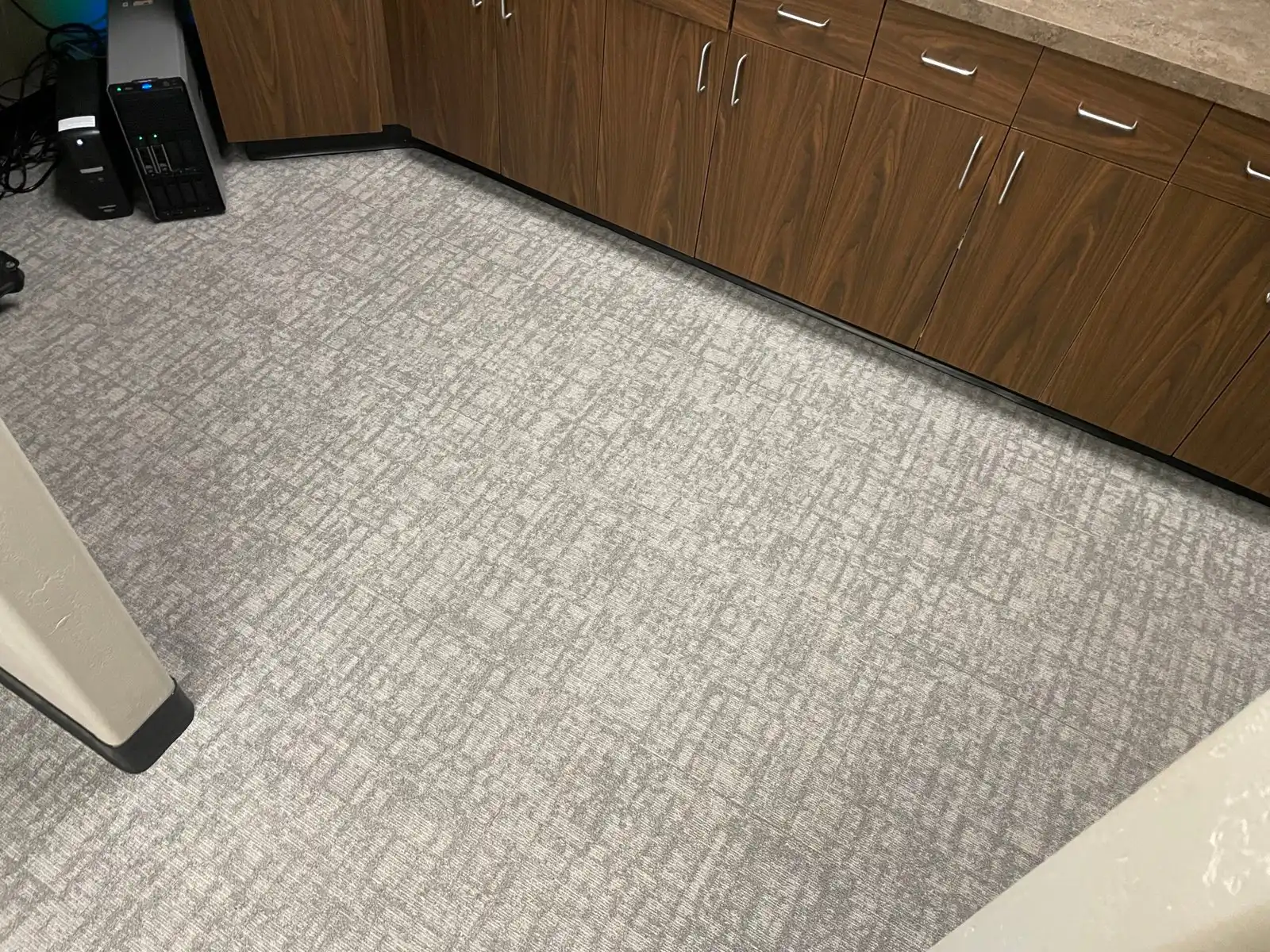
The Medical Office Carpet Soil Profile in Goodyear
Medical office carpet receives a soil profile that differs meaningfully from standard professional office carpet. Patient foot traffic brings a higher biological soil load than standard commercial visitor traffic. Patients are by definition unwell: they carry the biological compounds of their illness on their skin, clothing, and shoe soles. Respiratory illness patients shed viral and bacterial material in respiratory droplets that settle on surfaces including the waiting room carpet. Patients with wound care needs or dermatological conditions may shed biological material from skin contact with waiting room surfaces and adjacent carpet.
Children in pediatric practices are particularly active sources of biological surface contamination through direct floor contact: crawling, sitting on the carpet, and touching the floor surface. The waiting room carpet accumulates this patient biological load at a higher rate than any other zone in the facility because all patients pass through it and many spend extended time there. Healthcare worker foot traffic in clinical areas adjacent to carpet zones may also track biological material from examination rooms onto corridor and administrative carpet, a cross-contamination pathway that general commercial cleaning programs do not specifically address.
The Regulatory and Accreditation Context
The Joint Commission includes environmental management standards in its accreditation requirements that address the maintenance of a clean and sanitary environment including floor surfaces. Specific carpet cleaning frequency requirements are not prescriptive for all facility types, but facilities need a documented carpet maintenance policy that specifies cleaning frequency, cleaning method, and the responsible party for each activity. A Goodyear medical office that is Joint Commission accredited needs this documentation as part of its environment of care records.
OSHA Bloodborne Pathogen Standard applies to medical facilities and addresses surfaces that may be contaminated with blood or other potentially infectious materials. Carpet surfaces that are visibly contaminated with blood or other potentially infectious materials require specific decontamination protocols under OSHA-compliant procedures and an EPA-registered disinfectant before carpet cleaning proceeds. Standard carpet cleaning is not the appropriate first response to visible biological contamination.
CMS Conditions of Participation apply to medical facilities receiving Medicare and Medicaid reimbursement and include physical environment requirements. Arizona Department of Health Services regulations for specific facility types, including physician offices, ambulatory surgical centers, and dialysis facilities, may include physical environment maintenance requirements that affect cleaning frequency and method. The practical implication for Goodyear medical office managers is that the carpet cleaning program should be documented, the frequency should be established in a written policy, and outcomes should be recorded as part of the facility's environmental management documentation.
Structuring a Zone-Specific Maintenance Program
Frequency calibration to zone-specific soil accumulation is the foundation of an effective medical office carpet program. The waiting room carpet warrants monthly professional cleaning for most active Goodyear medical practices: it is the highest patient-density, highest-dwell-time zone in the facility. Corridor carpet and administrative area carpet accumulate soil more slowly and can extend to quarterly professional cleaning with interim vacuuming maintenance between appointments.
Goodyear's young family demographic throughout Canyon Trails, Cottonflower, and Estrella Mountain Ranch drives a pediatric and family practice market that creates specific maintenance demands. Pediatric waiting rooms have the highest biological soil accumulation rate of any medical office type because children make direct floor contact that adult patients do not. Pediatric practices warrant cleaning every two to three weeks during peak respiratory illness season from fall through spring.
Interim HEPA-filter vacuuming between professional cleanings is the high-frequency component of the program. Daily HEPA vacuuming of waiting room carpet removes fresh loose deposits before they compact into the fiber and before bacterial activity on them progresses. HEPA filtration is specifically important for medical office vacuuming because standard vacuum filtration exhausts fine particulate including biological material back into the room air during vacuuming: HEPA filtration captures this material rather than exhausting it.
Banner Estrella and the Higher-Acuity Practice Network
Banner Estrella Medical Center serves as the primary healthcare anchor for the West Valley, and the specialist and referral practice network that surrounds it in Goodyear includes practices serving immunocompromised patient populations. Oncology support practices, immunology and allergy practices, and transplant follow-up offices warrant the most conservative maintenance program: monthly professional cleaning of all patient-facing carpet, daily HEPA vacuuming, quality entry matting, and consideration of supplementary antimicrobial treatment coordinated with your infection control officer after professional cleaning has removed the soil that would otherwise prevent antimicrobial chemistry from contacting pathogens in the fiber.
New Construction and the First-Clean Consideration
The physical growth of medical services in Goodyear has created a mix of established practices in older commercial buildings and new practices in recently constructed medical office spaces. Newer medical office spaces may have commercial carpet installed during the same construction period as the residential properties nearby, potentially carrying the construction alkalinity load described in the Goodyear staircase page. A new medical office in a recently completed Goodyear commercial building may benefit from the acid pre-rinse first-clean approach in addition to the ongoing medical office maintenance program, establishing the carpet at a clean, appropriate-pH baseline before the medical office program begins.
How the Engagement Works
For medical office managers and practice administrators structuring or evaluating their carpet maintenance program, the engagement starts with a no-charge facility walkthrough that maps the carpet zones, documents the current condition and soil accumulation level at each zone, identifies any existing concerns, and produces a maintenance program proposal with zone-specific cleaning frequencies, cleaning methods, and cost estimates. The walkthrough produces information that serves the facility's compliance documentation regardless of whether they proceed with the cleaning program proposed.
After each professional cleaning appointment, written documentation of the date, areas cleaned, cleaning method used, chemistry applied, and any observations about the carpet condition is provided in a format that can be directly incorporated into the facility's environmental management records. Cleaning schedule coordination with the facility's operating hours, whether early morning before patient arrival, evening after the last patient, or weekend scheduling, ensures the cleaning process does not affect patient access or staff workflow. Dry times of 30 to 45 minutes with low-moisture encapsulation cleaning allow the facility to return to use quickly even when cleaning is scheduled during operating hours in lower-traffic zones.
Learn more about our commercial carpet cleaning services, or explore other cleaning services we offer in Goodyear.

 (602) 429-9602