What Barefoot Contact Deposits in Second-Floor Hallway Carpet
Sebaceous oil from plantar skin is the primary organic deposit from bare foot contact. Although the plantar surface has a lower sebaceous gland density than other body areas, oil migrates to the foot sole from adjacent skin and concentrates in the thicker skin of the heel and ball of the foot. This sebaceous oil coats the fiber surface in the barefoot traffic zone and progressively darkens those areas through lipid adhesion, attracting and holding fine particulate from the air and from sock lint.
Dead skin cells are shed in greater volume per step from bare feet than from shod feet because the direct contact between the bare foot sole and the carpet pile creates friction that mechanically detaches loose skin cells from the foot surface. In a second-floor hallway that receives daily barefoot traffic from a family of four, the dead skin cell accumulation in the carpet over months of use is substantial. Dead skin cells are organic particulate that support bacterial activity in the carpet, producing the volatile compounds that create the musty, slightly cheesy odor many Goodyear homeowners notice upstairs and cannot identify.
Eccrine sweat from the plantar surface deposits in the carpet at elevated rates during Goodyear's warm months. The plantar surface has one of the highest eccrine sweat gland densities of any body surface area. In Goodyear's warm household environment from April through October, plantar sweat production during walking contact is meaningful even in air-conditioned homes. The eccrine sweat compounds, including sodium chloride, lactic acid, urea, and amino acids, deposit in the carpet fiber and undergo the same crystallization and hygroscopic cycling described in the Goodyear recliner page, distributed across the hallway surface from walking contact rather than concentrated in a static contact zone.
What Sock Contact Adds to the Profile
In most Goodyear family homes, hallway traffic is roughly half barefoot and half socked at any given time. Socks shed fiber onto the carpet surface during walking contact through mechanical detachment from the sock weave. Cotton sock fibers contribute a light-colored fuzz visible against darker carpet colors. Synthetic fibers accumulate in the pile and add to the general particulate load over time.
Skin oil migration through sock fabric also transfers sebaceous oil from the foot sole through the sock weave and into the carpet fiber. A worn sock that has absorbed body oil from a full day of use transfers more oil to the carpet than a fresh sock. In a household where socks are worn through an evening upstairs routine without changing, the sock has been absorbing plantar oil all day and becomes a meaningful oil transfer vehicle during that hallway contact.
The Zone Map of Second-Floor Hallway Soil Concentration
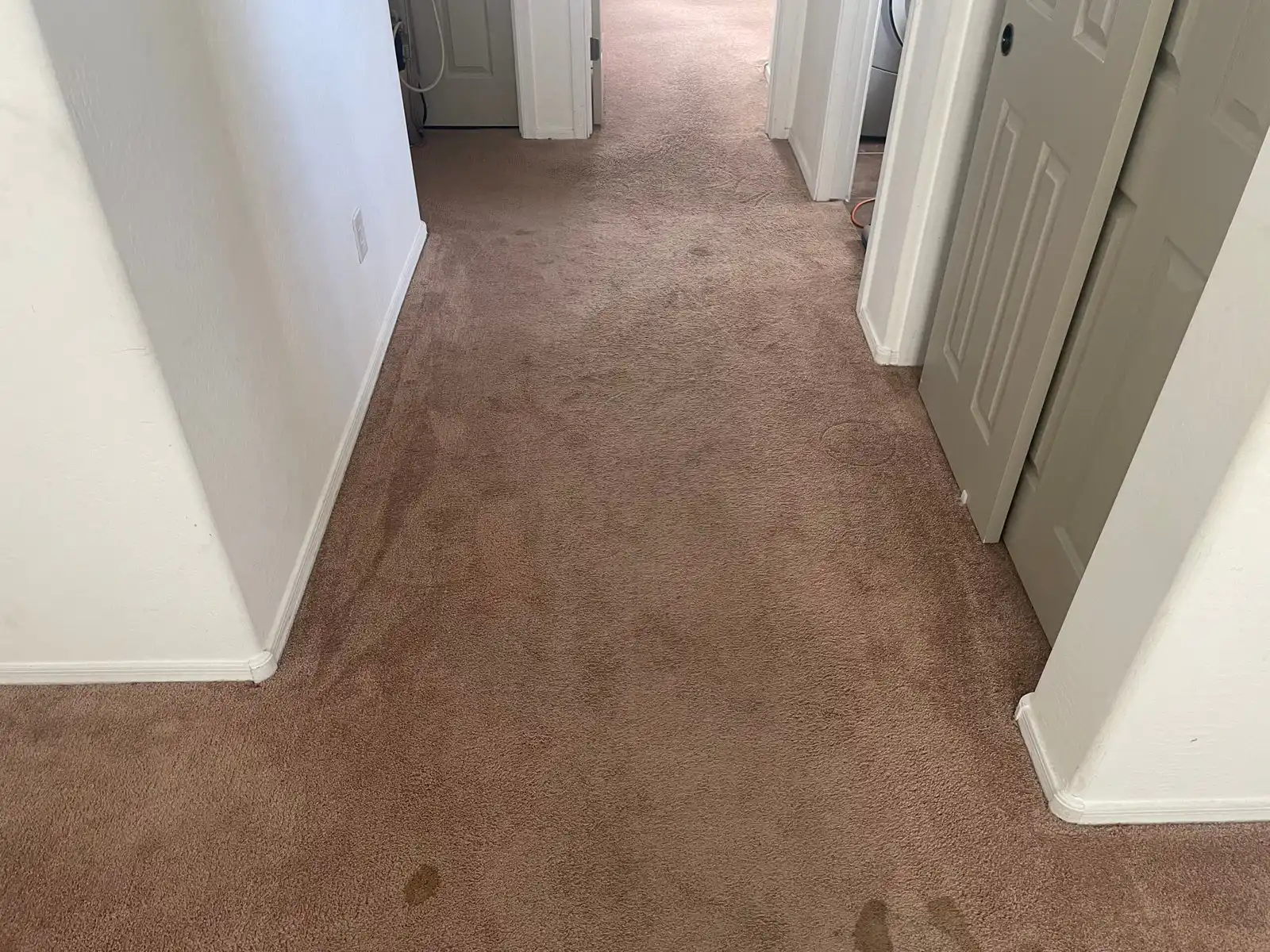
The bathroom threshold zone outside the bathroom door receives the most frequent barefoot traffic of any second-floor hallway area. Every family member going to and from the bathroom morning and evening crosses this zone barefoot. Morning preparation traffic, bedtime routine traffic, and nighttime bathroom use together make this the location of maximum barefoot contact frequency in the hallway. In Goodyear's typical two-story home where a shared bathroom serves multiple bedrooms, this threshold zone concentration is particularly pronounced.
The master bedroom doorway zone receives concentrated barefoot traffic from the primary adult household members traveling the same route between the master bedroom and the bathroom daily. Children's bedroom doorway zones receive their own concentrated traffic with somewhat different soil composition: children's foot contact typically has higher dead skin cell shedding relative to sebaceous oil, and higher plantar sweat contribution from the higher body heat of active children.
The stair landing at the top of the stairs is the transition zone between shoe-traffic and barefoot-traffic carpet conditions. In some Goodyear home configurations, this landing receives both shoe-traffic soil from family members who have not yet removed shoes at the top of the stairs and barefoot traffic from the second-floor hallway, producing a mixed soil profile between the pure organic skin contact soil of the deep second-floor hallway and the mineral-organic mixed soil of the ground floor.
Dogs With Upstairs Access Change the Profile
Dogs that have access to the second floor contribute paw pad deposits to the second-floor hallway through the same mechanism described in the Goodyear carpet page. Unlike human family members who remove shoes before the second floor, dogs travel from outdoor surfaces to the upstairs hallway carrying paw pad soil without a shoe-removal step. The second-floor hallway in a Goodyear dog household with upstairs dog access has a mixed profile: barefoot and socked human traffic organic soil plus dog paw pad compounds and potentially some outdoor mineral particulate from dog paw contact. The cleaning approach for this mixed profile adds dog-specific enzyme pre-treatment to the standard human skin contact organic soil treatment.
Honest Expectations for Second-Floor Hallway Cleaning
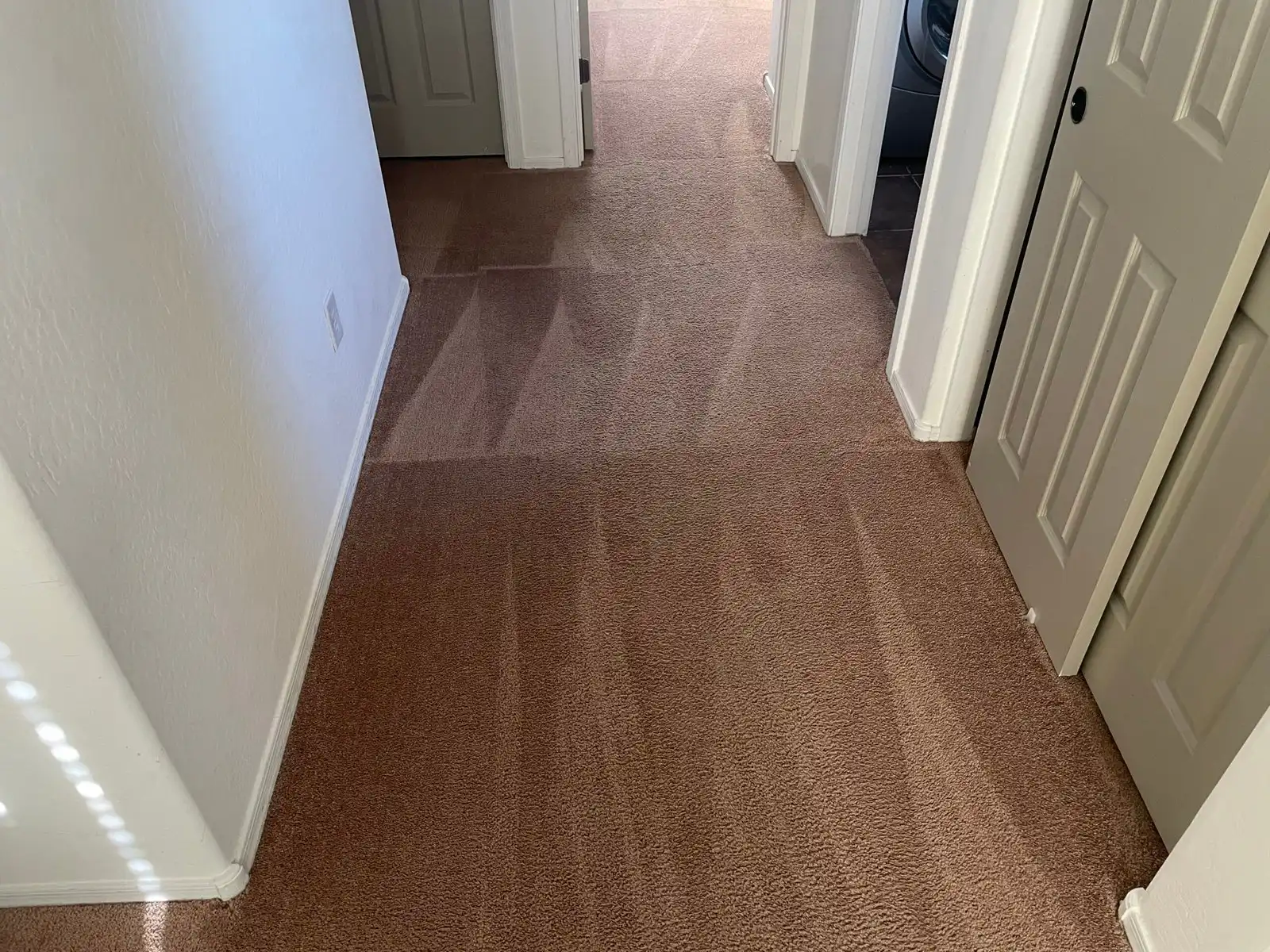
Second-floor hallway carpet that has received appropriate organic-soil-calibrated chemistry with enzyme and degreaser pre-treatment shows notably more dramatic improvement than the same carpet cleaned with standard general-purpose chemistry. The fiber condition underneath the organic soil layer is better than the visual appearance suggests, because the fiber has not been abraded by outdoor mineral particulate the way ground-floor carpet fiber has. Once the organic soil is addressed, the fiber recovers its original texture and light-reflection behavior in a way that heavily abraded ground-floor carpet cannot.
Established odor from dead skin cell bacterial decomposition responds well to enzyme treatment that breaks down the organic substrate supporting the bacterial activity. The odor resolution is at the source rather than masking. A second-floor hallway that has had enzyme cleaning typically shows odor improvement that holds between cleanings because the bacterial food source has been removed rather than covered.
Learn more about our hallway carpet cleaning services, or explore other cleaning services we offer in Goodyear.

 (602) 429-9602