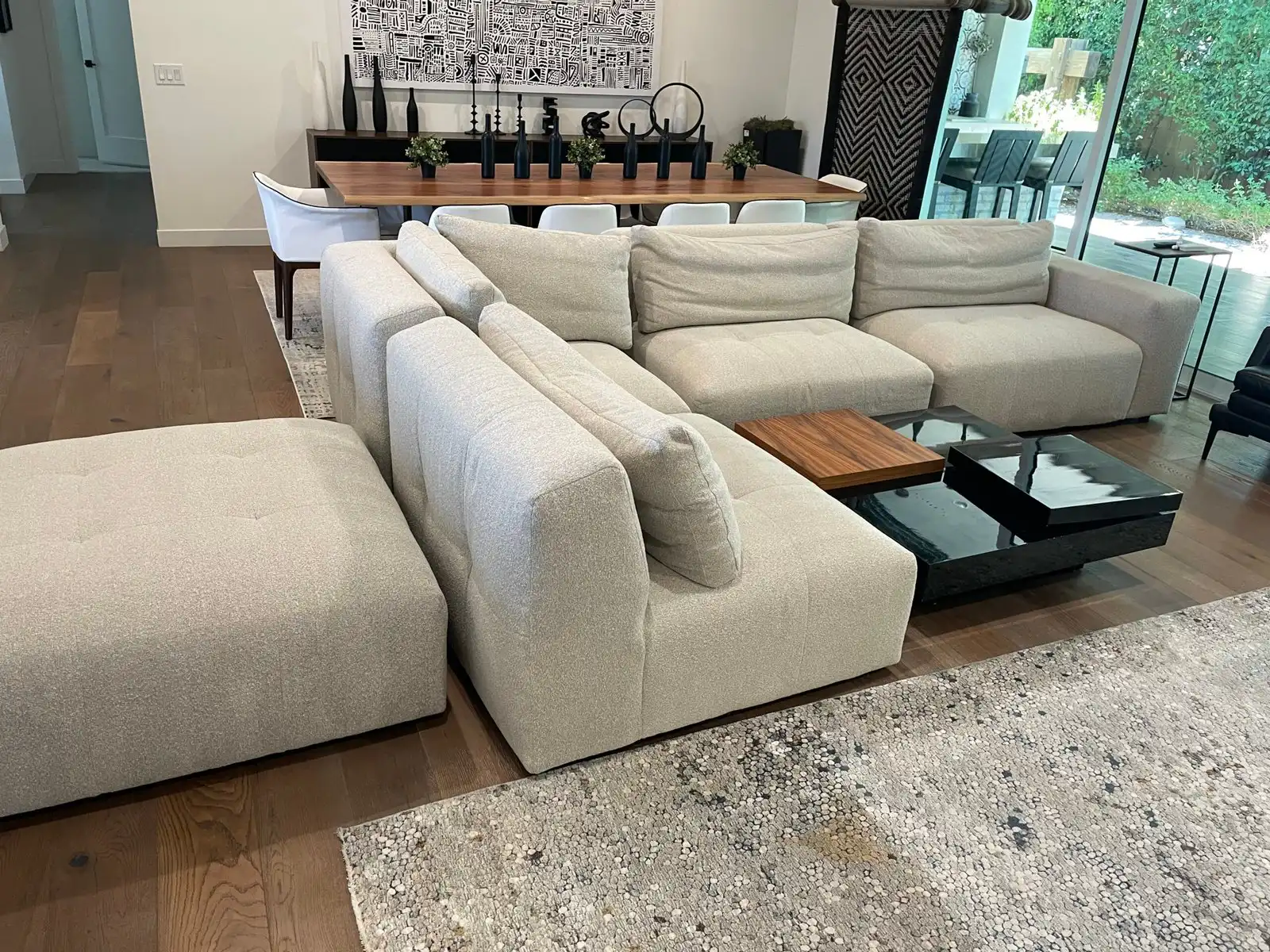
How UV Exposure Affects Upholstery Fabric Beyond Just Fading
Most people think about UV damage to upholstery fabric as a color problem. The fabric fades, the color looks washed out, and the piece looks older than it is. That is real, and it happens in Litchfield Park great rooms with consistent afternoon sun exposure more quickly than most homeowners expect. But UV damage to upholstery fabric is not only a color problem. It changes the surface characteristics of the fiber itself in ways that affect how the fabric feels, how it responds to soil, and how it behaves during cleaning.
UV radiation breaks down the molecular bonds in synthetic polymer fibers, which includes the polyester, nylon, and acrylic blends used in most upholstery fabric. At the fiber surface, this shows up as a gradual change in texture where the fabric that started with a specific hand feel becomes slightly different, sometimes slightly rougher or slightly more matte in appearance than it was when new. The fiber surface becomes more microscopically irregular from the molecular degradation, which has a practical consequence: irregular fiber surfaces are more effective at trapping and holding fine particulate soil than smooth, intact fiber surfaces. A sectional that has been in direct afternoon sun for two or three years is accumulating airborne dust and fine desert particulate more efficiently than it did when it was newer.
In natural fiber upholstery fabrics, which include linen, cotton, and wool blends, UV affects the dye chemistry rather than the polymer backbone. The dye degradation shows up as color shift in the exposed face fibers while the back of the cushion fabric, which faces away from the window, retains the original color. This difference between face and back of the cushion is one of the diagnostic comparisons that tells you how much UV has accumulated on the piece. In a Litchfield Park great room with west-facing glass and afternoon sun from roughly 1 pm through sunset, the UV accumulation on a sectional placed near those windows over two years represents a significant cumulative dose compared to what the same piece would receive in a room with north-facing or shaded exposure.
Body Oil Accumulation on a Premium Sectional in Daily Use
Simultaneously with the UV accumulation, daily use of the sectional deposits body oil into the fabric at every contact zone. The headrest areas where people lean their heads, the armrests where arms and hands rest consistently, and the seat cushion surfaces where the most body contact occurs all accumulate sebaceous oil, sweat compounds, and skin cell material over time. In a household where the sectional is used daily by two or more people, this accumulation is substantial after a year of use and significant after two or three years.
Body oil in upholstery fabric does not sit on the surface the way a liquid spill does. It penetrates into the fiber structure through body heat and the mechanical pressure of contact, working its way from the surface of the fiber down toward the weave structure. At the surface, fresh oil may be barely visible or invisible to the eye. Oil that has been accumulating for months darkens as it oxidizes, attracts additional soil particles because of its adhesive character, and produces the characteristic darker appearance at headrest and armrest zones that most homeowners eventually notice and wonder about.
In a home where the sectional is also near the windows getting afternoon sun, the oil that accumulates in the headrest and armrest zones is in a fabric that the UV has already been working on at the surface level. The microscopically rougher fiber surface from UV degradation is more efficient at holding onto the oil than an intact fiber surface would be. The two conditions are not independent. They compound each other, which is part of why a piece in this situation often looks worse than the homeowner expects given how well they thought they were maintaining it.
The Cushion Flip Test: Do This Before You Call Anyone
This takes thirty seconds and tells you exactly what you are dealing with before any cleaning conversation starts:
- Remove a seat cushion from the section of the piece that gets the most direct afternoon sun
- Hold the face fabric and the back fabric side by side in the same light
- If the back is noticeably more vibrant or saturated in color than the face: UV dye degradation has occurred and that difference is permanent regardless of cleaning
- If face and back look essentially the same: the piece has not experienced significant UV color shift and cleaning will address the full visible soil load
- If the face is darker in specific zones like the headrest area but not uniformly across the whole cushion: that is body oil accumulation, not UV, and it responds well to cleaning
The cushion flip test is the first thing I do on any sun-exposed sectional in a Litchfield Park great room. It sets accurate expectations before anything else is discussed.
The Assessment That Has to Happen Before Any Cleaning Starts
Before I start any cleaning on a sectional that has been living in a Litchfield Park great room with significant sun exposure, the assessment covers the full picture. The UV assessment starts with the cushion flip test described above. The oil accumulation assessment involves looking at the headrest zones, armrests, and seat cushion surfaces in raking light, which means holding a light source at a low angle to the fabric surface. Body oil zones show up in raking light as slightly darker, slightly shinier areas even before they are visible in normal room lighting. This gives a map of where the heaviest organic soil concentration is before the cleaning starts, which determines where pre-treatment chemistry needs dwell time and where the cleaning can move more quickly.
The fiber condition check involves pressing the fabric surface gently and observing how it recovers. Fiber that has significant UV degradation has less resilience than intact fiber and recovers more slowly from compression. Fabric that has both UV degradation and significant oil accumulation sometimes feels slightly tacky in the heavily soiled zones because the oxidized oil on the UV-roughened fiber surface has an adhesive character. All of this information together gives the accurate picture of what the cleaning will accomplish, and in some cases it gives me what I need to have an honest conversation about what the cleaning will not accomplish.
What the Cleaning Process Looks Like for This Specific Situation
The cleaning approach for a sun-exposed premium sectional is calibrated to the fiber condition that the assessment revealed. A fabric with significant UV degradation at the surface has less mechanical resilience than new fabric, which means the agitation level appropriate for a newer piece in good structural condition would be too aggressive for a piece where the surface fiber is already compromised. Lower agitation, more dwell time on the chemistry, and thorough extraction are the adjustments that account for reduced fiber strength.
Pre-treatment in the oil-accumulation zones, the headrest areas and armrests, is where the organic soil work begins. The citrus-based solution with d-limonene chemistry breaks down the sebaceous oil and the oxidized compounds that have been building in those zones. For zones with heavy accumulation, extended dwell time before agitation gives the chemistry time to penetrate into the fiber structure where the oil has migrated rather than just addressing the surface layer. This is the step most consumer cleaning attempts miss: applying solution and immediately working it rather than allowing the chemistry time to dissolve the oil before attempting to lift it.
Extraction removes the chemistry and the dissolved soil together. In the zones with heavy oil accumulation, a second pass of extraction after the main cleaning pass often pulls additional dissolved material that the first pass did not fully capture. The result on the organic soil component is usually significant. Oil that has been accumulating for one to three years in the headrest and armrest zones responds well to proper pre-treatment and extraction chemistry. The color of the fabric, whatever the UV has left of it, comes forward as the soil layer that was further suppressing it is removed.
The Golf Course Property Sectional Up Close
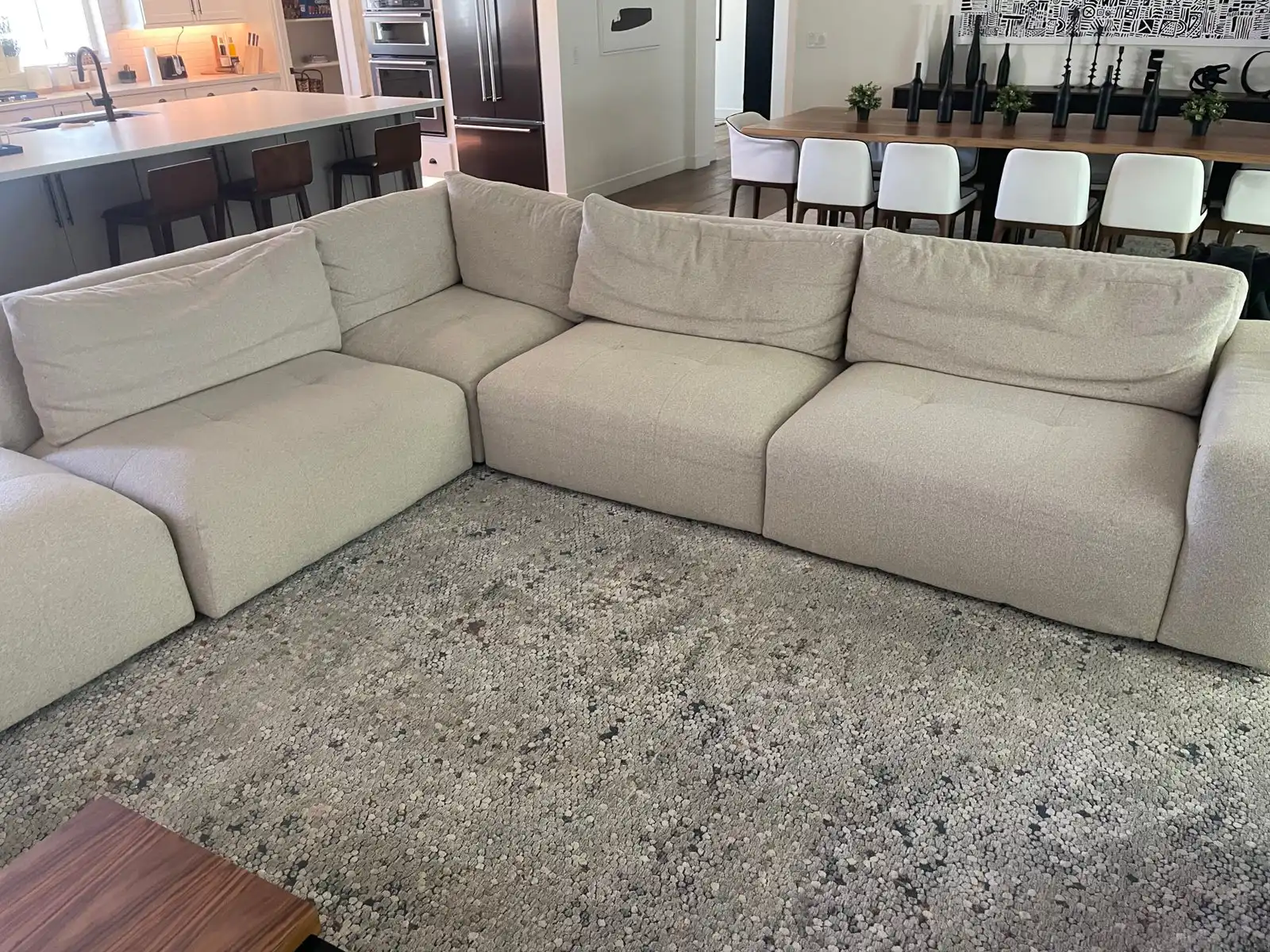
The pattern I see most often in Wigwam-adjacent homes and the custom builds near the golf courses is a premium fabric sectional, often light to medium in color, that has been in the great room for three to five years. The homeowner has been keeping the room clean, vacuuming the cushions occasionally, maybe using a fabric spray now and then for freshness. From the entry to the room, the piece looks fine. Decent color, no obvious stains, reasonable appearance.
When you look at it more closely in raking light, the headrest areas show the characteristic darkening from oil accumulation. The armrest panels have a slightly shinier appearance from the same cause. The cushion faces in the seating zones are slightly flatter in color than the back of the cushion. And in the section of the piece closest to the window, particularly if there is a chaise or a lounger element that catches the most direct afternoon light, the fabric face is slightly different in tone from the rest of the piece.
I had a conversation with a homeowner in Dreaming Summit about this exact situation before a cleaning last year. She had a premium linen-blend sectional in a great room with significant west-facing glass and had been wondering for a while whether the piece needed cleaning or replacing. The assessment showed meaningful organic soil accumulation and moderate UV shift in the section nearest the windows. After cleaning, the soil came off and the piece looked genuinely better across the whole surface. The slight UV tone difference in the window section was still there, but softer in appearance than it had been when it was competing with the soil layer on top of it. She was glad she cleaned it rather than replacing it.
Protecting a Premium Sectional in a Sun-Exposed Litchfield Park Great Room
UV-filtering window film is the most effective long-term protection for a premium sectional in a west or south-facing Litchfield Park great room. Standard window glass does not block UV effectively. Even newer construction with low-E glass reduces infrared but not necessarily the UV spectrum that degrades fabric dye. Window film rated for UV rejection, installed by a professional, reduces the UV load on the fabric without significantly changing the visual character of the glass or the view. For a sectional that represents a meaningful investment, UV film is the most practical and durable protective measure available.
Rotating cushions is worth doing regularly on a sectional where some sections receive more direct sun than others. If one end of the sectional is closer to the window than the other, the cushions from that end age faster under UV than cushions from the shaded end. Swapping cushions periodically distributes the UV exposure more evenly across all the cushion fabric, so no single cushion develops a dramatically different appearance from the rest.
For the organic soil side of the equation, washable throws or covers on the headrest areas and armrests slow the rate of direct body oil contact with the face fabric. Cotton or linen throws that you launder weekly intercept the oil before it reaches the upholstery and protect those zones from the compounding effect of UV exposure and oil contact simultaneously. Professional cleaning every 12 to 18 months for a sectional in active daily use is the right interval. A piece with significant direct sun exposure and regular family use should lean toward the 12-month end of that range because the UV and the organic soil are both accumulating faster than in a shaded room with lighter use.
Learn more about our sectional cleaning, or explore other cleaning services we offer in Litchfield Park.

 (602) 429-9602