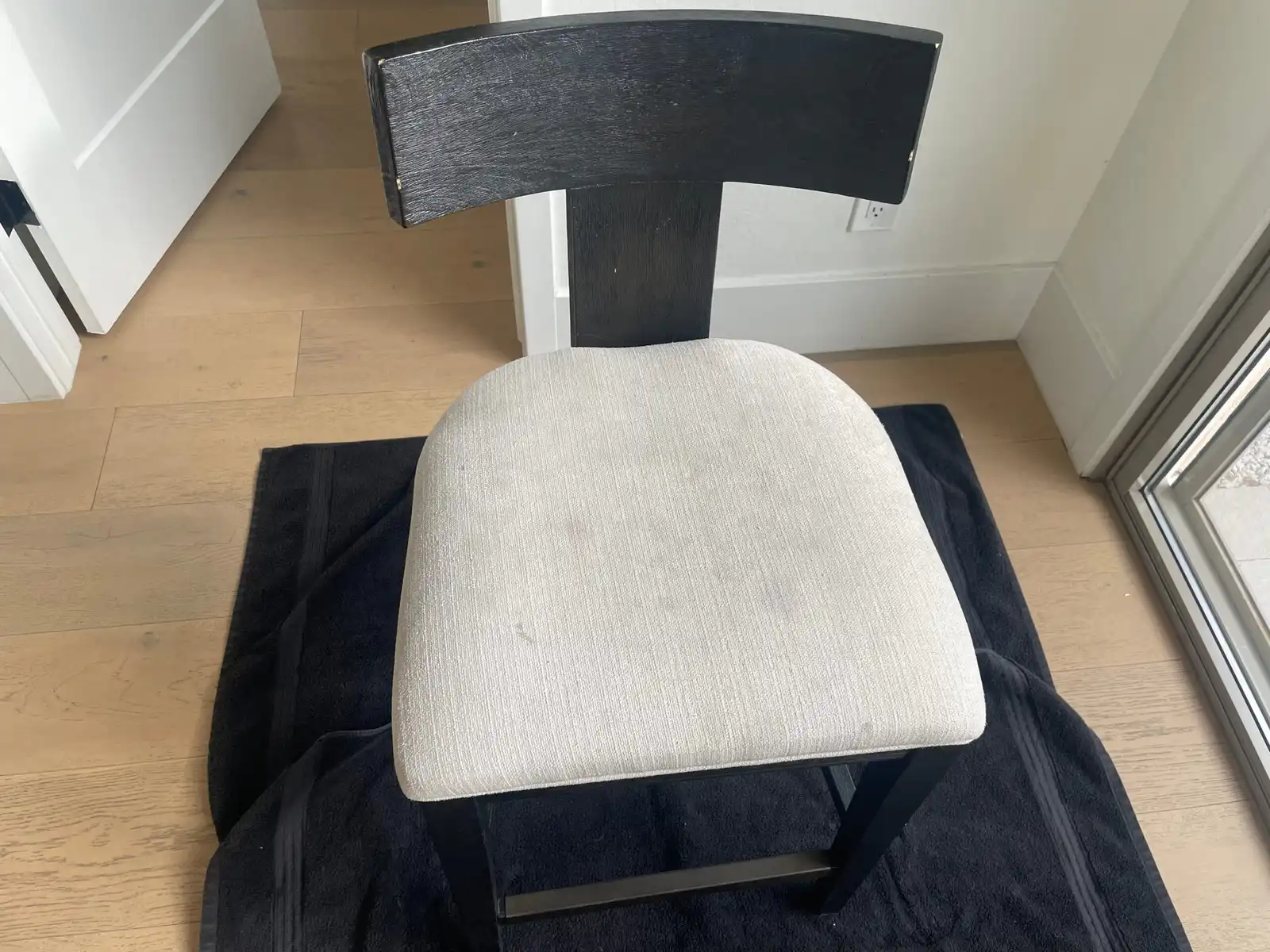
What Sunscreen Deposits in Dining Chair Fabric
Sunscreen is a complex formulation containing several categories of compounds that behave very differently from the food soil that dining chair cleaning chemistry is designed around. UV filter compounds, both chemical filters with aromatic ring structures and physical mineral filters like zinc oxide and titanium dioxide, deposit on fabric when sunscreen-covered skin contacts the chair and when sunscreen-containing pool water saturates swimwear. They are specifically formulated to resist water-based removal, which means they resist water-based cleaning chemistry in fabric the same way they resist washing off skin.
Emollient base compounds make up most of sunscreen formulations by weight: the moisturizing ingredients that carry the UV filters. These include esters, silicones, alcohols, and plant-derived oils. The emollient base is what gives sunscreen-deposited fabric its characteristic greasy feel and darkened appearance. It coats the fiber and attracts desert particulate from Goodyear's Estrella Mountain environment that settles on the chair surface. Standard surfactant cleaning partially addresses the simpler lipid fraction but leaves the silicone and synthetic ester compounds that are more resistant to saponification.
How Pool Water Chemistry Adds to the Compound
Pool water is not plain water. It is a chemically treated solution that deposits on fabric when pool-wet swimwear contacts dining chair fabric during poolside mealtimes. Free chlorine exists in pool water primarily as hypochlorous acid, and when chlorine-containing water contacts fabric through wet swimwear, it can oxidize fabric dye compounds at the contact zones - a permanent change to the dye, not a removable deposit. Dining chairs in Goodyear pool households near Sunchase at Estrella and along W Elliot Rd may develop a subtle lightening at the seat cushion contact zones from repeated chlorine water contact over a full pool season.
Calcium and magnesium from Goodyear's hard West Valley pool water accumulate in pool water and transfer to fabric when mineral-loaded pool water in wet swimwear evaporates on the chair surface. The mineral compounds deposit in the fabric fiber and partially encapsulate the UV filter organic compounds already present from sunscreen skin contact, reducing the accessibility of cleaning chemistry to those compounds beneath the mineral layer. The combined deposit: emollient lipid binding mineral compounds and UV filter organics, is more stubborn than any single component would be on its own.
The Three-Component Cleaning Sequence
The pre-cleaning assessment identifies the pool-household deposit profile specifically. Which chairs are closest to the back door or pool access carry the heaviest compound load. The assessment also checks for chlorine bleaching at the contact zones: a subtle lightening at the seat cushion center or back cushion at shoulder height that indicates direct chlorine water contact with the fabric dye. The post-cleaning assessment confirms whether any remaining lightening is permanent bleaching or was deposit interference with color appearance that cleaning has now resolved.
Dry pre-extraction removes the loose desert particulate that the sticky emollient lipid layer has attracted and retained on the fiber surface. This dry removal step is more productive for pool-household chair fabric than for standard food-soil chairs because the emollient stickiness has captured more total dry particulate per unit area.
Mild acid pre-rinse at the contact zones addresses the calcium and magnesium mineral compounds from pool water, dissolving the mineral deposit layer that has encapsulated the UV filter compounds and contributed to fabric stiffness. The same mild acid mechanism that addresses hard water mineral deposits on tile surfaces applies here to mineral deposits in fabric fiber. The acid pre-rinse dissolves the mineral matrix and opens access to the UV filter and emollient compounds beneath.
Solvent pre-treatment with d-limonene based citrus chemistry follows the acid mineral removal, addressing the UV filter organic compounds and the silicone and ester emollient compounds that standard surfactant does not dissolve. The solvent is applied after acid mineral removal and allowed adequate dwell for organic dissolution. Extraction removes all three treatment components: dissolved minerals, dissolved organic UV filter and emollient compounds, and released particulate. Multiple extraction passes at the compound deposit zones ensure complete removal.
Post-Pool-Season Timing Is Key
The right time to clean pool-household dining chairs in Goodyear is October or November, after the active pool season concludes. This timing addresses the full compound accumulation from the year's pool use before the dry winter and spring months progressively set the deposits more firmly in the fabric. For households in Canyon Trails, Cottonflower, and Estrella Mountain Ranch with very active pool use and multiple children, the full six-month pool season can produce enough compound accumulation to justify a mid-season cleaning in addition to the post-season appointment.
Chlorine Bleaching: The Permanent Condition
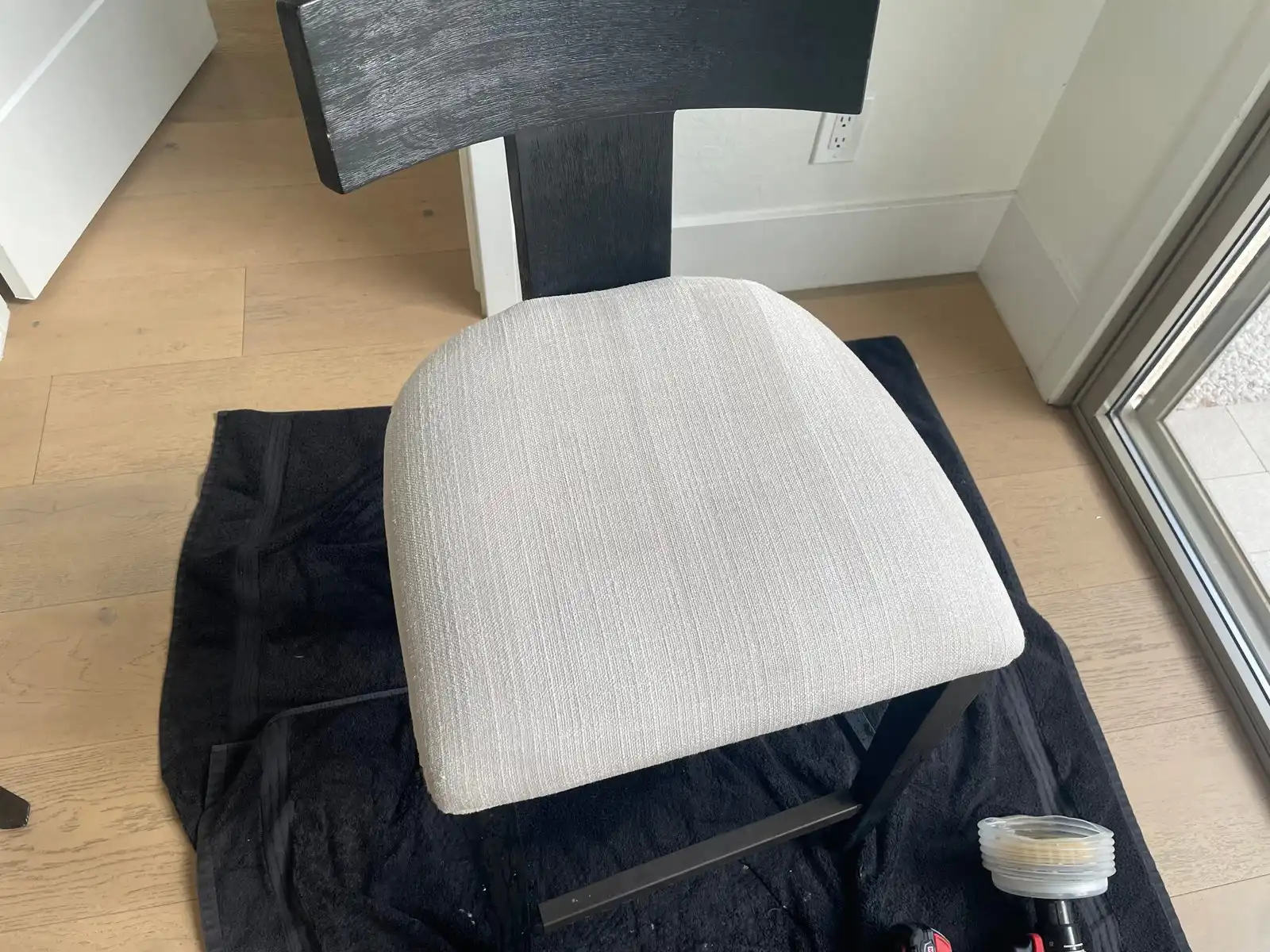
Chlorine bleaching of dining chair fabric dye is the one pool-household condition that professional cleaning cannot reverse. It is a permanent change to the fabric dye rather than a removable deposit. The visual character is a lighter zone at the contact area: paler or less vibrant in color than the surrounding fabric. A practical test distinguishes chlorine bleaching from sunscreen deposit yellowing: cleaning the contact zone thoroughly and assessing the color after deposits are removed. If the contact zone remains lighter after cleaning, the lightening is permanent chlorine bleaching. If it looks normal after deposits are removed, the lighter appearance was from deposit interference with the fabric's color rather than dye change.
For dining chair sets where chlorine bleaching has produced significant color change, reupholstering the affected chairs may be the most practical resolution for homeowners who find the color inconsistency visually significant. The cleaning removes the compound deposits and improves the overall chair condition, but the bleached zone remains as a permanent feature of the fabric's history of pool household use.
Learn more about our dining chair cleaning services, or explore other cleaning services we offer in Goodyear.

 (602) 429-9602