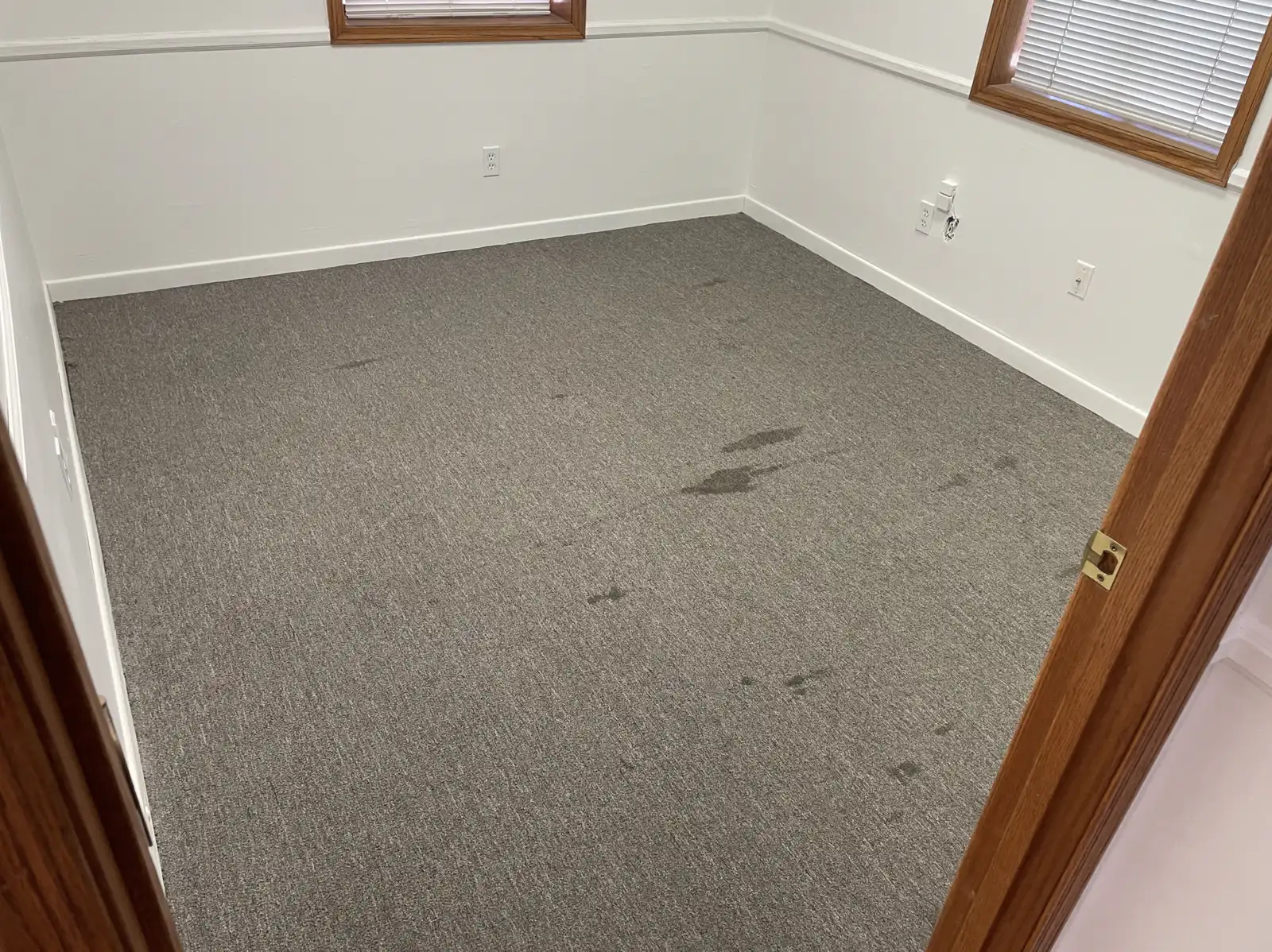
What Makes Industrial-Adjacent Office Carpet Soil Different From Standard Office Soil
Standard office carpet soil in a suburban office park with no industrial neighbors is primarily a combination of foot traffic soil from employees arriving from their cars, ambient dust from the HVAC system, food and beverage contact from break rooms and desk eating, and the fine particulate that circulates through any occupied building. This is the soil profile that standard commercial carpet cleaning chemistry and frequency programs are calibrated for.
An office in the industrial corridor near Watson Road, or in a business park adjacent to a distribution facility in the Sundance area, has all of that standard office soil plus additional particulate sources from the surrounding environment that change the character and the cleaning challenge significantly.
Combustion particulate from diesel truck traffic is the most consistent source. Distribution centers and manufacturing facilities generate heavy truck traffic throughout operating hours, and diesel combustion produces fine carbonaceous particulate, soot and partially combusted fuel compounds, that becomes airborne and enters nearby buildings through HVAC fresh air intakes, through door openings, and on the clothing and shoes of employees who cross parking lots adjacent to loading dock areas. Diesel combustion particulate is very fine, with a significant proportion of particles below 2.5 microns that penetrate building HVAC filtration at standard MERV ratings and settle into carpet pile throughout the occupied space.
Industrial dust from manufacturing and processing operations varies by the specific industry but typically includes metallic particles from machining, mineral dust from concrete or masonry work, and process-specific particulate that is distinct from the organic foot traffic soil of a standard office. This material is often harder and more chemically inert than standard office soil, which affects how it responds to cleaning chemistry. Standard surfactant cleaning chemistry works on organic soil by surrounding and solubilizing the material. Fine metallic or mineral industrial particulate is not organic and does not solubilize in surfactant chemistry. It requires mechanical extraction rather than chemical dissolution.
The disturbed land particulate in Buckeye's active development environment is the third component. The active construction throughout the city's residential and commercial growth areas generates continuous airborne particulate from graded land, concrete work, and construction activity. Offices in the middle of Buckeye's development corridor are in a significantly higher ambient particulate environment than offices in a fully built-out established suburb.
How Industrial Particulate Gets Into the Office and Where It Concentrates
The HVAC system is the highest-volume entry path for very fine particulate. Standard commercial HVAC systems are specified with MERV 8 to MERV 11 filtration in most Buckeye commercial buildings. Particles below approximately 1 micron in size pass through MERV 11 filtration efficiently. Diesel combustion soot and the finest industrial dust fractions are heavily represented in this sub-micron size range. The HVAC system continuously circulates this fine particulate through the office and deposits it on every horizontal surface including the carpet pile throughout the occupied space. This particulate settles most heavily near supply vents and in the main air circulation paths of the office layout, rather than only at the entry zones where shoe-contact soil concentrates.
Shoe and clothing contact at the entry is the second path. An employee who crosses a parking lot adjacent to a loading dock area picks up the coarser fraction of the industrial particulate on their shoe soles. This material deposits in the entry zone and the traffic paths from the entry to workstations. The entry zone in an industrial-adjacent Buckeye office typically shows heavier and harder-to-clean soil than the entry zone in a standard suburban office park because the coarser industrial particulate component adds to the standard outdoor foot traffic soil.
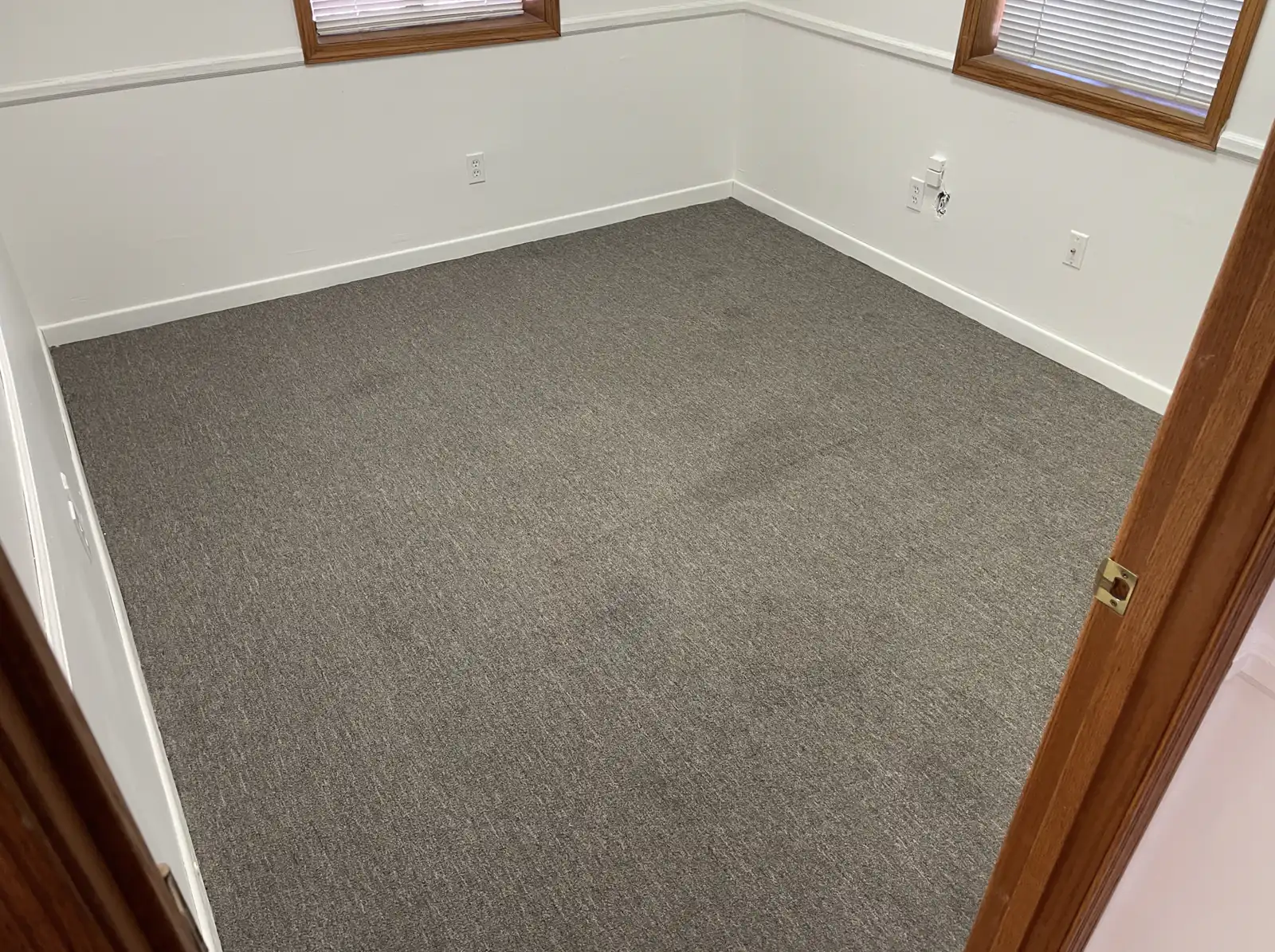
The pattern in the carpet that results from these entry paths is different from standard office soil distribution. Standard office soil concentrates at the entry and thins progressively toward the back. Industrial-adjacent particulate from the HVAC path distributes throughout the full office. The combination produces a carpet that is uniformly dull and flat in appearance across the full floor area rather than just at the entry, because the HVAC-distributed fine particulate has coated the fiber surface throughout the space.
Signs Your Office Has an Industrial Particulate Problem
These patterns distinguish industrial-adjacent particulate soil from standard office carpet soil:
- The carpet looks uniformly dull across the full floor area, not just at the entry or high-traffic paths
- The carpet looks dull fairly quickly after professional cleaning, faster than you would expect from a standard office
- The dullness is more pronounced near ceiling supply vents and in the main air circulation paths
- The entry zone darkening has a harder, grittier character than standard foot traffic soil
- The office is near a distribution center, manufacturing facility, or in the Watson Road or Sundance industrial corridor
If two or more of these apply, the adjusted cleaning approach described on this page will produce a better and longer-lasting result than standard commercial encapsulation cleaning.
Why Standard Commercial Cleaning Falls Short on This Soil
Standard commercial carpet cleaning, including the VLM encapsulation method used for most commercial work, is calibrated for organic office soil: foot traffic oil, food and beverage residue, skin cell material, and the ambient dust that is primarily organic in character. The encapsulation chemistry surrounds soil particles and holds them in a crystalline structure for vacuum extraction in the final dry pass. This approach works well for organic soil because the chemistry can interact with the organic compounds and modify their surface properties to facilitate extraction.
Fine metallic, carbonaceous, and mineral industrial particulate does not respond to encapsulation chemistry in the same way. The particles are inert. They do not have the organic chemistry that the encapsulation system is designed to interact with. The encapsulation polymer can surround a fine metal particle the same way it surrounds an organic soil particle, but the inert particle does not have the surface chemistry that makes the encapsulated organic particle easy to shear away from the fiber during the final vacuum pass. Fine inert industrial particulate that has worked into the lower pile layers requires more aggressive mechanical extraction than the standard commercial cleaning pass provides.
The frequency implication is also significant. A quarterly cleaning program for a standard office accumulates one quarter of annual soil between visits. An industrial-adjacent Buckeye office accumulates both the standard organic soil and the continuous HVAC-distributed inert particulate between visits. The inert particulate builds at a rate that is independent of office occupancy and activity because it enters through the HVAC system regardless of whether the office is in active use. This combination of chemistry limitation and higher accumulation rate means the standard cleaning frequency that works for a suburban office park does not fully address the industrial-adjacent Buckeye office.
The Adjusted Cleaning Approach for Industrial-Adjacent Office Carpet
The cleaning approach for an industrial-adjacent office in Buckeye accounts for the inert particulate component through two primary adjustments: more aggressive pre-cleaning dry extraction and a more thorough mechanical agitation step before the encapsulation chemistry is applied.
Pre-cleaning dry extraction with commercial-grade suction removes the loose and semi-loose inert particulate from the upper and mid-pile layers before any chemistry goes down. Commercial extraction equipment with significantly more suction than standard commercial cleaning setups pulls a higher proportion of the loose inert particulate from the pile before the wet cleaning step. This dry extraction step is more important in industrial-adjacent offices than in standard offices because the inert particulate volume in the pile is substantially higher, and the consequences of converting it to an adhesive paste by adding chemistry before removing it dry are more significant.
The mechanical agitation step is calibrated to penetrate deeper into the pile than the standard commercial cleaning pass provides. The goal is to bring inert particulate from the lower pile layers up toward the surface where the subsequent extraction can reach it, rather than leaving it at the base of the pile where it continues to dull the carpet appearance between cleaning visits. The encapsulation chemistry and final extraction follow the enhanced dry and mechanical steps, addressing the organic soil component that the chemistry was designed for.
The cleaning frequency program for an industrial-adjacent office should account for the higher accumulation rate by shortening the interval between professional cleanings. A quarterly program that works adequately for a standard suburban office may need to be a ten-week or eight-week program for an office in Buckeye's industrial corridor, with the entry zone receiving spot attention more frequently to prevent the coarser shoe-contact particulate from embedding past the point where it can be addressed in the main cleaning pass.
The Verrado Commercial Context: A Different Type of Buckeye Business
Not every Buckeye commercial space is industrial-adjacent. The Verrado commercial district along the main commercial corridor is a different context entirely: small professional offices, medical and dental practices, retail spaces, cafes, and service businesses serving the Verrado residential community. These spaces have a carpet soil profile that is closer to the boutique commercial context, with low foot traffic volume, an appearance standard driven by a residential clientele, and cleaning frequency driven by ambient environmental accumulation as much as by foot traffic load.
The industrial particulate issue described earlier in this page is less relevant in the Verrado commercial context because the surrounding environment is residential rather than industrial. The Buckeye construction environment is still a factor, since active residential construction in surrounding phases brings construction particulate into commercial spaces through HVAC and door contact. For a new professional office in a recently completed Verrado commercial building, the construction dust first-clean situation applies to new carpet in the same way it applies to new residential carpet in the city.
For Verrado commercial clients, the approach is calibrated to the boutique professional context: low traffic, a premium appearance standard, flexible scheduling around business hours, and a cleaning program designed for the actual soil load rather than a generic commercial square footage calculation. This is the same assessment-first philosophy applied to every job regardless of whether it is residential or commercial.
What Clients Can Do Between Professional Cleanings
HVAC filter maintenance is the highest-return intervention for reducing carpet soil accumulation in an industrial-adjacent Buckeye office. Check the filter condition monthly rather than on the standard quarterly replacement schedule, because in a high-particulate environment the filter loads faster and a loaded filter reduces airflow efficiency. Upgrading to MERV 13 filtration if the building HVAC system supports it reduces the volume of fine industrial particulate delivered to the carpet through the air handling system. Coordinate with building management or the HVAC contractor for buildings where the filtration standard is specified at the building level.
Commercial entry matting at every exterior door, sized large enough that employees take two full steps on the mat before reaching the carpet, intercepts the coarser industrial particulate from shoe soles. Commercial loop pile matting is more effective than flat rubber matting because the pile provides the mechanical wiping action that pulls material from the shoe sole. Arrange for the matting to be extracted or laundered by the professional cleaning visit rather than just vacuumed in-house, because heavily loaded commercial matting distributes particulate onto adjacent carpet surfaces if vacuumed without proper extraction.
Daily vacuuming of the main traffic paths with commercial-grade suction equipment removes the surface layer of particulate before it works into the mid-pile. For industrial-adjacent offices this daily maintenance is more important than for standard offices because the particulate accumulation rate is higher. Work with building management to understand the HVAC fresh air intake location and whether it is positioned near loading areas or truck traffic paths. Fresh air intakes positioned adjacent to loading dock areas draw the highest concentration of industrial particulate into the building HVAC, and understanding this explains why the carpet accumulates faster than expected and why the cleaning interval needs to be shorter than the generic commercial standard.
Learn more about our commercial carpet cleaning, or explore other cleaning services we offer in Buckeye.

 (602) 429-9602