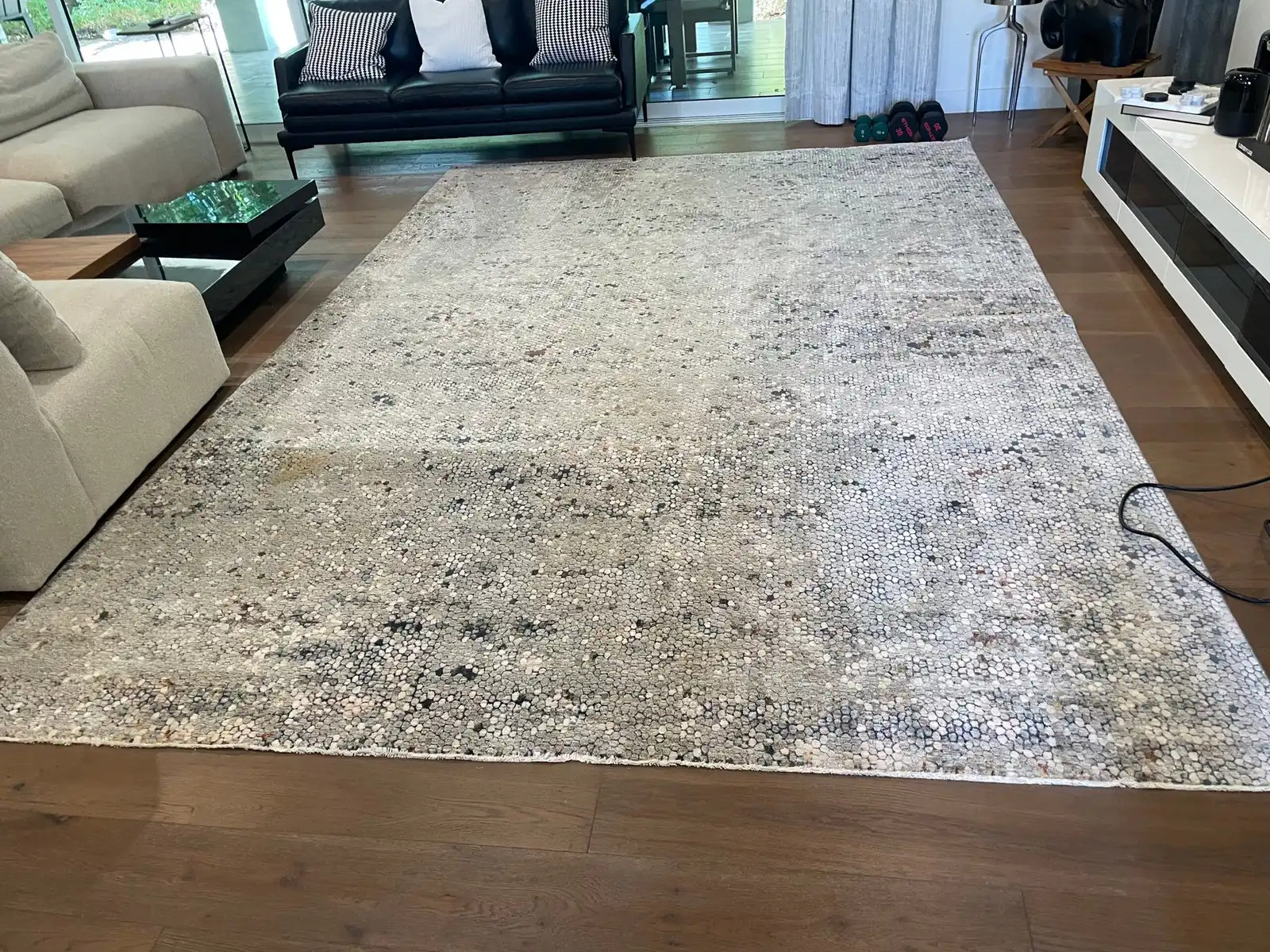
What On-Location Rug Cleaning Is and When It Works Well
On-location rug cleaning is exactly what it sounds like. I come to your home, move the rug to a cleanable surface or clean it in place, and use the VLM encapsulation process to clean it. The rug stays in your home the entire time and is dry and back in position within an hour or so. For most rugs in most Buckeye homes this is the right approach and it produces a good result.
It works well for rugs in reasonably good condition with moderate soil accumulation from normal daily use. A living room rug in a Verrado home that gets foot traffic, occasional pet contact, and the normal ambient dust that every Buckeye home deals with is a good candidate for on-location cleaning. The pile is accessible, the soil is not so heavy that it requires full foundation flushing, and the low-moisture VLM process cleans the pile thoroughly and dries the rug within an hour or so.
It also works well for large rugs that would be difficult or impractical to roll and transport. A ten by fourteen rug under a full living room furniture arrangement is a major logistical undertaking to remove and transport. If the rug is in reasonably good condition and the primary need is pile cleaning rather than foundation treatment, cleaning it in place is both practical and effective.
The limitation of on-location cleaning is access and water volume. When a rug is cleaned in your home, the process is constrained by what is appropriate for the floor surface underneath. A thorough rinse-and-flush approach, which sends significant water through the pile and foundation to remove deeply embedded particulate from the backing side, is not something you can do over hardwood or tile without causing damage to the floor. On-location cleaning addresses the pile and the upper backing. For rugs with light to moderate soil primarily in the pile, that is not a limitation that matters. For rugs with heavy embedded grit in the foundation or significant contamination that has penetrated to the backing, it is.
What Pickup and Drop-Off Cleaning Is and What It Accomplishes Differently
Pickup and drop-off rug cleaning means I come to your home, roll the rug, transport it to a cleaning location where it can be worked flat on an appropriate surface, clean it thoroughly with more aggressive water application and mechanical work than is possible over your interior floors, and return it when it is clean and dry. The turnaround time is typically one to three days depending on the rug type, soil level, and drying requirements.
The core advantage is access to both sides of the rug. When a rug is cleaned on an appropriate surface away from your home floors, it can be worked from both the pile side and the backing side. Flushing water through the foundation from the backing side carries embedded grit, pet dander, deep soil, and biological contamination out through the pile rather than leaving it trapped in the foundation threads. This is the cleaning step that on-location work cannot replicate without risking damage to the floor beneath the rug.
For a rug that has accumulated two years of Buckeye desert grit in the foundation, a thorough mechanical beating and foundation flush removes a volume of material that extraction alone from the pile side would leave behind. The amount of material that comes out of a heavily grit-loaded rug during the beating step before washing is often substantial and gives a clear picture of how much embedded soil was in the foundation layers that regular cleaning was not reaching.
The drying step is also more controlled when the rug is off-site. A rug dried flat on a clean surface in a controlled airflow environment dries more evenly than a rug dried on a home floor where the bottom surface has limited airflow. Uneven drying in a rug with a natural backing can contribute to backing distortion, and the micro-moisture environment between the rug and the floor can be a concern in heavily soiled rugs. Clean, flat, controlled drying produces a better end result for the pile lay and the backing condition.
How to Know Whether Your Rug Needs Pickup or On-Location Cleaning
Run through these before calling. The answers point clearly to one approach or the other:
- Has the rug been at a patio door or pool entry through a full Arizona summer? Pickup is likely the better approach for the foundation layer.
- Has a dog used the rug as a primary resting spot for a year or more? Pickup addresses the biological load in the backing that on-location cleaning does not reach.
- Does the rug have a persistent odor that has not resolved with previous cleaning? The odor source is almost certainly in the foundation, not the pile.
- Is the rug a high-value or specialty piece worth significant money? The controlled environment of pickup cleaning is worth considering regardless of soil level.
- None of the above? On-location cleaning is the right approach and will produce a good result.
The Buckeye Rug Situations That Make Pickup the Better Choice
There are specific rug situations that come up repeatedly in Buckeye homes that tip the decision toward pickup over on-location cleaning. The first is the patio-door rug in a pool home. Pool water carries calcium and chlorine compounds, wet feet bring in pool deck grit, and sunscreen UV filter compounds are specifically engineered to resist water and washing. After a full pool season the foundation of a patio-door rug has a compacted layer of all of these materials that has worked past the pile and into the backing.
The second is any rug in a high-pet household that a dog has been using as a primary resting spot for a year or more. I have picked up rugs in homes in Tartesso where the rug looked manageable on the surface but the backing was heavily contaminated with embedded dander and hair that on-location cleaning was not designed to address. The allergen load in those rugs is significant, particularly in a household where someone has pet sensitivities.
The third is any rug with a strong persistent odor that on-location cleaning has not resolved in previous attempts. If a rug smells and the cleaning does not fully resolve it, the odor source is almost certainly in the foundation rather than the pile. The pile cleans on-location. The backing does not receive the same treatment. Picking up the rug and treating it from both sides, including the foundation and the backing, is the step that addresses where the odor actually is rather than where it is most visible.
The fourth is a high-value or specialty rug that deserves more controlled handling than the on-location setting allows. A quality hand-knotted piece in a Festival Foothills home that is worth several thousand dollars deserves more care than being cleaned on a living room floor, even if the soil level is moderate. The controlled environment of off-site cleaning is often preferable for pieces like that precisely because more care and more complete treatment is possible.
The Logistics of Pickup and Drop-Off in Buckeye
The pickup process starts with a brief assessment of the rug before I roll it. I look at the pile condition, the backing type, the fiber content if I can determine it, and the approximate soil level to understand what the cleaning will involve. This assessment takes about five minutes and gives me the information I need to confirm the cleaning approach and give you a realistic expectation for the result and the timeline.
Turnaround time is typically one to three days. A moderately soiled synthetic rug with a standard backing cleans and dries within a day. A heavily soiled natural fiber rug with a thick backing, or a rug that requires extended treatment for odor or deep contamination, may take two to three days to clean and dry properly. I give you a specific expected return date at pickup based on what I assessed, not a vague estimate.
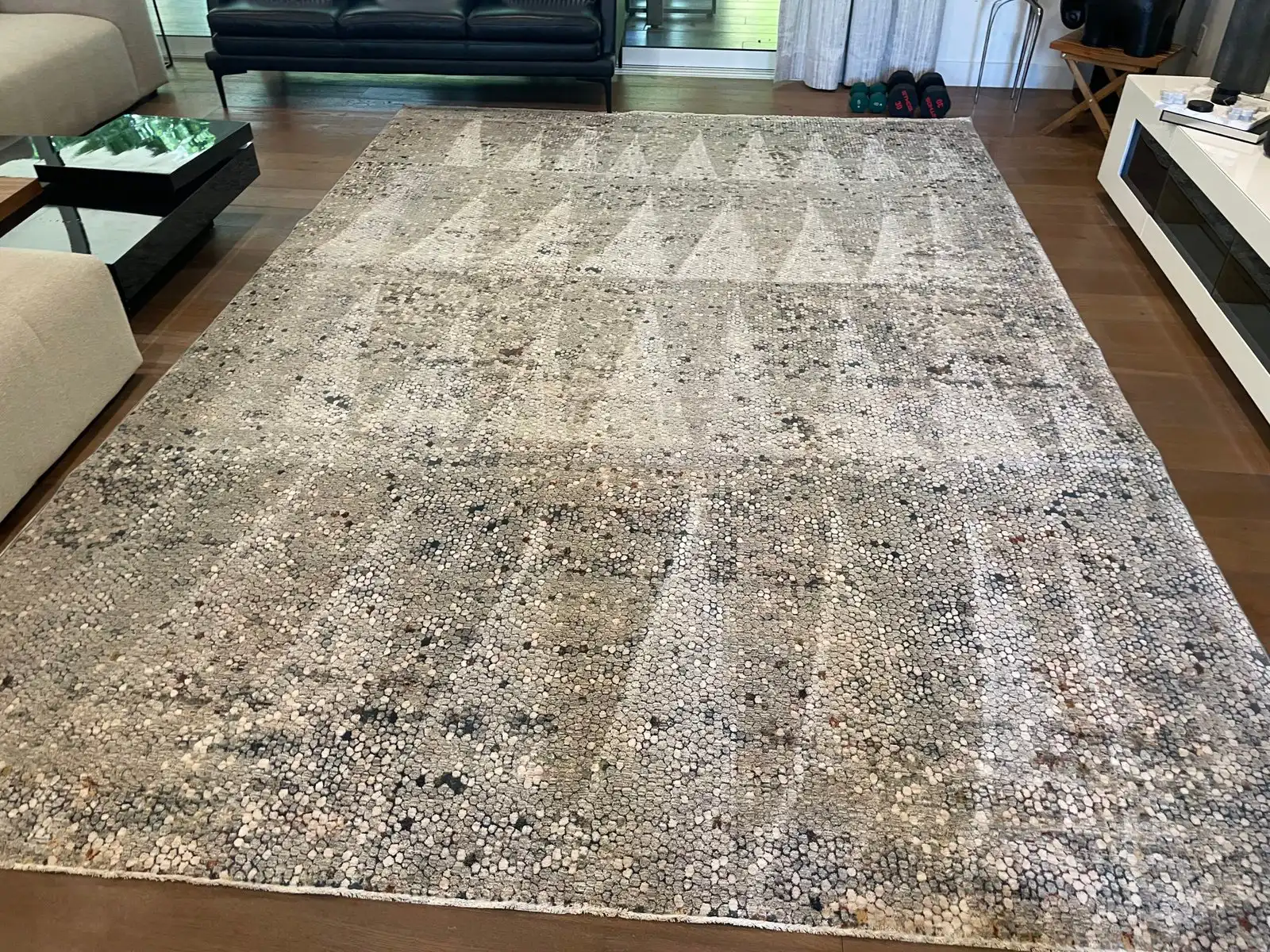
Return delivery means I bring the rug back to your home and help position it in the original location. For rugs with significant improvement, the before and after is often most clearly shown by comparing a section of the pile under good light before and after placement. I also walk through what was found during cleaning and what the result represents so you have an accurate picture of the rug's condition going forward.
A note on how this service works: pickup and drop-off is available by arrangement rather than as a standard booking. If you have a rug that fits the situations described on this page, call or text me and we can talk through whether pickup is the right approach before you book anything. I am not going to recommend pickup when on-location cleaning will do the job. The goal is the right approach for the specific rug.
What On-Location Cleaning Accomplishes for Standard Buckeye Area Rugs
For the majority of area rugs in Buckeye homes, on-location cleaning is the appropriate service and it produces a good result. The VLM process applied to an area rug begins with a thorough dry extraction pass that removes the loose surface layer of particulate before any chemistry is applied. In Buckeye's environment this step removes more material than it does in cities with lower ambient grit levels, and the difference between the before and after of just the dry pass is often visible in terms of pile clarity.
The cleaning chemistry is applied at a controlled moisture level appropriate to the rug's fiber type and backing. Natural fiber rugs and rugs with natural backings get less moisture than synthetic pile rugs with synthetic backings, because natural fiber absorbs moisture more readily and requires lower moisture application to avoid over-wetting the backing. The citrus-based solution addresses the organic soil component in the pile through the encapsulation mechanism that surrounds soil particles and holds them in suspension for extraction.
Extraction removes the chemistry and suspended soil together. In Buckeye homes the extraction fluid from a moderately soiled area rug is typically darker than in cities with lower ambient particulate levels, because the grit and desert dust component that has been accumulating in the pile shows clearly in what the extraction pulls out. Dry time for an area rug cleaned in place is 45 to 75 minutes depending on pile depth and fiber type, and Buckeye's low humidity keeps this on the shorter end.
Honest Expectations: What Cleaning Addresses and What It Does Not
Area rug cleaning, whether on-location or pickup, removes accumulated soil from the pile and the accessible portions of the backing. What it consistently accomplishes is removing the deposited material that has been making the rug look flat, dull, and less vibrant than it did when newer. The color comes forward after cleaning, the pile texture is more defined, and the rug looks like itself again rather than a muted version of itself. For most rugs in good structural condition this improvement is significant and the result holds for a reasonable maintenance interval.
What cleaning does not address is UV dye degradation. If a rug has been in direct sun from a sliding glass door or a west-facing window in a Buckeye home, the dye in the exposed pile surface may have shifted from the original color. Cleaning removes the soil that was compounding the washed-out appearance, but the underlying dye change from UV is permanent. In some cases the cleaning makes the UV shift more visible by removing the soil that was partially equalizing the color across the rug surface. This is worth knowing before the cleaning rather than after.
For rugs with very heavy contamination from pet urine that has reached the backing, on-location cleaning addresses the surface but not the deep contamination. Pickup with foundation treatment gives the best result, but even thorough pickup cleaning may not fully eliminate odor from urine that has been in a rug backing for an extended period. That is the honest version of this conversation, and I have it before we start rather than after.
A homeowner in one of the newer Verrado neighborhoods near the Skyline Regional Park trailhead brought out a large synthetic area rug that had been at the back door for two pool seasons. She was not sure whether it was worth cleaning or replacing. The assessment showed the pile was in good structural condition despite the soil load, which meant the soil was the driver of the appearance problem rather than fiber damage. Pickup cleaning, including a foundation flush, produced a result that surprised her enough that she did not end up replacing it.
Keeping Area Rugs in Better Shape Between Professional Cleanings
Rotation is the single most effective ongoing maintenance practice for an area rug in a Buckeye home, and it is the one that most homeowners skip because it seems like a lot of effort for unclear benefit. Rotating a rug 180 degrees every four to six months distributes foot traffic across different sections of the pile, distributes UV exposure more evenly across the rug surface, and prevents the concentrated abrasion and compression that develops in fixed traffic zones from building permanently in one section. In Buckeye's high-UV, high-grit environment rotation matters more than it does in a milder climate because both of the primary damage mechanisms concentrate in specific zones that rotation redistributes.
Vacuuming area rugs on the same schedule as your carpet, at minimum weekly in actively used areas, keeps the surface layer of Buckeye's abundant desert and construction particulate from working its way deeper into the pile between professional cleanings. Vacuum in multiple directions rather than a single pass, which reaches more of the pile than a single-direction pass does. Avoid beater bar settings on natural fiber rugs and on rugs with delicate pile construction.
For rugs at patio doors and pool entries, a dedicated bath mat or absorbent entry mat placed on top of the area rug at the threshold zone intercepts the wet foot contact before it reaches the rug pile. The bath mat launders weekly and takes the majority of the chlorine, sunscreen, and wet grit contact that would otherwise go directly into the rug. Replace the mat when it no longer has pile enough to do its job.
Keeping the floor clean beneath the rug matters more in Buckeye than in most cities because the fine particulate that enters the home settles on every surface, including the floor under the rug. Dust that accumulates under the rug migrates back up through the pile over time, particularly in rooms with HVAC airflow. Every two to three months, pull the rug back, sweep or vacuum the floor underneath, and let both the floor and the rug backing breathe for a few hours before repositioning. This simple maintenance habit reduces the rate of foundation contamination that drives the pickup cleaning recommendation.
Professional cleaning every 12 to 18 months for a standard area rug in active daily use is right for most situations. Rugs at patio doors or pool entries should lean toward 10 to 12 months because the compound soil load builds faster. Rugs in lower-traffic rooms can stretch to 18 to 24 months if the household maintains a consistent vacuuming and rotation routine.
Learn more about our area rug cleaning, or explore other cleaning services we offer in Buckeye.

 (602) 429-9602