The Soil Chemistry of Work-From-Home Contact
The chemistry of the soil deposited during work-from-home use differs from leisure use in a few specific ways that affect how the cleaning approach addresses it.
Mental focus and problem-solving produce higher eccrine sweat output than passive leisure activity. Eccrine sweat from the palms and the stress response of concentrated work is primarily water with dissolved sodium chloride, potassium, and trace proteins. In Buckeye's warm climate where interior temperatures are managed by air conditioning that runs continuously, the thermal eccrine response from heat is also present. A work-from-home resident who has their home office in a room that receives afternoon sun and relies on AC to keep it comfortable is producing both cognitive-stress eccrine sweat and thermal eccrine sweat simultaneously during summer work hours.
The sodium chloride in eccrine sweat is hygroscopic, it absorbs moisture from the air. On fabric that has accumulated eccrine deposits from regular work contact, this produces a slight tackiness in humid conditions, specifically during Buckeye's July through September monsoon season, as the salt deposits rehydrate from the ambient humidity. The rehydrated salt surface attracts additional particulate and creates a progressive soil accumulation cycle in the heaviest contact zones that is faster than what the same fabric would experience from leisure contact alone.
Keyboard and mouse hand contact introduces a specific soil component that does not exist in leisure recliner use. The natural oils on the hands and wrists are present in both leisure and work use, but work contact adds the very light residue from keyboard and mouse surfaces that transfers to the hands during extended use and then deposits onto the armrest fabric. This is a trace quantity but over months of daily work contact it contributes to the armrest soil profile in a way that is specific to the work use pattern.
One important difference from a leisure piece: the absence of food and beverage contact in a dedicated home office recliner simplifies the soil chemistry. Most work-from-home residents do not eat at their work recliner the way they might eat at a leisure couch. The food tannin, fat, and protein staining that complicates cleaning of a family room piece is typically absent or minimal in a dedicated home office recliner. The soil is cleaner in chemistry, primarily skin oil, eccrine compounds, and ambient particulate, but more concentrated in the specific zones of consistent work contact.
Reading the Zone Pattern on a Work Recliner
The zone map I walk through before cleaning a work-from-home recliner is different from what I find on a leisure recliner. Knowing the pattern determines where extended pre-treatment dwell time is needed and where the standard cleaning approach is sufficient.
The headrest zone in a work recliner has a specific sub-zone pattern. A worker who sits slightly upright makes consistent contact with the lower portion of the headrest, the zone that the back of the head and the upper neck contact when looking at a monitor at a consistent height. This produces a concentration of scalp oil and hair product transfer in a narrower band than the broader headrest contact of a fully reclined leisure user. The oil concentration in that narrow band is often higher per square inch than in a leisure headrest because the consistent contact geometry prevents the oil from spreading to adjacent areas.
The inner forearm zones of the armrests show the most distinctive work pattern. A leisure recliner has oil concentration from palm and outer forearm contact across the full armrest width. A work recliner has a specific darkening along the inner forearm and wrist contact line on the surface of the armrest where the arm has rested during keyboard and mouse use. This line is narrower and more defined than leisure armrest darkening and often runs along only the front half of the armrest rather than the full length.
The lumbar zone of the back cushion is the third distinct concentration point. In a work recliner where the resident sits in a more upright position for extended periods, the lumbar contact zone accumulates more soil than the upper and lower back areas. This is the opposite of a fully reclined leisure pattern where the full back surface makes even contact with the back cushion.
The footrest on a work recliner is often in better condition than on a leisure recliner. A work-from-home resident who sits upright during work hours may not use the footrest extension at all during the workday, reserving it for the brief breaks or end-of-day leisure use. The footrest soil load on a work recliner may be light relative to the armrests and headrest, which is the inverse of what you see in a heavy leisure recliner where the footrest takes significant daily contact.
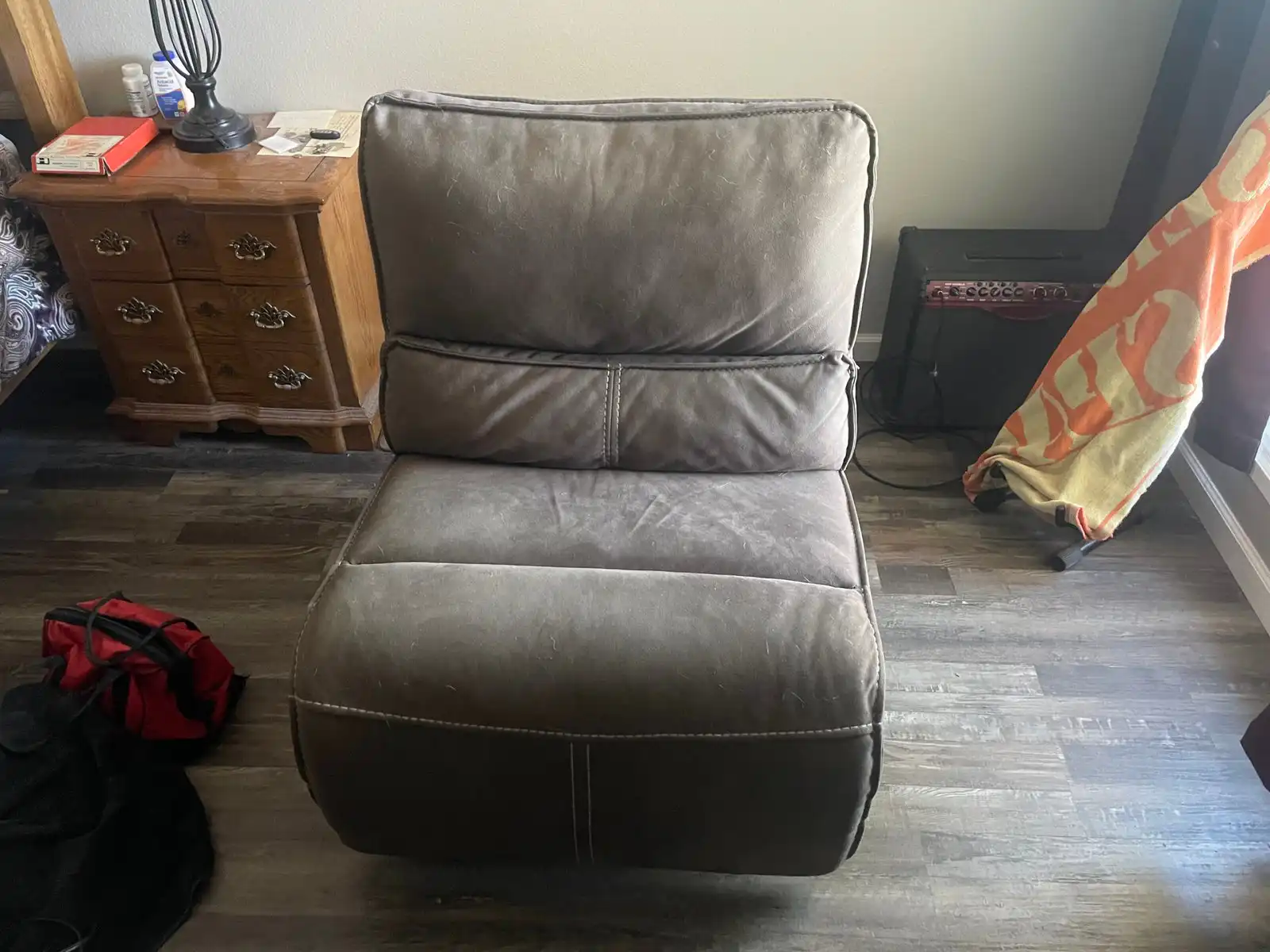
A resident in one of the Verrado Heritage neighborhood homes reached out after noticing that his recliner, which he had been using as his primary work chair for about two years, had developed a very specific darkening pattern, the headrest was dark at one narrow band across the lower third rather than across the full cushion, and the inner forearm strip of each armrest was noticeably darker than the rest of the armrest surface. He mentioned he barely used the footrest and the back cushion was primarily dark only at the lumbar zone. The pattern he was describing is exactly the work-from-home recliner zone map this page covers.
The Cleaning Approach for a Work Recliner Zone Pattern
The cleaning approach for a work-from-home recliner accounts for the specific zone pattern rather than applying uniform treatment across the full piece. Uniform treatment over-treats the zones that are relatively clean, the lower back, the footrest, the cushion sides, while potentially under-treating the narrow, concentrated zones that have the heaviest soil.
Pre-treatment of the headrest zone focuses on the specific narrow band of scalp oil concentration rather than the full headrest area. Extended dwell time in that concentrated band allows the citrus-based degreasing chemistry to penetrate the higher-concentration scalp oil deposit before agitation. The adjacent lower-contact areas of the headrest receive standard treatment rather than the extended dwell that the primary contact band needs.
The inner forearm armrest zones get targeted pre-treatment that addresses the specific wrist and forearm oil line, including the eccrine salt component that may be present from work-stress eccrine output in those zones. A brief water pre-rinse in the armrest contact zones before the degreasing chemistry goes down re-dissolves any dried salt crystal deposits so they can be extracted rather than remaining in the fiber after cleaning. Degreasing chemistry then addresses the oil component after the salt rehydration step.
The lumbar zone of the back cushion gets pre-treatment appropriate to the soil level in that specific area. The upper and lower back zones, which typically have lighter soil in a work recliner, receive standard cleaning without the extended pre-treatment that the lumbar concentration warrants.
The full-piece cleaning follows the targeted pre-treatments, applying the encapsulation chemistry across all surfaces including the lighter-soil zones, the cushion undersides, and the sides and frame fabric. The full-piece step produces the consistent clean appearance across the whole recliner that makes the cleaned zones look like they belong with the rest of the piece rather than showing as isolated cleaned spots against a less-clean background. Dry time with the VLM method in Buckeye's dry climate is approximately one hour, which means a work-from-home resident can have the chair back in service within the same morning.
The Pre-Monsoon Cleaning Window for Work-From-Home Residents
Late June through early July, before the monsoon humidity arrives, is a practical cleaning window for work-from-home residents in Tartesso, Festival Foothills, and other Buckeye communities who want to address accumulated eccrine salt deposits before the monsoon activates them:
- Salt deposited from hand and forearm eccrine sweat during work hours sits in the fabric in dry crystalline form during the nine dry months from October through June
- When the monsoon season arrives and humidity rises, the hygroscopic salt absorbs moisture from the air and partially dissolves — producing the tacky quality work-recliner users notice in the forearm zones during monsoon months
- Pre-monsoon cleaning removes the accumulated salt from the fiber before it can activate, so the recliner goes into monsoon season with clean fiber rather than salt-loaded fiber waiting to rehydrate
- This timing also naturally falls within the 10 to 12 month cleaning interval for a recliner in daily work use
Honest Expectations: What the Cleaning Accomplishes
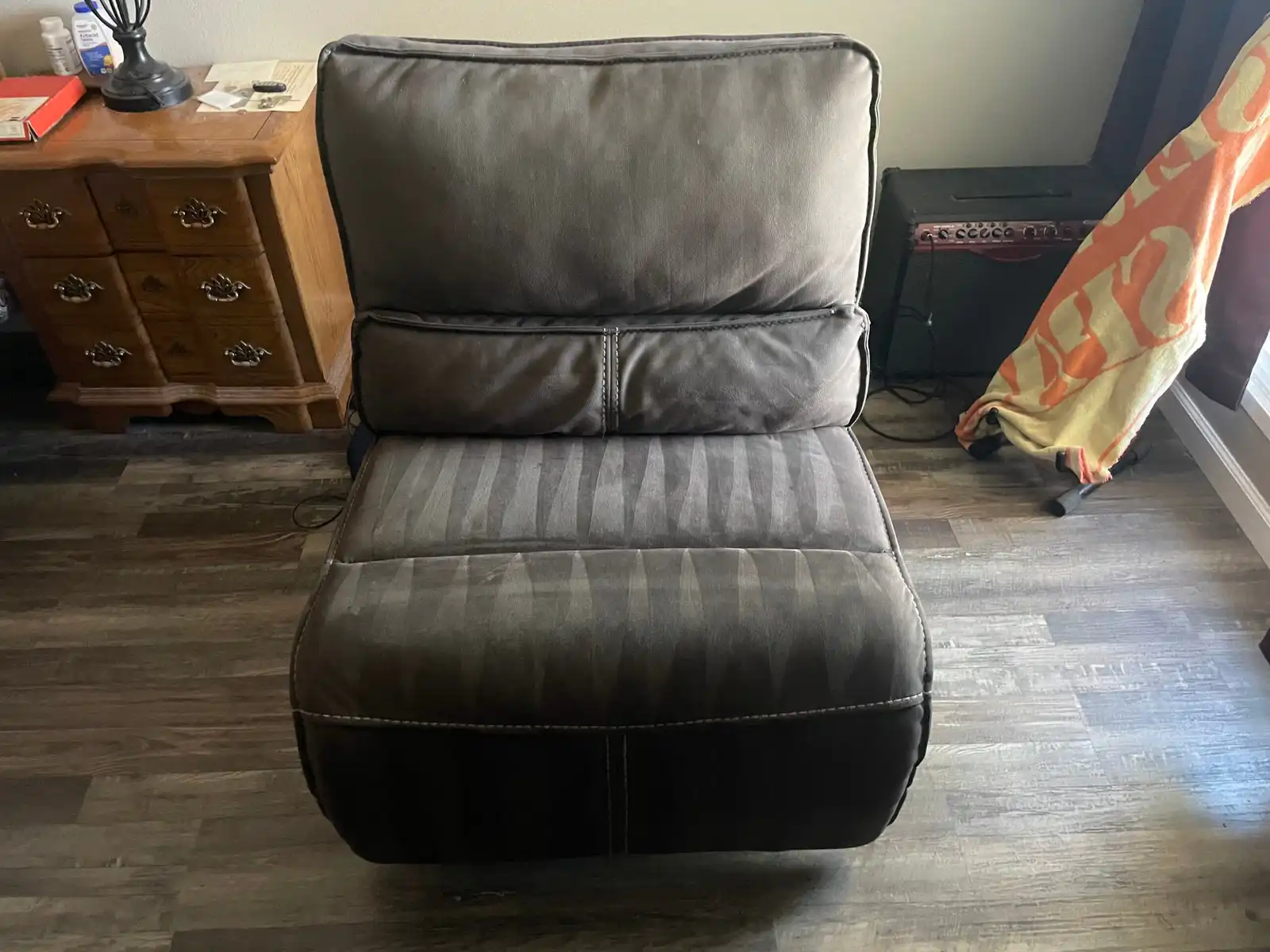
For a work recliner that has been in regular use for one to two years, the zone-specific pre-treatment and full-piece cleaning produces a clear improvement across all surfaces. The concentrated headrest band clears the scalp oil and the color returns to match the surrounding lower-contact areas of the cushion. The inner forearm armrest zones clear the eccrine salt and wrist oil accumulation. The lumbar back zone addresses the concentrated back contact soil. The piece looks consistent and clean across the full surface.
For a work recliner that has been the primary work chair for three or more years without professional cleaning, the concentrated zones may have soil that has been oxidizing and bonding into the fiber long enough that a single cleaning produces significant improvement without fully clearing to the original fabric color. The scalp oil in the narrow headrest band, when it has been accumulating and oxidizing for three years in that specific narrow contact zone, may leave some residual discoloration after cleaning that a piece with two years of accumulation would not. The cleaning improves it significantly. Whether it fully clears depends on the accumulation depth.
Physical wear at the consistent contact points is a separate condition from soil. Recliners used as work chairs develop friction wear at the forearm contact zones on the armrests faster than leisure recliners because the sustained forearm and wrist pressure during keyboard and mouse use creates more consistent mechanical contact than the intermittent arm placement of a leisure user. If the fabric surface at the inner forearm zone of the armrests has developed a sheen or slight texture change from years of friction contact, that is physical fiber change that cleaning addresses the soil component of but does not reverse.
The walkthrough before cleaning identifies which zones have soil-driven versus wear-driven appearance change and tells you what the cleaning will accomplish at each zone. If the condition suggests replacement is the better long-term choice, that conversation happens before anything starts, not after. The price does not change based on what the walkthrough finds.
Keeping a Work Recliner in Better Condition Between Professional Cleanings
A headrest cover for the specific narrow contact band is the most effective single prevention step for the primary soil zone in a work recliner. A washable cotton or microfiber head cover that sits at the correct height for your monitor setup intercepts the scalp oil before it reaches the fabric. Wash it weekly. This one habit eliminates the highest-concentration soil zone on the piece and meaningfully extends the interval between professional cleanings.
Arm covers for the forearm contact zones on the armrests serve the same function as the headrest cover for the secondary concentration zone. A pair of washable cotton arm covers that fit the armrests and stay in position during work hours intercepts the eccrine salt and wrist oil before it reaches the armrest fabric. Some work-from-home residents find these awkward and skip them. Others find them a natural addition to a work setup that prioritizes function over appearance. If you use them, launder them with the headrest cover weekly.
Taking a brief break every two hours to change posture and contact point, beyond the ergonomic benefits for your back and circulation, also slightly reduces soil concentration in the primary contact zones by distributing the contact across slightly different positions. This is a marginal benefit compared to the covers, but posture rotation is already recommended for health reasons and the soil distribution benefit is a secondary bonus.
Professional cleaning every 12 months is appropriate for a work recliner with active daily use. The sustained daily contact from an eight-hour work schedule builds soil faster than intermittent leisure use. For residents who use the recliner for both work hours and evening leisure — essentially the piece is in contact use for 12 or more hours per day — the 10-month end of the range is more appropriate given the total daily contact time. Pre-monsoon timing in late June or early July is a natural scheduling anchor for many work-from-home residents in communities like Watson Estates and Sienna Hills who want to remove eccrine salt deposits before the monsoon humidity arrives.
Learn more about our upholstery cleaning, or explore other cleaning services we offer in Buckeye.

 (602) 429-9602