All Ways Organic Citrus Carpet & Upholstery Cleaning - Home
🇺🇸 Made in USA
🍋 Citrus Based
🌵 Eco-Friendly
Hours
Mon – Sat
7AM – 7PM
Book Online
Book
Online
📍 Serving the Greater Phoenix Valley
🕐 Mon – Sat  7AM – 7PM
👨‍👩‍👧‍👦 Family Owned & Operated
🇺🇸 Made in USA
🍋 Citrus Based
🌵 Eco-Friendly
Book Online
Loveseat Cleaning in Buckeye Arizona - All Ways Organic
Buckeye, Arizona

Buckeye AZ
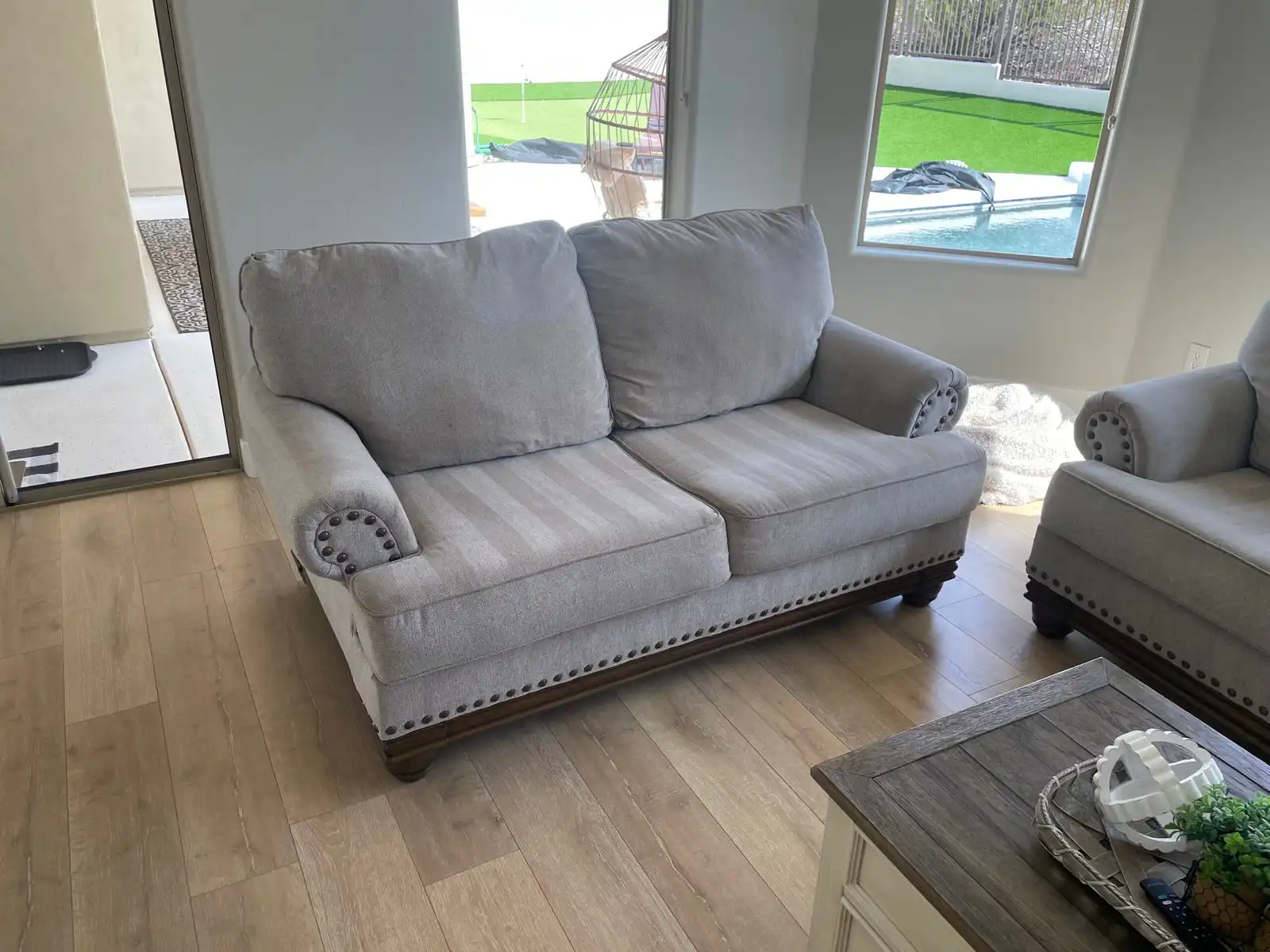
Loveseat Cleaning

Children's food staining on upholstery is a multi-chemistry problem. Juice, dairy, and fat each respond to different treatment chemistry, and using the wrong product first can permanently set what would otherwise come out. Owner-operated, dry in about 1 hour!

Google
5.0 / 5.0
Google Reviews
Organic
100% Organic
Citrus-based products
Owner operated
Owner-Operated
Kyle shows up every time
Quick dry
45-60 Min Dry Time
Back in use within the hour
No hidden fees
No Hidden Fees
Price quoted = price paid
Schedule Your Cleaning
Book Your Buckeye Loveseat Cleaning
Pick a date, build your clean, and confirm - takes about 60 seconds
1Date
/
2Build
/
3Book
Your Clean
$0

When works for you?

Pick a day and time. We'll handle the rest.

Build your clean

Tap a category, then add what you need.

Need commercial cleaning? Call (602) 429-9602 for a custom quote.

Confirm your cleaning

Almost there. Fill in your details and lock in your spot.

📅
Driveway parking available?

Message frequency varies. Msg & data rates may apply. Reply STOP to opt out, HELP for help. Consent is not a condition of purchase. See our Privacy Policy and Terms.

Tap any item above to adjust add-ons or remove it.
✓

You're All Set!

Booking #

Confirmation sent to your email.

What to expect: I'm Kyle, the owner, and I'll be the one showing up. Carpets dry in about 1 hour. Your home will smell like fresh citrus. Safe for kids and pets immediately after cleaning.

Questions? Call or text (602) 429-9602

Need help?(602) 429-9602
Transparent Pricing

No Hidden Fees. No Surprises.

UV light inspection, stain mapping, and the full sequential pre-treatment for tannin, protein, and fat are all included in the general cleaning rate.

Loveseat
Loveseat
2-seat upholstered loveseat
$75
Starting price
Book Now >
3-Seat Sofa
3-Seat Sofa
Standard 3-seat sofa
$125
Starting price
Book Now >
Sectional
Sectional
Full sectional configuration
$225
Starting price
Book Now >
Optional Upgrade Treatments
Available at checkout to customize your cleaning
Deodorizer
Deodorizer
Extra odor elimination for a deeper fresh
High Traffic
High Traffic
Targeted treatment for heavy-wear areas
Pet Treatment
Pet Treatment
Neutralizes pet odors at the source

Dry time approximately 1 hour. Buckeye's low humidity keeps dry times on the shorter end. Pieces with extended compound staining history requiring additional pre-treatment time.

What Our Customers Say

Real Reviews, Real Results

Posted on Google Google
K B profile picture
K B
Google star 1Google star 2Google star 3Google star 4Google star 5Trustindex verifies that the original source of the review is Google.
I had my sectional couch, my area rug, my bedroom carpets and my dining room chairs cleaned at the same time. Kyle did an excellent job and took his time to make sure that everything was done correctly. Everything looked beautiful when he was done. I would not hesitate to recommend this company to anyone that needs carpets or furniture cleaning in their home.
Posted on Google Google
Kelby Reck profile picture
Kelby Reck
Google star 1Google star 2Google star 3Google star 4Google star 5Trustindex verifies that the original source of the review is Google.
Kyle was incredible. The house smells great, the carpets are as clean as they were when we first moved in. I highly recommend, extremely accommodating, friendly and worth every penny.
Posted on Google Google
Brandy Robbins profile picture
Brandy Robbins
Google star 1Google star 2Google star 3Google star 4Google star 5Trustindex verifies that the original source of the review is Google.
Everything about the experience was exceptional. Kyle was prompt, professional, and very detail oriented. My sofa looked almost like new (it’s a really old sofa and we have a lot of dogs, so that’s nothing short of a miracle) and I loved the fresh, citrus smell. This is the only company I will ever use to get my carpet, rugs, and upholstry cleaned from now on.
Posted on Google Google
Joseph Presta profile picture
Joseph Presta
Google star 1Google star 2Google star 3Google star 4Google star 5Trustindex verifies that the original source of the review is Google.
Excellent job and good price of the service.
Posted on Google Google
Tami Matthews profile picture
Tami Matthews
Google star 1Google star 2Google star 3Google star 4Google star 5Trustindex verifies that the original source of the review is Google.
Kyle is very professional! I had three light grey living room set pieces cleaned. The service was quick and the furniture looks and smells fantastic. 10 out of 10 -highly recommend 😊
Posted on Google Google
Kathryn La Touf profile picture
Kathryn La Touf
Google star 1Google star 2Google star 3Google star 4Google star 5Trustindex verifies that the original source of the review is Google.
Kyle did a great job bringing our area rugs back to life! From pick up, cleaning and delivery he was courteous and professional. Highly recommend.
Posted on Google Google
Jane Dane profile picture
Jane Dane
Google star 1Google star 2Google star 3Google star 4Google star 5Trustindex verifies that the original source of the review is Google.
Excellent job by Kyle. Very professional and thorough. Would hire him again!
Posted on Google Google
Karen Mosakowski profile picture
Karen Mosakowski
Google star 1Google star 2Google star 3Google star 4Google star 5Trustindex verifies that the original source of the review is Google.
Here on time, friendly and did a great job. Thank you!
Posted on Google Google
Ruben Real profile picture
Ruben Real
Google star 1Google star 2Google star 3Google star 4Google star 5Trustindex verifies that the original source of the review is Google.
Kyle was awesome!! Arrived when he said he would and was super nice and easy to talk to. He explained the whole process that was going to go on and did an awesome job on our couches and got ride of the milk bottle smell lol. Will be calling him back for sure 🤙🏼
Posted on Google Google
Alicia Slade profile picture
Alicia Slade
Google star 1Google star 2Google star 3Google star 4Google star 5Trustindex verifies that the original source of the review is Google.
Kyle did an excellent job cleaning our carpet and tile! He was professional, friendly, and very flexible with our schedule, which made the whole process so easy. He took the time to answer our questions and made sure everything was done thoroughly. Our carpet, tile, and grout look fantastic, and we were especially impressed that there wasn't a strong chemical odor afterward. Everything looked fresh and clean without the overwhelming smell that often comes with carpet cleaning. Kyle clearly takes pride in his work, and it shows. We really appreciate his excellent service and would highly recommend him to anyone looking for carpet and tile cleaning!

Treating a juice stain with an alkaline upholstery spray does not help it. It sets it. The chemistry that clears grease is the chemistry that permanently bonds tannin to fabric fiber.

About This Service

Why Children's Food Staining on Upholstery Is a Multi-Chemistry Problem and Why Order Matters

Buckeye is a young city. The median age is in the mid-thirties, young families are the dominant demographic throughout the active build-out in Verrado and in communities like Tartesso, and the loveseat in most of the homes I clean here is not a decorative piece in a formal room. It is the second couch in the family room, the piece where the kids sit for movie night, where homework happens, where juice gets spilled, where a slice of pizza is eaten sideways over the armrest, and where the dog eventually claims one end as its own. That is a loveseat that is earning its keep and that accumulates a specific and complex soil profile from children's daily contact.

The reason children's food staining on upholstery fabric is more challenging than most homeowners expect is that a single spill event from a child eating on the couch typically involves multiple soil chemistries simultaneously. Juice contains tannin and natural pigments that are water-soluble when fresh but cross-link into a more permanent compound when they dry or are exposed to heat. A cheese cracker leaves fat and protein. A juice box with a hard squeeze leaves concentrated tannin plus sugar plus food coloring. Chocolate combines fat, protein, and tannin in one stain. Each of these components responds to different cleaning chemistry, and treating all of them with a single product, which is what most consumer spot cleaners do, means some are addressed and others are set more firmly into the fabric.

I'm Kyle with All Ways Organic. The family room loveseat in a Buckeye or Verrado home with young kids is one of the cleaning jobs where understanding the chemistry actually changes the result in a way that matters. This page covers what the different stain components are, why they need to be treated in sequence, and what the cleaning process looks like for a piece with compound child-use staining history.

Why It Matters
Three Stain Chemistry Categories, Three Different Treatments, One Specific Sequence
Tannin
Tannin: Juice, Fruit, and Tomato Staining
Tannin stains come from juice, fruit, grape-based drinks, tomato products, and chocolate. Fresh tannin is water-soluble. As it dries, an oxidation reaction converts the soluble compound into cross-linked structures that bond more tenaciously to the fiber. Mild oxidizing chemistry is the appropriate treatment. Alkaline cleaning chemistry applied to tannin staining accelerates the oxidation process and can permanently darken the stain. Tannin must be addressed first, before any alkaline chemistry touches the piece.
Protein
Protein: Dairy, Eggs, and the Milk in Chocolate
Protein stains come from dairy products, eggs, and the protein component of chocolate. Cold water removes fresh protein easily. The critical rule: protein denatures and bonds permanently to fiber when exposed to heat above roughly 130°F. Hot water or steam applied to a milk or cheese stain sets it permanently. Enzyme chemistry breaks down protein compounds at the molecular level and is the correct treatment - applied cold, in the correct sequence after tannin pre-treatment.
Fat
Fat: Chips, Crackers, Buttery Foods, and Dairy Fat
Fat does not dissolve in water. Applying water to a fat stain spreads it laterally through the fabric rather than removing it. Solvent-compatible chemistry - the d-limonene component in the citrus-based solution - dissolves and lifts lipophilic fat compounds from the fiber. Fat staining left unaddressed begins to oxidize over time, producing the progressively darker appearance and more tenacious bonding that makes old snack stains harder to treat than fresh ones.
Sequence
Sequence: Tannin First, Then Protein, Then Fat
Most stains on a Sundance or Festival Foothills family room loveseat are compound stains with two or three of these categories in the same zone. The wrong treatment order - alkaline degreaser before tannin, or heat before protein enzyme - sets one component while clearing another. The correct sequence works from most chemically sensitive to least: tannin chemistry first with no alkaline, enzyme cold second, solvent-compatible fat treatment third. The full cleaning follows after all three targeted pre-treatments are extracted.

Why the Treatment Sequence Matters as Much as the Chemistry

Most stains on a family room loveseat in a Buckeye home with young children are compound stains that contain more than one of the three chemistry categories simultaneously. A chocolate stain has fat, protein, and tannin. A pizza stain has fat, protein, and tomato tannin. A fruit-and-cheese snack event produces multiple simultaneous deposits in overlapping zones. When the treatment approach applies a single chemistry to a compound stain, it addresses one category and can inadvertently create conditions that make another category harder to remove.

The most damaging sequence error is applying alkaline degreasing chemistry before addressing the tannin component. Alkaline chemistry on tannin staining accelerates the oxidation reaction that makes tannin more permanently bonded to the fiber. If you apply a standard alkaline upholstery cleaner to a juice stain because you want to degrease the adjacent chip grease, the alkaline chemistry that clears the grease simultaneously darkens and sets the tannin stain that was overlapping with it. The stain that could have been fully removed is now significantly more difficult.

The second damaging sequence error is applying heat or steam before the protein component is addressed with enzyme chemistry. Steam cleaning a loveseat with dairy or food protein staining without first using enzyme pre-treatment exposes the staining to the denaturation temperature. The protein bonds permanently to the fiber during the steam application. The surface looks temporarily cleaner because the steam lifted loose surface material, and then the set protein staining becomes apparent as the fabric dries.

The correct treatment sequence for compound food staining works from the most chemically sensitive component to the least. Tannin staining is addressed first with appropriate mild chemistry before any alkaline or heat-generating process is used. Protein staining is addressed second with enzyme pre-treatment and cold chemistry before any warm application. Fat staining is addressed third with the solvent-compatible component once the tannin and protein steps are complete. The full organic cleaning of the piece follows after the targeted pre-treatments have had their dwell time and been extracted.

What the Compound Staining History of a Family Room Loveseat Looks Like

A loveseat that has been in a family room in a Buckeye or Verrado home with young children for two or three years has typically accumulated far more compound staining than the surface appearance suggests. Some events were blotted immediately and look clean. Some were addressed with consumer spray cleaners that removed the visible surface material while leaving chemistry and residue in the fiber. Some were not noticed until they had dried and been sat on multiple times, pressing the staining further into the pile.

The consumer spray cleaner residue situation is particularly relevant to the accumulated stain history. When a parent grabs a bottle of upholstery spray and treats a juice spill, the product removes some of the surface tannin but leaves surfactant residue in the fiber. The treated area looks better for a few days and then darkens again as new soil and airborne particulate adhere to the sticky surfactant residue. Another treatment follows, leaving more residue. After two or three years of this cycle in a high-staining-event household, the fabric in the seating zones and armrests has a layered soil history of original staining, partial cleaning, residue accumulation, and fresh staining on top of the residue. This is the compound that a professional cleaning has to work through.

The armrests on a loveseat in a children's household develop their own specific soil profile. Children lean on armrests the way adults do, depositing skin oil and hand contact soil, but they also use armrests as food resting surfaces and as the place where a juice cup or a sticky hand gets placed during screen time. The armrest fabric typically has a combination of body oil, food tannin, sugar residue, and fat from snack contact that is different in composition from the seating zone soil and different from adult-household armrest soil.

I cleaned a loveseat for a family near the Tartesso Sports Park area in Buckeye whose three kids had been using the piece as the primary family room seating for about two and a half years. The homeowner described it as needing a cleaning and thought the visible spots were the main issue. Under UV light before cleaning, the staining history across the full loveseat was much more extensive than what was visible in normal lighting. The tannin oxidation, the protein deposits, and the consumer cleaner residue layers all showed up in the UV scan and mapped out which zones needed which pre-treatment before the main cleaning. The result after the full sequential treatment was significantly better than the homeowner expected given how discouraged she had become about the piece.

What the UV Light Inspection Reveals Before Cleaning Starts

The fifteen-minute UV inspection before any chemistry is selected maps the staining history that normal lighting does not show:

  • Dried protein deposits fluoresce differently from tannin staining, identifying which zones need enzyme pre-treatment versus tannin chemistry
  • Consumer cleaner residue shows as flat zones that absorb UV rather than reflecting it, marking where multiple spray applications have built up
  • Tannin oxidation shows its degree of advancement, indicating whether mild chemistry will fully reverse it or whether some permanent bonding has occurred
  • Fat deposits in the seating zones and armrests show their lateral spread, which is often wider than the visible surface stain suggests
  • The UV map determines the pre-treatment sequence and the zones where extended dwell time is needed before the main cleaning pass

This assessment is included in the standard rate. The cleaning conversation starts from what the UV inspection shows, not from what the homeowner guesses is in the fabric.

The Professional Cleaning Process for a Family Room Loveseat

The cleaning process for a compound-stained family room loveseat in a Buckeye home starts with the UV light inspection that maps the staining history before any chemistry is selected. The fifteen-minute assessment gives a clear map of which zones need which pre-treatment and in what order.

Tannin staining identified in the UV scan gets the first pre-treatment application before anything alkaline touches the piece. The mild acid chemistry appropriate for tannin oxidation reversal is applied to those specific zones with enough dwell time for the chemistry to work into the oxidized tannin compound. Gentle agitation works the chemistry through the fiber without spreading the stain laterally. Extraction removes the chemistry and the dissolved tannin compound before the next step begins.

Protein staining zones get enzyme pre-treatment as the second step. The enzyme chemistry is applied cold, not warm, to avoid triggering denaturation in protein staining that has not yet been heat-set. The enzyme dwell time is longer than for the tannin step because the biological catalyst action of the enzyme needs time to break down the protein compound at the molecular level. Extraction after the enzyme dwell removes the broken-down protein.

Fat and oil zones get the solvent-compatible component as the third targeted step, applied after the tannin and protein chemistry has been extracted so there is no cross-contamination between the chemistry sequences. Extended dwell in the fat zones allows the d-limonene component to dissolve the lipophilic compounds from the fiber.

The full-piece cleaning follows all three targeted pre-treatments, applying the encapsulation chemistry across the entire surface of the loveseat; cushion faces, armrests, back panels, and sides, to address the ambient body soil and the fine particulate accumulation that is present across the piece beyond the specific staining zones. The post-cleaning check compares the treated staining zones to the surrounding fabric in normal and raking light to assess the result. In most cases the compound staining in a family room loveseat in a Buckeye home responds well to the sequential approach and the treated zones are not visibly different from the surrounding clean fabric.

What DIY Consumer Products Do and Why They Often Make Things Worse

Consumer upholstery spot cleaners are a single-chemistry product applied to a multi-chemistry problem. They are formulated to address the most common household soil type (oily body contact soil) with an alkaline surfactant system. That chemistry works for the soil it was designed for. It creates problems when it is applied to tannin staining, protein staining, or compound staining that includes tannin as a component.

The most common and most damaging consumer cleaning mistake on a family room loveseat is reaching for whatever cleaning spray is under the sink when a stain happens. Alkaline upholstery spray on a fresh juice spill sets the tannin component within the first application. The visible fruit color lightens because the surface material was lifted, which looks like the stain was addressed, and the underlying oxidized tannin compound that was accelerated by the alkaline chemistry becomes the darker, more permanent residue that eventually shows up when the surface material fades.

Steam cleaning units marketed for upholstery are particularly risky on a family room piece with dairy or food protein history because the steam temperature is well above the protein denaturation threshold. A homeowner who steam cleans their loveseat to address general soil and odor may inadvertently set every protein stain on the piece during that cleaning, making those zones permanently harder to address in any subsequent cleaning.

Rubbing a stain rather than blotting it is the physical equivalent of the wrong chemistry problem. Rubbing spreads the stain laterally across a larger area of fiber and drives it deeper into the pile from the surface. Blotting with a clean dry cloth, pressing straight down and lifting, removes liquid from the surface without spreading it. For every type of stain a child produces on upholstery fabric, blotting rather than rubbing is the correct immediate physical response regardless of what chemistry will be used subsequently. This conversation is about understanding why the piece looks the way it does when the professional cleaning starts, and why some of the residual staining may be more permanent than it appears because of how it was treated in the first minutes after it occurred.

Honest Expectations: What the Sequential Treatment Accomplishes

The sequential pre-treatment approach addresses compound food staining at the chemistry level rather than just at the surface level, and for most staining that has not been permanently set by heat or long-term oxidation the results are very good. Fresh to moderately aged tannin staining that has not been treated with alkaline chemistry clears well. Protein staining that has not been heat-set responds fully to enzyme pre-treatment. Fat staining that has not been oxidizing for years responds well to the solvent component.

The realistic limitations are the staining that has been permanently altered. Protein staining that was heat-set by hot water treatment or steam cleaning has denatured and is bonded to the fiber at the molecular level. Enzyme chemistry improves the appearance of set protein staining but may not fully clear zones that received significant heat exposure. Tannin staining that was treated with alkaline chemistry immediately after the spill has undergone accelerated oxidation and the resulting compound is more tenaciously bonded than staining that was left alone and addressed professionally. These zones improve but may not fully clear to the surrounding fabric color.

Food coloring from juice drinks and flavored beverages is its own category. Artificial food dyes are specifically designed to be color-stable and resistant to fading. In upholstery fabric, food coloring behaves more like a fabric dye than a food stain. Professional enzyme and oxidizing treatment partially addresses food coloring in many cases. In severe or long-standing cases, some residual color may remain after the cleaning. The UV light assessment before the cleaning tells me which zones have which staining conditions, and the pre-cleaning conversation tells you what the treatment is likely to accomplish for each specific zone on your piece. No surprises after the cleaning is done.

Managing a Family Room Loveseat With Young Children Between Professional Cleanings

Immediate response is the single most valuable thing a parent can do for loveseat staining. Blot, do not rub, with a clean dry cloth within the first thirty seconds of any food or beverage contact. Cold water only if the stain needs liquid treatment; not warm, not hot, not the nearest cleaning spray. Cold water blotting of a fresh juice or food stain removes the majority of the soluble surface material before the oxidation and bonding processes that make stains permanent begin. This one habit reduces the severity of staining that the next professional cleaning has to address more than any other maintenance practice.

If a consumer spot product is used, check the pH before applying it to tannin staining. Products marketed for tough food stains or set-in stains are typically alkaline because alkaline chemistry is aggressive at removing grease and organic body soil. That same aggressiveness accelerates tannin oxidation. For fruit, juice, and tomato staining on upholstery, a product labeled as enzyme-based or pH-neutral is a safer choice than a general alkaline spot spray. Enzyme products are widely available at grocery stores and pet supply stores and are safe for tannin staining in the way that alkaline sprays are not.

Washable slipcovers or seat covers for the loveseat in active children's use reduce the rate at which staining reaches the upholstery fabric. A fitted washable cover laundered weekly intercepts most of the snack and beverage contact before it reaches the fabric. The loveseat underneath the cover accumulates far less compound staining than it would with direct contact, which means the professional cleaning interval can be extended and the result of each cleaning is better because the accumulation layer is thinner.

In Buckeye's high-UV environment, keeping the loveseat out of direct afternoon sun from west-facing windows slows the tannin oxidation process on any staining already in the fabric. UV and heat both accelerate tannin cross-linking and fat oxidation. A piece in direct afternoon sun in a Verrado or Tartesso home with west-facing windows is seeing conditions that actively worsen any existing staining between cleaning visits. Positioning the piece away from that direct light, or using UV-filtering window treatments during peak sun hours, meaningfully slows the staining chemistry between professional cleanings. Professional cleaning every 10 to 12 months is appropriate for a family room loveseat with young children in active daily use.

Learn more about our upholstery cleaning, or explore other cleaning services we offer in Buckeye.

Common Questions

FAQs About Buckeye Loveseat Cleaning

Most likely yes, and this is one of the more common staining situations I see in Buckeye family homes. Most upholstery sprays are alkaline, and alkaline chemistry applied to fresh tannin staining from juice accelerates the oxidation reaction that converts soluble tannin into a more permanently bonded compound. The surface color may have lightened from the spray, which makes it look like the stain was addressed, while the underlying oxidized tannin compound is now more tenaciously bonded than it would have been if left alone and treated professionally. The brownish residue you are seeing is the oxidized tannin. It is not necessarily permanent — professional treatment with the correct chemistry for tannin oxidation still produces meaningful improvement in most cases, though a stain that has been set by alkaline treatment is harder to fully clear than one that was not.

Dairy contains protein, and steam cleaning is above the temperature at which protein denatures and bonds permanently to fabric fiber. The stiff, discolored spot is set protein staining - the dairy protein compound denatured during the steam application and bonded to the fiber. Enzyme pre-treatment can improve the appearance of set protein staining by breaking down what it can access at the fiber surface, but staining that has been heat-set is harder to fully clear than staining that was kept cold and treated with enzyme chemistry. The professional cleaning will improve it, but heat-set protein staining has a limited outcome range compared to protein staining that has not been exposed to heat.

In most cases it is worth cleaning first, particularly if the fabric is in good structural condition. The UV assessment before cleaning maps the staining history and tells me which zones have which staining conditions, which gives you an accurate picture of what the cleaning will accomplish before you decide whether to invest in it. Fabric that is structurally intact and has compound staining history that has not been severely heat-set typically cleans up significantly better than the pre-cleaning appearance suggests. If the assessment shows conditions that limit the likely outcome below what justifies the cleaning cost, I will tell you that before starting.

Yes, Tartesso and the communities along the Rainbow Road corridor are within my Buckeye service area. The young family demographic in Tartesso and the surrounding communities produces exactly the household profile this page describes - active kids, regular food contact on the furniture, and a piece that has accumulated compound staining history over a few years of family use. The same pre-treatment sequence and UV assessment approach applies regardless of which Buckeye neighborhood the home is in.

The UV light inspection tells me a great deal about what is in the stain even when the source is unknown. Protein residue, tannin compounds, and fat deposits all have different UV fluorescence signatures. The physical characteristics of the stain - color, texture, whether it feels stiff or tacky, how old it appears - also give information about the likely composition. In cases of unknown staining, I start with the most conservative chemistry and test the stain's response before committing to a specific approach. Progressive testing from the gentlest to the more aggressive chemistry, with observation at each step, is the safe approach for unknown compound staining.

Body oil staining from skin contact is a single-chemistry problem - sebaceous oil and skin cell material that responds to the degreasing component of the cleaning solution. It accumulates gradually and responds predictably to the standard cleaning approach. Children's food staining is a multi-chemistry compound that requires sequential treatment because the tannin, protein, and fat components each respond to different chemistry and the wrong chemistry applied to one component can set another permanently. The compound nature of food staining is what makes it require a more deliberate approach than the body oil that is also present on the same piece.

Yes, and it is one of the most practical maintenance recommendations I make to Buckeye families with young children and quality upholstery. A washable fitted slipcover laundered weekly intercepts most of the food and beverage contact that would otherwise reach the upholstery fabric, dramatically reducing the rate at which compound staining accumulates. The loveseat under the cover stays in significantly better condition than it would with direct contact, the professional cleaning interval can be extended, and the result at each cleaning is better because the accumulation is thinner and less compounded. Remove the slipcover before the professional cleaning so the cleaning addresses the upholstery directly.

Every 10 to 12 months is the right interval for a family room loveseat with children in active daily use. The compound food staining accumulates faster than in an adult-only household, and the oxidation and cross-linking processes that make staining progressively more permanent are happening continuously between cleaning visits. Cleaning within 12 months keeps each cleaning at a level where the sequential pre-treatment approach produces full results. Waiting longer allows the staining to advance further toward the permanent end of the spectrum, which reduces the achievable outcome at the next cleaning.

Ready to Clean Your Loveseat?
UV assessment included - No hidden fees - Pay after you're happy
What Our Customers Say

Real Reviews, Real Results

Posted on Google Google
K B profile picture
K B
Google star 1Google star 2Google star 3Google star 4Google star 5Trustindex verifies that the original source of the review is Google.
I had my sectional couch, my area rug, my bedroom carpets and my dining room chairs cleaned at the same time. Kyle did an excellent job and took his time to make sure that everything was done correctly. Everything looked beautiful when he was done. I would not hesitate to recommend this company to anyone that needs carpets or furniture cleaning in their home.
Posted on Google Google
Kelby Reck profile picture
Kelby Reck
Google star 1Google star 2Google star 3Google star 4Google star 5Trustindex verifies that the original source of the review is Google.
Kyle was incredible. The house smells great, the carpets are as clean as they were when we first moved in. I highly recommend, extremely accommodating, friendly and worth every penny.
Posted on Google Google
Brandy Robbins profile picture
Brandy Robbins
Google star 1Google star 2Google star 3Google star 4Google star 5Trustindex verifies that the original source of the review is Google.
Everything about the experience was exceptional. Kyle was prompt, professional, and very detail oriented. My sofa looked almost like new (it’s a really old sofa and we have a lot of dogs, so that’s nothing short of a miracle) and I loved the fresh, citrus smell. This is the only company I will ever use to get my carpet, rugs, and upholstry cleaned from now on.
Posted on Google Google
Joseph Presta profile picture
Joseph Presta
Google star 1Google star 2Google star 3Google star 4Google star 5Trustindex verifies that the original source of the review is Google.
Excellent job and good price of the service.
Posted on Google Google
Tami Matthews profile picture
Tami Matthews
Google star 1Google star 2Google star 3Google star 4Google star 5Trustindex verifies that the original source of the review is Google.
Kyle is very professional! I had three light grey living room set pieces cleaned. The service was quick and the furniture looks and smells fantastic. 10 out of 10 -highly recommend 😊
Posted on Google Google
Kathryn La Touf profile picture
Kathryn La Touf
Google star 1Google star 2Google star 3Google star 4Google star 5Trustindex verifies that the original source of the review is Google.
Kyle did a great job bringing our area rugs back to life! From pick up, cleaning and delivery he was courteous and professional. Highly recommend.
Posted on Google Google
Jane Dane profile picture
Jane Dane
Google star 1Google star 2Google star 3Google star 4Google star 5Trustindex verifies that the original source of the review is Google.
Excellent job by Kyle. Very professional and thorough. Would hire him again!
Posted on Google Google
Karen Mosakowski profile picture
Karen Mosakowski
Google star 1Google star 2Google star 3Google star 4Google star 5Trustindex verifies that the original source of the review is Google.
Here on time, friendly and did a great job. Thank you!
Posted on Google Google
Ruben Real profile picture
Ruben Real
Google star 1Google star 2Google star 3Google star 4Google star 5Trustindex verifies that the original source of the review is Google.
Kyle was awesome!! Arrived when he said he would and was super nice and easy to talk to. He explained the whole process that was going to go on and did an awesome job on our couches and got ride of the milk bottle smell lol. Will be calling him back for sure 🤙🏼
Posted on Google Google
Alicia Slade profile picture
Alicia Slade
Google star 1Google star 2Google star 3Google star 4Google star 5Trustindex verifies that the original source of the review is Google.
Kyle did an excellent job cleaning our carpet and tile! He was professional, friendly, and very flexible with our schedule, which made the whole process so easy. He took the time to answer our questions and made sure everything was done thoroughly. Our carpet, tile, and grout look fantastic, and we were especially impressed that there wasn't a strong chemical odor afterward. Everything looked fresh and clean without the overwhelming smell that often comes with carpet cleaning. Kyle clearly takes pride in his work, and it shows. We really appreciate his excellent service and would highly recommend him to anyone looking for carpet and tile cleaning!
All Buckeye Services
What We Clean in Buckeye
All 14
Carpet
Upholstery
Area Rugs
Tile & Commercial
Decorative desert cactus illustration growing from the desert floor