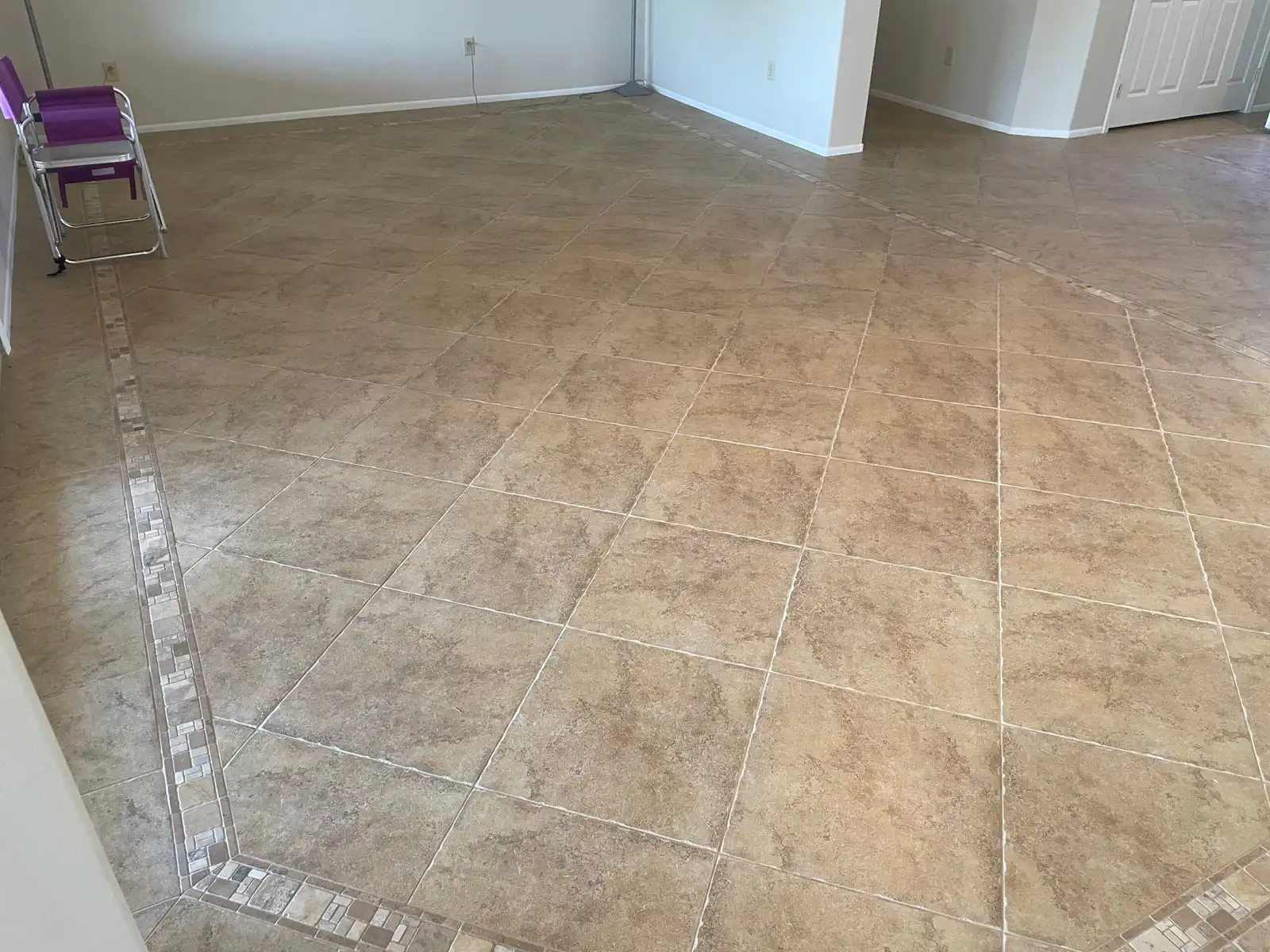
What Happens When Standard Alkaline Cleaning Meets New Grout
The most common experience that Verrado and Buckeye homeowners have when a standard tile cleaning service visits a new build is that the tile face cleans up nicely but the grout does not lighten much. The service may describe it as heavy soiling or staining. The homeowner may wonder if the grout has already been permanently stained by the first year of use. In most cases neither of those explanations is accurate.
What is actually happening is a chemistry mismatch. The alkaline cleaning chemistry applied to the grout is meeting grout that is already at an alkaline pH internally. The cleaning chemistry's primary mechanism for loosening and removing organic soil from grout, saponification and the solubilization of fats and proteins in alkaline solution, requires a pH gradient to drive the reaction. When the grout interior is already highly alkaline, that gradient does not exist or is minimized, and the chemistry does not penetrate the grout pore structure effectively. It cleans the surface of the grout but does not pull material from the pore interior.
This produces the frustrating pattern where the grout looks slightly better after a first standard cleaning but nowhere near as clean as the homeowner expected for what they thought was relatively new, lightly used tile. The grout is not permanently stained. The cleaning approach was simply not calibrated to the chemistry condition of the grout at this stage of its curing.
Efflorescence is the other thing that can happen with very fresh grout and alkaline cleaning chemistry. In fresh grout where significant calcium hydroxide is still present internally, wet cleaning that drives moisture into the grout can mobilize some of these salts and bring them to the surface as the grout dries, leaving a whitish haze on or near the grout lines that was not there before cleaning. This is more common in the first several months of grout installation when the salt content of the pore water is highest, and it is more work to address than if the first cleaning had been done with an approach calibrated to new grout chemistry.
The Acid Pre-Rinse Approach for New Construction Tile
The correct approach for a first professional cleaning of new grout in a Verrado or Buckeye new construction home uses a dilute acid pre-rinse as the primary chemistry step rather than alkaline cleaning chemistry. A dilute phosphoric or citric acid solution at a low concentration reacts with the residual calcium hydroxide in the grout pore structure in a neutralization reaction that converts it to a neutral salt and water. This reaction does two things simultaneously: it lowers the internal pH of the grout toward neutral, and the reaction itself releases the mineral compound from the pore surface and holds it in solution so that extraction can remove it.
Once the acid pre-rinse has neutralized the residual alkalinity and been extracted, the grout is in a chemistry state where standard cleaning chemistry can actually function the way it is supposed to. The now-neutral grout interior responds to organic soil removal chemistry because the pH gradient needed to drive saponification and solubilization now exists. A second cleaning pass with the appropriate organic soil removal chemistry after the acid pre-rinse produces significantly better grout cleaning results than either chemistry used alone.
The acid pre-rinse requires care in a few specific situations. Natural stone tile, which includes travertine, marble, limestone, and similar materials, is composed of calcium carbonate that dissolves in acid. Even very dilute acid chemistry applied to natural stone tile causes etching, a permanent physical damage to the stone surface. The acid pre-rinse approach is appropriate for ceramic and porcelain tile, which are stable at the acid concentrations needed. If any natural stone is present in the installation, those areas are protected from the acid pre-rinse and addressed with pH-neutral stone-specific chemistry instead.
Grout sealer condition also matters before the acid pre-rinse. If the grout was sealed before the residual alkalinity was fully addressed, the sealer may need to be assessed for whether it is interfering with chemical penetration. A sealer that is intact and properly bonded may limit how effectively the acid pre-rinse reaches the grout interior. In those cases, the conversation about whether to strip and re-seal after the cleaning is worth having before anything starts, because cleaning sealed grout with residual alkalinity requires a different approach than cleaning unsealed or properly aged grout.
The Right Timing Window for a First Professional Cleaning
One of the more common questions I get from new Verrado homeowners is whether to clean the tile and grout right away or wait until the grout has had more time to cure. The answer depends on how long the grout has been in place and what the primary goal of the cleaning is.
For grout that is less than three months old, waiting is recommended. The carbonation process is still in its earliest phase, the residual alkalinity is at its highest, and the risk of mobilizing soluble salts through wet cleaning is also at its highest. More importantly, very fresh grout that has not yet reached its full hardness is slightly more vulnerable to the mechanical action of cleaning equipment, and the pore structure is still changing as the hydration reaction proceeds. Cleaning at this stage produces limited results and carries more risk than waiting.
For grout that is three to nine months old, the acid pre-rinse approach is the right first cleaning method. The grout has hardened and its basic structure is stable, but the internal pH is still elevated enough that standard alkaline cleaning will underperform. The acid pre-rinse and follow-up organic cleaning approach produces the best result in this window and gives the grout its first thorough cleaning before significant soil has had time to embed deeply into the pore structure.
For grout that is nine months to two years old, the residual alkalinity has moderated significantly in most cases and a standard professional cleaning with appropriate degreasing and extraction chemistry performs much closer to what you would expect in an older home. A pH test of the grout before cleaning still confirms what is present and allows the approach to be calibrated appropriately.
The Verrado build-out creates a specific timing question that comes up regularly. A homeowner moves into a home where the tile was installed six months before they moved in during the construction and finishing period. By the time they settle in and start thinking about tile cleaning, the grout may be eight to ten months old, which is exactly the window where the acid pre-rinse approach is most valuable. Knowing this timing helps me recommend the right approach without having to guess at the grout age based on how it looks.
What the Full Tile Cleaning Process Looks Like
Every tile and grout cleaning in a new Verrado or Buckeye home starts with the walkthrough: how old is the grout, was a sealer applied and if so when, is any natural stone present in the installation, and what is the primary soil concern the homeowner wants addressed. These answers shape the chemistry approach before anything is applied to the floor.
A pH test strip applied to the grout surface after wetting with plain water gives a direct reading of the surface pH and a useful indicator of what is happening closer to the pore interior. A surface pH above 9 in grout that the homeowner believes is fully cured is a clear signal that the acid pre-rinse approach is appropriate rather than leading with alkaline chemistry. A surface pH of 7 to 8 on grout that has been in place for over a year indicates adequate carbonation and the standard cleaning approach will function normally.
After the walkthrough and pH test, the cleaning proceeds according to what the assessment found. For new construction homes in the three-to-nine-month grout window, the acid pre-rinse goes down first in the grout lines, with careful protection of any tile face zones that might contact the acid solution. A brief dwell allows the neutralization reaction to proceed. Extraction removes the neutralized mineral compounds and the acid solution. The pH of the grout is re-checked to confirm it has dropped toward neutral before the organic cleaning chemistry is applied.
The organic cleaning chemistry then addresses the construction residue, foot traffic soil, hard West Valley water mineral deposits, and any other accumulated material on the tile face and in the now-neutralized grout lines. The lower pH of the freshly neutralized grout means the cleaning chemistry can now penetrate the pore structure and work on the soil embedded there rather than just skimming the surface. Extraction removes the cleaning solution and suspended soil. The final step is a recommendation on sealing, which the homeowner can add at the same appointment or schedule separately.
Protecting New Tile and Grout Between Professional Cleanings
The habits that keep new Verrado tile floors in the best condition between professional visits:
- Seal the grout after the first professional cleaning. A penetrating grout sealer applied to clean, pH-neutral grout fills the pore structure and dramatically reduces how quickly soil embeds between professional cleanings. Do not seal grout that has not been professionally cleaned first: sealing over soil traps it permanently and makes the next cleaning significantly harder.
- Use the right daily cleaning chemistry. The most common tile maintenance mistake in new Verrado and Buckeye homes is using a multi-surface cleaner or mop solution that leaves surfactant residue in the grout. For new tile in particular, plain water mopping or a pH-neutral tile-specific cleaner in a two-bucket system with a clean water rinse keeps the grout from accumulating cleaning product residue on top of the ordinary soil load.
- Sweep or vacuum before mopping. Wet mopping over dry grit on tile pushes the particulate into the grout lines rather than removing it. In Buckeye's high-grit environment, dry sweeping or vacuuming first removes the majority of abrasive particulate that would otherwise grind further into the grout with mop pressure and foot traffic during and after mopping.
- Run the first professional cleaning within the three-to-nine-month window after installation. After that, professional cleaning every 12 to 18 months maintains the grout in the condition the first cleaning established. High-traffic areas like the kitchen and main entry are appropriate for 12 months. Secondary bathroom tile can go to 18 months.
Honest Expectations: What Cleaning Accomplishes in New vs. Aged Grout
A properly approached first professional cleaning of new construction tile in a Verrado home produces a clear improvement: grout that is meaningfully lighter and more consistent in color than it was before, tile faces that are clean and reflective, and a floor that looks the way a new floor should look rather than the slightly dull, unevenly-colored version that months of accumulated construction dust and foot traffic produce.
The limitation is that the acid pre-rinse and cleaning process addresses soil and residual alkalinity, but it does not change the underlying color of the grout. Grout that was installed in a medium gray color is medium gray when clean. If the homeowner's expectation is that cleaning will produce a bright white or near-white grout result and the grout was not installed in that color, cleaning will not achieve that. The improvement is the grout looking like itself, its installed color, rather than the progressively darker and more mottled version that soil and alkalinity residue produce.
Grout that has been stained by something other than alkalinity residue and organic soil presents differently. Iron-based staining from water with high iron content produces a reddish-brown discoloration in grout that standard cleaning chemistry does not address effectively. Iron removal requires specific chelating chemistry that is a separate treatment. Hard water mineral haze on the tile face from Buckeye's West Valley water supply is addressable through the acid chemistry in the pre-rinse and cleaning, but heavy calcium scale that has built up over years may require a more concentrated acid treatment than is appropriate in a first cleaning of new grout.
The pre-cleaning walkthrough assesses the tile, tests the pH, identifies the soil types present, and tells the homeowner what the cleaning will and will not accomplish before it starts. A first cleaning of a new Verrado home is a calibration exercise as much as it is a cleaning appointment, and the information gathered during the walkthrough is what makes the cleaning actually work.
Learn more about our tile and grout cleaning, or explore other cleaning services we offer in Buckeye.

 (602) 429-9602