The Physics of Wick-Back: Why Moisture Volume Is the Key Variable
Wick-back is driven by capillary action, the same physical force that pulls water up through a paper towel or draws water up into a plant stem against gravity. In upholstery fabric, capillary action moves moisture through the fiber structure from wetter zones toward drier zones as the piece dries. The direction of movement is always from high moisture concentration toward low moisture concentration.
When a sofa has been cleaned with significant moisture application, the interior of the cushion foam and the deeper layers of the fabric backing hold more moisture than the surface of the fabric pile. As the surface of the pile dries from air exposure, it becomes the low-moisture zone and the interior becomes the high-moisture zone. Capillary action then moves moisture from the interior toward the surface. This movement continues until the moisture concentration equalizes or all the moisture has evaporated.
The problem is what that moisture carries. Any soil, staining compound, or dissolved material in the interior of the cushion or the backing is dissolved in the moisture and travels with the capillary flow toward the surface. Concentrated soil that the cleaning extracted from the pile surface but did not fully remove from the backing or cushion interior rides the outward-moving moisture to the fabric face during drying. When the moisture reaches the surface and evaporates, the soil it was carrying is deposited there, exactly where the cleaning had just removed it.
This means the zone that wick-back affects most is always the zone with the most soil in the backing or deep cushion layers, because that is where the dissolved soil concentration available to ride the capillary flow is highest. Pet urine contamination that has reached the cushion foam is the most dramatic source because dried urine leaves highly concentrated uric acid crystal deposits in the foam that dissolve and become strongly mobile when the foam is wetted. The wick-back this page covers is from general household soil: the organic accumulation, staining compounds, and dissolved material in the backing and deep fiber layers of a sofa that has been over-wetted during cleaning.
Why Steam Cleaning Produces the Worst Wick-Back Conditions
Not all cleaning methods create equal wick-back risk. The primary variable is how much moisture enters the cushion interior and the backing layers during the cleaning process. The more moisture that penetrates beyond the pile surface into the interior layers, the greater the dissolved soil load available to wick back to the surface during drying.
Steam cleaning and hot water extraction apply significantly more moisture to upholstery than any other common cleaning method. A steam cleaning unit heats water to produce steam that is driven into the fabric under pressure. That steam condenses in the fiber and in the cushion interior, depositing liquid moisture throughout the depth of the piece rather than just at the pile surface. A typical steam cleaning session on a sofa introduces enough moisture to fully saturate the outer layers of the cushion foam, particularly in areas where the steam wand is held for any length of time.
The extended drying time of steam-cleaned upholstery is partly a function of the moisture volume and partly a function of where that moisture is. Moisture that penetrated deep into the cushion foam dries more slowly than surface moisture because it has to move outward through the foam and the backing before it can evaporate from the fabric surface. That long outward journey through the cushion interior is exactly the path that wick-back follows.
The heat from steam also plays a specific role beyond just adding moisture. Hot water and steam dissolve soil compounds more effectively than cold or room-temperature water because higher temperature increases the solubility of many soil components. A steam cleaning process that drives hot moisture deep into a cushion with significant embedded soil dissolves a larger volume of that soil and holds it in solution, which means more dissolved soil is available to wick back to the surface during the extended drying period.
How Low-Moisture VLM Cleaning Prevents Wick-Back
The VLM encapsulation cleaning process prevents wick-back through the same physical logic that explains why steam causes it. Less moisture into the cushion means less moisture movement during drying, which means less dissolved soil transported to the surface.
The VLM process applies cleaning chemistry at a controlled low-moisture level that is calibrated to penetrate and clean the pile, the fiber itself and the upper portion of the backing, without saturating the cushion foam. The encapsulation chemistry surrounds soil particles and holds them in a crystalline structure that does not dissolve or become mobile during drying the way free dissolved soil does. When extraction removes the cleaning solution, it removes the encapsulated soil with it.
The dry time of approximately one hour for VLM-cleaned upholstery in Buckeye's dry climate reflects how little moisture entered the fiber during cleaning. When the surface is dry at one hour, there is no outward moisture gradient from the interior to drive capillary flow. The shallow moisture profile of the VLM process means there is no extended drying period during which dissolved soil in the interior has time to wick to the surface.
The critical difference is extraction timing. In the VLM process, extraction follows immediately after agitation while the chemistry and the dissolved soil are at the surface and in the upper pile. The window between agitation and extraction is short, which means the dissolved soil does not have time to penetrate deeper into the fiber before it is removed. Steam cleaning typically applies moisture, allows dwell, and then extracts, but the moisture applied during the dwell period continues to penetrate deeper into the cushion during the dwell window.
The Buckeye Sofa Context: Active Households and Soil History
The sofa in a Buckeye or Verrado family home is the primary living room piece in a household that uses its living room. Young families, kids, dogs, active daily use. The main sofa takes the full load of the household's living room activity, which in Buckeye's warm climate means it is also where family members sit after outdoor time, after pool time, after coming in from the backyard through spring and summer and fall.
In the established phases of Verrado in the Founders Community area, homes that have been occupied for five to ten years have sofas with real soil history. The fabric has accumulated body oil, food contact soil, pet dander and hair, and in many cases the aftermath of multiple DIY cleaning attempts with consumer spray products and rental steam units. This is exactly the history that creates wick-back risk on the next professional cleaning: soil that has been driven deeper into the backing by previous over-wetting sits in the interior and is available to wick back during any subsequent high-moisture cleaning.
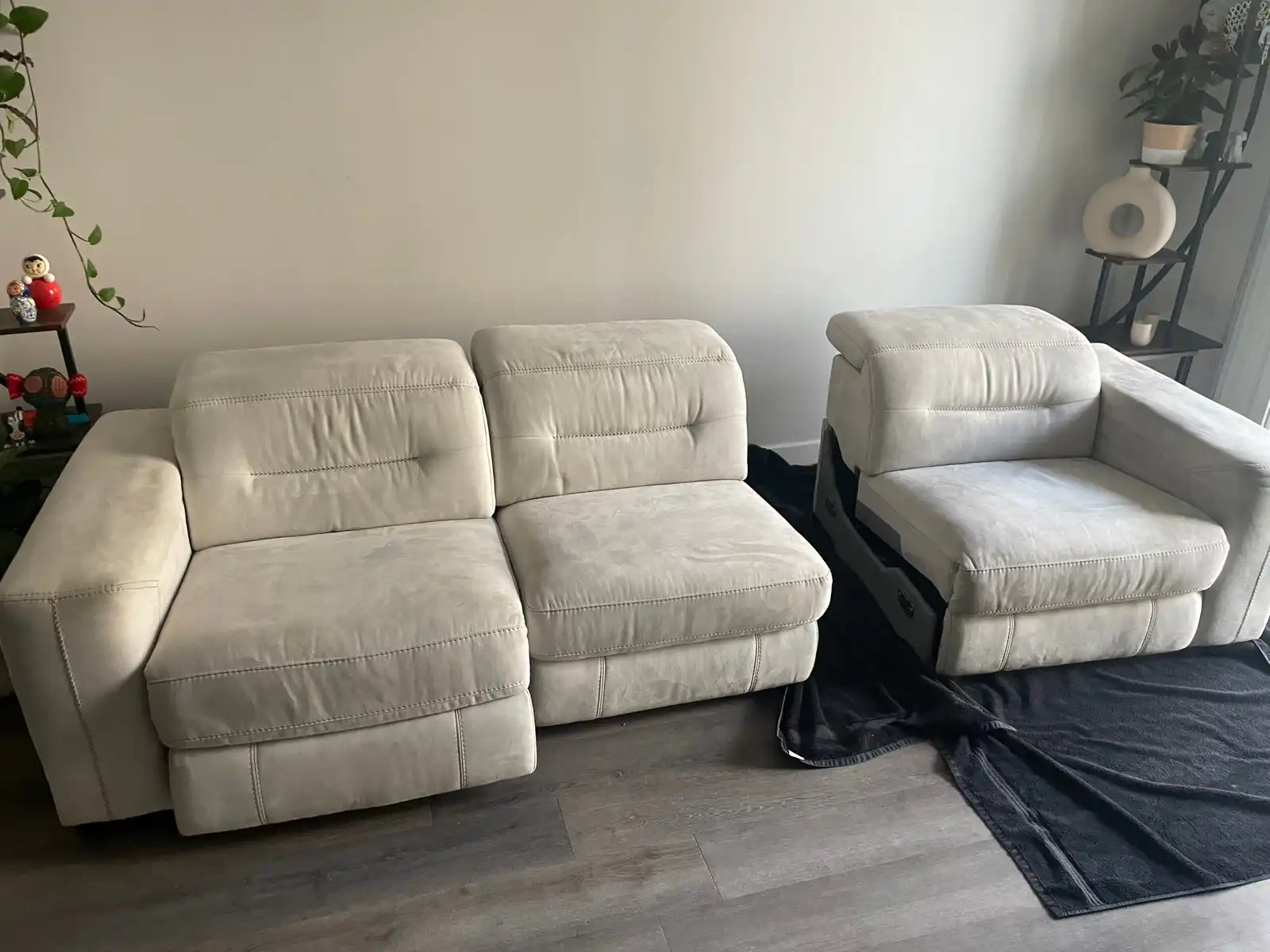
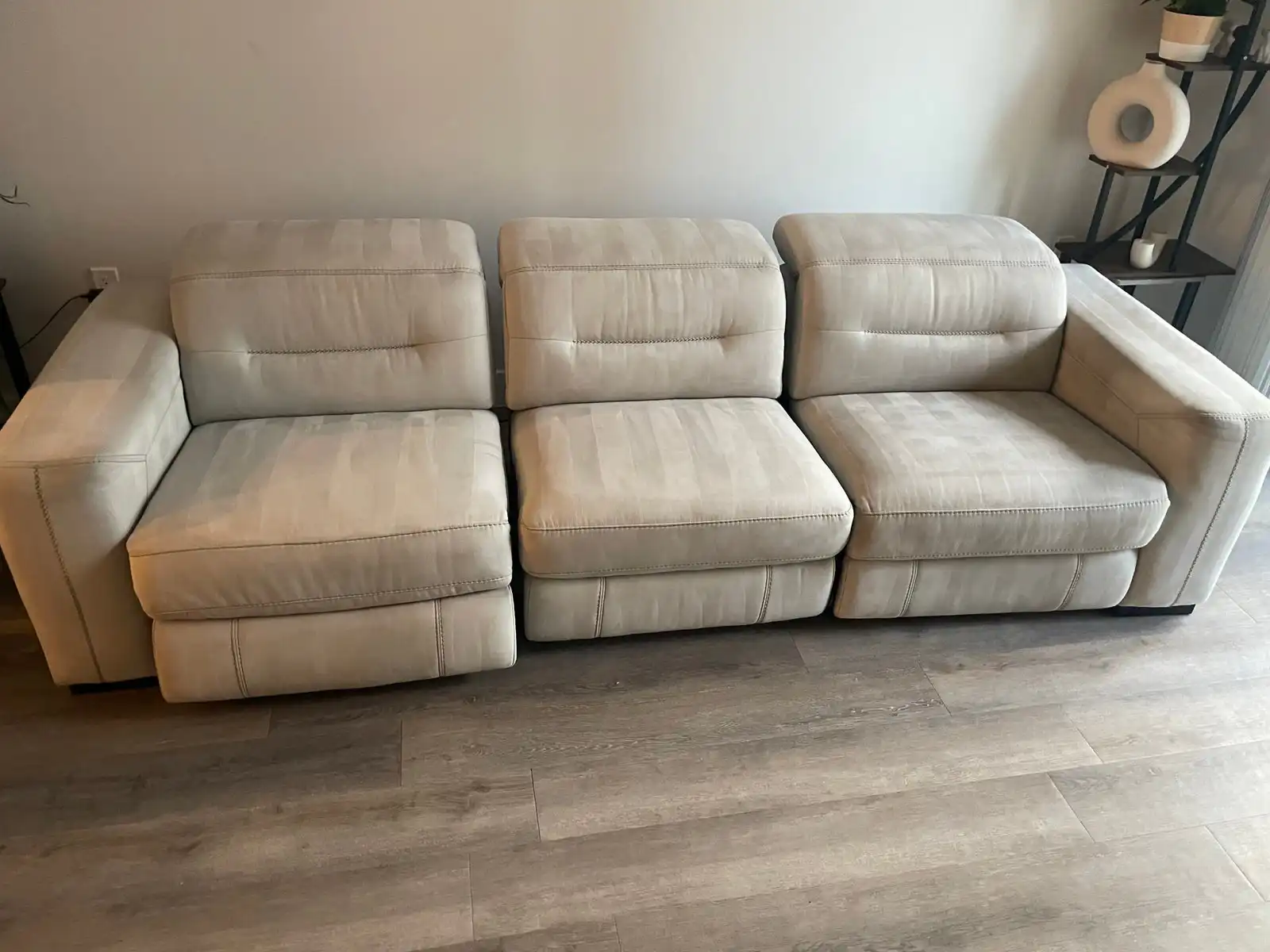
A homeowner near the Buckeye Road corridor in one of the established Buckeye neighborhoods outside the master-planned communities called me after having their sofa cleaned twice by the same service with the same result both times. The sofa looked great right after each cleaning and by the next morning the original dark zones were fully back. That is the classic wick-back presentation. The service had the chemistry right, but the high moisture application was dissolving backing-level soil that wicked back each time. The VLM approach on the same sofa kept the moisture in the pile zone, extracted immediately after agitation, and the sofa dried clean at 50 minutes with no wick-back.
Newer phases throughout the Verrado build-out have sofas that are newer but not necessarily cleaner in the way the homeowner might expect. Active young families in brand-new homes get their furniture dirty at the same rate as any other active household. A sofa that is two years old in a Sundance or Festival Foothills home with young children and a dog has two years of compound soil accumulation that may not be visible at the surface but is present in the backing layer in a way that creates wick-back risk for any cleaning that introduces significant moisture.
Buckeye's climate plays a supporting role. In a more humid climate, a sofa dries slowly over many hours and the extended drying period gives the capillary flow more time to carry dissolved soil to the surface. In Buckeye's low humidity the evaporation rate is fast, which shortens the wick-back window, but only if the moisture volume is appropriate for that fast evaporation rate. Steam cleaning in Buckeye's low humidity still produces wick-back because the moisture volume is high enough that the deep cushion interior takes many hours to dry even when the surface dries quickly.
Identifying Wick-Back vs. Resoiling vs. Incomplete Cleaning
When a sofa looks worse after drying than it did right after cleaning, three distinct causes can produce similar-looking outcomes:
- Wick-back develops during the drying period, typically within four to eight hours after cleaning. The sofa looks improved immediately after the cleaning ends, then darkens progressively as it dries. The pattern follows the original staining zones exactly.
- Resoiling develops over days and weeks after cleaning, not during drying. Surfactant residue left in the fiber from the cleaning chemistry acts as a soil attractant, capturing airborne particulate and contact soil faster than clean fiber would. The piece looks worse at two weeks than it did at two days.
- Incomplete cleaning leaves unchanged zones that look the same as before, not zones that changed during drying. The surface areas look better but the areas that were not fully cleaned were unchanged from the start.
The distinction determines the solution. Wick-back requires a different cleaning method. Resoiling requires residue-free chemistry and rinsing. Incomplete cleaning requires targeted pre-treatment of the deeper backing soil before the main cleaning.
Honest Expectations: What the Right Cleaning Accomplishes
VLM cleaning prevents wick-back by keeping moisture in the pile zone and extracting immediately. For sofas where the soil is primarily in the pile and upper backing, this produces a result that holds: the sofa looks clean after drying and stays clean because no wick-back brings interior soil back to the surface.
For sofas with very heavy soil penetration into the cushion foam, from a significant liquid spill that was not addressed promptly, from pet urine that reached the foam, or from years of high-moisture cleaning that drove soil progressively deeper, the VLM process addresses the pile and upper backing effectively but may not fully address the foam-level contamination. In these cases the conversation before the cleaning covers what it will improve and what it cannot reach.
A zone that has deeply embedded backing soil shows a characteristic behavior during the initial check at the start of the appointment: pressing the fabric firmly and releasing shows whether the soil springs back from depth or is only at the surface. Moisture application to a small test area reveals whether the backing releases soil upward during drying, which is an indicator of wick-back risk at that zone. For zones with confirmed high wick-back risk, the approach uses the most conservative moisture application and the most immediate extraction to minimize the dissolved soil load available for capillary transport. This approach reduces wick-back but may produce a result in the highest-risk zones that is not as complete as the rest of the piece. That is the honest outcome of managing wick-back risk rather than ignoring it.
UV fading of the fabric dye, chlorine dye oxidation in pool-contact households in Tartesso and other Buckeye communities with heavy pool use, and physical fiber wear from years of use are all conditions that exist independently of cleaning and that cleaning does not reverse. These conditions are identified at the start of the appointment so the outcome conversation is accurate before anything begins.
What Buckeye Sofa Owners Can Do Between Professional Cleanings
For any spill on a sofa, blot immediately with a clean dry cloth and use as little additional moisture as possible in the first response. The goal of the immediate response is to absorb the spill from the surface before it penetrates to the backing. A dry cloth pressed firmly against a fresh spill absorbs liquid through contact pressure. Multiple dry cloths replacing each other as they absorb is more effective than a single cloth that becomes saturated. Getting the surface liquid out before it penetrates to the backing is what prevents the backing-level soil that creates wick-back risk for the next professional cleaning.
Do not use steam cleaning appliances on a sofa. Consumer steam cleaning units marketed for upholstery create the exact moisture conditions that produce wick-back. The result may look good for the first hour and then the wick-back develops as the piece dries over the following hours. A professional cleaning with appropriate chemistry and a low-moisture approach is meaningfully better than a DIY steam application that drives dissolved soil into the backing and pulls it back to the surface.
If a consumer spot cleaner is used between professional cleanings, choose one that rinses fully out of the fiber rather than leaving surfactant residue. After applying any product, blot the area with a clean damp cloth to rinse the product out before it dries in the fiber. Residue left in the fiber from a spot treatment dries and acts as a soil attractant for the weeks between the treatment and the next professional cleaning, producing the resoiling pattern that looks similar to wick-back but develops over a longer period.
Vacuuming the sofa cushions weekly, including the cushion undersides when they are removable, keeps the surface layer of ambient particulate from working deeper into the pile between professional cleanings. In Buckeye's high-grit environment the ambient desert and construction particulate that settles on the sofa is a real contributor to the embedded pile soil that becomes the dissolved soil load in any subsequent wet cleaning. Weekly vacuuming with a proper suction attachment reduces that load meaningfully.
Professional cleaning every 12 months for an actively used sofa in a Buckeye family home is the right interval. This keeps the backing-level soil accumulation from reaching the depth where wick-back risk is highest, and it means each professional cleaning is working on a single year of accumulation rather than multiple years of progressively deeper soil penetration.
Learn more about our upholstery cleaning, or explore other cleaning services we offer in Buckeye.

 (602) 429-9602