The Three-Component Treatment Sequence for Pool Household Sectional Soil
Addressing the compound pool household sectional soil requires a treatment sequence that works through the three distinct components in the right order. Applying the wrong chemistry first, or applying everything simultaneously, means the most difficult component is the last one addressed and by that point the earlier chemistry has complicated access to it.
The first step is the acid mineral treatment. A dilute mild acid solution is applied to the pool-contact zones specifically. The acid chemistry dissolves the calcium mineral encapsulation that surrounds the UV filter compounds. This step alone does not remove the UV filter compounds — it strips the inorganic shell that was protecting them from cleaning chemistry. With the calcium dissolved and extracted, the UV filter compounds are now accessible to the subsequent chemistry steps.
The second step is the solvent component targeting the UV filter compounds themselves. UV filter molecules are lipophilic organic compounds, and lipophilic compounds are most effectively removed by solvent-compatible chemistry rather than surfactant chemistry alone. The citrus-based d-limonene component in the cleaning solution has a solvent character for lipophilic compounds that water-based surfactant does not. Applied with appropriate dwell time to the zones where the calcium encapsulation has been dissolved, the solvent component breaks the molecular bond between the UV filter compound and the fabric fiber and holds it in suspension for extraction.
The third step is the standard organic cleaning of the full sectional surface, including both the pool-contact zones already treated and the non-pool-contact zones that carry the normal body oil and household soil profile. This step addresses the organic soil load present across the full piece. The full-piece cleaning produces a consistent result across the whole sectional rather than a cleaner appearance in the treated zones and an untreated appearance in the rest.
Extraction after each step removes the chemistry and suspended soil before the next chemistry step goes down. Cross-contaminating the acid mineral step with the subsequent organic cleaning chemistry reduces the effectiveness of both. The sequence — acid mineral, extract, solvent for UV filters, extract, full organic clean, extract — is more time-consuming than a single-chemistry approach but it is what the compound soil actually requires.
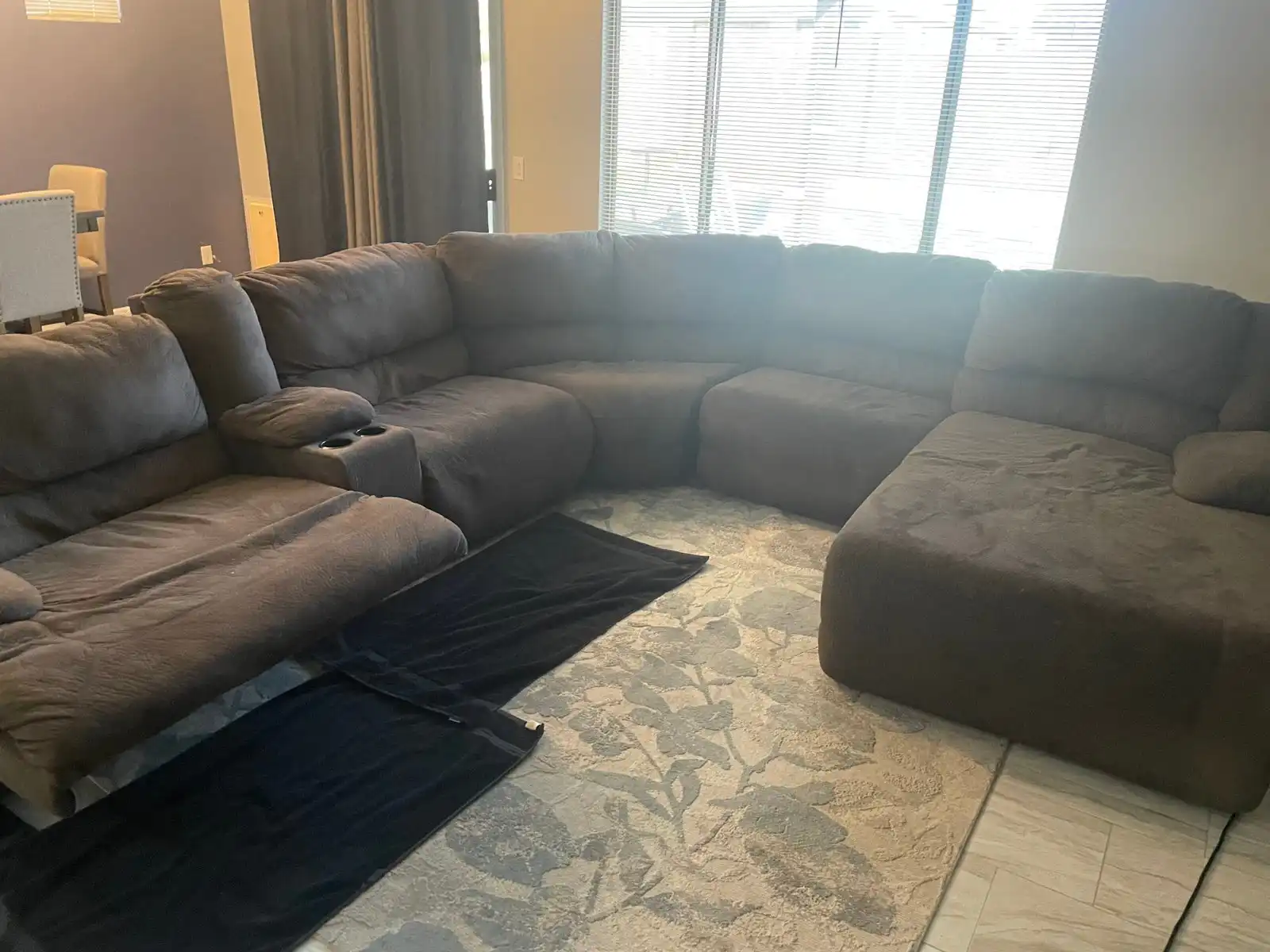
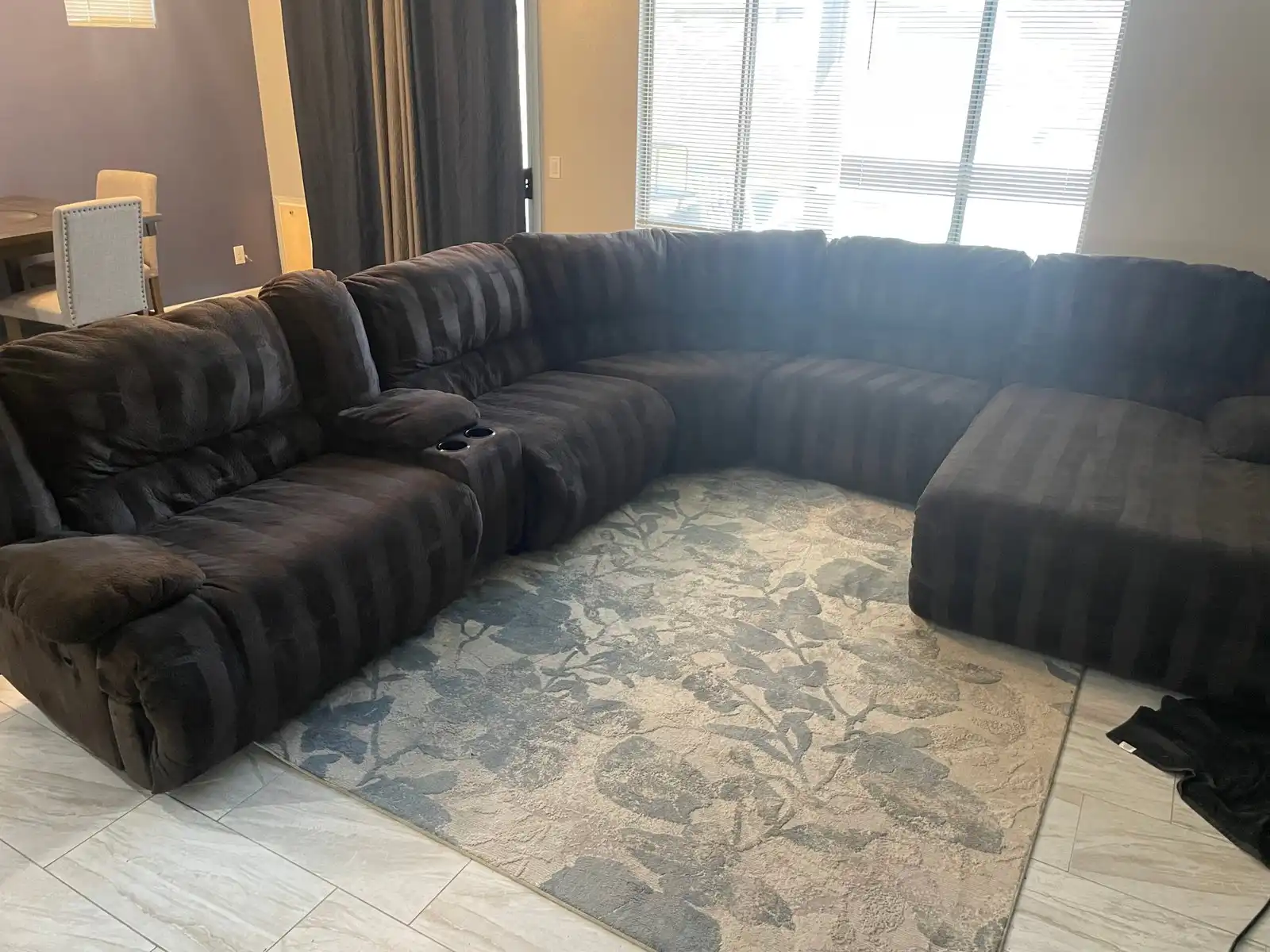
I cleaned a sectional for a family in one of the Victory at Verrado neighborhoods in November after a full pool season. The sectional was a medium gray fabric and from across the room it looked like it just needed a general cleaning. When I mapped the soil with a UV light and did a quick hand-feel check of the contact zones, the difference in fabric character between the pool-contact zones and the non-contact zones was clear. The three-step sequence produced a result where the fabric character across the full piece was consistent and the contact zones no longer had the slightly stiff, slightly different texture they had going in.
How the Soil Builds Through a Buckeye Pool Season
The pool season in Buckeye runs roughly from late March through mid-October — about seven months of regular pool use in a typical year. In Victory at Verrado and the surrounding Verrado neighborhoods where pool ownership is particularly high, this is seven months of daily or near-daily pool activity followed by post-pool time in the main living areas.
In the early part of the pool season, the sectional looks fine. The first few weeks of pool-household contact are not enough to produce visible soil at the fabric surface. The UV filter compounds and calcium deposits are accumulating but the volume is low enough that the fabric appearance has not meaningfully changed. This early-season invisibility is part of why pool household sectional soil is consistently underestimated by homeowners until it becomes more apparent later in the season.
By midsummer, the accumulated deposits are beginning to show in the character of the fabric in the contact zones. The fabric in the areas most frequently used after pool time — typically the main seating sections closest to the pool entry, the chaise section if there is one, and the corner where someone regularly drops onto the couch from the pool — has developed a slightly different texture and appearance from the rest of the piece. The fiber in those zones feels slightly different when you run a hand across it. The color may look very slightly duller. This is the compound of UV filter bonding, calcium mineral encapsulation, and the beginning of chlorine dye oxidation, all present simultaneously in the contact zones.
By late September and October, when the pool season is winding down, the compound soil in the sectional has accumulated through a full season. The contact zones have received dozens of post-pool sitting events, each depositing a thin layer of the compound described in the earlier sections. The sectional may not look dramatically dirty to a casual observer. But the accumulated soil in those zones is significantly more cleaning-resistant than the body oil and household soil in the non-pool contact zones of the same piece.
The post-pool-season timing in late October through November is the best window for cleaning a pool household sectional in Buckeye. The full season's accumulation is present and ready to be addressed, and the pool is closing or already closed, which means no additional pool-contact soil will be added after the cleaning.
Identifying Pool Household Soil vs. Standard Household Soil
Not every Buckeye sectional has pool household soil, even in a household with a pool. If the pool users change before coming inside and the sectional is rarely used in wet swimwear, the soil profile may be essentially standard household body oil and ambient particulate despite the pool being active all summer. The three-component treatment is warranted only if the pool-contact soil is actually present.
The hand-feel check is the most reliable pre-cleaning indicator. Run a hand across the fabric surface in a firm, slow pass in the zones that have had the most post-pool contact. Clean fabric with normal body oil soil has a specific feel — slightly warm, slightly resistant to the hand, but the fabric character is normal. Fabric with significant sunscreen and calcium encapsulation deposit feels slightly stiffer and slightly different in surface texture than body-oil-only zones. The difference is subtle but perceptible once you know what you are feeling for.
A raking light check, where a focused light is held at a low angle to the fabric surface, can show the slightly different surface reflectance of the pool-contact zones compared to the rest of the piece. UV filter compounds and calcium deposits on fabric change how the fiber surface scatters light in a way that is visible in raking light even when it is not visible in normal overhead room lighting.
The zone pattern also tells you something. Standard body oil soil on a sectional concentrates at the headrest zones and armrests — the fixed points of consistent skin contact during seated use. Pool household soil concentrates in the seating zones and the lower cushion areas where a wet swimsuit makes the most contact, plus any sections where family members routinely sit with pool-wet hair. A sectional where the seating zones show the most fabric character change while the headrests look relatively normal is more likely a pool-contact soil pattern than a standard use pattern.
Honest Expectations: What the Treatment Addresses and What It Does Not
The three-component treatment sequence addresses the UV filter compounds, the calcium mineral encapsulation, and the organic household soil that accompanies them. For a sectional that has been in a Buckeye pool home for one to three pool seasons, this treatment produces a result where the fabric character in the contact zones returns to normal — the slightly stiff, slightly different texture resolves — and the color of the fabric looks consistent and clean across the full piece.
What the cleaning does not address is chlorine dye oxidation. If the cumulative chlorine exposure from wet swimwear contact has oxidized the fabric dye in the pool-contact zones, that color change is permanent. The cleaning removes the soil, but if the underlying dye has been oxidized, the subtle color difference from the non-contact zones will remain after cleaning. The soil mapping before cleaning starts identifies this condition so it is not attributed to the cleaning after the fact.
For sectionals with many pool seasons of accumulated soil, the cleaning produces meaningful improvement but may not fully restore the fabric character in the most heavily impacted zones. Successive annual post-season cleanings prevent the accumulation from reaching the depth where it becomes increasingly difficult to fully address.
Reducing Pool Household Sectional Soil Between Professional Cleanings
The most effective prevention for pool household sectional soil is a change-before-sitting habit. When pool users change out of wet swimwear before sitting on the sectional, the primary soil source does not reach the fabric. This is the most complete prevention available, and in households where it is practical it makes more difference than any cleaning product or maintenance routine. Having a dedicated post-pool area near the pool entry where family members change before coming into the main living area makes the habit easy to maintain.
For households where changing before sitting is not practical, washable sectional slipcovers or dedicated furniture covers for the pool season are the next best option. A washable cotton or microfiber cover over the seating zones during the pool season intercepts the sunscreen, pool water, and wet contact before it reaches the upholstery fabric. The cover goes in the washing machine weekly. Remove the covers at the end of the pool season before the annual professional cleaning so the cleaning addresses the fabric directly.
Towels on the cushions during post-pool seating are a partial solution. A thick bath towel placed on the cushion before a wet family member sits down absorbs the majority of the pool water and provides some barrier against the sunscreen compounds. It is not as effective as a fitted cover because the towel moves and slides, but it is better than no barrier at all and most families can maintain the habit without significant effort during the pool season.
Rinsing sunscreen off thoroughly before getting in the pool, or using mineral sunscreen that has been fully applied and absorbed before pool entry, reduces the concentration of UV filter compounds that transfer to upholstery. A pool user who has absorbed most of their sunscreen before swimming transfers less UV filter compound to the sectional than one who applied sunscreen ten minutes before getting out. The secondary benefit for the sectional fabric is meaningful even if it is not the primary reason to make the change.
Post-season professional cleaning every year in October or November is the right maintenance schedule for any sectional in a pool-active Buckeye household. Annual cleaning prevents the seasonal accumulation from compounding year over year and keeps each cleaning at the single-season soil level where the treatment sequence produces full results.
Learn more about our upholstery cleaning, or explore other cleaning services we offer in Buckeye.

 (602) 429-9602