What a Dog Deposits in a Hallway That a Human Does Not
Every foot or paw that crosses hallway carpet deposits something. The difference between human foot contact and dog paw contact is not just the number of contact points — four paws versus two feet — it is the chemistry and composition of what transfers from each.
Human foot contact in a shoe-free upper hallway deposits plantar sebaceous oil from the skin surface of the foot, eccrine sweat from the high-density sweat glands on the plantar surface, dead skin cells that detach from the foot during contact with the carpet pile, and sock fiber at the carpet interface. In a shoe-free upper hallway, this is the entire soil source from human traffic. It is organic, relatively light per crossing, and accumulates gradually into the brownish-tan organic darkening that characterizes barefoot hallway carpet over time.
Dog paw contact adds two components that human foot contact does not produce in the same way. The first is interdigital oil from the sebaceous glands between the toes, deposited into the pile at the paw contact point with every step. In a Verrado two-story home where the dog makes twenty or more hallway crossings per day, the daily interdigital oil deposit in the center path is substantial on a per-square-foot basis.
The second is outdoor particulate carried on the paw surface. A dog that has access to a backyard, a patio, a pool area, or the Verrado community trail system between indoor trips carries material on its paws from every outdoor surface it contacted. In Buckeye's high-grit desert environment that material includes fine mineral grit, construction particulate from the active development zones, and in pool households the calcium and chemical residue from pool deck surfaces. This transfers from the paw to the hallway carpet on every indoor pass, depositing outdoor grit into the pile of an upper hallway that human traffic alone would never expose to outdoor particulate.
The combination of interdigital oil and outdoor grit in the hallway pile produces a specific compound. The oil acts as a binder for the grit, holding it in the pile fiber rather than allowing it to remain as loose surface particulate that vacuuming could remove. This oil-bound grit compound in the lower pile is both more difficult to extract than dry grit and more abrasive against the yarn fiber than the same grit would be without the oil holding it in close contact with the fiber surface.
How the Pet-Corridor Soil Pattern Distributes Across the Hallway Width
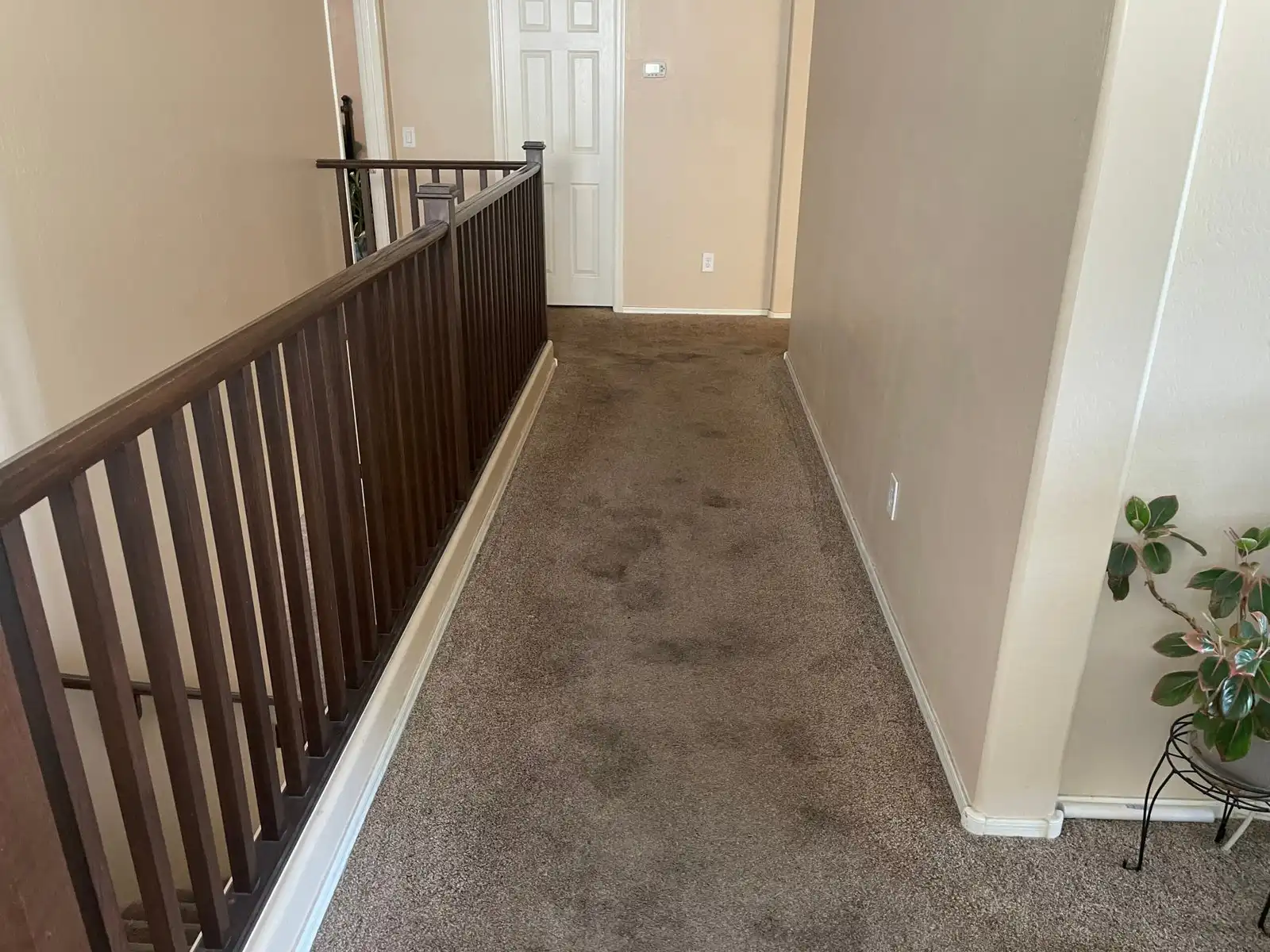
One of the clearest ways to identify a pet-corridor hallway before any testing is the distribution pattern of the soil across the hallway width. Human hallway traffic follows the center path, usually distributed within the middle third of the hallway width as people walk without attention to their lateral position. Dog traffic is different in a specific way.
Dogs in a familiar home develop a consistent travel route through every space they navigate regularly. The route is not always the center of the hallway — it is wherever the dog found easiest or most comfortable during the first weeks in the home and then maintained as a habit. In many Verrado northern-phase two-story homes, the dog's hallway travel path runs closer to one wall than a human walking the same corridor would naturally walk.
This offset travel path produces an asymmetric soil pattern. The zone of heaviest paw contact darkening is not in the center of the hallway the way human traffic darkening would be — it is shifted toward one side. The opposite side of the hallway, farther from the dog's travel path, may be in significantly better condition than the heavily trafficked side even though both sides have been in use for the same period.
The width of the contact zone is also different. Four paw pads spaced at the dog's shoulder and hip width leave contact marks across a band that is wider than a single human foot contact zone but also has a specific four-point pattern within it rather than the continuous contact of a human footstep. In a hallway with a large dog, the shoulder width is substantial and the contact zone covers most of the center and one side of the hallway in each pass. Identifying this pattern before cleaning determines where pre-treatment concentration is needed and confirms the cleaning addresses the actual soil distribution rather than applying uniform treatment to a non-uniform pattern.
The Dander and Hair Component in the Pet-Corridor Hallway
Beyond the active paw contact deposits, a hallway that is a primary dog travel corridor accumulates a secondary soil source from the dog passing through the space: airborne dander and coat shed from the dog's body as it moves through the hallway.
Dogs shed continuously. When a dog moves through a hallway, the air movement from its body displaces dander and fine hair that settles into the hallway carpet pile after the dog has passed. This is not the same as a dog lying on a rug and leaving a large volume of hair in a resting zone. It is a fine, diffuse deposition of microscopic skin flakes and coat fiber that happens every time the dog transits the space. In a hallway with twenty or more dog transits per day, this diffuse deposition is continuous throughout the household's waking hours.
Dander in carpet pile is fine, light, and works its way into the lower pile layers through air movement and the slight mechanical vibration of the carpet during use. Standard household vacuuming removes the loose surface layer but does not extract the dander that has settled into the mid-pile and lower pile. In a hallway that has been the primary pet travel corridor for a year or more without professional extraction, the dander load in the lower pile is significant regardless of how diligently the hallway has been vacuumed.
The practical consequence for households with pet-sensitive family members is worth understanding. The upper hallway carpet in a two-story Buckeye home is where family members walk to the bedroom at the end of every day, often in bare feet or socks. Foot contact with dander-loaded carpet transfers that material to the foot surface, and from there it can be carried into bedrooms and onto bedding. Professional extraction of the hallway carpet removes the dander load that vacuuming cannot reach, which has a measurable effect on the allergen level in the upper-floor living areas beyond just the visual appearance of the carpet.
Reading Your Hallway Before You Call
These checks take about two minutes and tell you what you are dealing with before any conversation starts:
- Stand at one end of the hallway and look along it in raking light. Is the darkening heavier on one side than the other, rather than centered? That asymmetric pattern is the dog's travel path.
- Run your hand through the pile against the lay direction in the darkest zone. A gritty, slightly stiff feel in the lower pile is the oil-bound grit compound.
- Compare the heaviest-traffic zone of the hallway to the carpet in an adjacent bedroom that sees much lighter use. The difference in pile clarity tells you how much has accumulated.
- If someone in the household has pet allergies and the hallway is the daily path to their bedroom, dander extraction is the most important outcome of the cleaning beyond the visual result.
- Check whether the hallway carpet had a professional cleaning in the past 12 months. If not, and the dog uses it daily, the lower-pile compound has been building for that full interval.
The Cleaning Approach for a Pet-Corridor Hallway
The cleaning of a pet-corridor hallway starts with the pre-cleaning assessment that maps the soil pattern before any chemistry is selected. The asymmetric pattern assessment identifies which side of the hallway shows the heaviest paw contact soil, which determines where the extended pre-treatment dwell time is needed and where the cleaning can move at standard pace.
Dry extraction before any wet chemistry is the first active step, and it matters more in a pet-corridor hallway than in a hallway with human-only traffic. The outdoor grit on the dog's paws has been depositing in the pile over months, and while the interdigital oil binds some of it in the lower pile, there is also loose surface grit that should be removed dry before moisture converts it to a paste. A slow, thorough dry pass along the full length of the hallway, focused on the dog's travel path, removes this surface layer before the wet chemistry goes down.
The enzyme pre-treatment step is specific to pet-corridor hallways in a way it is not for human-only hallways. The interdigital oil and the dander protein compounds in the pile both respond to enzyme chemistry. The enzyme pre-treatment is applied to the dog's travel path with adequate dwell time for the chemistry to penetrate into the mid-pile where the oil-bound grit and dander have concentrated. This dwell time is longer than what a standard organic soil pre-treatment requires because the oil-grit compound is more tenacious than standard foot traffic oil alone.
The degreaser component follows the enzyme pre-treatment, addressing the sebaceous oil component that binds the grit in the lower pile. The sequence matters: enzyme first for the protein and dander, degreaser second for the oil. Applying the degreaser before the enzyme interferes with the enzyme's protein-breakdown mechanism. After both pre-treatments have had dwell time and been extracted, the full-hallway VLM cleaning addresses the ambient particulate and lighter organic soil across the full hallway width, not just the dog's travel path.
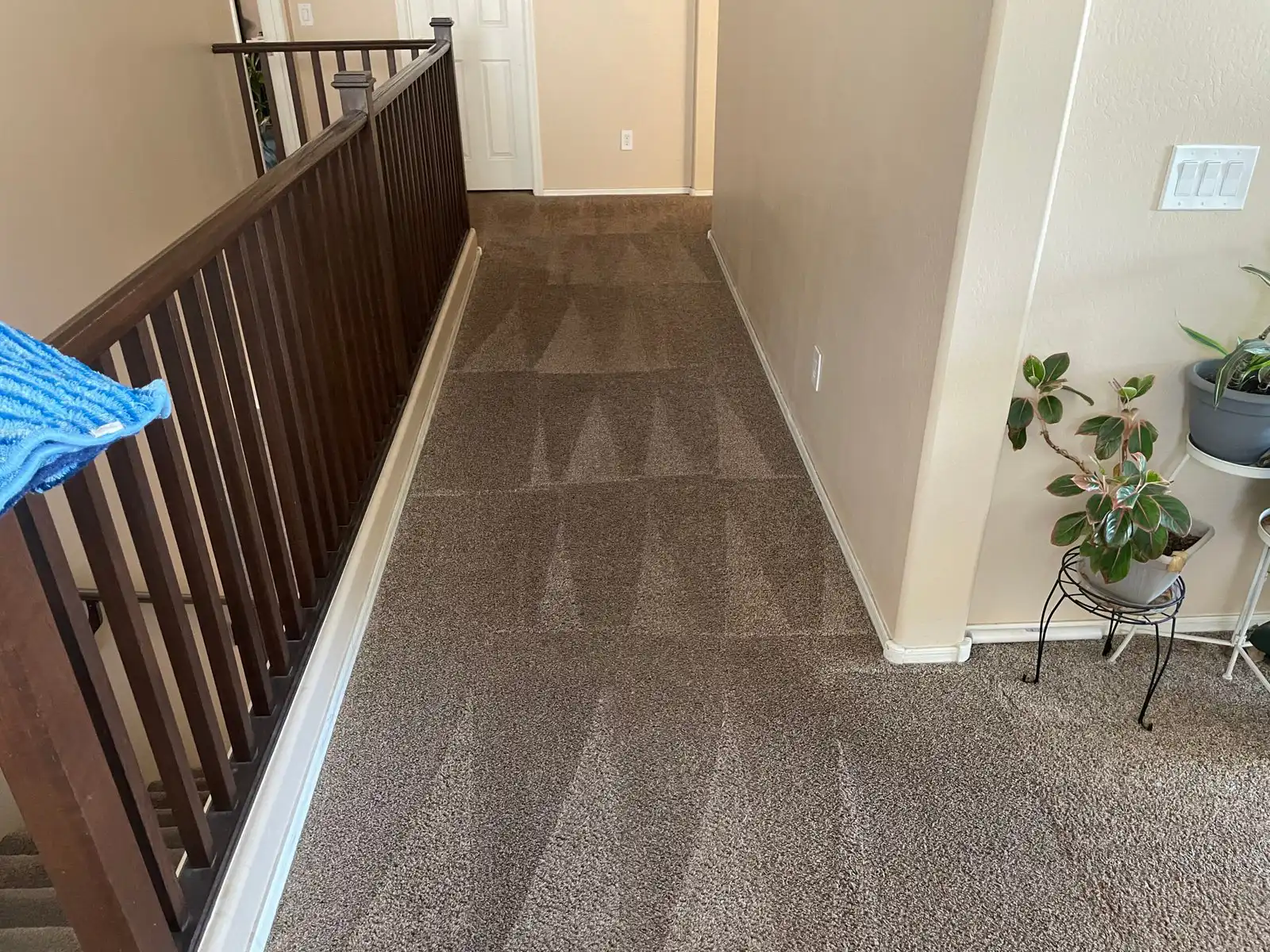
The result in a pet-corridor hallway cleaned with this approach is a hallway where the asymmetric soil pattern resolves and the full width of the carpet reflects light consistently. The dander load in the pile is extracted along with the soil. The oil-bound grit that was acting as an abrasive compound in the lower pile is removed, interrupting the fiber abrasion cycle before it can advance further.
Why Standard Hallway Cleaning Leaves Part of the Problem Behind
The standard hallway carpet cleaning approach is calibrated for the organic soil profile of a human-traffic corridor — plantar oil, skin cells, ambient particulate, and whatever is carried in from other areas of the home. That approach works well for human-only hallways because it addresses the primary soil chemistry correctly.
In a pet-corridor hallway the same approach addresses the human traffic component but misses the interdigital oil and the dander protein layer because it does not include the enzyme pre-treatment those components require. A standard cleaning of a pet-corridor hallway extracts the loose surface material, addresses the human-origin organic soil, and produces a visible improvement. But the oil-bound grit in the lower pile and the dander protein in the mid-pile are left behind because the chemistry was not designed for them.
This is why pet-corridor hallways sometimes look better immediately after a standard cleaning but resoil faster than expected in the weeks that follow. The remaining interdigital oil in the lower pile is the same adhesive compound that captures new particulate from every subsequent dog pass. The cleaned surface looks better because the surface soil was removed, but the oil compound in the lower pile continues to capture new material and the hallway darkens faster than a hallway without that residual oil base would. For families in Tartesso or Sundance with active dogs, this fast-resoil pattern after a standard cleaning is a clear indicator that the pet-corridor pre-treatment sequence was not part of the approach.
Honest Expectations: What the Pet-Corridor Cleaning Accomplishes
A properly approached pet-corridor hallway cleaning in a Verrado two-story home produces a result where the asymmetric soil pattern resolves, the oil-bound grit is extracted from the lower pile, the dander load is meaningfully reduced, and the full hallway width looks consistent and clean. The carpet reflects light evenly across the full width rather than showing the differential appearance of the heavily trafficked pet path against the lighter-use zone on the other side.
The resoiling rate after this cleaning is lower than after a standard cleaning of the same hallway because the oil-grit compound in the lower pile has been extracted. New outdoor grit that the dog brings in on subsequent passes does not have the established oil base to bind to immediately — it sits more loosely in the pile and is more accessible to the next vacuuming session. The interval before the hallway needs professional attention again is longer than it would be if the lower-pile compound had not been fully addressed.
Physical fiber abrasion from the oil-bound grit that accumulated before the cleaning is a permanent condition for the fiber that was in contact with that compound. The cleaning removes the grit and the oil, but the yarn surface in the zones of longest and heaviest exposure may show some residual surface roughening that is not soil-driven but structural. The assessment before cleaning identifies whether this is a factor and whether it is significant enough to affect the overall result expectation. For hallways with severe asymmetric soiling that has been building for several years without professional extraction, a second cleaning at the six to eight month mark typically produces a more complete resolution because it addresses a single cycle of accumulation on a lower-compound baseline.
Reducing Pet-Corridor Hallway Soil Between Professional Cleanings
Paw wiping at the point of outdoor re-entry is the single most effective prevention step for the outdoor grit component of pet-corridor hallway soil. A dedicated paw wipe station at the back door — a thick microfiber mat and a nearby cloth for quick wipe-downs after backyard, trail, or pool time — intercepts the majority of the mineral grit and pool deck residue before it gets carried upstairs through the hallway. The interdigital oil is harder to prevent because it is produced continuously, but reducing the grit that the oil binds in the pile significantly reduces the abrasive compound that makes pet-corridor soil harder to clean than human-only hallway soil. For families in Festival Foothills where dogs have frequent access to trails and open desert, this one habit at the door makes a meaningful difference in how quickly the hallway soil builds between professional cleanings.
Vacuuming the upper hallway along the dog's travel path two to three times per week rather than the once-a-week routine appropriate for a human-only hallway keeps the surface grit from working into the mid-pile between professional cleanings. Identifying where the dog actually walks and concentrating the vacuuming effort there is more effective than treating the full hallway width uniformly when the dog's path is offset to one side.
A washable hall runner or narrow area rug placed along the dog's travel path intercepts the paw contact before it reaches the carpet directly, in the same way that seat covers on dining chairs reduce direct pet contact with the upholstery fabric. A washable cotton runner laundered weekly collects the interdigital oil and grit at the surface rather than allowing it to work into the carpet pile below. The carpet under the runner accumulates far less pet-corridor compound than it would with direct paw contact, which extends the professional cleaning interval and makes each cleaning easier.
Professional cleaning every 10 to 12 months is appropriate for a pet-corridor hallway in a Buckeye two-story home with a single dog in regular daily use. For homes with multiple dogs, or dogs with particularly active outdoor access — trail hiking near the White Tank Mountains, daily backyard use with pool access — the 10-month end of the range is the right interval. The dander allergen benefit from professional extraction is also a consideration for households with pet-sensitive family members, where the cleaning serves both appearance and indoor air quality purposes.
Learn more about our carpet cleaning, or explore other cleaning services we offer in Buckeye.

 (602) 429-9602