What Yarn Twist Is and Why It Is Worth Protecting
Most homeowners think of carpet quality in terms of fiber type and pile height. Those matter, but the single most important manufacturing characteristic for how long a carpet holds its appearance under foot traffic is yarn twist. Twist is exactly what it sounds like: the number of times the yarn strand is twisted per inch of length before it is tufted into the carpet backing. A higher twist count produces a more resilient yarn that recovers better from compression and maintains its texture definition longer under traffic.
After the yarn is twisted, the carpet goes through a heat-setting process. The twisted yarn is exposed to steam at a specific temperature that sets the twist permanently by softening and then resolidifying the polymer structure of the fiber around its twisted shape. This is why carpet yarn holds its texture rather than immediately unraveling from foot contact. The heat-set twist is the structural property that gives the carpet its durability.
The problem with abrasive grit in the pile is that it attacks this structure mechanically. Fine mineral particles that have been ground down to a size that allows them to work between the fiber strands of the twisted yarn create friction at the point where the fibers contact each other and contact the grit particle. Over many thousands of footsteps, that friction slowly wears the surface of the fiber at the twist contact points. The result is not a cut or a visible break in the fiber. It is a gradual surface roughening of the yarn that makes the fiber less able to reflect light cleanly and less able to maintain the twist geometry that gives the pile its texture.
This is why heavily grit-loaded carpet often looks matted and dull even in areas that are not particularly high traffic. The fiber has not been compressed from footsteps in the way a heavily trafficked zone would be. It has been abraded from the grit that was sitting in the pile while people walked nearby, while foot traffic elsewhere vibrated the floor. Abrasion from grit does not require direct foot contact in the way that pile compression does. The grit is in the pile and it moves with every vibration, every nearby footstep, every air movement from an HVAC cycle.
Why Buckeye's Environment Loads Carpet With More Grit Than Most Cities
Buckeye has a specific combination of environmental grit sources that makes the abrasion problem more significant here than in a fully developed inner suburb of Phoenix.
The active construction throughout Verrado and the surrounding development corridors is the most visible source. New concrete work, graded lots, disturbed desert soil from land clearing, and the fine particulate from cutting and finishing construction materials all become airborne. Concrete dust is particularly abrasive because Portland cement particles are angular rather than rounded. They have sharp edges at the microscopic level that make them more effective at grinding against carpet fiber than rounded desert sand would be. In a neighborhood where your home is built and occupied but the phase behind yours is still going up, you are living with construction particulate in the air for years.
The agricultural history and current reality of Buckeye adds another dimension. There are still working farms and large agricultural properties throughout the city, particularly in the older areas away from the master-planned communities. Tilled soil from agricultural operations is fine and dry and becomes easily airborne in the desert wind. Residents in communities along Sun Valley Parkway are close enough to open agricultural land that this particulate is part of what enters the home on any given week, especially during the dry spring months when wind picks up dried soil from tilled fields.
The White Tank Mountains to the north and east of Verrado contribute their own particulate profile. The gravelly, sandy soils of the mountain foothills are different in composition from valley floor soil, and the hiking and biking activity in the area means shoe soles carry this material regularly into homes from trail use. The White Tank mineral profile includes silica-bearing material that is among the harder and more abrasive components you can have in carpet pile. All of these sources combine in a Buckeye home in a way that does not exist in a suburb surrounded by other suburbs.
How to Tell Abrasion Damage from Soil Before Cleaning
This simple test takes about two minutes and gives you a clear picture of which condition is driving your carpet's appearance change:
- Find a section of carpet that has been consistently protected from foot traffic, ideally under a piece of furniture that has been in the same position for several years
- Move that furniture and compare the protected pile to the traffic zones in the same lighting
- If the protected pile looks significantly more vibrant, better-defined in texture, and cleaner-colored than the traffic zones, some degree of abrasion history has accumulated in those zones
- After cleaning, the gap between the protected area and the cleaned traffic zones tells you how much of the change was soil-driven versus structural. Soil comes out. Abrasion does not reverse.
This comparison is the first thing I do on any Buckeye carpet job before the cleaning starts. It sets accurate expectations for both of us before anything happens.
Why Vacuuming Alone Does Not Address the Abrasion Problem
Regular vacuuming is essential and I always encourage clients to do it consistently, because it removes the loose surface layer of particulate before it has a chance to work its way deeper into the pile. But there is a hard limit to what vacuuming accomplishes, and understanding that limit explains why the abrasion problem builds even in homes that are vacuumed weekly.
A standard household vacuum creates suction that pulls material up from the surface of the pile and from the upper portion of the fiber. It is effective at removing loose particulate that has not yet worked its way past the midpoint of the pile depth. This is real maintenance that matters. The loose surface layer removed by weekly vacuuming is material that is not embedding further down.
What vacuuming does not reach is the grit that has already worked its way to the lower half of the pile and toward the carpet backing. Fine mineral particles are denser than most household dust. They sink through the pile under gravity and vibration, and once they are past the midpoint of the pile depth, the suction from a household vacuum is typically insufficient to pull them back up through the fiber above them against gravity. They stay in the lower pile, and that is exactly the zone where the abrasion against the yarn twist is most damaging.
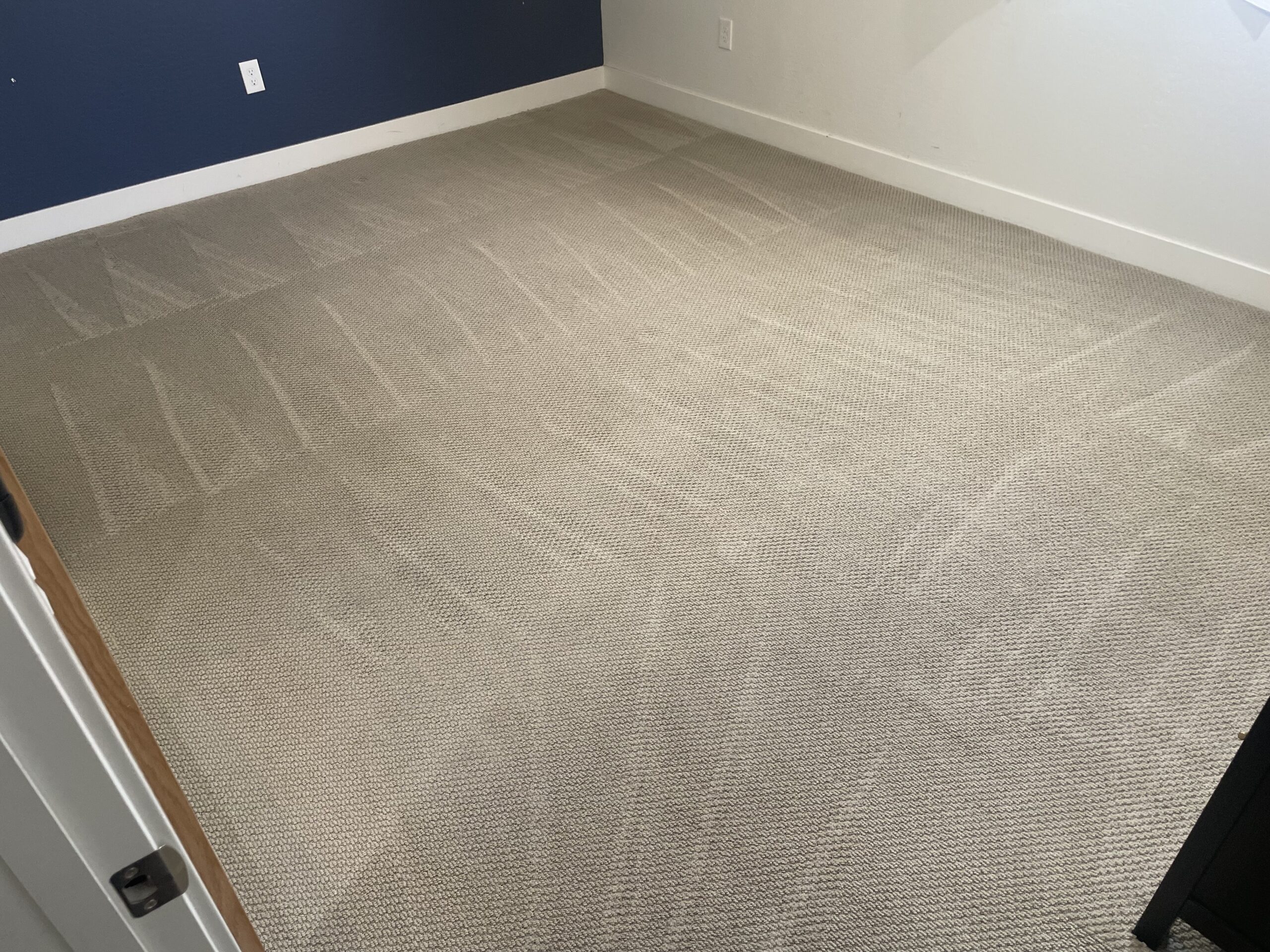
Professional VLM cleaning addresses the lower pile in a way that vacuuming cannot. The mechanical agitation from the cleaning process physically disrupts the embedded particulate and brings it back into suspension so that extraction can remove it. After a proper professional cleaning that addresses the full depth of the pile, what comes out in the extraction fluid includes the material that had been sitting in the lower pile for months or years, the same material that was doing the ongoing abrasive work against the yarn.
The Cleaning Process for Grit-Loaded Carpet in a Buckeye Home
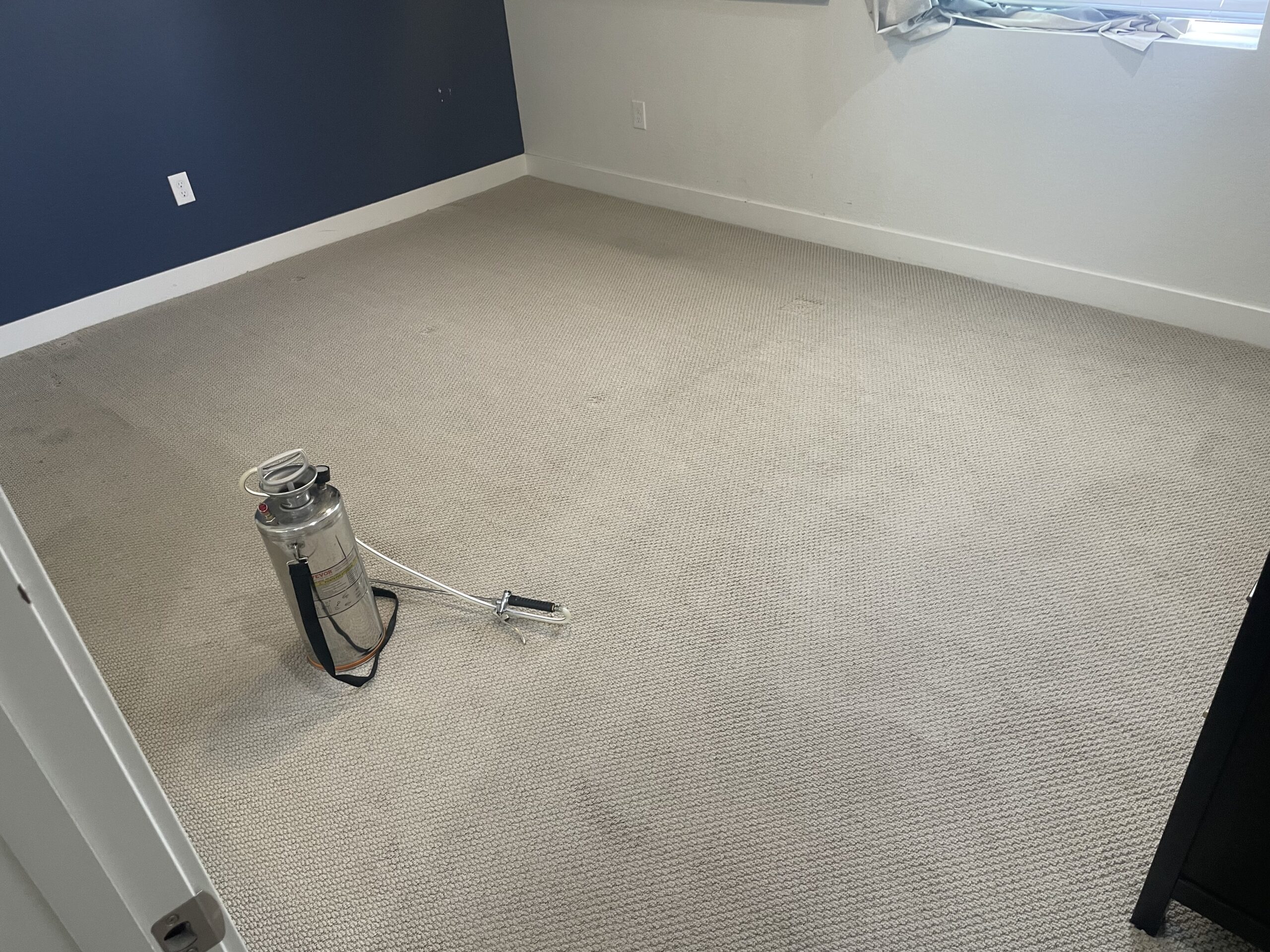
Before any chemistry or moisture goes down, the pre-cleaning assessment for a Buckeye home includes a specific check for grit load in the pile. Running a hand through the pile against the lay direction gives a tactile reading of how much abrasive material is embedded. A pile that has a fine gritty feel when you run your hand through it has embedded mineral particulate that needs to be addressed before agitation begins, because agitating a grit-loaded pile without loosening the grit first can redistribute it laterally through the fiber rather than bringing it up for extraction.
The first step is a thorough pre-vacuuming pass with professional extraction equipment that has significantly more suction than a household vacuum. This pass removes the loose and semi-loose particulate from as much of the pile depth as the suction can reach before any moisture is introduced. The goal is to reduce the grit load as much as possible dry before the wet cleaning step, because adding liquid to a heavily grit-loaded pile creates a temporary slurry condition that can make fine particles more difficult to fully extract.
The VLM cleaning solution is then applied and the agitation works through the pile with enough mechanical action to dislodge embedded grit from the lower pile and bring it into contact with the encapsulation chemistry. The encapsulation chemistry surrounds the fine particles and holds them in suspension so that the extraction removes them along with the dissolved organic soil rather than allowing them to resettle in the pile during drying.
For rooms with very heavy grit loading, a main hallway in a home where trail use near the White Tank Mountains is frequent, or a bedroom entry adjacent to a backyard door, a second agitation pass before extraction is sometimes the right call. The investment in a more thorough single cleaning is better for the carpet long-term than a quick cleaning that leaves a significant residual grit load.
New Construction Carpet in Verrado and the First-Clean Window
A specific situation comes up regularly in Verrado because of how active the construction is and how quickly new phases of the community are filling with residents. A homeowner moves into a brand-new home, the carpet is factory-fresh and looks perfect, and the assumption is that nothing needs to be done to it for the first year or two because it is new.
The problem is that new carpet in a Buckeye home starts accumulating construction particulate and desert grit from the day of move-in, and sometimes before. The carpet is installed during the finishing phase of construction, which means it goes down while there is still construction activity on the property and potentially in the surrounding neighborhood. Construction dust settles on the factory-fresh carpet and begins working into the pile immediately. The carpet looks clean because it is new and the pile reflects light well, but the grit is already there.
That first-clean window matters because the abrasive grit that is already in the pile of new carpet is starting its work against the yarn from day one. I recommend to new Verrado homeowners that the first professional cleaning happen within three to six months of move-in, not because the carpet looks dirty but because removing that first generation of embedded construction grit before it has been walked on for a full year preserves the factory twist and the original appearance of the pile in a way that waiting eighteen months does not.
I have cleaned brand-new carpet in Verrado homes within the first few months of occupancy and been surprised by what comes out in the extraction. The water is not clean. It carries construction particulate and fine mineral grit that was in the pile from the installation and move-in period. The carpet looks the same after cleaning because it looked new before, but the fiber is now actually clean rather than just appearing clean while carrying an abrasive load in the lower pile. That distinction between appearing clean and being clean at the fiber level is the most important thing I communicate to a Verrado homeowner who is new to the area and thinking about a cleaning schedule for the first time.
Slowing the Grit Abrasion Cycle Between Professional Cleanings
The most effective single habit for protecting carpet from grit abrasion in a Buckeye home is a consistent shoe removal practice at the entry. Shoes carry the majority of the coarse mineral grit that enters the home. The fine airborne particulate that comes in through the HVAC and door openings is harder to control, but the larger angular grit that does the most rapid mechanical damage to yarn comes in primarily on shoe soles. A dedicated spot for shoes at the entry, combined with a high-quality entry mat with enough pile depth to actually pull material off the shoe sole, reduces the volume of abrasive grit entering the carpet by a meaningful amount.
Vacuuming frequency matters more in Buckeye than in most cities. Weekly vacuuming in actively used areas keeps the surface layer of particulate from working its way further into the pile between professional cleanings. In rooms near exterior doors that get frequent use, especially doors that open to a backyard, patio, or direct outdoor access, vacuuming two to three times per week in the entry zone near that door is a reasonable practice during the dustier months of spring and late summer. Choose a vacuum with strong suction and a proper carpet setting with the brush bar adjusted to the pile height so it agitates the surface and loosens particulate into the suction path rather than riding on top of the pile without making real contact.
For homes with dogs, which is a large proportion of Buckeye and Verrado households, wiping paws after outdoor time is the practice that most meaningfully reduces the grit load those paws carry into the carpet. Dog paw pads are soft and slightly tacky and pick up fine grit very effectively from yard surfaces, trail access, and concrete around pool areas. A paw wipe at the back door after outdoor time removes the majority of what those paws would otherwise carry directly into the pile. Professional cleaning every 10 to 12 months is the right interval for a Verrado home with regular use and a consistent vacuuming routine. For homes with trail-adjacent access, active construction still occurring nearby, or multiple dogs, the shorter end of that range is worth the additional visit to keep the abrasive grit from accumulating past the point where it causes ongoing damage between cleanings.
Learn more about our carpet cleaning, or explore other cleaning services we offer in Buckeye.

 (602) 429-9602