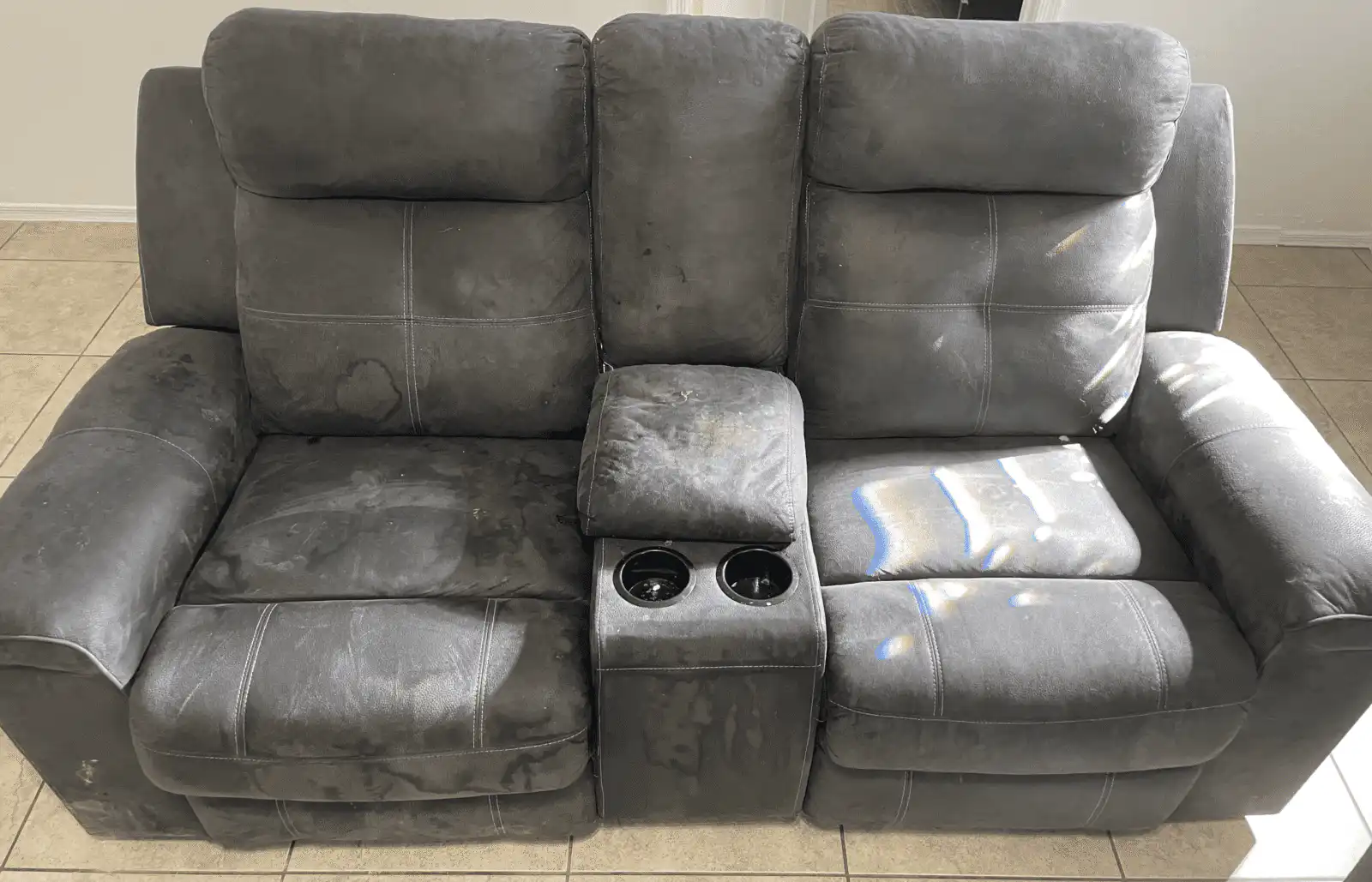
The Resoiling Cycle: How It Starts and Why It Compounds
The rapid resoiling cycle in lotion-loaded upholstery doesn't just persist - it tends to get worse over time if the underlying residue film isn't fully addressed.
Stage one: Initial lotion transfer. Over months of regular use, lotion residue accumulates in the fiber structure at the primary contact zones - armrests, seat cushion surfaces, back cushion contact areas. The accumulation is gradual and invisible. The loveseat looks fine.
Stage two: Surface soil attraction begins. The accumulated residue film starts attracting and holding new soil faster than clean fabric would. The loveseat begins looking dirty sooner after each cleaning.
Stage three: Cleaning without residue removal. A standard upholstery cleaning removes the surface soil layer but leaves the underlying lotion residue in the fiber structure. The loveseat looks clean immediately after cleaning.
Stage four: Accelerated re-soiling on the residue base. With fresh surface soil now gone, the residue film is fully exposed and maximally sticky. New soil accumulation happens faster than before the cleaning, because the cleaning removed the previous soil layer that was partially capping the residue's stickiness. The loveseat looks dirty again within weeks.
Stage five: Residue compounding. Each cleaning cycle that removes surface soil but leaves residue in place allows more lotion transfer from ongoing use to add to the existing residue film. The film gets thicker. The re-soiling rate increases. The interval between cleanings gets shorter.
Sun City homeowners who've been cleaning their loveseat on an accelerating schedule - more frequently each year, with increasingly disappointing results - are experiencing this compounding cycle. The solution isn't more frequent cleaning. It's cleaning that specifically targets and removes the residue film rather than just the surface soil sitting on top of it.
Why Most Cleaning Approaches Don't Break the Cycle
Standard upholstery cleaning is formulated for general soil removal. It works by applying chemistry that suspends soil particles and then extracting or blotting them from the fabric surface. For general contact soil, this approach is effective.
The lotion residue film presents a different problem. The film-forming and emollient compounds in skin care and therapeutic lotions are specifically engineered to be water-resistant and persistent. Standard cleaning chemistry doesn't break the molecular structure of silicone-based emollients, petroleum derivatives, or polyacrylate film-forming agents.
Steam cleaning presents an additional problem specific to lotion residue. Heat from steam can set certain types of emollient compounds into fabric fibers rather than releasing them. Repeated steam cleaning of a lotion-loaded loveseat can gradually drive the residue deeper into the fiber structure and make it progressively harder to remove.
DIY spray cleaners add another layer to the problem. Most commercial upholstery sprays contain surfactants and fragrance compounds that leave their own residue in the fabric. These residues are themselves soil-attracting, compounding the lotion residue film with a cleaning product residue layer. The loveseat smells fresher immediately after DIY treatment but resoils even faster than before because both the lotion residue and the cleaner residue are now contributing to the sticky film.
Breaking the cycle requires encapsulation chemistry that specifically targets and surrounds non-water-soluble emollient compounds, allowing them to be extracted from the fiber structure rather than just wiped from the surface.
The Specific Products Driving the Problem in Sun City Homes
Arthritis and joint pain creams are among the most common therapeutic products used in Sun City communities, and they contain some of the most upholstery-problematic compounds. Products containing diclofenac, menthol, camphor, or capsaicin use carrier bases including diethylene glycol monoethyl ether, propylene glycol, and various emollient oils that penetrate fabric fibers readily and leave persistent residue. These carriers are specifically formulated for deep skin penetration - which makes them highly effective therapeutically and highly problematic when they transfer to upholstery.
Dry skin and body moisturizers are used at higher frequency in Sun City than in most demographics, because Arizona's very low humidity creates genuine chronic skin dehydration. Products addressing this contain lanolin, mineral oil, petroleum jelly derivatives, dimethicone and other silicones, and various wax emollients. Silicone compounds in particular are notable for their fabric persistence - silicones are used industrially as release agents and lubricants specifically because they don't wash off easily.
Hand lotions applied multiple times daily in response to Sun City's dry climate produce continuous small transfer events to every fabric surface the hands contact. A resident who applies hand lotion four or five times daily and then touches the loveseat armrest, adjusts a cushion, or picks up the remote from the cushion surface is transferring small amounts with each contact. Individually trivial. Cumulatively significant over months of daily repetition.
Sunscreen for the outdoor activity that's central to Sun City lifestyle - golf at Desert Springs or trail walks near Festival Foothills, outdoor socializing in covered patios - contains UV filter compounds, film-forming polymers, and emollient bases that transfer to upholstery when residents come indoors and sit down.
Identifying Whether Your Loveseat Has Residue Buildup
The re-soiling timeline test is the most informative. If your loveseat looks noticeably dirty within four to six weeks of cleaning - regardless of how the cleaning was done - residue buildup is almost certainly driving accelerated soil attraction. Clean upholstery in a Sun City two-person household should look good for three to six months between cleanings.
The tactile test at the armrests is often revealing. Run your hand slowly across the armrest surface. Clean upholstery fiber feels smooth and slightly soft. Upholstery with significant lotion residue buildup often feels slightly tacky, slightly waxy, or has a subtle surface drag compared to the cleaner areas.
The color concentration pattern - whether the darkening is heaviest at the armrests, the seat cushion front edges, and the area where the back of arms and hands contact the back cushion - is consistent with lotion transfer rather than general sitting soil, which would be more evenly distributed.
The vacuum response test: vacuuming clean upholstery removes surface dust effectively and the fabric looks slightly fresher. Vacuuming residue-loaded upholstery produces little visible improvement because the soil is held to the fiber surface by the residue film rather than sitting loosely on top.
The Cleaning Process for Breaking the Resoiling Cycle
Pre-assessment identifies the extent of residue buildup - which zones are affected, how advanced the accumulation is, and what fabric type the loveseat is. This determines the specific chemistry and how many treatment passes will be needed.
Dry pre-vacuuming removes loose surface soil before any wet chemistry is applied. This step matters more for residue-loaded upholstery than for standard cleaning because applying chemistry to a heavily soil-loaded surface dilutes the chemistry's effectiveness against the residue film.
Encapsulation pre-treatment with chemistry specifically formulated for non-water-soluble emollient compounds is applied to all affected zones with appropriate dwell time - 10 to 15 minutes for established buildup. The encapsulation process surrounds the emollient molecules and breaks their bond with fiber surfaces, making them extractable.
Controlled agitation works the pre-treatment into the fiber structure to reach residue that has penetrated below the surface fiber layer. Gentle but thorough - enough mechanical action to ensure the chemistry reaches the full depth of the residue without stressing the fabric.
Thorough extraction is the step where the residue film actually leaves the fabric. Complete extraction is critical - leaving any emollient residue means the re-soiling cycle will resume. This is what differentiates a resoil-cycle-breaking cleaning from a cleaning that just addresses surface appearance.
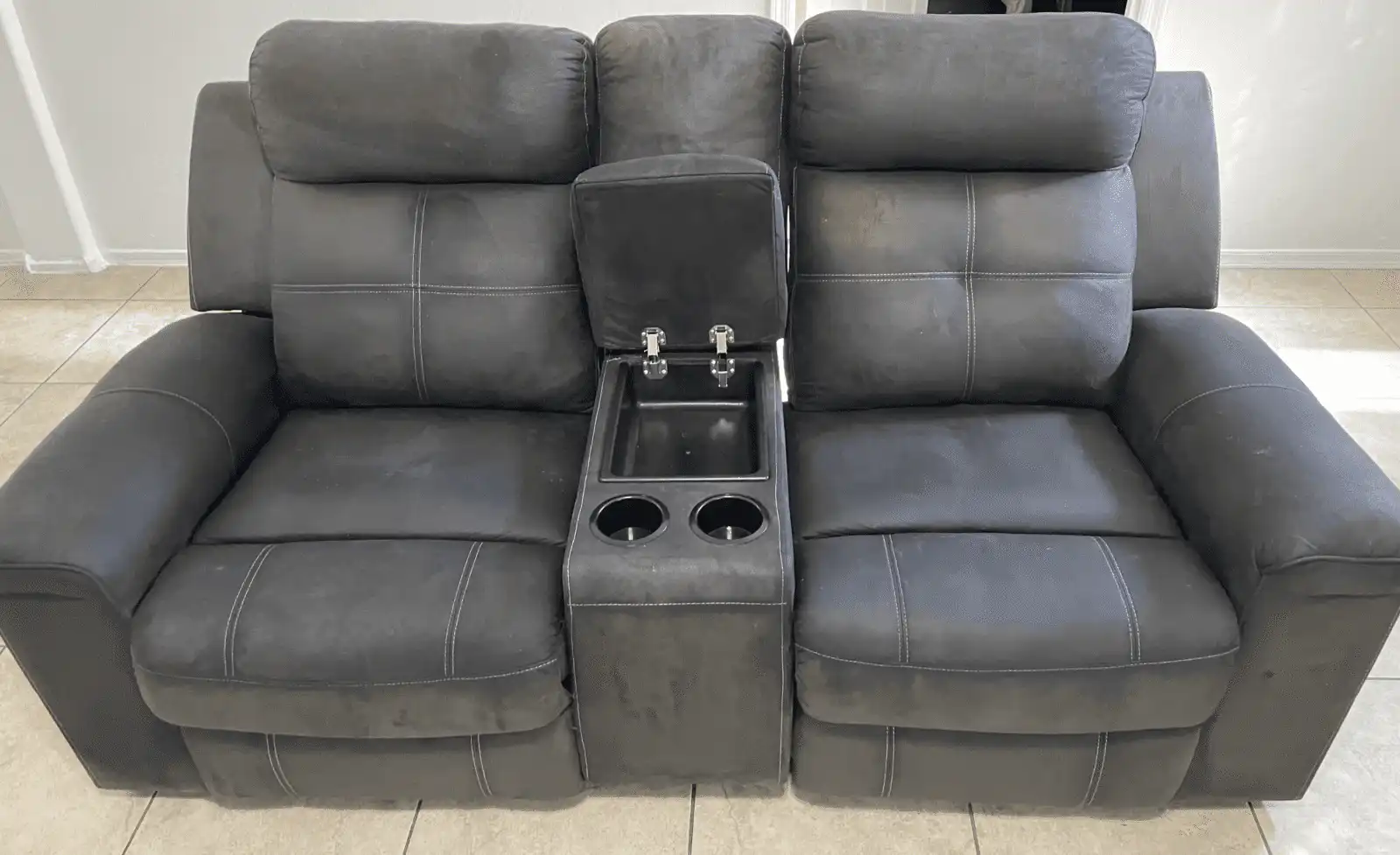
Post-cleaning assessment checks that the armrests and primary contact zones have lost the tacky feel that indicates residue presence. If residue remains, an additional treatment pass is applied before finishing.
Preventing Rapid Resoiling Between Cleanings
Arm covers or small folded cloths on the armrests are the most effective single intervention. The armrests receive the highest concentration of hand lotion transfer because hands contact them with every seated position adjustment. An arm cover absorbs the transfer rather than allowing it to reach the upholstery fabric. The arm cover can be laundered weekly. This simple addition can extend the interval between professional cleanings from weeks to months for the highest-transfer zones.
Timing of lotion application relative to sitting matters more than most people realize. Applying hand lotion and then immediately sitting down transfers a higher concentration than applying lotion and waiting 15 to 20 minutes before sitting. Lotion that has had time to absorb into the skin transfers far less to fabric than freshly applied lotion.
Vacuuming with a soft brush attachment weekly removes loose soil before it can bond to the residue film surface. On a loveseat that has been properly cleaned and has minimal residue, weekly vacuuming keeps the surface relatively neutral.
Professional cleaning annually - with the full residue-addressing process rather than standard maintenance cleaning - prevents the compounding cycle from re-establishing. An annual cleaning that keeps residue from accumulating past the threshold where re-soiling rate accelerates is a very different maintenance situation from cleaning an already-compounded residue film that has been building for years.
Serving All Four Sun City Communities
Serving Sun City, Sun City West, Sun City Grand, and Sun City Festival including communities near Hillcrest Golf Club, Heritage, Sun City Manor, Desert Springs, Festival Foothills, Corte Bella, Briarwood Country Club, and throughout the West Valley active adult communities.
Learn more about our upholstery cleaning services, or explore other cleaning services we offer in Sun City.

 (602) 429-9602