Mapping the Guest-Use Zones on a Sun City Modular Sectional
The ability to identify which sections of a modular sectional actually need cleaning - and which are genuinely clean and don't - is one of the most practically useful things I can offer Sun City homeowners with this type of furniture.
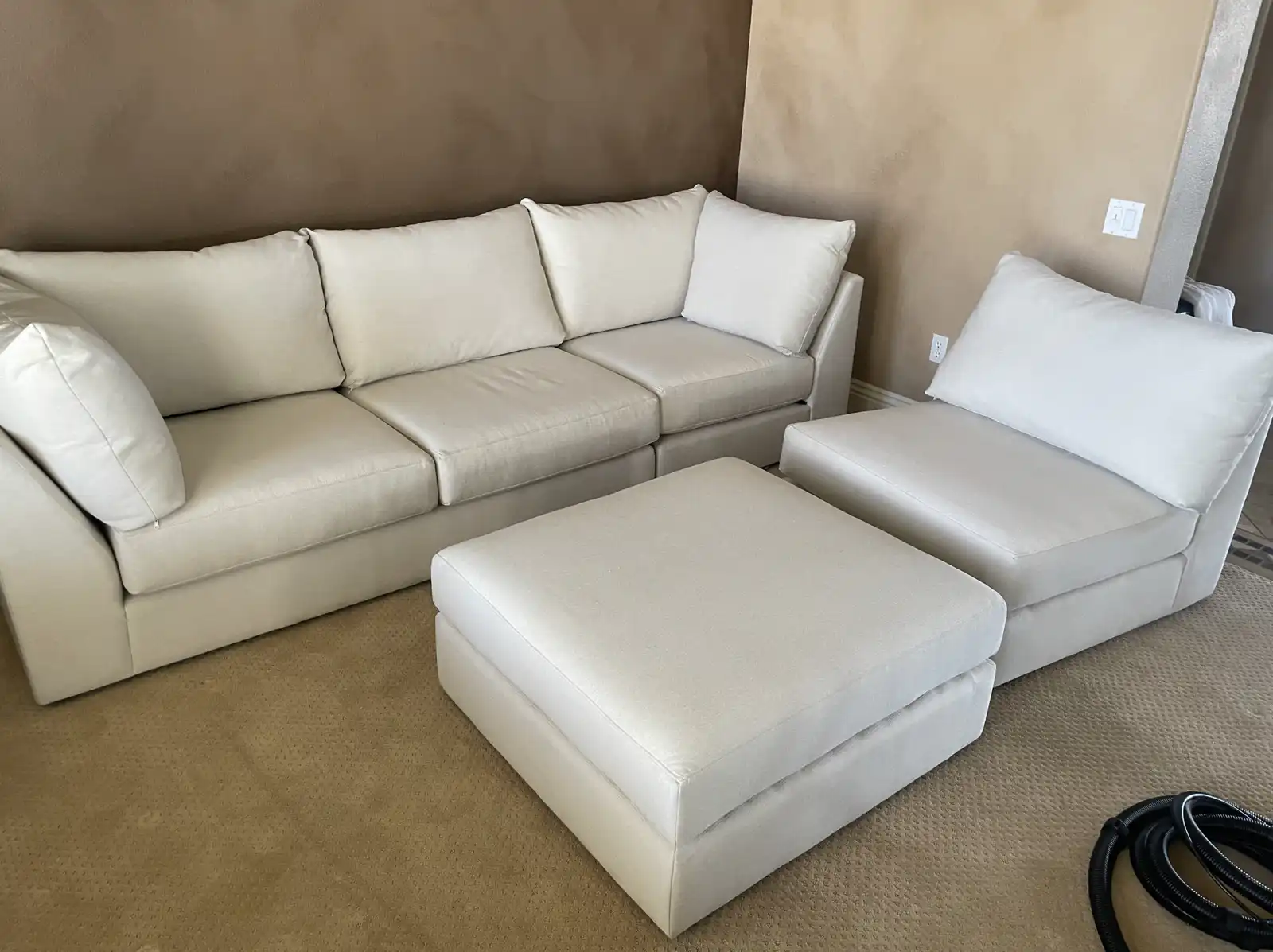
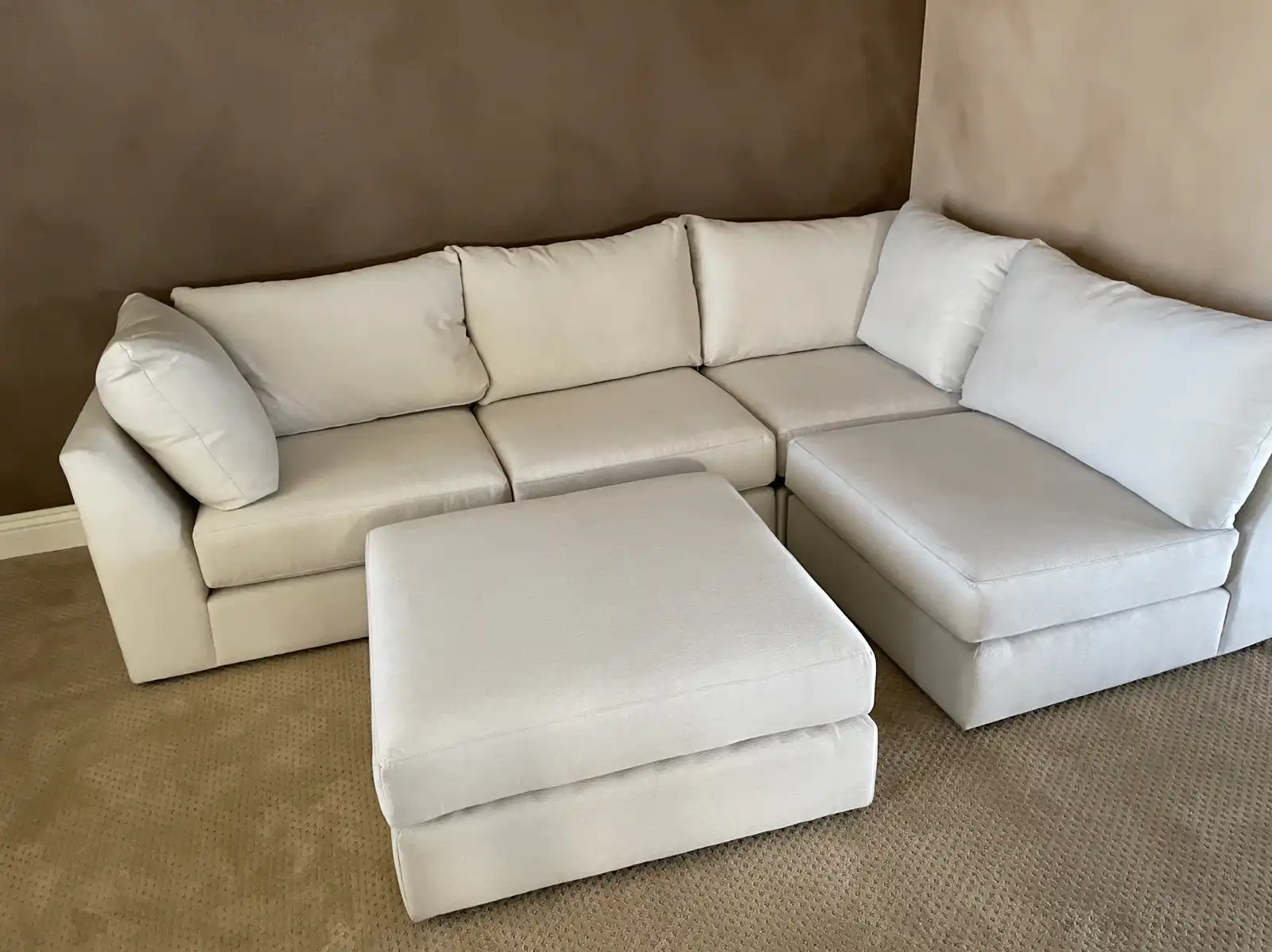
The chaise or extended end section receives the highest concentration of use in most households. It's the section where a guest lies back to watch television, where a grandchild stretches out, where the family member who arrived with a long travel day settles for an extended period. The chaise gets full-body contact rather than the seated contact of the other sections - more surface area in contact for longer periods.
The corner section of an L-shaped or U-shaped modular sectional receives concentrated use because it's the natural gathering point - the section guests orient toward each other from. The seam lines and crevices in the corner configuration collect fallen snack material, crumbs, and small debris that accumulates during the visit period.
The sections immediately adjacent to where the Sun City resident sits during gatherings receive secondary guest contact - guests sitting closest to the host, the section where a grandchild sits next to their grandparent.
The far end sections - the parts of the modular configuration that are furthest from the main seating orientation and the television - often receive minimal use even during visits. Cleaning them adds time and cost for no visual benefit.
In Sun City Grand homes near Desert Springs and in Corte Bella, I regularly assess six and seven-piece modular sectional configurations and identify two or three sections that genuinely need cleaning and three or four that don't.
Guest-Specific Soil Types and How They Differ From Resident Soil
Snack and food contact soil is the highest-probability guest-visit deposit that doesn't feature in normal Sun City daily use. Grandchildren watching movies on the sectional with snack bowls in hand deposit food oils, salt, and fine crumb material into upholstery fabric. Buttered popcorn oils, cheese powder from snack bags, the greasy residue of various child-friendly snack foods - these are oil-based soil types that respond to degreasing chemistry rather than the emollient-focused chemistry appropriate for therapeutic lotion residue.
Beverage spills during visits are the most likely visible staining events. The sugar content in juice and soda creates a sticky residue that attracts additional soil and can darken significantly if not addressed promptly. The concentration of people and activity during a family visit means spills are more likely and may not be noticed immediately.
Sunscreen transfer is significant during warm-weather visits when guests arrive from outdoor activity at the pool, the golf courses, or the community recreation areas throughout Sun City. Sun City Festival's Festival Foothills community and the golf-adjacent homes throughout Sun City West see this particularly during spring and fall visits.
Pet contact from visiting family members who bring dogs or cats is a Sun City-specific dynamic - many Sun City residents don't keep pets, making the sectional unfamiliar territory for visiting animals whose dander, oils, and hair deposit into the fabric during the visit.
Travel clothing contact soil from guests who've been in airports, rental cars, or long drives carries a varied soil profile from those environments that differs from the controlled soil profile of the Sun City home environment.
Fast Dry: Why It Matters for Visit Windows
Pre-visit cleaning - cleaning the sectional before family arrives so it's fresh and presentable - has a hard deadline: guests arrive at a specific time, and a sectional that's still damp when they arrive is worse than a sectional that wasn't cleaned.
Post-visit cleaning - cleaning after guests have left to address the visit soil before it sets - has a softer but still real timeline: the longer the guest-visit soil sits in the fabric, the more it bonds to fiber surfaces, and the sooner after the visit cleaning happens, the more completely the soil can be removed.
Low-moisture cleaning that produces fast dry times is the right approach for Sun City modular sectionals. A low-moisture cleaned sectional section in Sun City's climate is typically dry to the touch in 30 to 45 minutes and fully dry within one to two hours. This means pre-visit cleaning can happen the morning of a same-day arrival and the sectional will be guest-ready by early afternoon.
This is a meaningful contrast to high-moisture steam cleaning approaches that can leave upholstery damp for four to six hours or longer. A sectional cleaned with high-moisture methods the morning of guest arrival may still be noticeably damp when guests sit down.
The Targeted Section-by-Section Cleaning Process
Pre-visit or post-visit walkthrough assessment identifies which sections have visible soil, which have tactile soil evidence, and which are genuinely clean. For a post-visit cleaning, I'll ask the homeowner where guests sat, where the grandchildren were, and whether any spills occurred - this information is often more efficient than examining each section.
Spot identification within the sections that need cleaning marks any specific visible staining - beverage spills, snack contact, visible sunscreen or lotion spots - for individual pre-treatment before the section's general cleaning.
Zone pre-treatment at identified spots uses chemistry calibrated to the soil type. Food oil contact gets degreasing chemistry. Beverage tannin staining gets oxidation-reducing pre-treatment. Sunscreen and lotion deposits get encapsulation chemistry.
Section-level pre-treatment after spot treatment addresses the general accumulated soil across the section with appropriate dwell time. The sections that need attention get full pre-treatment and extraction. The sections that are clean get a brief freshening pass or nothing at all.
Thorough extraction on treated sections removes all pre-treatment and released soil material. Incomplete extraction leaves residue that re-soils the sections more quickly during the next visit.
Cushion edge and seam line attention on the guest-use sections addresses the accumulated crumb and debris material in seam crevices. Corner sections particularly accumulate material in the seam geometry that falls there during family visits.
Between Visits: Keeping the Sectional Guest-Ready
Cushion covers or a light throw draped over the primary guest seating zones - the chaise end and the corner section - between visits creates a simple barrier against the fine dust that settles continuously in Sun City's desert environment. The covered sections arrive at the next visit with the dust load that accumulated on the throw rather than on the upholstery directly.
Monthly vacuuming with a soft brush attachment across all sections removes the settled particulate before it can bond to any residual surface oils on the fabric. For a Sun City modular sectional that isn't in daily use, monthly vacuuming is sufficient.
Sunlight exposure management matters for modular sectionals positioned near windows or patio doors in Sun City homes with golf course views. A UV-filtering window treatment in rooms where the modular sectional is positioned near significant sun exposure is worth having for a piece that the homeowner wants to keep looking good for years of guest visits.
Professional cleaning once or twice a year - calibrated to visit frequency and soil level - is appropriate for most Sun City modular sectionals. Homes that host family visits three or more times a year benefit from a post-visit cleaning after the heaviest-use visit and a pre-visit freshening before the next.
Planning the Cleaning Around the Visit Calendar
Sun City residents tend to have predictable hosting calendars - Thanksgiving, winter snowbird visits from family, spring break with grandchildren, summer visits when out-of-state relatives come for a long weekend. Knowing the visit calendar makes it possible to build a cleaning schedule that keeps the sectional in the best possible condition for each arrival.
The optimal pre-visit cleaning window is two to four days before guests arrive. This timing allows full dry time with comfortable margin, ensures the piece is fresh, and avoids the day-of-arrival time pressure that requires rushing the cleaning process or dry time.
For post-visit cleaning, the sooner after guests leave the better - within a week ideally. Guest-visit soil is still primarily at the fiber surface within the first few days after the visit. After a week to ten days, oil-based soil from snack contact and sunscreen transfer has begun bonding to fiber surfaces.
For Sun City homeowners who host the extended family visit at the holidays - Thanksgiving through New Year gatherings that involve multiple waves of guests - a post-holiday cleaning appointment in January addresses the full accumulated holiday season soil at once rather than trying to clean between arrival waves.
Serving All Four Sun City Communities
Serving Sun City, Sun City West, Sun City Grand, and Sun City Festival including communities near Desert Springs, Corte Bella, Festival Foothills, Briarwood Country Club, Hillcrest Golf Club, RH Johnson Recreation Center, Heritage, Trail Ridge Golf Course, and throughout the West Valley active adult communities.
Learn more about our upholstery cleaning services, or explore other cleaning services we offer in Sun City.

 (602) 429-9602