What's Actually in the Transfer Deposit
The soil profile at a lift chair adjacency point is chemically different from general seating soil. Therapeutic lotions used for arthritis, muscle soreness, dry skin, and joint discomfort contain ingredient profiles significantly different from ordinary skin oils. Common active ingredients include menthol and camphor compounds, salicylates, capsaicin derivatives, and various emollient bases including lanolin, petroleum derivatives, mineral oil, and synthetic silicones.
Moisturizing hand and body lotions - used frequently in Sun City's very dry climate where skin dehydration is a constant factor - contain additional emollients, humectants like glycerin, and various film-forming agents designed to stay on the skin surface rather than absorbing immediately.
When these compounds transfer to upholstery fabric and dry, they leave a residue that bonds more aggressively to fabric fibers than standard skin oil does. The film-forming agents are specifically designed to persist on surfaces - which is exactly what makes them effective on skin and exactly what makes them problematic on fabric.
The tactile difference is usually noticeable before the visual difference. Sun City homeowners often first notice that a specific section feels slightly tacky or waxy before the darkening becomes visually obvious. That tactile change is the lotion film layer building up on the fiber surface.
The Secondary Contact Zones on Lift Chair Adjacent Sectionals
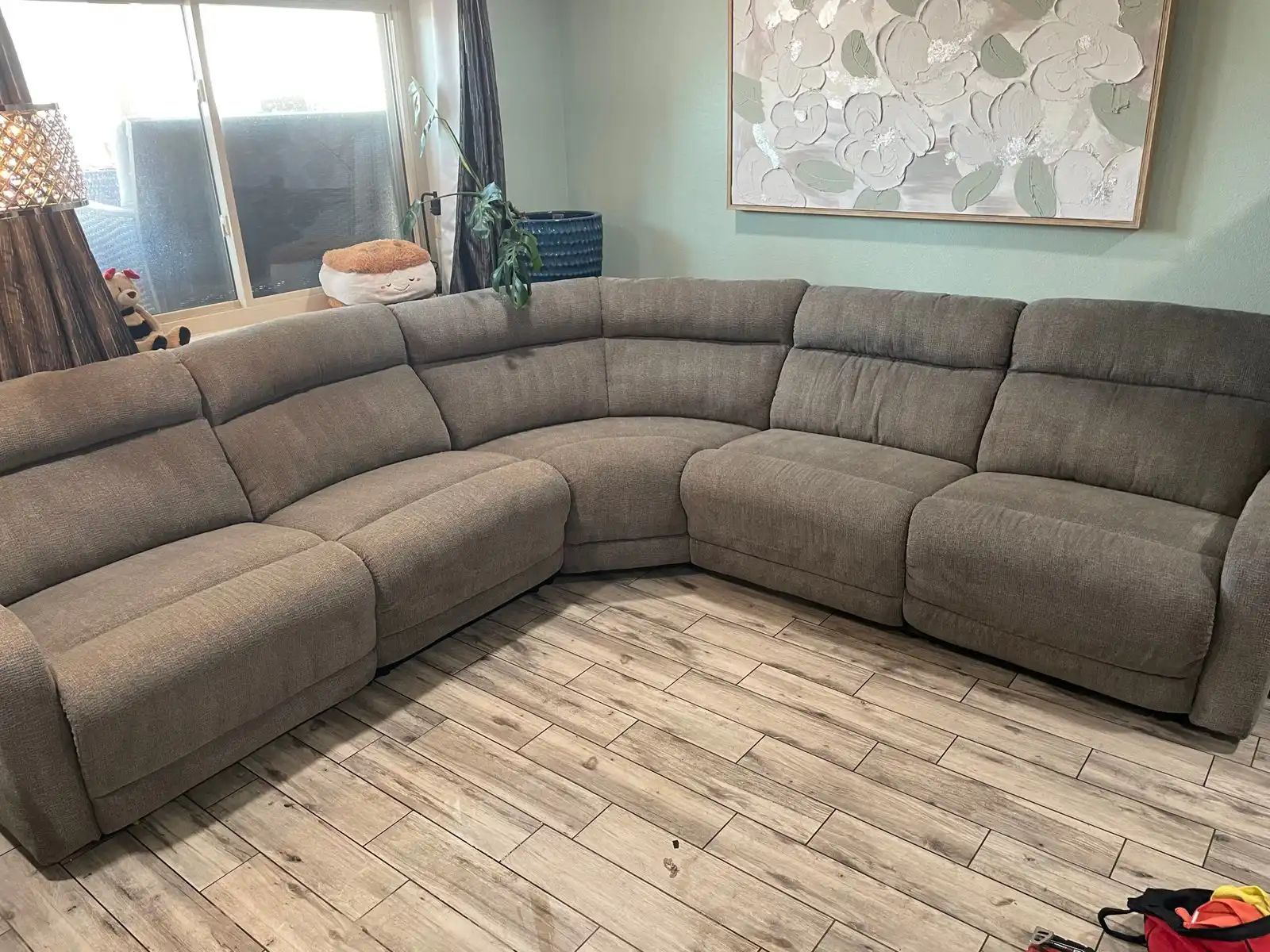
The seat cushion of the first adjacent section receives transfer from sitting contact when the lift chair user occasionally uses the sectional. This contact covers a larger surface area but occurs less frequently than the transitional hand contact.
The back cushion at the lift chair adjacency position receives contact when the user leans against the sectional during the standing transition. This produces a characteristic shoulder-height darkening on the back cushion adjacent to the lift chair.
The sectional arm top surface - the horizontal surface that a hand grips for support - receives the most concentrated and most repeated contact. Hand grip contact applies more pressure than resting contact, which drives the lotion and oil deposit deeper into the fabric fibers. This zone often shows the most pronounced residue buildup despite being a relatively small surface area.
In Sun City Grand homes in the Desert Springs and Mountain View communities, and in the Corte Bella neighborhood, I regularly document these patterns before cleaning because thorough treatment requires addressing the complete pattern, not just the most visible point.
Fabric Type and How It Affects the Transfer Pattern
Microfiber sectionals show the adjacency pattern most prominently. The fine fiber structure provides high surface area for lotion film to coat, and the characteristic nap direction gets disrupted unevenly, creating a visible color change at the affected area from across the room.
Performance fabrics show the pattern less dramatically but are not immune. The tight weave resists initial penetration, keeping deposits more at the surface and potentially easier to clean in early stages.
Natural fiber upholstery absorbs lotion compounds more readily but also responds better to water-based cleaning chemistry. The adjacency pattern on natural fibers is often less tacky and more responsive to cleaning.
Leather and faux leather show the pattern as a surface buildup rather than an absorbed deposit, making it the most easily addressed fabric type for this specific problem.
How I Clean Lift Chair Adjacency Soil on Sun City Sectionals
Full assessment before any treatment. I identify all contact zones and evaluate the severity of deposit at each. I also assess the rest of the sectional to determine whether zone treatment or full-piece cleaning is appropriate. This assessment takes about ten minutes and shapes the entire job.
Targeted pre-treatment with encapsulation chemistry specifically formulated to break down emollient and film-forming compounds. Dwell time of 10 to 15 minutes allows the chemistry to penetrate the film layer and break the bond between the lotion compounds and the fiber surface.
Controlled agitation at the contact zones works the pre-treatment into the fiber structure to release the deposited material. For microfiber, agitation needs to be in a consistent direction to restore the nap rather than disrupting it further.
Extraction removes the pre-treatment and released material completely. Incomplete extraction leaves residue that re-attracts soil faster than clean fiber. On microfiber, thorough extraction also helps restore nap direction.
For the rest of the sectional, a lighter maintenance cleaning pass maintains consistency and prevents the clean-zone contrast from becoming visually obvious after the adjacency zones are treated.
Why the Rest of the Sectional Looks Fine
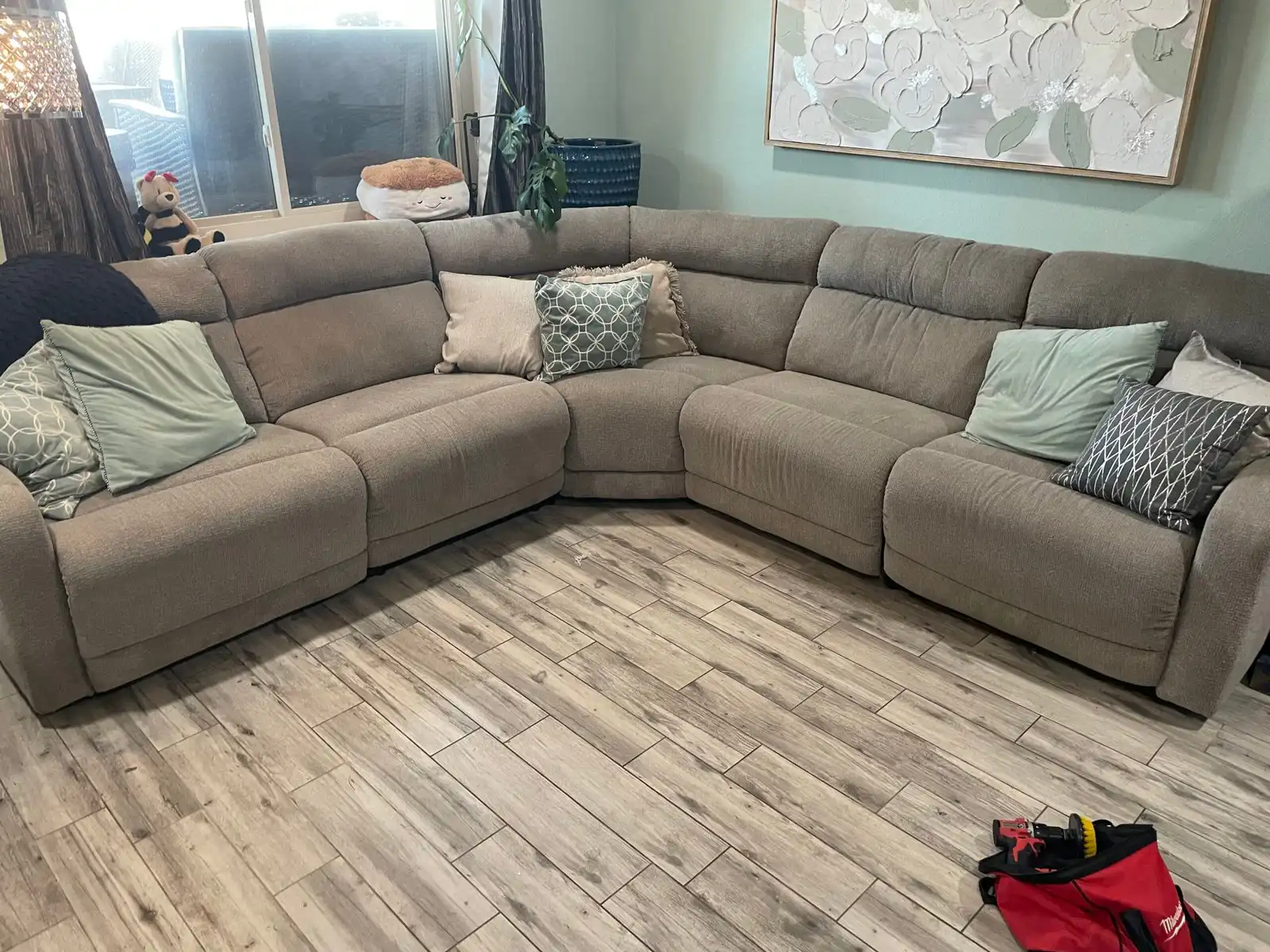
In a Sun City home with two residents where one uses the lift chair and the other uses a specific section of the sectional, the use pattern is concentrated and predictable. The same sections receive the same contacts day after day. The unused sections accumulate very little. This contrast means that cleaning the whole sectional to address the adjacency zone, while sometimes appropriate, isn't always necessary.
Maintenance Between Professional Cleanings
A clean, dry cloth placed over the primary adjacency point - the sectional arm beside the lift chair - provides a barrier layer that absorbs the hand contact transfer rather than allowing it to reach the fabric directly. This is the simplest and most effective daily prevention measure. The cloth can be laundered regularly.
Periodic light wiping of the adjacency zones with a barely damp clean cloth - no cleaning products, just slightly damp - removes the fresh lotion transfer before it has time to dry and form the film layer. This works best as a weekly habit.
Avoid DIY spray cleaners on the adjacency zones. Most over-the-counter upholstery sprays are not formulated for film-forming lotion chemistry and can set the deposit rather than removing it.
Professional cleaning annually for the adjacency zones keeps the deposit from reaching the level where it has bonded deeply and requires more intensive treatment.
Serving All Four Sun City Communities
Serving Sun City, Sun City West, Sun City Grand, and Sun City Festival including communities near Briarwood Country Club, Stardust Golf Course, Desert Springs, Mountain View, Corte Bella, Deer Valley Golf Course, RH Johnson Recreation Center, Festival Foothills, and throughout the West Valley active adult communities.
Learn more about our upholstery cleaning services, or explore other cleaning services we offer in Sun City.

 (602) 429-9602