What Cleaning Can Address and What It Cannot
This is the central distinction for hallway carpet cleaning in Sun City homes with mobility device use, and it's the framework I use to give homeowners an honest picture before any cleaning begins.
The soil component is what cleaning addresses. The carbon black from rubber wheels and tips deposits into the carpet pile fiber along the track. The plasticizer compounds that help carbon black bond to surfaces create adhesion between the rubber deposit and the carpet fiber. This is a soil condition: material deposited into the fiber from an external source that can be extracted with appropriate chemistry, adequate dwell time, and good mechanical agitation and extraction.
Professional cleaning with alkaline chemistry targeting petroleum-based compounds releases the carbon black deposit from the fiber surface. Thorough extraction removes it. The track lightens. How much it lightens depends on how long the deposit has been accumulating and how deeply the carbon black has penetrated - recent accumulation responds more completely than long-term deep-bonded deposit.
The compression component is what cleaning cannot fully address. When carpet pile fiber has been compressed under sustained high load for an extended period, the fiber takes a set in the compressed position. The fiber's memory has been altered by the sustained force.
Moisture introduced during professional cleaning temporarily increases fiber elasticity and allows some compression recovery - the fiber becomes more pliable when damp and can recover toward its original position. Pile grooming while damp assists this recovery by physically working against the compressed direction while the fiber is at its most elastic. This process produces genuine pile recovery in many cases, particularly for moderate compression that hasn't been sustained for extremely long periods.
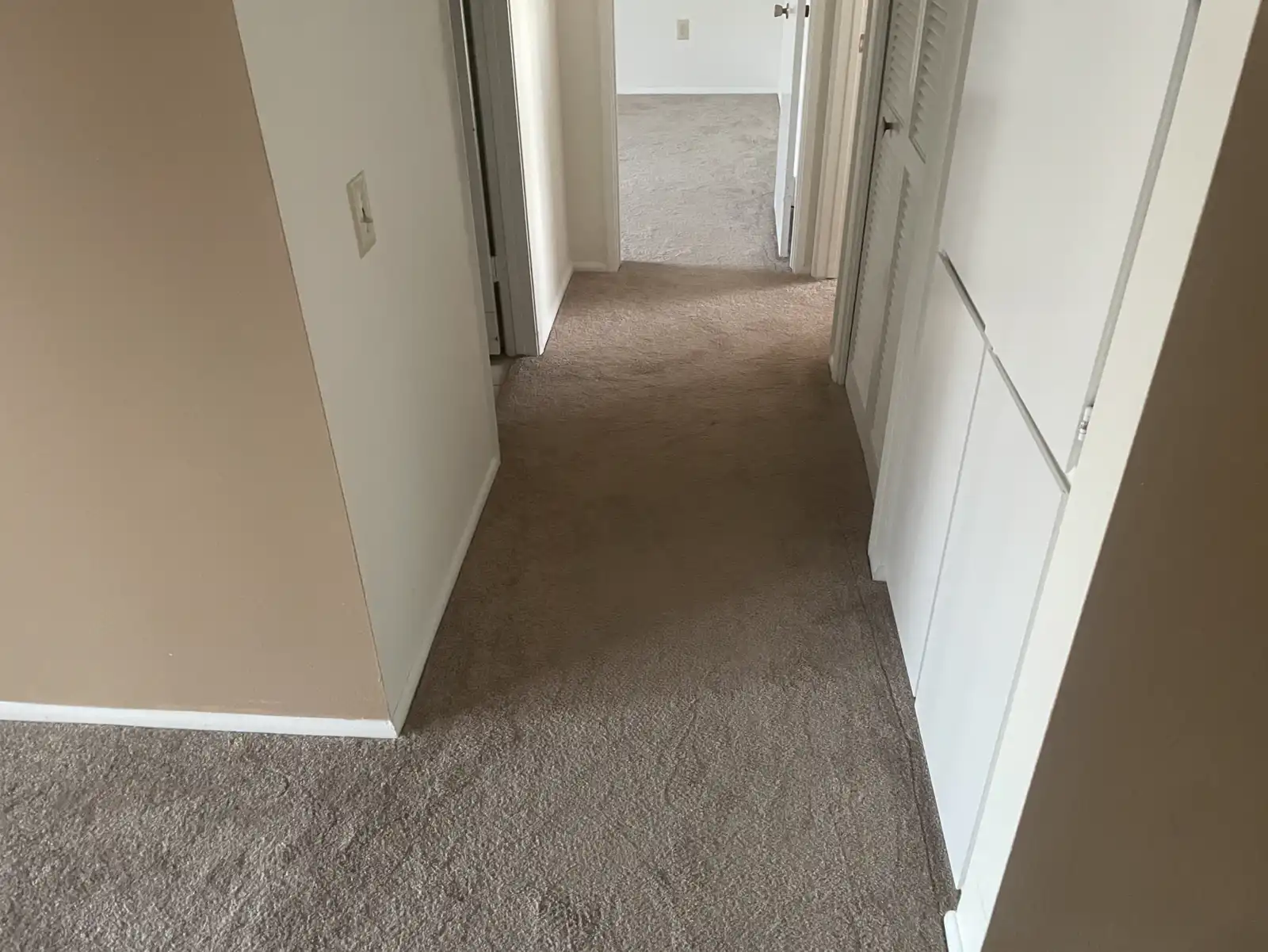
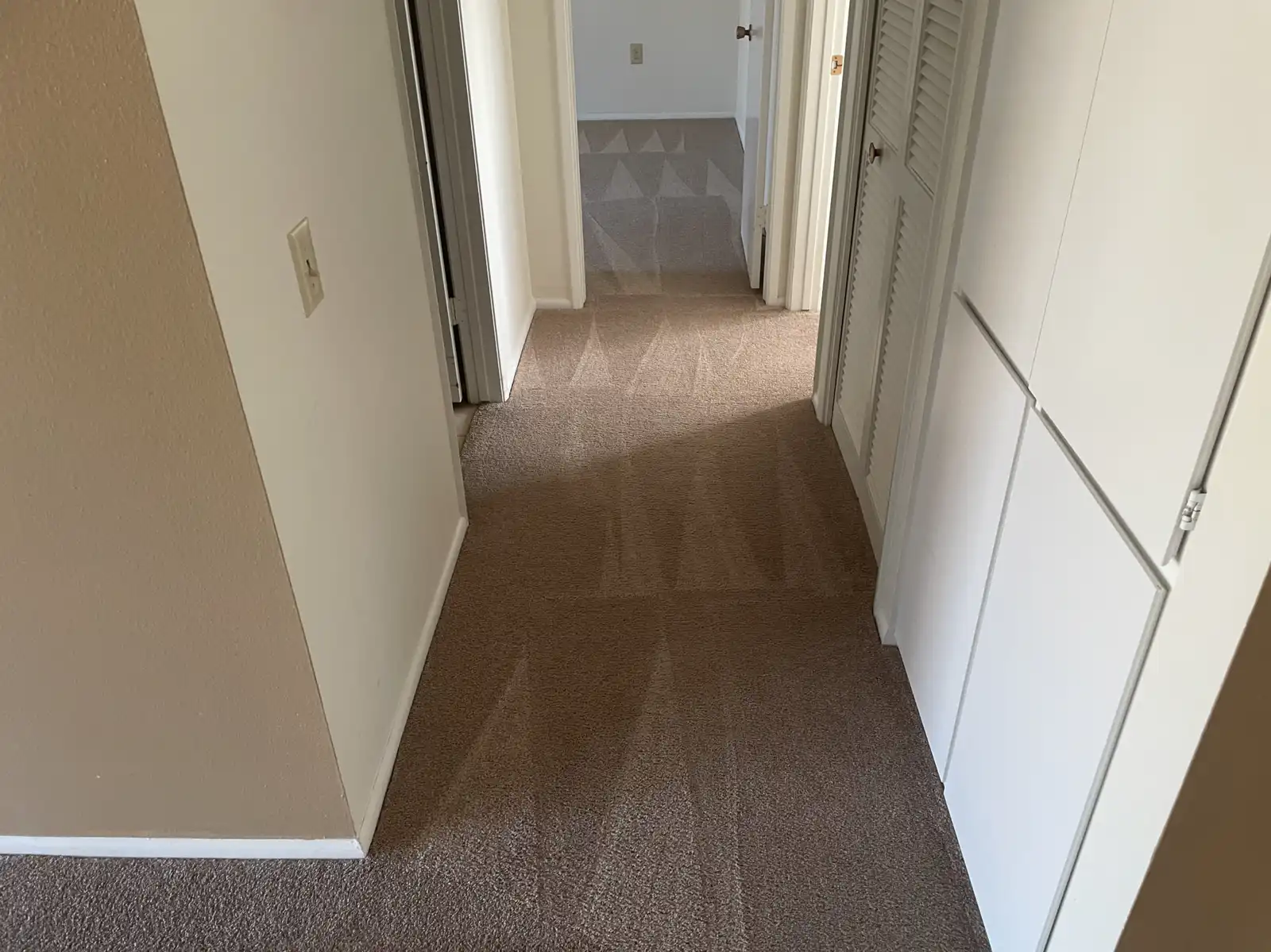
The honest picture after a thorough cleaning of a Sun City hallway with a mobility device track is typically: the track is lighter (soil removed), the pile is partially recovered (compression partially reversed), and the hallway looks substantially better - but a subtle indication of the track path may remain as a slight pile height difference rather than the combined darkening-and-flattening that existed before cleaning.
Walker Tracks vs. Scooter Tracks: Different Severity, Different Prognosis
Standard walker tracks - from a four-leg walker with rubber tips - produce the lightest compression profile. The track pattern is typically two lines corresponding to the two front feet. Standard walker tracks generally respond well to cleaning - the carbon black deposit is moderate, the compression is not extreme, and pile recovery after cleaning is substantial.
Rollator walker tracks - from the two-wheeled or four-wheeled rolling walker type - produce a more defined compression pattern. The rolling wheels create continuous parallel compression lines. Rollator tracks respond well for the soil component and show moderate pile recovery for the compression component.
Motorized scooter tracks produce the most significant compression and soil accumulation. The heavy combined weight of device and rider, the large rubber tire contact area, and the daily round-trip travel creates a track with both deep rubber compound penetration and the most severe compression set. I approach scooter track hallway cleaning with a clear pre-cleaning assessment and honest outcome discussion.
Wheelchair tracks fall between rollator and scooter in severity depending on the chair type and the user's weight. Manual wheelchair tracks are lighter than powered chair tracks.
Carpet Pile Type and Compression Recovery
Cut pile carpet - the most common type in residential hallways throughout Sun City West, original Sun City, and Sun City Grand homes - has individual fiber ends standing upright. Nylon cut pile has better memory and recovery than polyester because nylon retains more shape-recovery property after compression.
Low-pile or berber-style carpet shows compression tracks as defined paths of slightly altered texture rather than dramatically flattened pile. The low pile height means there's less pile to compress and less to recover.
In Sun City Grand communities like Cimarron and Desert Springs, and in the established Sun City West neighborhoods near Hillcrest and Briarwood, hallway carpet installed in the last decade tends to be lower-pile and often nylon-based - generally a better compression-recovery prospect than the older polyester carpet in some original Sun City homes.
The Cleaning and Pile Recovery Process
Full hallway assessment before treatment. I walk the hallway and examine the track at multiple points - the compression and soil severity often varies along the length, with areas of most frequent turning or stopping showing different profiles than the straight travel sections.
Pre-treatment chemistry applied specifically to the track lines with emphasis on the rubber compound deposit. Full dwell time - 15 to 20 minutes for established track accumulation - allows the chemistry to work through the rubber deposit layers.
Agitation into the pile fiber along the track. The agitation direction works against the compression to begin physically assisting pile recovery. Agitation that goes across the track path - working into the compressed fibers from the side - reaches the fiber base more effectively than agitation that runs parallel to the track direction.
Extraction removes the released rubber compound, pre-treatment chemistry, and any other soil. Thorough extraction at the track lines is critical - rubber compound left by incomplete extraction re-darkens quickly.
Pile grooming while damp is the compression recovery step. A pile brush worked against the compression direction physically assists the fibers in recovering their upright orientation. This makes a visible difference on cut pile carpet, particularly nylon cut pile.
When the Track Is Permanent: Honest Assessment and Options
A hallway with permanent compression tracks that has been professionally cleaned is in substantially better condition than an uncleaned hallway. The soil component is gone. The remaining track visibility is the pile height difference from permanent compression set, not the combination of soil darkening plus compression that existed before.
Carpet replacement in the hallway only is an option in many Sun City homes where the hallway is a discrete zone. A hallway runner placed along the mobility device path covers the track while protecting the remaining carpet. Carpet repair or pile lifting by a specialist can improve pile height in some cases.
Preventing Progressive Compression
A hallway runner placed along the primary mobility device path is the most effective preventive measure. The runner absorbs the rubber compound transfer and the compressive force, protecting the carpet beneath. For motorized scooter users in Sun City Grand communities and throughout Sun City West, a runner is the single most practical protection measure.
Rubber tip replacements on standard walkers reduce both the rubber compound transfer rate and the compressive force concentration. Harder, more worn tips transfer carbon black more readily and concentrate force on a smaller contact area.
Professional cleaning every 12 months for hallways in active mobility device use prevents the track accumulation from reaching the severe stage. Annual cleaning at the moderate accumulation stage consistently produces better results than less frequent cleaning at the severe stage.
Serving All Four Sun City Communities
Serving Sun City, Sun City West, Sun City Grand, and Sun City Festival including communities near RH Johnson Recreation Center, Hillcrest Golf Club, Briarwood Country Club, Corte Bella, Desert Springs, Cimarron, Heritage, Sun City Manor, Trail Ridge Golf Course, and throughout the West Valley active adult communities.
Learn more about our carpet cleaning services, or explore other cleaning services we offer in Sun City.

 (602) 429-9602