Why Waiting for Visible Soiling Is the Wrong Trigger for Dining Chair Cleaning
In most cleaning contexts, visible soiling is the appropriate trigger for action - you clean when something looks dirty. For Sun City dining chairs with the consistent low-intensity use pattern, this approach consistently produces worse results than schedule-based cleaning, for two specific reasons.
The first reason is the film bonding timeline. The skin oil and lotion compounds that accumulate on dining chair upholstery from daily mealtime use don't remain loosely deposited on the fiber surface indefinitely. Over time - through the repeated heat cycling of daily body contact followed by cooling between uses, through the gradual penetration of oil compounds into fiber structure - the accumulated material bonds progressively more firmly to the fiber surfaces. Deposits that are six months old clean easily. Deposits that are two years old require more intensive treatment. Deposits that are four or more years old have undergone enough bonding that some of the accumulation is genuinely difficult to fully remove regardless of the cleaning approach.
Waiting until the chair looks visibly soiled typically means waiting until two to three years of accumulation have occurred - at which point much of the material has undergone significant bonding and requires deeper treatment than a light maintenance cleaning would have needed at the six-to-twelve month mark.
The second reason is the visual threshold of detection. The slow, even accumulation on Sun City dining chairs - distributed uniformly across the contact zones rather than concentrated in obvious stains - is difficult to notice until it has reached a significant level. The color change happens gradually, with no single event that draws attention to it. By the time the chairs look noticeably soiled, the accumulation has typically been building for much longer than the current visible level suggests.
Sun City homeowners in the Heritage neighborhood and throughout the Sun City Grand communities who have dining chairs that "suddenly" looked very dirty to them were usually experiencing the moment when gradual accumulation crossed their visual detection threshold - not the moment when accumulation began. The cleaning job required at that point is substantially more intensive than what schedule-based light cleaning would have required at regular intervals.
Building a Maintenance Schedule for Sun City Dining Chairs
A practical maintenance schedule for Sun City dining chairs has two components: a light maintenance cleaning interval and a deeper periodic cleaning interval. The combination keeps chairs consistently presentable without the intensive restoration work that deferred cleaning requires.
Light maintenance cleaning every six to nine months is the core of the schedule. At this interval - before significant bonding of accumulated material has occurred - the soil profile at the seat, back, and armrest contact zones is still primarily surface and near-surface. Light maintenance cleaning with appropriate upholstery chemistry, brief dwell time, and good extraction removes the accumulated deposit cleanly without requiring the extended treatment times and multiple passes that established accumulation needs. The chairs look consistently fresh and the fabric is maintained at a condition where its cleaning response stays predictable.
For a Sun City two-person household where dining chairs are in use three times daily, six months is the more appropriate light cleaning interval if the residents use therapeutic lotions regularly. Nine months is appropriate for lighter lotion use or chairs used less frequently than three meals daily.
Deeper periodic cleaning every 18 to 24 months addresses any accumulation that's worked below the surface layer despite the light maintenance cleanings, restores full fabric brightness, and allows assessment of the armrest and seat edge zones that take the heaviest contact. This deeper cleaning uses longer pre-treatment dwell times and more thorough extraction than the light maintenance sessions.
A full set of dining chairs - typically four to six chairs in a Sun City dining room - can be light-cleaned in one to two hours. Scheduling this cleaning at the same appointment as other upholstery maintenance - the sofa, the loveseat - makes the logistics straightforward and allows assessment of all the upholstered pieces in the home at the same visit.
Fabric Types Common in Sun City Dining Chairs
Dining chairs in Sun City homes span a range of upholstery materials, and the fabric type affects both how quickly accumulation becomes visible and how well the chairs respond to light maintenance cleaning.
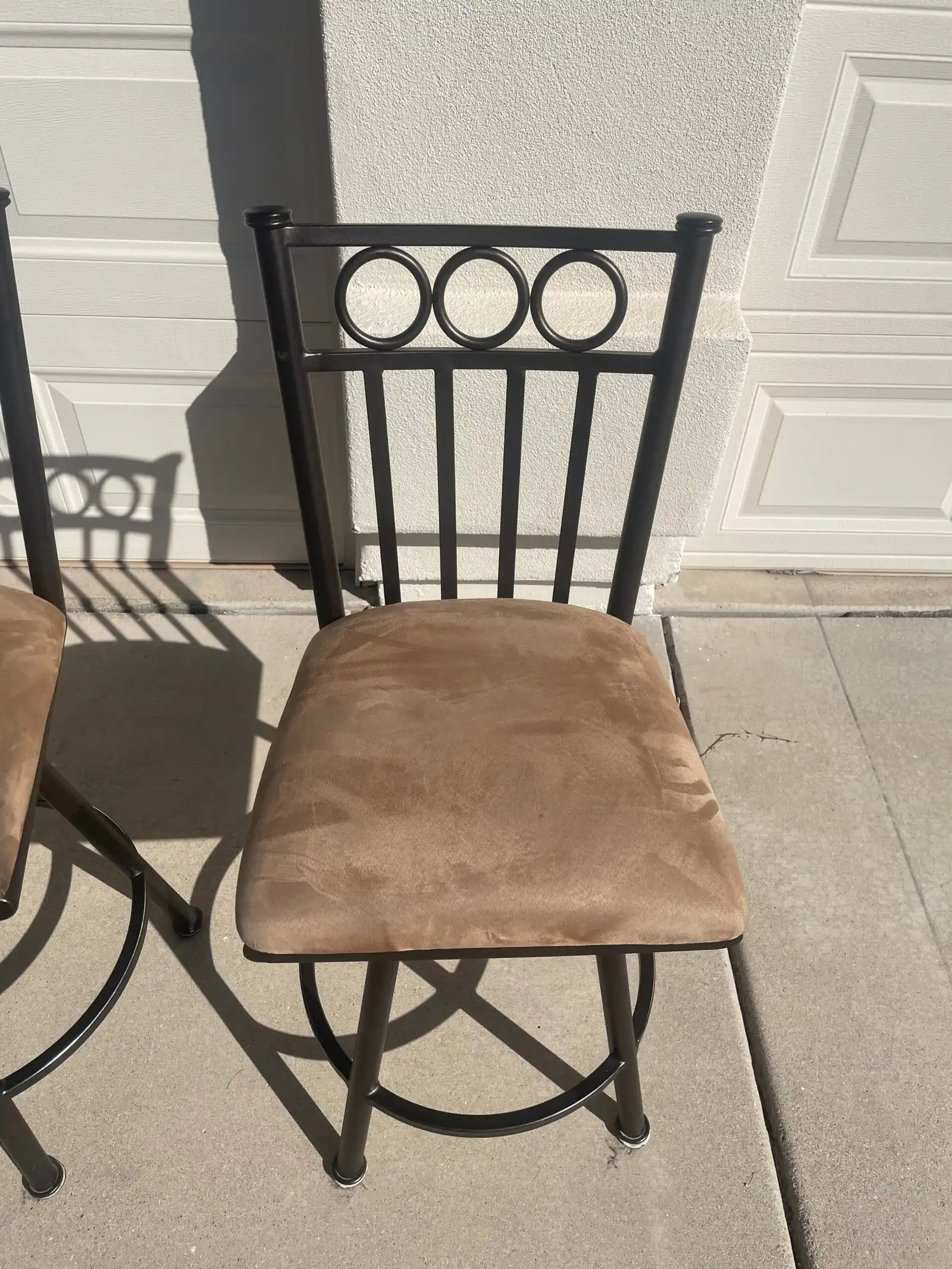
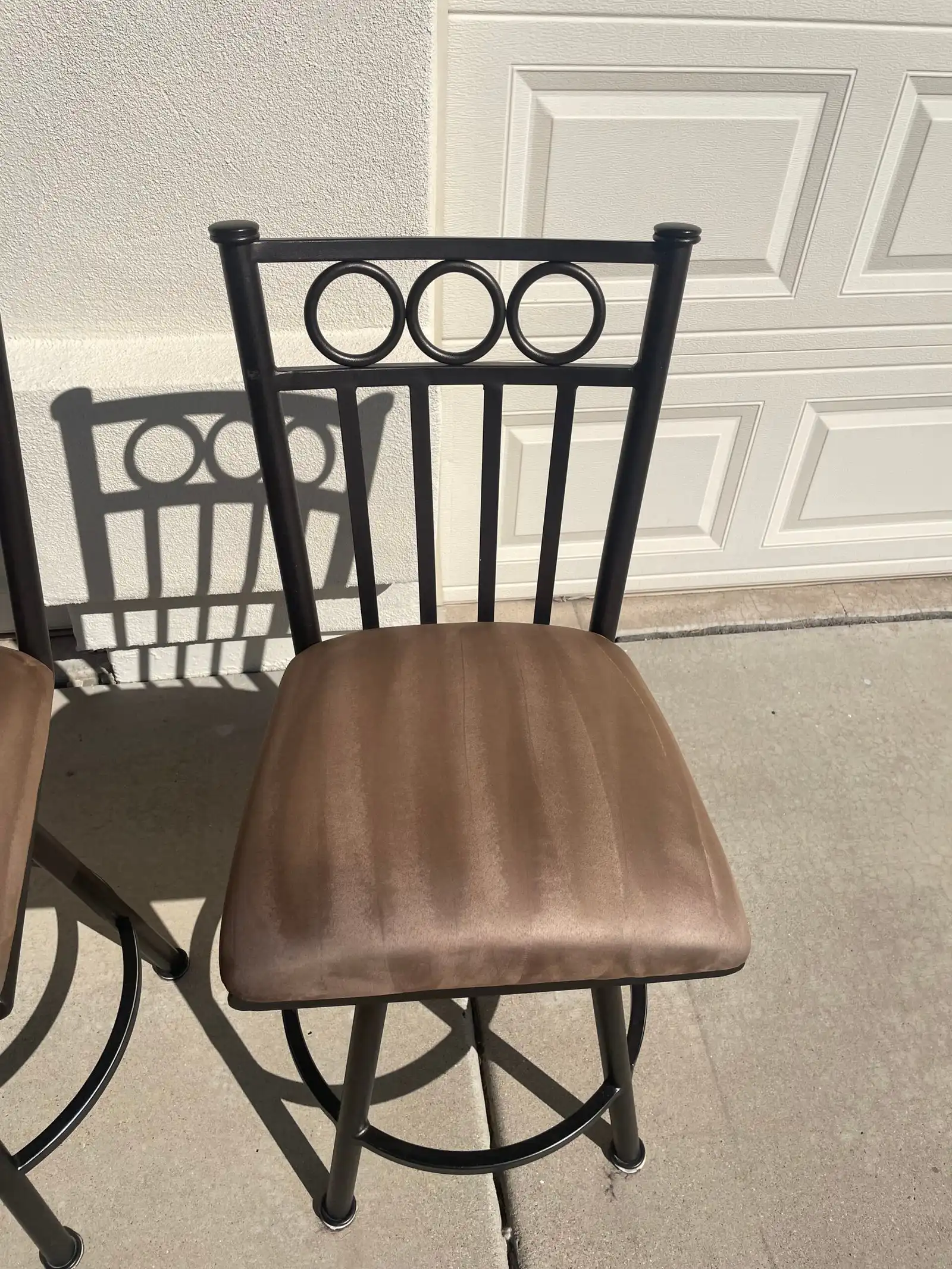
Microfiber dining chair seats are common in Sun City homes for their soft feel and marketed stain resistance. Microfiber accumulates the skin oil and lotion film relatively quickly - the fine fiber structure that makes microfiber feel soft also provides substantial surface area for film to coat. Microfiber responds well to light maintenance cleaning when done at appropriate intervals - the film hasn't had time to penetrate deeply and the nap can be restored through cleaning and grooming. Microfiber that has been allowed to accumulate for several years without cleaning is more challenging because deep-penetrated film on microfiber's fine fibers is difficult to fully extract.
Woven fabric dining chair seats - including jacquard, tapestry, and textured weave fabrics common in traditional dining chair styles throughout Sun City's more formal dining rooms - accumulate soil more slowly than microfiber because the tighter weave resists surface penetration initially. The visual accumulation signal appears later, but when it does appear it reflects deeper penetration than microfiber at the equivalent visual stage. Light maintenance cleaning on woven fabrics is highly effective at regular intervals because the soil is primarily surface through most of the maintenance window.
Vinyl and faux leather dining chair seats accumulate surface film rather than fiber-penetrated deposits - the non-porous surface doesn't absorb compounds the way fabric does. Wipe-down with a slightly damp cloth handles most mealtime surface soil on vinyl seats. Professional cleaning for vinyl dining chairs addresses accumulated film in seam lines, on the chair back fabric where present, and any areas where the vinyl surface has developed micro-scratches that trap soil.
Meal-Specific Soil and How It Differs From Other Accumulation
Beyond the skin oil and lotion accumulation from seating contact, dining chairs in Sun City homes also receive the specific soil types associated with mealtimes - and understanding these adds nuance to the maintenance picture.
Beverage drips and splashes are the most common visible dining chair soil event in Sun City homes. Coffee and tea - consumed at most meals in retirement households - are the most frequent sources. Coffee tannins stain light fabric quickly and become more difficult to remove the longer they remain untreated. A coffee drip that's addressed within minutes with a clean damp cloth produces minimal lasting staining. The same drip left to dry and then cleaned days later is significantly more stubborn.
Food contact at the seat edge and front seat cushion comes from the mechanics of mealtime sitting - a dropped crumb, a small food contact from a napkin that misses the table, the trace contact of hands with food residue reaching the chair arms between bites. These are individually small events that don't produce dramatic visible staining but contribute organic material to the accumulation profile.
Medication-related contact is a Sun City-specific element that other demographics don't experience to the same degree. Vitamin and supplement handling at the dining table can leave trace residue on chair arms - fish oil capsules in particular leave an oily residue that transfers readily to armrests and is worth addressing in the regular maintenance cleaning.
Spot Treatment Between Professional Cleanings
Part of a useful maintenance plan is knowing what can be addressed at home between professional cleaning appointments and what should be left for professional treatment.
Fresh beverage spills are the highest-priority immediate response situation. For coffee, tea, or juice on fabric dining chairs, immediate blotting with a clean white cloth removes a significant portion of the liquid and tannin before it sets. Blot from the outside of the spill toward the center - never rub - and use a clean section of cloth with each blot to avoid re-depositing removed material. Light blotting with cool water after the initial dry blot helps dilute remaining tannin. Allow to dry fully before assessing whether residual staining remains.
Dried food contact is generally better left for professional cleaning rather than home treatment. Attempting to clean dried food residue with home products often drives it deeper into the fabric or leaves cleaning product residue that compounds the accumulation. If dried food is present, remove loose surface material gently without pressing it into the fabric, then leave the rest for professional cleaning.
General surface freshening between cleanings - a light pass with a soft brush attachment vacuum over seat cushions and chair backs - removes loose surface dust and food crumbs without adding any chemistry to the fabric. This is safe and beneficial to do weekly as part of general dining room maintenance.
Avoid over-the-counter upholstery sprays on dining chair fabric between professional cleanings. Most commercial sprays leave surfactant and fragrance residue that compounds the underlying accumulation and accelerates re-soiling.
Why Consistency Across the Chair Set Matters
Dining chairs are experienced as a group, not individually. When one chair in a set is notably cleaner or darker than the others, the difference is immediately apparent. When all chairs are maintained on the same schedule, the set looks consistently uniform.
In Sun City homes where there are typically four to six dining chairs - some of which may be used more than others depending on the household's regular seating arrangement - the chairs used least often accumulate soil most slowly and will look cleaner than the chairs in daily use. Over time this creates a visible within-set inconsistency that's more noticeable than the absolute soil level on any single chair.
Cleaning the full set at each maintenance appointment addresses this by bringing all chairs to the same level at the same time. The chairs that needed more cleaning get more attention, the lightly used chairs get a lighter maintenance pass, and the whole set is consistent afterward.
The logistics of a full dining chair set cleaning are straightforward. Most sets of four to six chairs can be fully maintained in one to two hours at a light maintenance cleaning appointment. This is typically done as part of a broader home upholstery appointment that includes the sofa, loveseat, and any other upholstered pieces due for attention - making one visit serve the maintenance needs of the whole home's soft furnishings.
Serving All Four Sun City Communities
Serving Sun City, Sun City West, Sun City Grand, and Sun City Festival including communities near Heritage, Sun City Manor, Desert Springs, Cimarron, Mountain View, Corte Bella, Hillcrest Golf Club, Festival Foothills, Sun Valley Parkway, and throughout the West Valley active adult communities.
Learn more about our upholstery cleaning services, or explore other cleaning services we offer in Sun City.

 (602) 429-9602