Dog Oil Chemistry in White Fabric
Dog sebaceous oil is a complex mixture of fatty acids, wax esters, squalene, and cholesterol derivatives. These lipid-based compounds are oil-soluble rather than water-soluble. Fresh dog oil transfer to white fabric is nearly invisible - the problem develops over time through accumulation and oxidation.
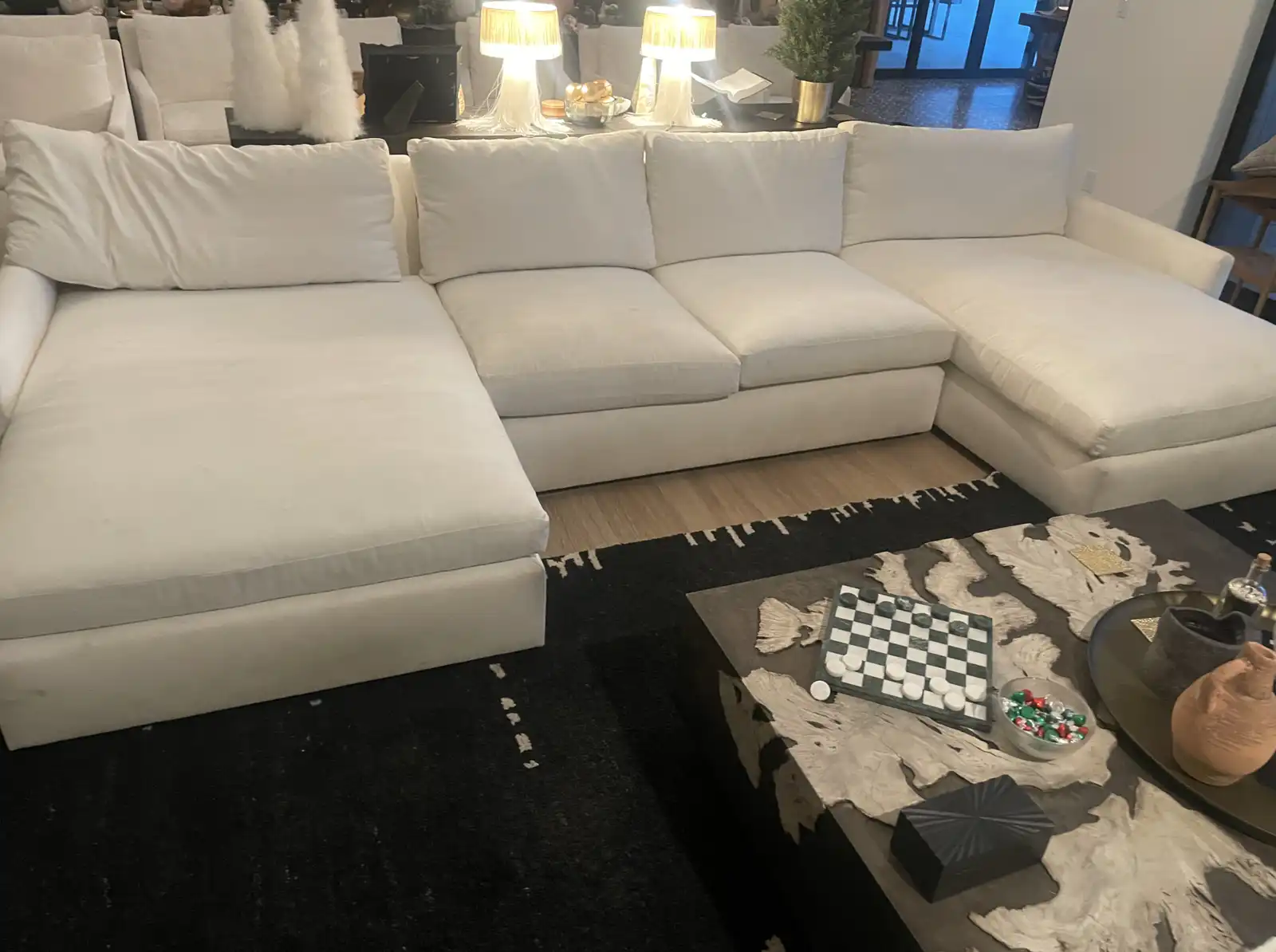
Accumulation builds as each contact event deposits additional oil onto the fabric surface. The oil film captures airborne particulate and bonds it to the fabric, darkening the contact zones progressively. Oxidation occurs as the unsaturated fatty acids react with oxygen over time, producing carbonyl compounds with a yellowish color. This is the chemical process that produces the characteristic cream-to-yellow discoloration of dog contact zones on white fabric.
The critical implication for cleaning frequency: dog oil in the early stages of oxidation is significantly more removable than oil that has been oxidizing for extended periods. The cleaning cycle should be tight enough to address the oil before full oxidation and bonding occurs.
The Rebooking Cycle: Why Multiple Cleanings Per Year
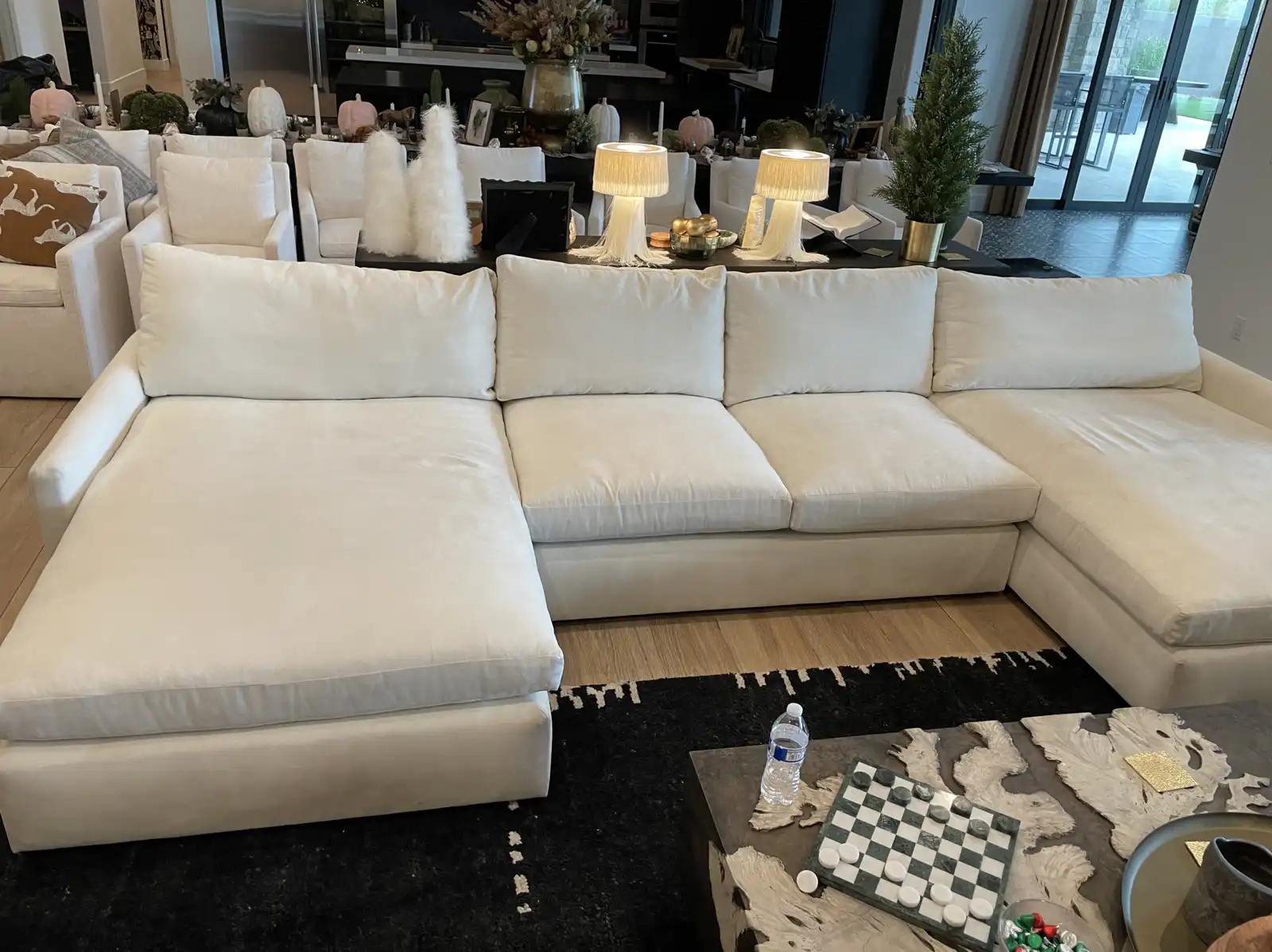
A white sectional in a large-dog household accumulates visible dog oil oxidation discoloration within approximately three to four months. Cleaning at the two-to-three month interval catches the oil in the pre-oxidation or early oxidation stage when it's primarily at the fiber surface. The cleaning is faster, the result is more complete, and the white appearance is restored more fully.
The holiday preparation cleaning is the most emotionally resonant element. Arriving before Thanksgiving to restore the white sectional for the extended family gathering - knowing the piece will look its best for the people they love most - is what professional cleaning is for at its most meaningful level.
Premium Modular Sectional Construction Considerations
Down or down-blend cushion fill requires low-moisture cleaning. Over-wetting a down cushion creates conditions for bacterial growth and mold during the extended drying period. The modular configuration includes hardware and connection components that require care during cleaning. The scale of these pieces means systematic section-by-section coverage with consistent dwell times is the only approach that produces a uniform result on white fabric.
Cleaning White Fabric: Chemistry and Technique
Chemistry pH management is more critical on white fabric. Strongly alkaline chemistry can promote yellowing. Strongly acidic chemistry can affect optical brighteners. Encapsulation chemistry is particularly appropriate because it minimizes residue risk - any surfactant left in white fiber shows as dulling or graying.
An additional extraction pass with clean water only after primary extraction removes residual cleaning compounds. Post-cleaning grooming of the pile in a consistent direction across all sections produces uniform light reflection - the whole piece looks uniform rather than showing tonal variation from inconsistent pile direction.
Managing Between Professional Cleanings
A washable throw or cover over the primary dog resting zones intercepts most oil transfer before it reaches the white fabric and can be laundered weekly. Weekly dry brushing of uncovered sections removes loose dog hair and surface particulate before they bond to freshly oxidizing oil film. Immediate blotting of any visible fresh deposits before they dry is more important on white fabric than on dark fabric.
No spray cleaners, no DIY spot treatments on white fabric between professional cleanings. DIY attempts risk discoloration and residue that compromise the result of the next professional cleaning.
Making the Decision: Is a White Sectional Right for Your Dog Household?
The white sectional works when the homeowner genuinely values the appearance and is committed to the maintenance cycle - professional cleaning two to four times per year. It doesn't work when the homeowner wants a low-maintenance piece that can go a year or more between cleanings. On a dark or patterned sectional, that interval is achievable. On a white sectional in a large-dog household, it isn't.
If you're going to commit to a white sectional in a dog household, the investment in quality fabric that responds well to cleaning over many cycles is worth making. For north Peoria homeowners in Vistancia, Blackstone, and the Estates at Happy Valley who choose quality white sectionals and commit to the appropriate maintenance cycle - the piece is achievable, sustainable, and genuinely rewarding.
Serving North Peoria Communities
Serving north Peoria including Vistancia, Trilogy, Blackstone, Sunrise Point, Northpointe, Desert Sky, Sunset Ridge, Desert Bloom, Sonoran Mountain Ranch, Westwing Mountain, Cibola Vista, Wyndham Village, Estates at Happy Valley, Parkridge, Westbrook Village, Cypress Point Estates, Torrey Pines, and surrounding communities along W Happy Valley Rd, Lone Mountain Rd, and Vistancia Blvd.
Learn more about our upholstery cleaning services, or explore other cleaning services we offer in Peoria.

 (602) 429-9602