Why Moisture Before Dry Extraction Makes Embedding Permanent
Dry pet hair in woven upholstery retains some degree of movement potential. The hair strands are dry, relatively stiff, and while anchored by their scale structure, they can be mechanically worked loose with the right tools applied to dry fabric.
When moisture is introduced before the dry hair is extracted, the hair absorbs moisture and becomes significantly more flexible, conforming to the weave structure and wrapping around individual fibers. Wet hairs mat together into clumped masses that anchor more effectively than separated strands. The weave fibers themselves become more adhesive when damp, increasing the grip on embedded hair.
The combined result: moisture locks the embedded hair more firmly into the weave. A loveseat that had removable embedded hair before moisture contact has permanently embedded hair afterward if the dry extraction step was skipped.
Tools and Techniques for Dry Pet Hair Extraction
A rubber bristle brush is the most effective dry extraction tool. Rubber has a high friction coefficient against both pet hair and fabric fibers. Short directional strokes work more hair out of the weave than long sweeping strokes. Multiple passes in the same direction, then cross-direction passes, then along the bias of the weave, extract hair from multiple orientations.
A stiff upholstery brush used before the rubber brush loosens deeply embedded hair and brings it closer to the surface. The vacuum with upholstery attachment follows the brush work, removing what the brushes loosened. The full sequence - stiff brush, rubber brush, vacuum - repeated across all sections constitutes thorough dry extraction.
Low-Moisture Wet Cleaning After Dry Extraction
After dry extraction removes the embedded hair, low-moisture cleaning with encapsulation chemistry addresses the remaining soil profile - pet oil deposits, dander, and odor-producing organic material. Woven upholstery is vulnerable to over-wetting: cushion fill absorbs excess moisture, fabric backing can shrink or distort, and wicking can deposit dissolved soil at the fabric surface during drying.
Pre-treatment dwell time for pet contact soil should be slightly longer than for non-pet upholstery. Post-agitation extraction must be thorough enough to remove all chemistry residue - surfactant residue in a woven weave attracts pet hair and dander back to the fabric surface faster than clean fabric would.
Fabric Types and Pet Hair Embedding
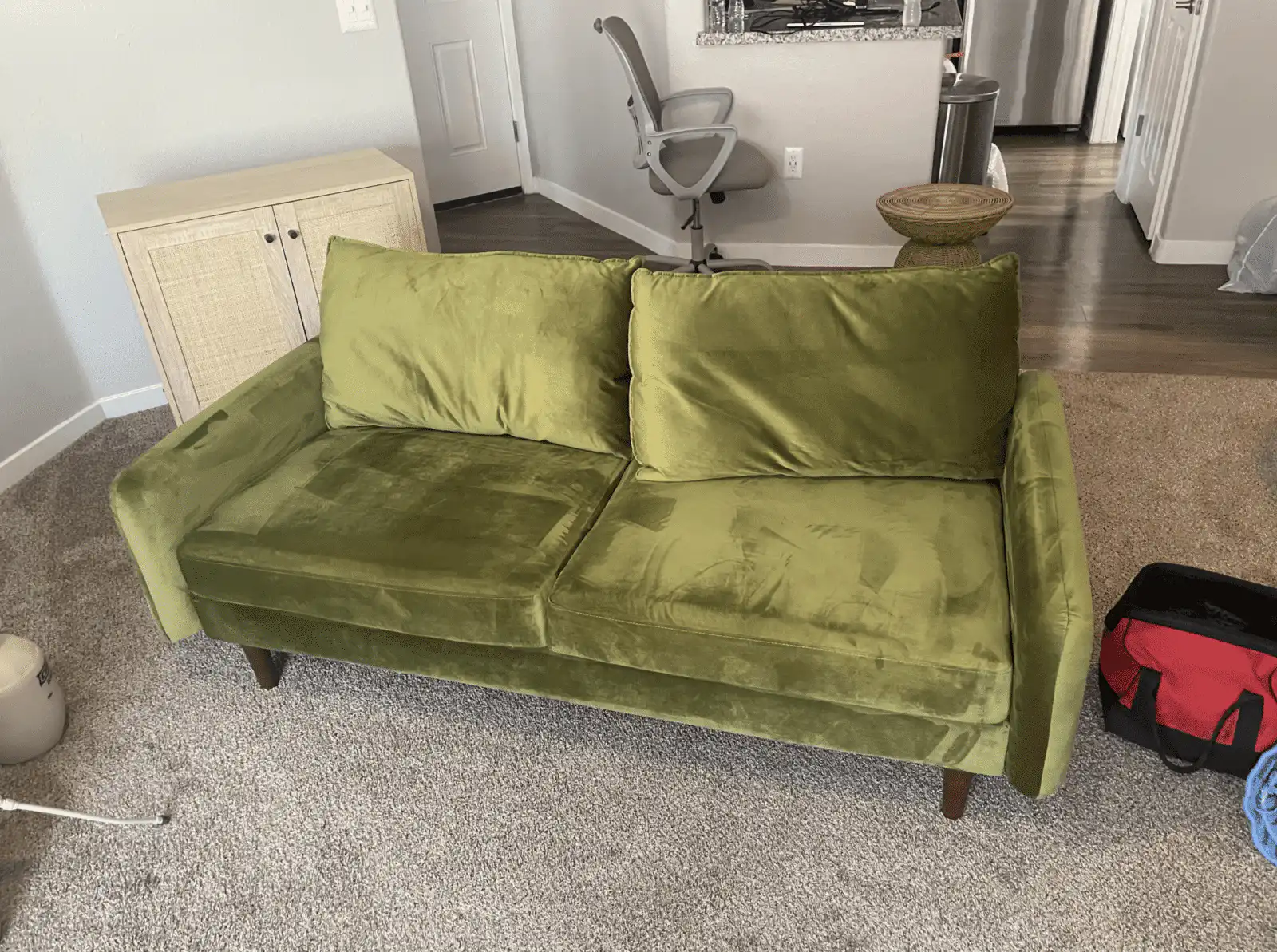
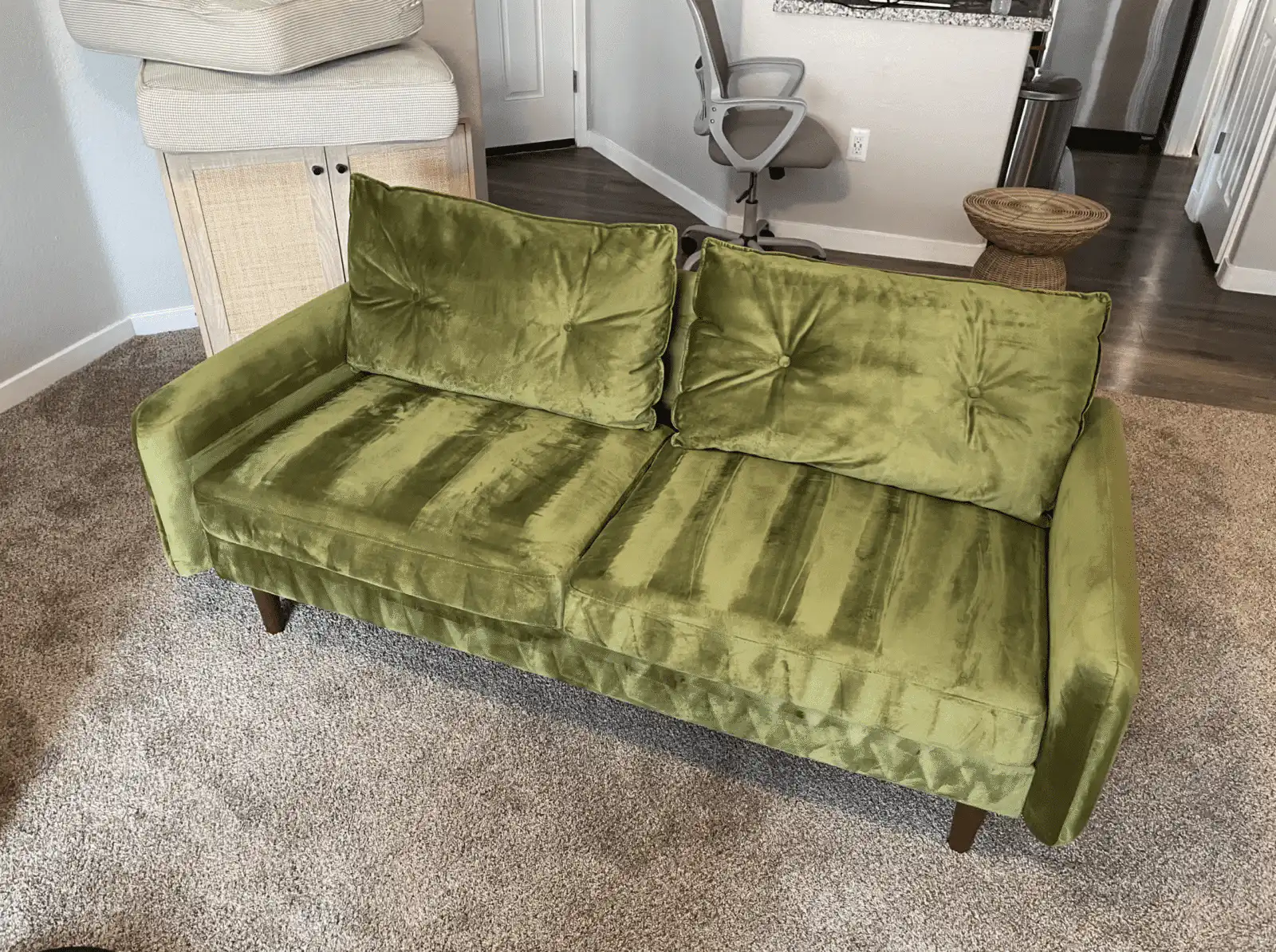
Chenille is the most challenging - its plush construction creates enormous fiber surface area for embedding. Textured woven fabrics embed hair moderately. Tight smooth weaves and performance fabrics embed least deeply and are the most practical choice for pet households. Microfiber's static charge in north Peoria's dry climate attracts hair electrostatically. Velvet requires directional awareness during dry extraction - working against the pile direction loosens embedded hair most effectively.
Pet Dander and Odor After Hair Removal
After dry extraction, the wet cleaning phase addresses dander accumulated throughout the fabric depth, pet oil deposits from skin and coat contact, and organic accumulation. Pet skin oils are higher in certain fatty acids and wax esters than human skin oils, producing a slightly more waxy film that's more odor-active as it oxidizes. Enzyme pre-treatment targeting dander and urine compounds combined with encapsulation chemistry for the oil compounds produces the most complete odor resolution.
Maintaining a Pet Household Loveseat Between Cleanings
A washable loveseat cover over the primary pet contact zone is the single most effective preventive measure. Weekly dry extraction maintenance - a brief 5-minute rubber brush pass followed by vacuuming - removes newly embedded hair before it works deeper. Grooming the dog or cat before loveseat access on high-shedding days reduces the volume of loose hair available to embed.
Professional cleaning every 12 months with the weekly maintenance habits in place maintains the loveseat at a consistently clean level. Without maintenance, deep embedding can reach a level within 6 to 8 months where the dry extraction phase alone takes 30 or more minutes.
Serving North Peoria Communities
Serving north Peoria including Vistancia, Trilogy, Blackstone, Sunrise Point, Northpointe, Desert Sky, Sunset Ridge, Desert Bloom, Sonoran Mountain Ranch, Westwing Mountain, Cibola Vista, Wyndham Village, Estates at Happy Valley, Parkridge, Westbrook Village, Cypress Point Estates, Torrey Pines, and surrounding communities along W Happy Valley Rd, Lone Mountain Rd, and Vistancia Blvd.
Learn more about our upholstery cleaning services, or explore other cleaning services we offer in Peoria.

 (602) 429-9602