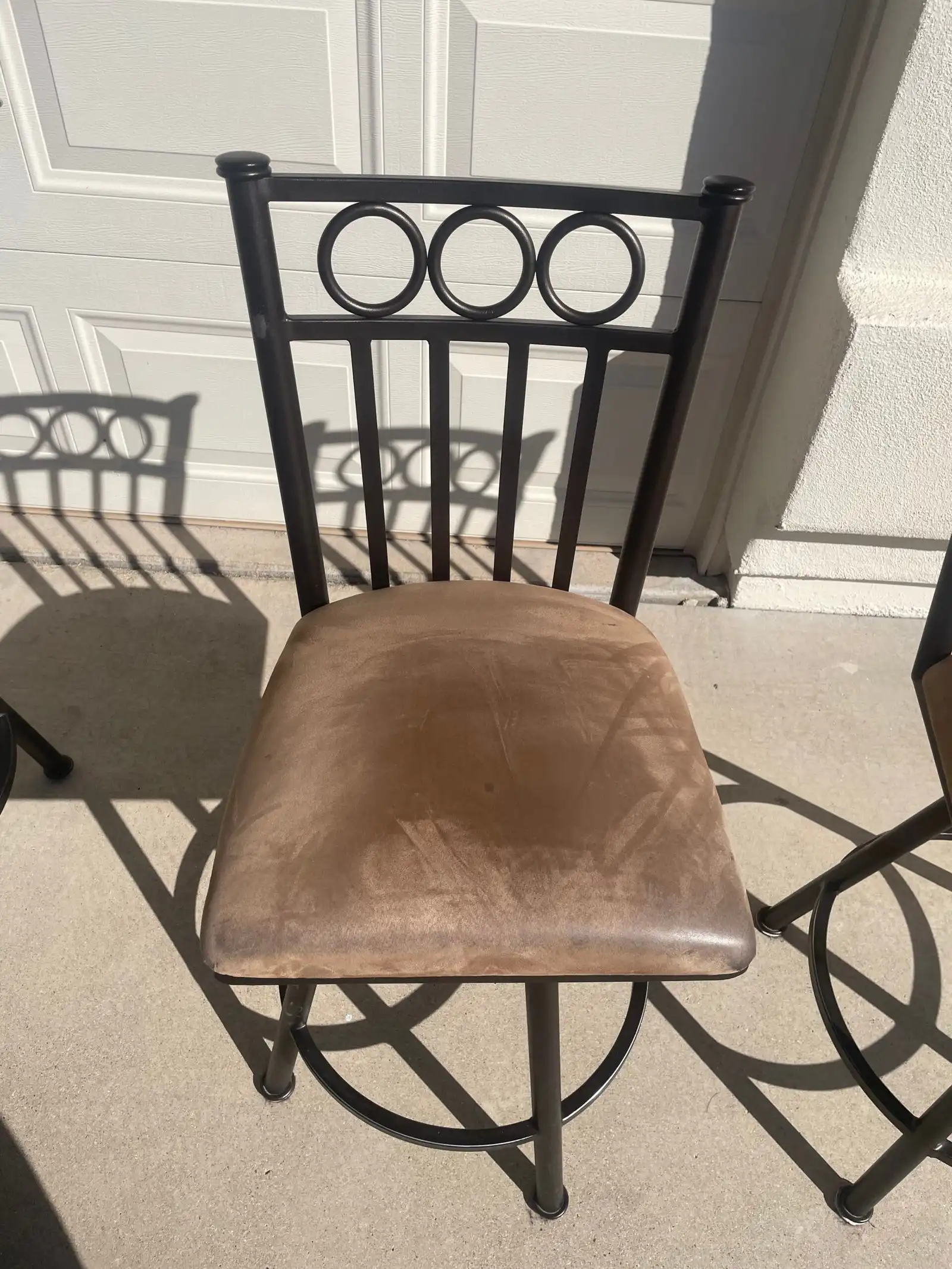
Juice Stains: Chemistry, Behavior, and Treatment
Fresh juice on upholstery fabric is primarily water with dissolved sugar, fruit acids, and tannin compounds. A fresh juice contact blotted immediately removes a substantial portion of the dissolved tannin before it bonds to fiber surfaces. As juice dries, the tannin component bonds to fiber surfaces through hydrogen bonding, producing the characteristic yellow-to-brown discoloration.
Treatment combines mild enzyme pre-treatment with an oxidizing agent that specifically targets tannin compounds. This chemistry is different from general upholstery surfactant chemistry. Fresh juice stains treated within hours respond completely in most cases. Stains that have dried and been in the fabric for days to weeks require longer dwell time and may need multiple passes.
Sauce Stains: The Multi-Component Challenge
Tomato-based sauces contain several distinct staining components: lycopene (a fat-soluble red pigment that requires degreasing chemistry), protein from tomato solids and added protein from meat or cheese, natural fruit acids, sugars, and cooking oil. This is four distinct chemical stain components in one incident.
The heat-setting risk is critical. Protein stains are permanently set by heat. Any attempt to treat a sauce stain with hot water before the protein component is enzymatically broken down drives the protein into a permanent bond with the fabric. Cool water only until enzyme treatment has addressed the protein.
Barbecue sauce combines the tomato component with additional sugar and often artificial colorants, making it typically the most stubborn of the common dining chair sauce stains.
Marker Stains: Why Water-Based Cleaning Doesn't Work
Permanent markers use alcohol-soluble dye compounds in a carrier solution designed to bond to surfaces. Water-based cleaning doesn't dissolve the alcohol-soluble dye compounds. The appropriate chemistry is isopropyl alcohol or specific solvent-based pre-treatment. Applied with a clean cloth, allowed brief dwell time, and blotted rather than rubbed, the dissolved ink transfers to the blotting material.
The critical precaution: solvent chemistry must be tested on an inconspicuous area of the fabric before treating the visible marker stain. Some upholstery fabrics have dyes that are soluble in alcohol-based solvents - treating the marker stain could remove the fabric dye along with the marker dye.
Crayon is wax-based rather than ink-based. Scrape off surface wax deposits first, then warm-temperature degreasing chemistry addresses the wax compound and pigment effectively.
Combined Stain Events and Treatment Sequencing
Solvent treatment for marker goes first when marker is present alongside food stains. Solvent applied to dry fabric before any water chemistry produces more consistent results. Enzyme pre-treatment for protein stains goes before any alkaline chemistry. Cool water extraction between chemistry types prevents interference.
For chairs where all three stain types are present: solvent pre-treatment for marker zones with testing and dwell, extraction and drying; enzyme pre-treatment for sauce protein zones; oxidizing treatment for juice tannin zones; final general upholstery cleaning pass across all sections.
Fabric Types on North Peoria Family Dining Chairs
Performance fabric dining chairs are the most practical choice for families with children and are increasingly common in Vistancia and Blackstone. The tight weave resists initial stain penetration, giving a longer window for surface blotting. Microfiber shows stains visibly but responds well to enzyme and solvent chemistry. Linen and cotton are most susceptible to permanent tannin staining and require careful chemistry selection.
Home Response and Professional Cleaning: What to Do and When
For juice: immediate dry blotting, then light cool water blotting. Do not apply any spray cleaner before fully dry. For sauce: remove solids by lifting, blot with dry cloth, cool water only - never hot water. For marker: do not apply water or water-based cleaners to fresh marker. Dry blot only and leave for professional solvent treatment.
Professional cleaning timing: juice and sauce stains benefit from treatment within two to four weeks. Marker stains are less time-sensitive. Annual professional cleaning addresses the accumulated stain profile, with specific significant stain events addressed promptly rather than waiting.
Serving North Peoria Communities
Serving north Peoria including Vistancia, Trilogy, Blackstone, Sunrise Point, Northpointe, Desert Sky, Sunset Ridge, Desert Bloom, Sonoran Mountain Ranch, Westwing Mountain, Cibola Vista, Wyndham Village, Estates at Happy Valley, Parkridge, Westbrook Village, Cypress Point Estates, Torrey Pines, Fairway Ridge, and surrounding communities along W Happy Valley Rd, Lone Mountain Rd, and Vistancia Blvd.
Learn more about our upholstery cleaning services, or explore other cleaning services we offer in Peoria.

 (602) 429-9602