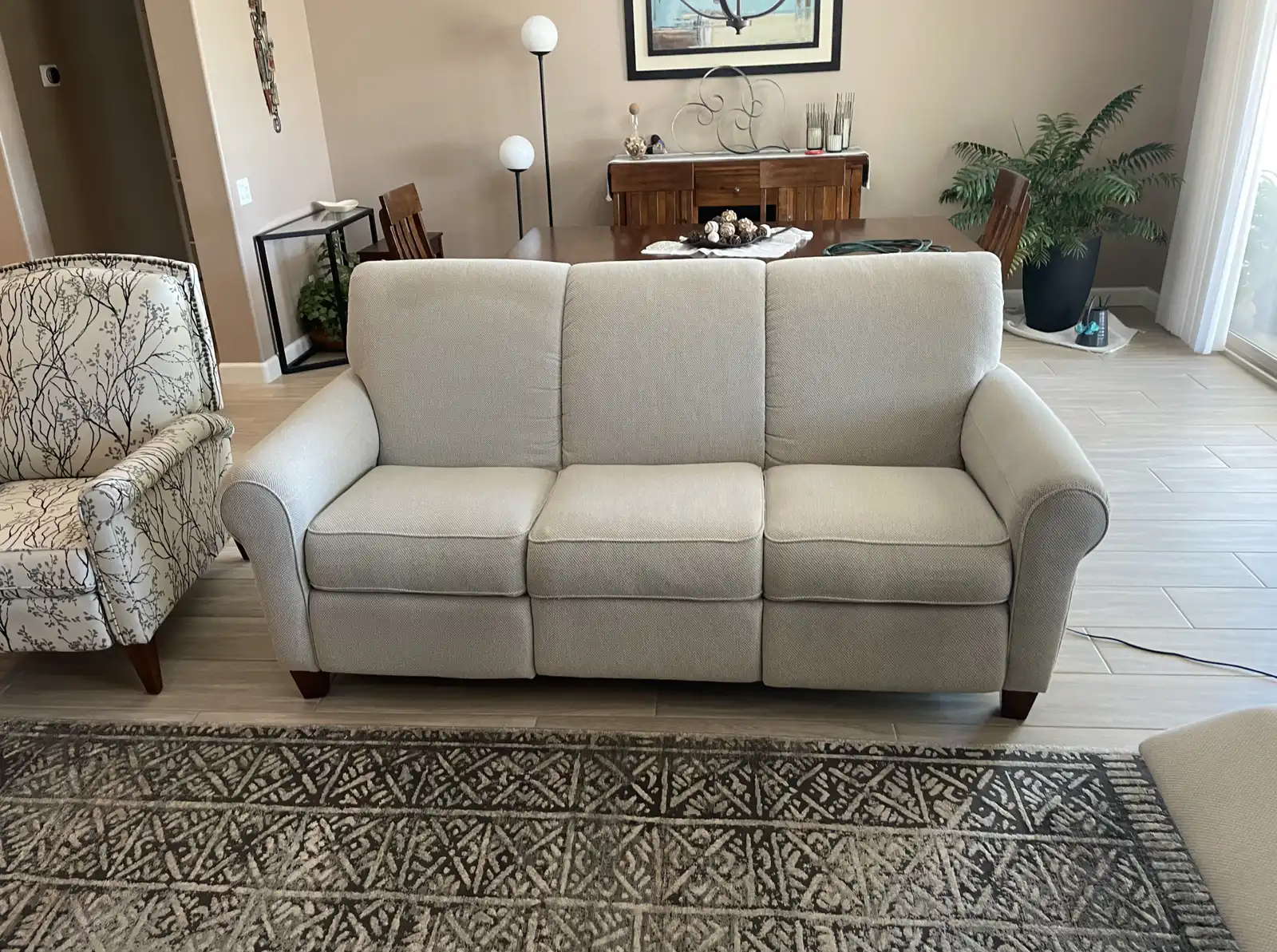
The Six Common Discoloration Types in North Peoria Sofas
UV fading from north Peoria's intense year-round sunlight through large windows breaks down dye molecules through photochemical reactions. It's gradual, uniform across exposed areas, and permanent. Bleach contact instantly strips dye from fibers - a splash of bleach cleaner, a treated towel left on a cushion. Oxidation yellowing develops in cellulosic fibers over time. Dye migration from liquid spills on unstable dyes creates ring-shaped marks. Heat damage from hot laptops or containers alters fiber structure permanently. Cleaning product damage from alkaline sprays removes dye alongside soil - the most common and most preventable type.
True Stains and How to Identify Them
Fresh stains with known incident history are the most clearly identifiable and most treatable. Dried stains that have set over time are more challenging but still categorically different from discoloration - they have defined edges, often a ring perimeter, and they transfer color to a white blotting cloth. Ink and marker stains commonly look like they might be discolorations because they resist water-based cleaning, but they're deposited pigment requiring solvent chemistry rather than water-based approaches.
North Peoria Family Sofa Stain Profile
Children's beverage stains - juice, sports drinks, milk - produce tannin, sugar, and protein stains that respond well to professional cleaning. Food stains from family mealtime proximity produce oil and protein deposits. Pet urine is a true stain with complex chemistry requiring enzyme treatment. Ink and marker from children's activities require solvent pre-treatment. Sunscreen transfer from pool households produces film-forming stains requiring encapsulation chemistry.
The Five-Minute Diagnostic Process
Step one: establish incident history - a known cause means true stain. Step two: examine edge character - defined ring edges indicate stain, soft graduated edges indicate discoloration. Step three: the white cloth blot test - color transfer confirms deposited material. Step four: compare with protected fabric under a cushion. Step five: assess previous cleaning history for product-induced discoloration. This framework prevents the frustration of cleaning attempts that don't work because they're addressing the wrong problem.
How Professional Cleaning Addresses True Stains
Beverage stains respond to enzyme pre-treatment and oxidizing agents for tannin. Food stains need degreasing for oil, enzyme for protein. Ink and marker require solvent-based pre-treatment that dissolves the pigment compounds. Pet urine requires enzyme treatment with UV mapping. Sunscreen transfer requires encapsulation chemistry. For all stain types, treating sooner produces significantly better results than waiting.
When Cleaning Won't Help: Managing Discoloration
For UV fading: UV-filtering window treatments and cushion rotation going forward. For bleach discoloration: dye restoration by a textile specialist. For cleaning product damage: professional cleaning of the whole section can reduce visual contrast but doesn't restore removed dye. For oxidation yellowing: cleaning addresses any soil contribution but not the underlying fiber change. Get a professional diagnosis before spending money on cleaning attempts that can't address the actual problem.
Serving North Peoria Communities
Serving north Peoria including Vistancia, Trilogy, Blackstone, Sunrise Point, Northpointe, Desert Sky, Sunset Ridge, Desert Bloom, Sonoran Mountain Ranch, Westwing Mountain, Cibola Vista, Wyndham Village, Estates at Happy Valley, Parkridge, Westbrook Village, Cypress Point Estates, Torrey Pines, and surrounding communities along W Happy Valley Rd, Lone Mountain Rd, and Vistancia Blvd.
Learn more about our upholstery cleaning services, or explore other cleaning services we offer in Peoria.

 (602) 429-9602