All Ways Organic Citrus Carpet & Upholstery Cleaning - Home
🇺🇸 Made in USA
🍋 Citrus Based
🌵 Eco-Friendly
Hours
Mon – Sat
7AM – 7PM
Book Online
Book
Online
📍 Serving the Greater Phoenix Valley
🕐 Mon – Sat  7AM – 7PM
👨‍👩‍👧‍👦 Family Owned & Operated
🇺🇸 Made in USA
🍋 Citrus Based
🌵 Eco-Friendly
Book Online
Recliner Cleaning in Peoria Arizona - All Ways Organic
Peoria, Arizona

Peoria AZ
Recliner Cleaning

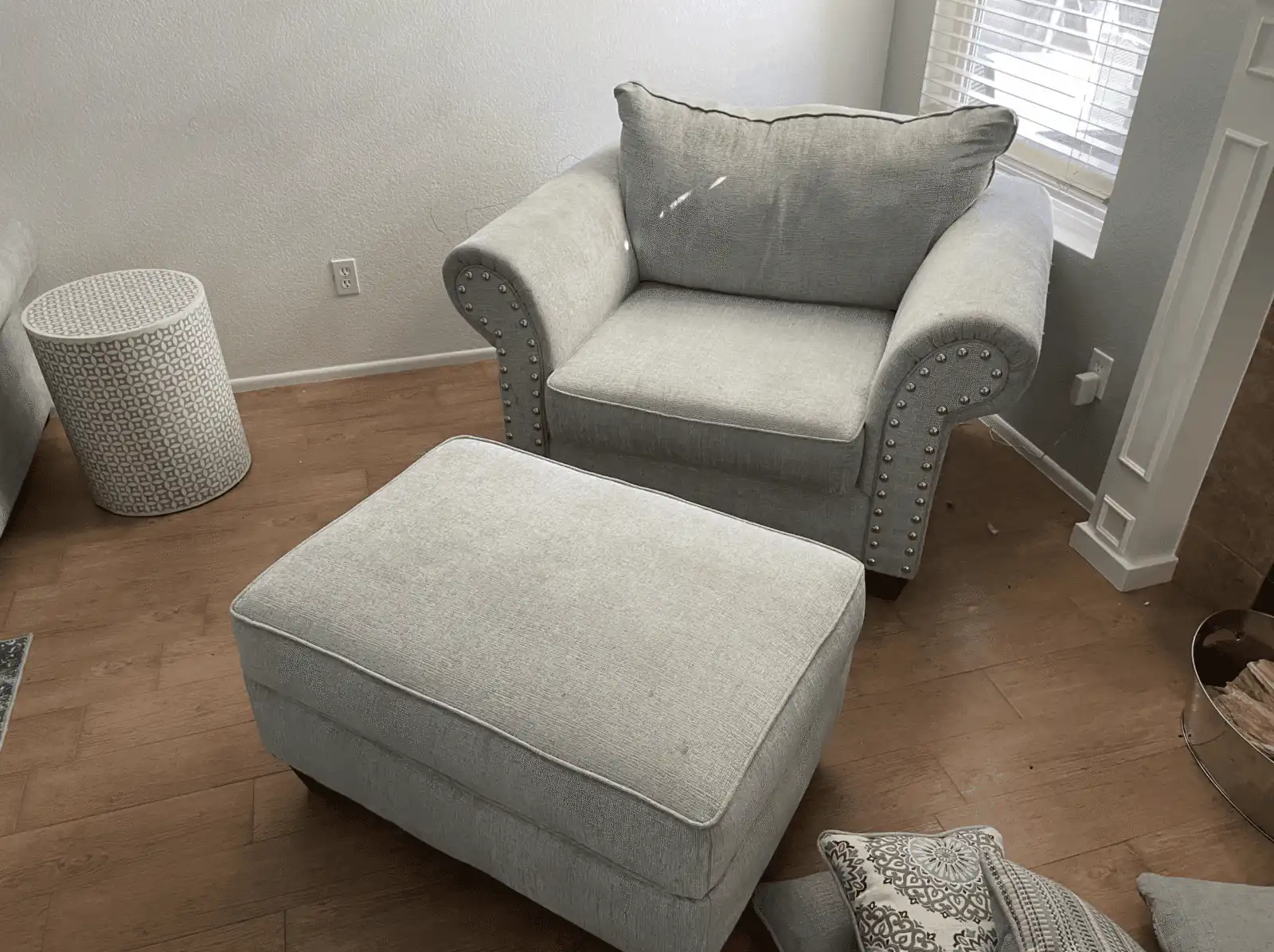
The built-in cupholder is one of the most used features on a recliner in a north Peoria family home - and one of the most consistent sources of a specific, progressive fabric problem. Every beverage that goes into a cupholder spills eventually, at least a little. Sugar from beverages crystallizes as it dries, becomes tacky as humidity fluctuates, bonds fresh particulate on contact, and creates a progressively worse sticky film problem.

Google
5.0 / 5.0
Google Reviews
Organic
100% Organic
Citrus-based products
Owner operated
Owner-Operated
Kyle shows up every time
Quick dry
~1-Hr Dry Time
Low-moisture process
No hidden fees
No Hidden Fees
Price quoted = price paid
Schedule Your Cleaning
Book Your Peoria Recliner Cleaning
Pick a date, build your clean, and confirm - takes about 60 seconds
1Date
/
2Build
/
3Book
Your Clean
$0

When works for you?

Pick a day and time. We'll handle the rest.

Build your clean

Tap a category, then add what you need.

Need commercial cleaning? Call (602) 429-9602 for a custom quote.

Confirm your cleaning

Almost there. Fill in your details and lock in your spot.

📅
Driveway parking available?
Tap any item above to adjust add-ons or remove it.

You're All Set!

Booking #

Confirmation sent to your email.

What to expect: I'm Kyle, the owner, and I'll be the one showing up. Carpets dry in about 1 hour. Your home will smell like fresh citrus. Safe for kids and pets immediately after cleaning.

Questions? Call or text (602) 429-9602

Need help?(602) 429-9602
SMS Consent: By providing your phone number when booking, you consent to receive appointment reminders and follow-up messages via SMS from All Ways Organic. Msg frequency varies. Msg & data rates may apply. Reply STOP to opt out at any time. Privacy Policy · Terms
Transparent Pricing

No Hidden Fees. No Surprises.

The price you see is the price you pay. Cupholder zone treatment, mechanism area cleaning, and sugar residue chemistry included.

Recliner Cleaning
Recliner
Single recliner, all surfaces cleaned
$45
per recliner
Book Now >
Loveseat Cleaning
Loveseat
Standard 2-seat loveseat, all surfaces cleaned
$75
per loveseat
Book Now >
3-Seat Sofa Cleaning
3-Seat Sofa
Standard 3-cushion sofa, all surfaces cleaned
$125
per sofa
Book Now >
Optional Upgrade Treatments
Available at checkout to customize your cleaning
Deodorizer
Deodorizer
Extra odor elimination for a deeper fresh
High Traffic
High Traffic
Targeted treatment for heavy-wear areas
Pet Treatment
Pet Treatment
Neutralizes pet odors at the source
What Our Customers Say

Real Reviews, Real Results

"Sugar residue crystallizes as it dries, becomes tacky when humidity changes, and turns the cupholder zone into a progressive soil trap that darkens faster than any other part of the recliner."

About This Service

How Cupholder Spills Create a Progressive Sticky Residue Zone

Every time a glass, can, or bottle is placed in the cupholder and lifted out, the bottom deposits a thin ring of whatever liquid it contained. In north Peoria's warm climate where condensation on cold beverage containers is significant, the drip from the bottom of a lifted container adds dilute residue to the adjacent armrest fabric with every use.

The actual spill - when a container tips or is bumped - delivers a larger volume to the fabric and potentially to the mechanism area beneath. In a family home in Vistancia or Blackstone where the recliner is used daily by both adults and children, these events are more frequent than in a single-adult household.

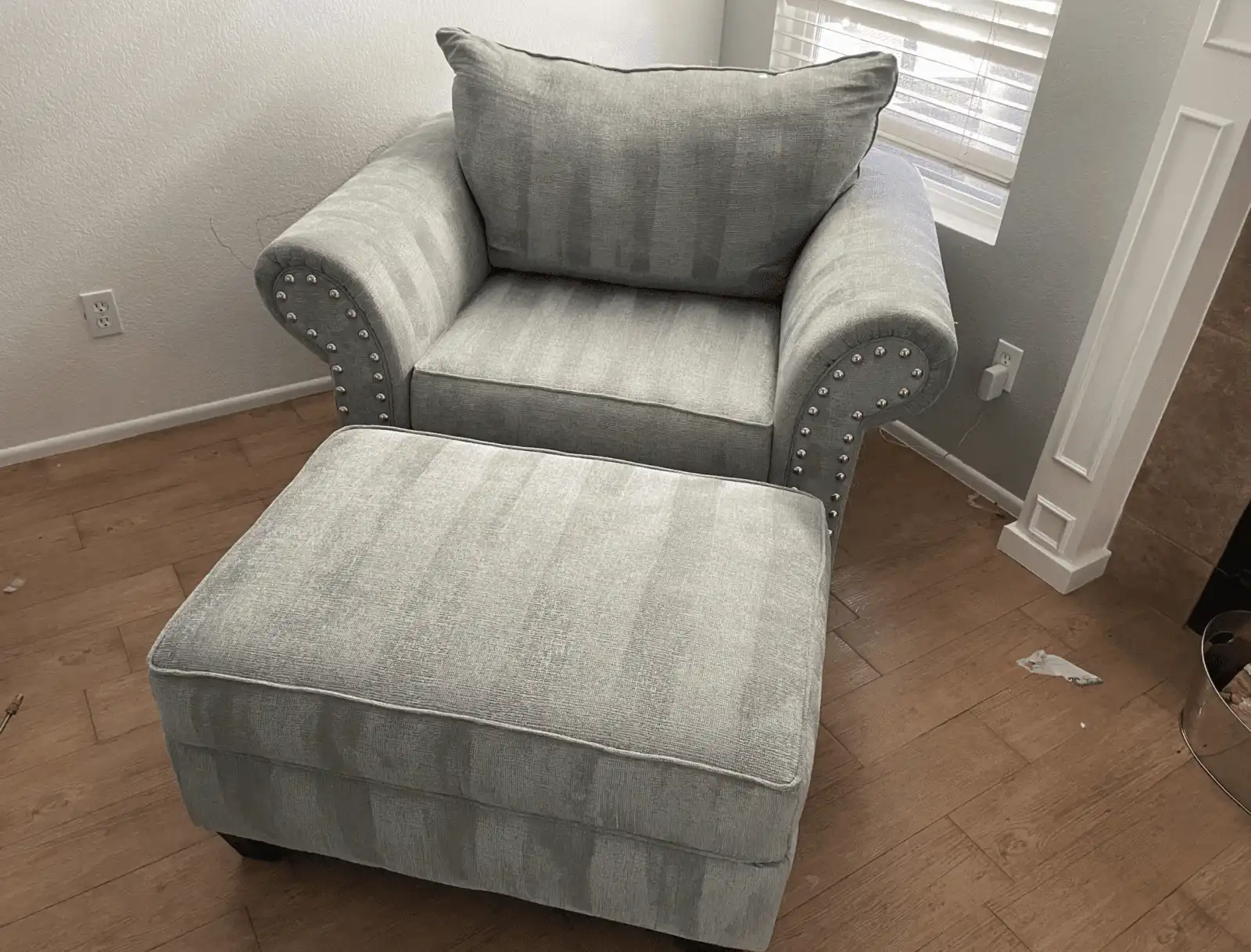
The cumulative result after a year or more of regular cupholder use is a fabric zone that has received many hundreds of small residue deposits. This zone has a characteristically different surface quality - slightly tacky, slightly darker, and significantly more soil-attracting than the clean fabric on either side.

Sugar dissolves readily during the spill but as the fabric dries, it remains in the fiber. At moderate to high concentration, the residue forms microscopic crystalline deposits that produce the characteristic stickiness. In low humidity the sugar crystallizes and the fabric feels granular. When humidity rises - during monsoon season or when a cold drink sweats onto the fabric - the crystals partially dissolve and the surface becomes genuinely tacky and adhesive.

Why It Matters
Sugar Residue Behaves Differently
Soil Trap
The Cupholder Zone Becomes a Soil Trap
Rehydrated sugar residue is genuinely adhesive - it captures airborne particulate, pet hair, and any contact material with significantly more effectiveness than clean fabric. This is why the cupholder area darkens dramatically faster than the surrounding armrest.
Mechanism
Sugar Residue Reaches the Mechanism
Spill liquid that drains past the fabric accumulates in the mechanism housing. Sugar residue combines with dust and particulate to create a composite sticky film on moving parts that can make the mechanism feel slightly stiff or gritty during operation.
Beverage Types
Different Beverages Leave Different Residue
Soda leaves sugar plus acid. Juice adds tannin staining. Coffee adds protein and oil compounds. Each requires different chemistry. A cupholder zone with mixed beverage history needs sequenced multi-chemistry treatment for complete results.
Prevention
Silicone Cupholder Liner Prevents It All
A small silicone insert that fits in the cupholder catches ring deposits and drips before they reach the fabric. Removable and rinsable weekly. Eliminates the primary accumulation source almost entirely for a few dollars.

What Sugar Does in Upholstery Fabric

Sugar dissolves readily during the spill event, depositing dissolved sugar throughout the wetted fiber structure. As the fabric dries, the sugar remains. At moderate to high concentration from repeated deposits, the residue forms microscopic crystalline deposits on and between fibers. These crystals cycle between crystalline and liquid states with humidity changes in north Peoria's climate - firm and granular in dry air-conditioned conditions, tacky and adhesive when humidity rises.

This stickiness is the most practically significant property. A fabric surface with dissolved sugar residue captures airborne particulate, pet hair, and contact material far more effectively than clean fabric. The cupholder zone becomes a progressive soil trap that darkens faster than any other part of the recliner.

The Mechanism Area: Where Spills Create Additional Problems

When a cupholder spill delivers liquid beyond what the armrest fabric absorbs, gravity carries it toward the mechanism housing. Sugar residue in the mechanism area combines with fine particulate to create a composite sticky film on mechanism components. Over time this accumulation can produce a slightly stiff or gritty feel during reclining operation. Dried beverage residue on warm internal surfaces also contributes to odor when the recliner is in a warm environment.

Beverage Types and Their Specific Residue Profiles

Soda leaves sugar plus phosphoric or citric acid that can affect dye stability. Juice and sports drinks leave sugar plus tannin that produces yellow-to-brown discoloration. Coffee and tea leave the most complex residue - sugar, tannin, caffeine, and potentially protein and fat from cream. Beer and wine combine sugar with tannins and distinctive coloration. Water leaves only mineral deposits from north Peoria's hard tap water.

Cleaning the Cupholder Zone: Why Standard Cleaning Falls Short

Standard upholstery chemistry targets skin oils and organic accumulation, not crystallized sugar. Warm water is the first specific requirement - sugar crystals dissolve significantly faster at warm temperature. Enzyme chemistry addresses the protein components of mixed beverage residues while mild acid chemistry addresses tannin discoloration. A detail brush that fits the cupholder recess geometry reaches residue that flat tools skim over. Thorough extraction from the cupholder zone prevents re-crystallization during drying.

Fabric Types and How They Affect Cupholder Residue

Microfiber shows the problem most prominently and responds well to warm-chemistry treatment. Performance fabric resists initial penetration but develops residue over time. Bonded leather accumulates residue as a surface film that's actually easier to address. Velvet has the most difficult profile - pile disruption from sticky contact compounds the discoloration problem.

Preventing Cupholder Residue Accumulation

A silicone cupholder liner is the single most effective preventive measure - catches ring deposits and drips, removable and rinsable weekly. Condensation management with insulated cups or napkin wraps eliminates the drip source. A weekly wipe-down with a barely damp cloth removes fresh residue before it crystallizes. Immediate response to any spill prevents the situation where concentrated juice or soda dries in the mechanism area.

Professional cleaning every 12 months maintains the full recliner. For heavy cupholder use, the cupholder zone can be targeted at 6-month intervals even when the full piece doesn't need complete cleaning.

Serving North Peoria Communities

Serving north Peoria including Vistancia, Trilogy, Blackstone, Sunrise Point, Northpointe, Desert Sky, Sunset Ridge, Desert Bloom, Sonoran Mountain Ranch, Westwing Mountain, Cibola Vista, Wyndham Village, Estates at Happy Valley, Parkridge, Westbrook Village, Cypress Point Estates, Torrey Pines, and surrounding communities along W Happy Valley Rd, Lone Mountain Rd, and Vistancia Blvd.

Learn more about our upholstery cleaning services, or explore other cleaning services we offer in Peoria.

Common Questions

FAQs About Peoria Recliner Cleaning

Yes - that's accumulated sugar residue from beverage rings, drips, and small spill events. The stickiness is crystallized and partially rehydrated sugar, and the darker color is from the residue acting as a progressive soil trap that captures particulate more effectively than clean fabric. Professional cleaning with warm chemistry specifically targeting sugar residue restores the zone. A cupholder liner going forward prevents it from rebuilding.

A damp cloth removes fresh surface residue but doesn't address sugar that's crystallized into the fiber structure. The stickiness is the crystalline matrix embedded in the fiber - rehydrating slightly from the damp cloth and re-crystallizing as it dries. Removing crystallized sugar requires warm-temperature chemistry with adequate dwell time to dissolve the deposits throughout the fiber depth.

Possibly, particularly if the cupholder is adjacent to the mechanism housing. Sugar residue that drains into the mechanism area combines with accumulated dust to create a composite on moving parts. Cleaning the accessible mechanism surfaces removes the composite. If the grittiness persists after cleaning, the mechanism may benefit from assessment by a furniture repair specialist.

A silicone cupholder liner catches ring deposits and drips - rinse it weekly. Immediate response to any spill with a damp cloth prevents drying and crystallization. Juice has tannin content that produces both sugar residue and staining if it dries, so prompt response matters more for juice than for clear sodas.

Likely both. The sugar residue attracts and binds particulate producing darkening. But if beverages included juice, cola, coffee, or tea, there's a tannin or colorant stain component layered with the sugar residue. Professional cleaning with enzyme and mild-acid chemistry addresses both. Very long-term concentrated tannin staining may have a permanent component - the sooner it's professionally cleaned, the more complete the result.

Less severely for the fabric aspect because leather doesn't absorb sugar into a fiber matrix - the residue sits on the surface and responds to leather cleaner more completely. The mechanism area concern is the same regardless of upholstery type - spill liquid accumulates the same sugar-and-particulate composite on mechanism components in both leather and fabric recliners.

Targeting just the cupholder zone with pre-treatment, agitation, extraction, and mechanism wipe-down takes about 20 to 30 minutes. Full recliner cleaning covering the complete piece takes 45 minutes to an hour and a half depending on overall soil level and fabric type.

Every 12 months for a recliner in active daily family use. If the cupholder sees particularly heavy use, the cupholder zone can be targeted at 6 months even when the full piece doesn't need complete cleaning at that interval. Addressing the cupholder zone at 6 months and the full piece at 12 months is the most practical schedule for high-use family recliners.

Sticky Cupholder Zone? Let's Get the Sugar Out.
Same-week availability - No hidden fees - Mechanism area cleaning included
What Our Customers Say

Real Reviews, Real Results

All Peoria Services
What We Clean in Peoria
All 14
Carpet
Upholstery
Area Rugs
Tile & Commercial
Decorative desert cactus illustration growing from the desert floor