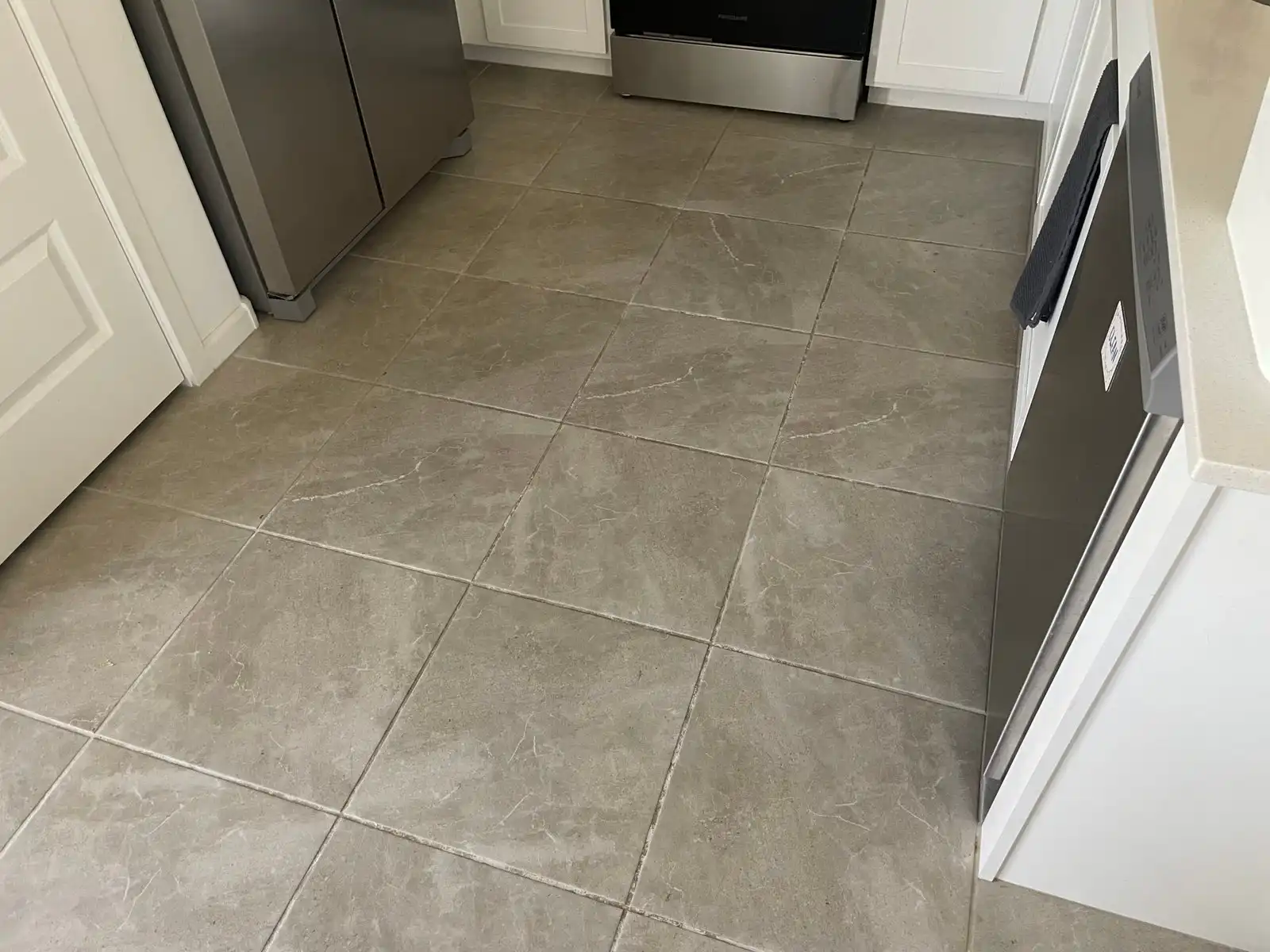
Distinguishing Mineral Haze From Other Tile Dullness
Hard water mineral haze presents as relatively uniform cloudiness across the glazed tile body. The surface feels smooth rather than rough. The acid response test is definitive: apply white vinegar to an inconspicuous area, let it sit for 30 to 60 seconds, wipe and examine. If the test area looks noticeably clearer and more glossy, mineral haze is confirmed.
Grout darkening from soap scum and body oil concentrates in the grout lines rather than on the tile face. Surfactant residue from incorrect mop cleaners has a slightly sticky or tacky quality and shows smear patterns from mopping rather than uniform overall haze. In Youngtown homes along 111th Ave and Youngtown Park where multiple conditions may coexist, the acid response test distinguishes the mineral component from other dullness causes before any treatment begins.
Acid Chemistry for Mineral Haze Removal
White vinegar is effective for light, recent accumulation. Undiluted vinegar applied to the tile face with two to five minutes dwell dissolves light calcium carbonate. The limitation is that vinegar is a weak acid at low concentration, not effective on heavy long-term accumulation. Vinegar also has a specific problem with grout: repeated application etches cement-based grout over time.
Diluted phosphoric acid or citric acid formulations are the professional-grade chemistry for moderate to heavy haze, the type found in many of Youngtown's older homes where accumulation has continued for years. Applied at appropriate dilution with adequate dwell time and rinsed completely before the acid can act on grout, these formulations restore glazed tile to its original reflective appearance. The critical precaution is grout protection: controlled application targeting the tile face, minimized grout dwell time, and thorough rinsing. Well-sealed grout has more resistance than unsealed grout.
Natural stone tile, including marble and travertine, is acid-sensitive. The acid that safely dissolves mineral haze from ceramic and porcelain will etch marble and travertine permanently. Acid chemistry applies only to ceramic and porcelain. Homes throughout Alabama Ave and Olive Ave may have mixed tile types, and confirming tile material before acid application is non-negotiable.
The Professional Mineral Haze Restoration Process
Tile type confirmation before any acid is applied. Surface soil removal before acid treatment gives the acid direct access to the mineral deposit rather than working through an overlying organic film. Acid pre-treatment applied specifically to tile face zones with dwell time calibrated to haze severity, lighter accumulation needing shorter dwell and heavier needing extended dwell with potentially multiple passes. Gentle agitation with a soft brush accelerates the dissolution reaction without mechanical abrasion.
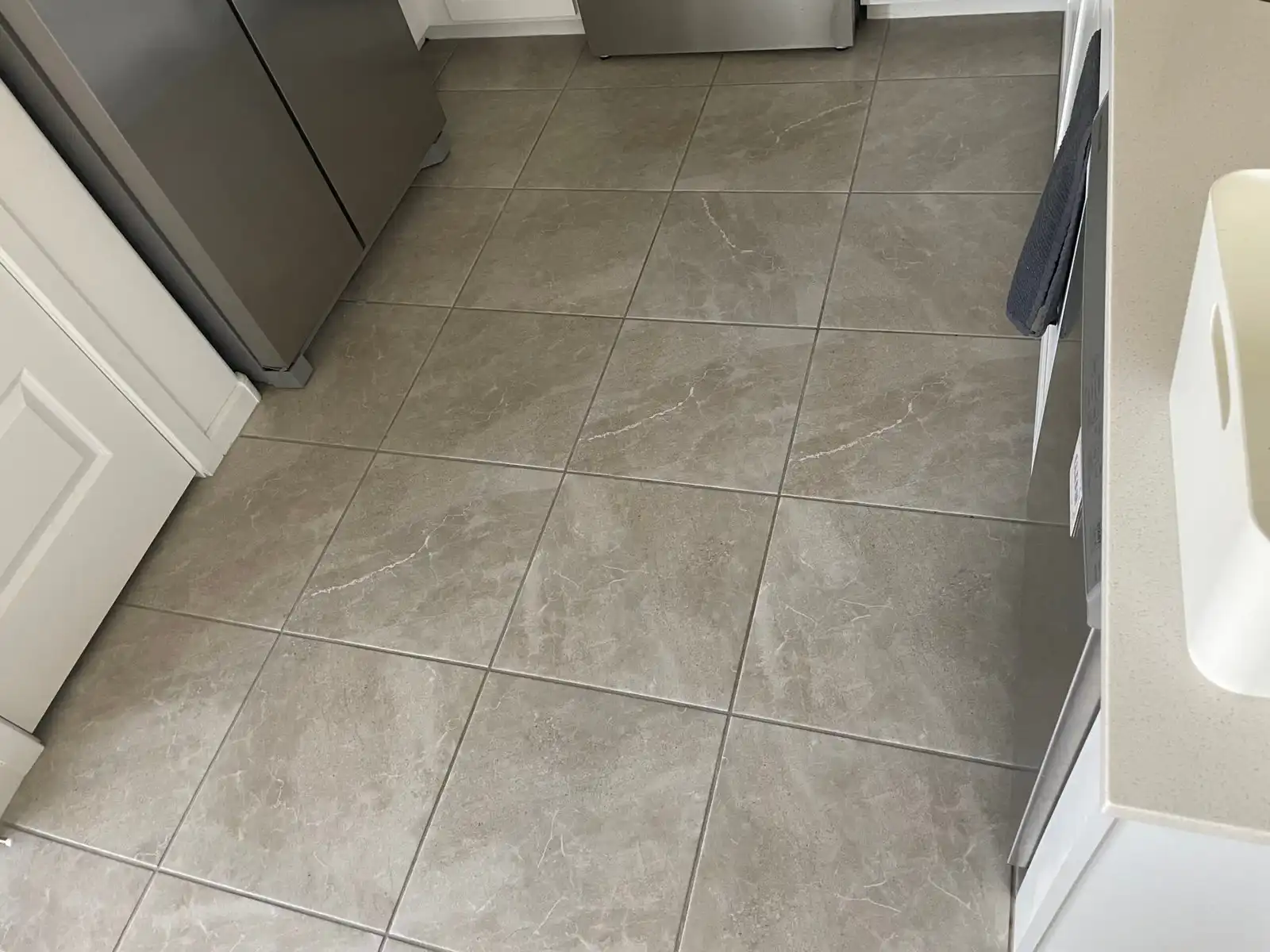
Thorough rinsing neutralizes the acid and removes dissolved mineral compounds. Post-acid grout cleaning addresses grout lines after the tile face has been treated. The restored tile surface reflects light clearly and evenly, the way it did when installed, without the diffuse scattering the mineral film was causing. For homes throughout Grand Ave and near Youngtown Park with decades of accumulation, the transformation from hazy flat tile to restored glossy tile is often dramatic.
Preventing Mineral Haze Buildup Between Cleanings
A squeegee drawn across shower tile after each shower removes hard water film before it evaporates and deposits minerals. In Youngtown's dry desert climate, water evaporates quickly, so the squeegee needs to happen within a few minutes. This 30-second habit significantly extends the interval before haze returns to a visible level. A mild acid tile spray applied weekly to shower and backsplash tile dissolves fresh thin deposits before they accumulate.
Water softener installation addresses the source by removing calcium and magnesium ions before they contact tile surfaces. Softened water doesn't deposit mineral scale. For homeowners managing persistent haze across extensive tiled areas in older homes throughout Suntown Estates, Agua Fria Ranch, River Heights, Cooks Corners, and surrounding Youngtown neighborhoods, a water softener eliminates the root cause rather than managing ongoing accumulation.
Professional cleaning every 18 to 24 months with prevention habits, or annually without them, maintains tile at a consistently good appearance level.
Acid Treatment for Mineral Haze Is Included, Not an Add-On
Every tile and grout cleaning appointment in Youngtown includes the acid response test, tile type confirmation, and acid treatment on the tile face when mineral haze is confirmed. The acid treatment step is part of the standard process, not an additional charge. Natural stone tile is identified during assessment and treated with stone-appropriate chemistry rather than acid.
Learn more about our tile and grout cleaning services, or explore other cleaning services we offer in Youngtown.

 (602) 429-9602