Tide Marks: The Same Mechanism on a Larger Scale
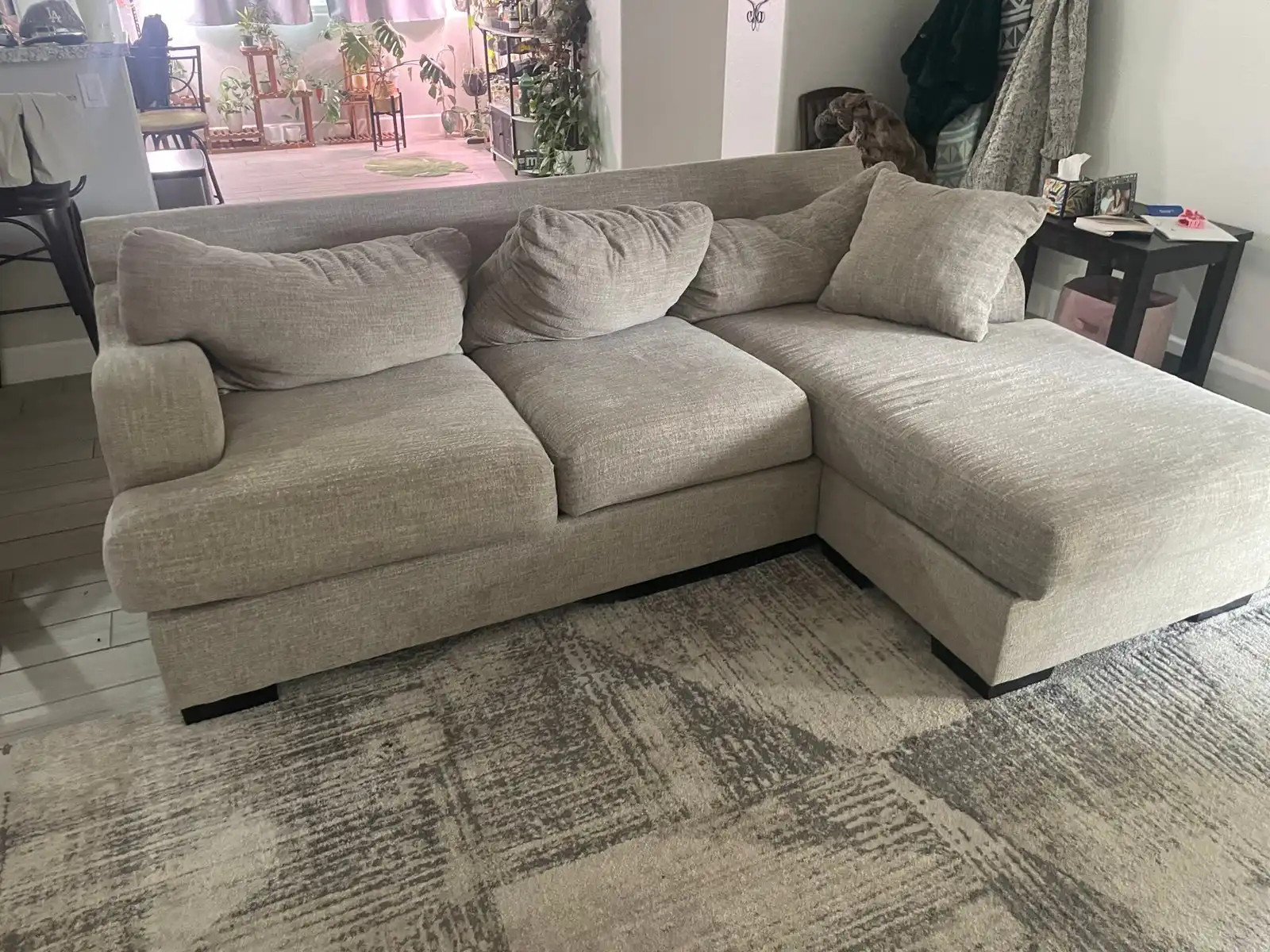
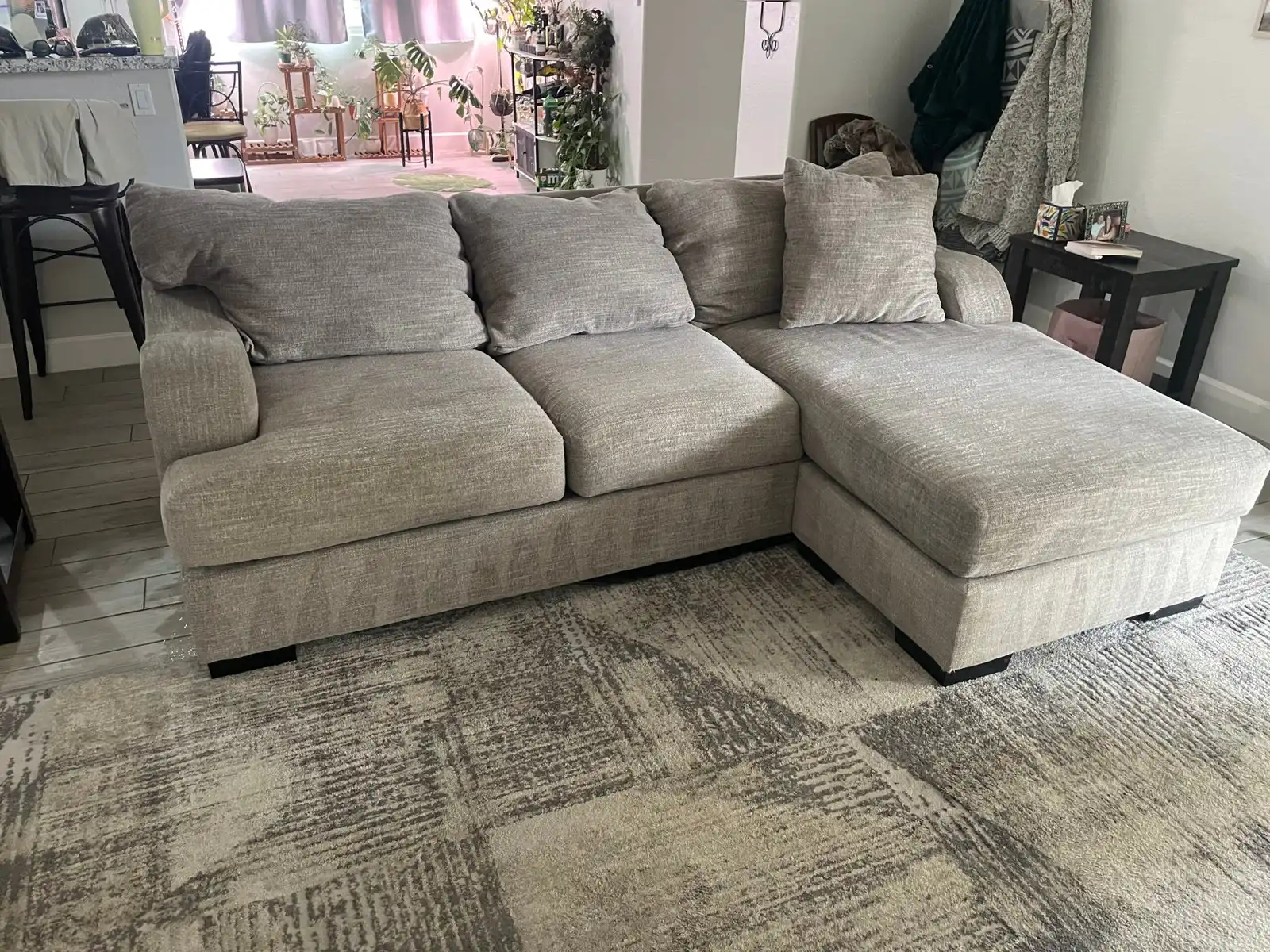
When a larger area is wetted, such as wiping an entire cushion surface with a damp cloth, the same evaporation mechanism produces a broader irregular line at the boundary of the wetted and dry zones rather than a circular ring. Tide marks are common when sectional owners attempt full-cushion wiping and the wiped zone has a visible boundary where the damp cloth was taken off the fabric.
In older Youngtown sectionals along Alabama Ave and Olive Ave where fabric has absorbed general household soil over years, tide marks are particularly visible because the evaporative migration picks up both the immediate spill material and the generally distributed fabric soil, concentrating both at the tide mark line.
The Professional Ring Correction Process
The correction works from outside the ring inward, the opposite of most home attempts. A controlled moisture zone extending well beyond the ring perimeter prevents the ring material from migrating further outward because there is no dry zone to migrate toward. Pre-treatment chemistry addresses each component: enzyme for organic stain, mild acid for mineral deposit, thorough extraction for any surfactant residue.
Extraction is the critical step. Multiple passes across the full treated zone, working from perimeter inward, remove cleaning moisture so completely that no dissolved material remains to migrate to a new perimeter during drying. Feathering the extraction at the treatment zone boundary, gradually reducing pressure as the tool reaches the edge, prevents a sharp new perimeter from forming. The transition from treated zone to surrounding fabric is gradual rather than abrupt. For homes throughout Grand Ave and Youngtown Park, this controlled approach eliminates rings without creating new ones.
Which Fabrics Are Most Ring-Prone
Microfiber is the most ring-prone common sectional fabric. Its fine fiber structure wicks moisture rapidly across a large area, creating a large wetted zone with a well-defined perimeter. The fine fibers hold mineral deposits very effectively, making rings particularly visible and durable. Performance fabrics are the least ring-prone because their tight weave resists moisture penetration and limits lateral spread.
Velvet and velvet-like fabrics show rings in a distinctive way: pile direction is disturbed by moisture contact, so the ring includes both the mineral deposit at the perimeter and a tonal change within the wetted zone from pile direction disruption. Natural fiber blends present a specific challenge because evaporative migration can move the fabric's own dye, producing a discoloration component that is a fabric change rather than a removable deposit.
Five Mistakes That Make Water Rings Worse
Applying more water directly to the ring redistributes the deposit to a new, larger perimeter. Each rewetting cycle extends the ring outward. Rubbing the ring drives the deposit deeper into the fiber rather than lifting it, and can create permanent pile damage on microfiber and velvet. Applying undiluted commercial spray adds surfactant without controlling the evaporation perimeter, creating a new ring on top of the existing one.
Using a hair dryer to speed drying accelerates the evaporation mechanism and concentrates deposits faster. Leaving the ring hoping it disappears does not work, as the mineral component is a stable inorganic deposit with no self-removal mechanism. Each of these approaches is counterintuitive because the correct correction requires wetting a larger area, working from outside in, and extracting thoroughly rather than drying quickly.
Preventing Water Rings on Youngtown Sectionals
Dry blotting for fresh spills removes bulk liquid before evaporation begins. Press a clean dry white cloth firmly and lift rather than wipe. If any moisture treatment is needed after blotting, distilled water from the grocery store carries essentially no dissolved minerals and eliminates the mineral ring component. Leave residual staining for professional treatment rather than continuing moisture-based cleaning that risks additional ring formation.
Professional cleaning every 12 months maintains general soil at a level where any rings that develop are less visible, since lower background soil means less concentrated material at the ring perimeter. Annual cleaning also corrects any rings from spot attempts during the year before they set more firmly throughout Suntown Estates, Agua Fria Ranch, River Heights, Cooks Corners, and surrounding Youngtown neighborhoods.
Water Ring Correction Is Included, Not an Add-On
Every sectional cleaning appointment in Youngtown includes water ring and tide mark correction as the standard process. The broad controlled moisture zone, multi-chemistry approach for compound deposits, and feathered extraction that prevents new ring formation are all part of the standard cleaning. Ring correction at the same appointment as full sectional cleaning produces the most uniform result.
Learn more about our upholstery cleaning services, or explore other cleaning services we offer in Youngtown.

 (602) 429-9602