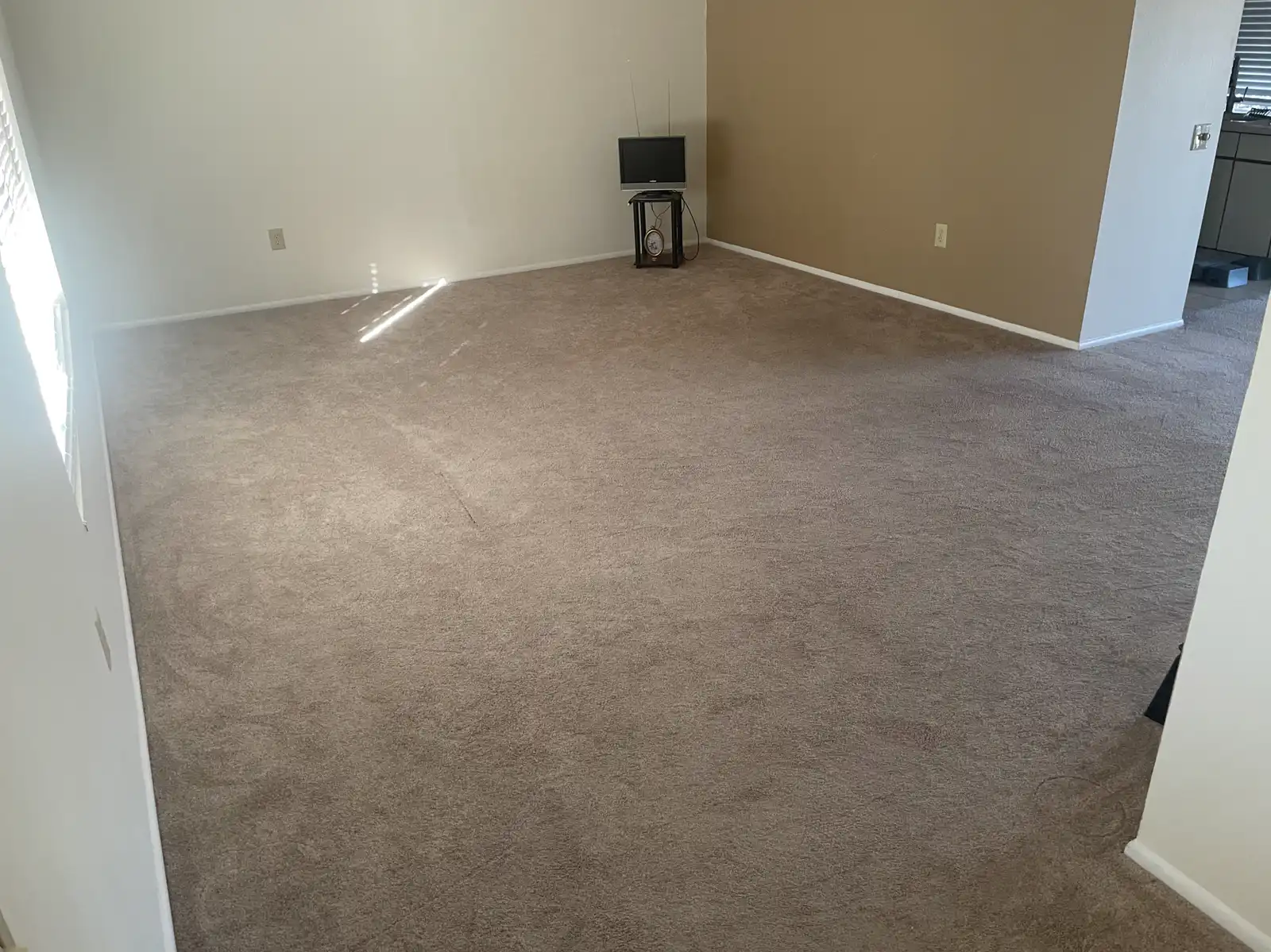
Why Moisture and Grooming Produce Recovery
Carpet pile fiber, particularly nylon, is a polymer material whose molecular chains are oriented during manufacturing. When compressed and held, the chains are forced out of their oriented position. In a dry state, the compressed fiber stays compressed because the chains lack mobility to return. When moisture is introduced, water molecules temporarily disrupt the intermolecular bonds holding the chains in their compressed orientation, creating a brief window of increased flexibility.
Grooming the pile during this moisture window, using a firm pile brush to work compressed fibers toward their original upright position, applies directional force to fibers that are temporarily receptive to repositioning. As the fiber dries in the groomed position, the bonds reform around the new orientation. In Youngtown's dry desert climate, this drying happens quickly, which is an asset: the fiber sets in the elevated position rather than having extended time to settle back during a slow drying process.
Assessing Indentations Before Cleaning
The fiber type check is the starting point. Nylon has a slightly crisp, resilient feel. Polyester is softer and less springy. Olefin has a waxy, flat character. In Youngtown's older homes throughout River Heights and along Olive Ave, the carpet may not be identifiable by brand, but the tactile assessment gives enough to calibrate expectations. The indentation depth assessment shows how compressed the pile has become, and the fiber condition check distinguishes compression from actual wear damage.
Based on these assessments, I give Youngtown homeowners a specific recovery expectation before starting: a direct statement about what the fiber type and condition suggests, what depth of improvement is likely, and whether the result justifies the attempt or whether replacement would produce a better result for less total investment.
The Professional Recovery Process
Pre-cleaning dry extraction removes the loose particulate that has settled into the compressed pile. The indentation zone is a soil trap: the depression collects fine dust, particulate shed from the furniture, and material tracked across the carpet over years. Pre-treatment at the indentation zones with extended dwell time gives moisture time to increase fiber flexibility before agitation. Directional agitation works the pile brush against the compression direction to begin mechanical fiber elevation.
Post-extraction grooming is the critical step. While the pile is at peak moisture content, a firm pile brush is worked against the compression direction with consistent force, lifting compressed fibers toward their original upright orientation. Multiple passes in the opposing direction followed by cross-direction passes address the fiber from multiple angles. The pile dries in the groomed position. For most fiber types in homes throughout Agua Fria Ranch and Grand Ave, the improvement is clearly visible: the indentation that was an inch deep is now a slight depression or nearly level.
When Indentations Are Permanent
Olefin carpet with deep long-term indentations produces limited recovery results. Carpet with pad failure beneath the furniture zone compounds the problem, and combined pile-plus-pad indentation is less recoverable than pile compression alone. Physical fiber damage at furniture contact points, where tips are matted or frayed, signals compression has progressed to wear. Very long duration compression in homes throughout Suntown Estates and Cooks Corners where furniture has been in place for fifteen or twenty years sometimes produces indentations where even thorough grooming achieves only modest improvement.
The replacement conversation in these cases follows the same honest approach: if deep permanent indentation, fiber damage, and overall carpet age make the piece past its useful life, the homeowner is better served knowing that clearly than investing in cleaning that won't produce a satisfying result.
Preventing Future Indentation
Furniture coasters and cups distribute the contact load over a larger area, reducing pressure per square inch dramatically. A sofa leg concentrating several hundred pounds through a one-inch contact point transmits the same weight through a three-inch cup at less than a tenth of the pressure. Periodic furniture shifting of just a few inches every year or two redistributes the compression zone so no single pile area bears sustained load indefinitely. Area rugs under heavy furniture legs provide a buffer that takes some compression itself and can be replaced far more easily than fitted carpet.
Professional cleaning every 12 to 18 months provides regular opportunity for light recovery grooming of any developing indentations before they become deep-set. Addressing mild indentation early produces more complete recovery than addressing severe long-term compression throughout Youngtown Park, River Heights, and surrounding neighborhoods.
Recovery Grooming Is Included, Not an Add-On
Every carpet cleaning appointment in Youngtown includes furniture indentation recovery grooming as the standard process where indentations are present. The pre-cleaning fiber and indentation assessment establishes realistic expectations before any work begins. You'll know what recovery is achievable for your specific carpet before the cleaning starts.
Learn more about our carpet cleaning services, or explore other cleaning services we offer in Youngtown.

 (602) 429-9602