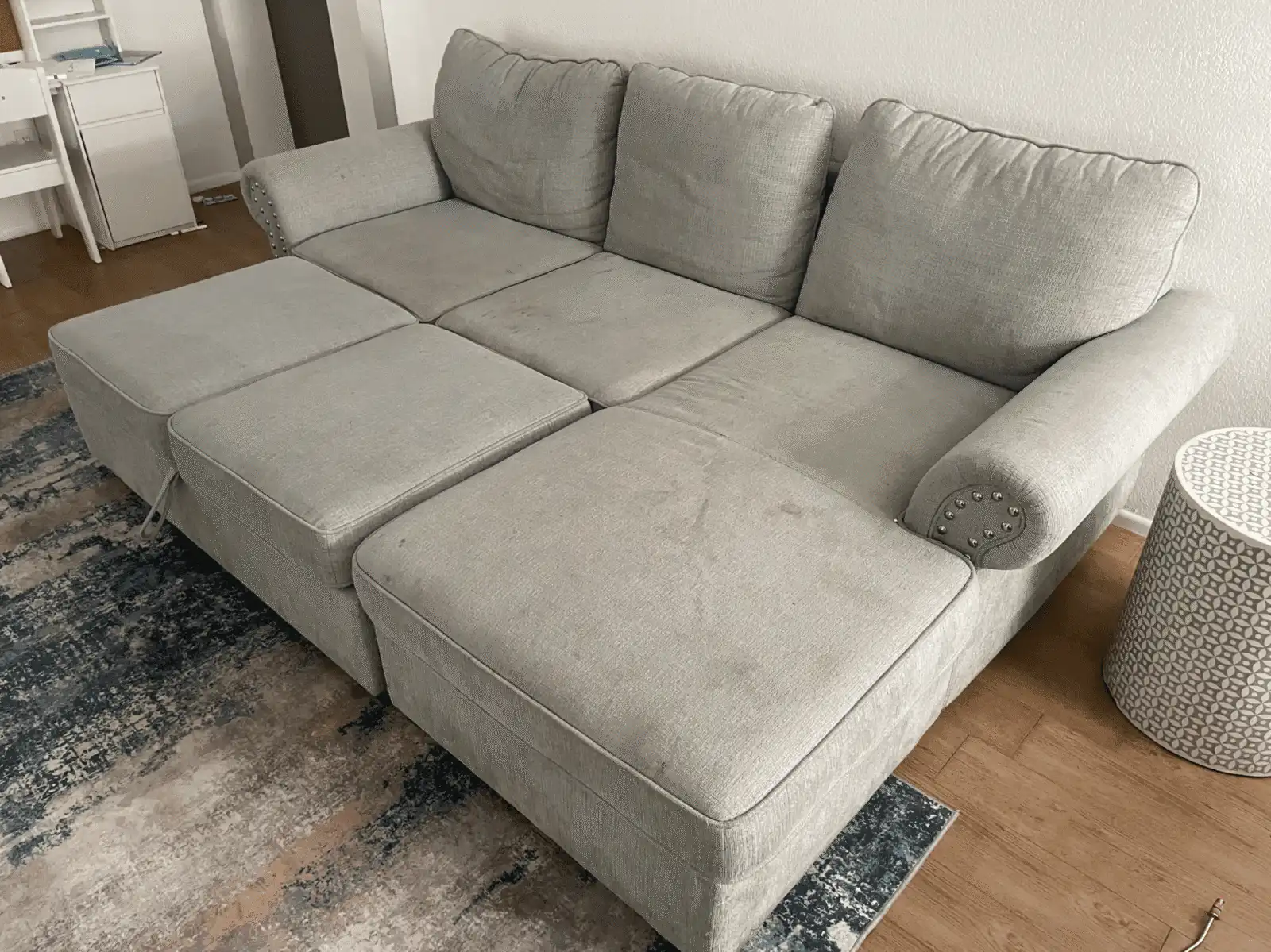
Where Snack Zones Develop on a Sectional
Children establish a preferred seat - typically the corner or the section with the best television sight line - and return to it consistently for snack consumption. The seat cushion surface and armrest at this primary position are the highest-deposit zones. The seat front edge accumulates compound deposit from reach-forward snacking - each reach to a snack bowl deposits hand residue at the front 6 to 8 inches, often the darkest zone on the whole sectional.
Sections adjacent to the primary snack position develop lighter deposits from children spreading out while watching television. Sections that adults use at the opposite end may have essentially no snack zone deposit, producing the characteristic condition where one end of the sectional in Dysart Ranchettes and Thompson Ranch family homes looks clearly different from the other.
Why Standard Cleaning Leaves the Tacky Feel Behind
Water-based cleaning alone addresses sugar but not oil. The oil component remains and serves as a foundation for the next sugar deposit. Degreasing chemistry alone addresses oil but not the sugar matrix holding the particulate. Standard upholstery cleaner produces visible improvement but doesn't specifically target either component with the chemistry required for complete removal.
The correct approach combines enzyme chemistry to break down the organic sugar and food-based compounds with degreasing chemistry to emulsify the oil. The sequence matters: enzyme first with 10 to 15 minutes dwell time, extraction, then degreaser with access to the oil component that was previously protected within the matrix. In El Mirage's warm indoor environment, enzyme activity is faster - the warm conditions accelerate the enzymatic breakdown.
The Residue-Free Cleaning Approach
Dry extraction first removes loose surface particulate bonded to the compound deposit. In El Mirage's elevated-particulate environment, removing particulate before wet chemistry prevents it from forming a paste driven deeper into the fabric. Enzyme pre-treatment follows with extended dwell time to work through the matrix depth. Degreaser pre-treatment after enzyme extraction gives better oil access with the organic matrix already broken down.
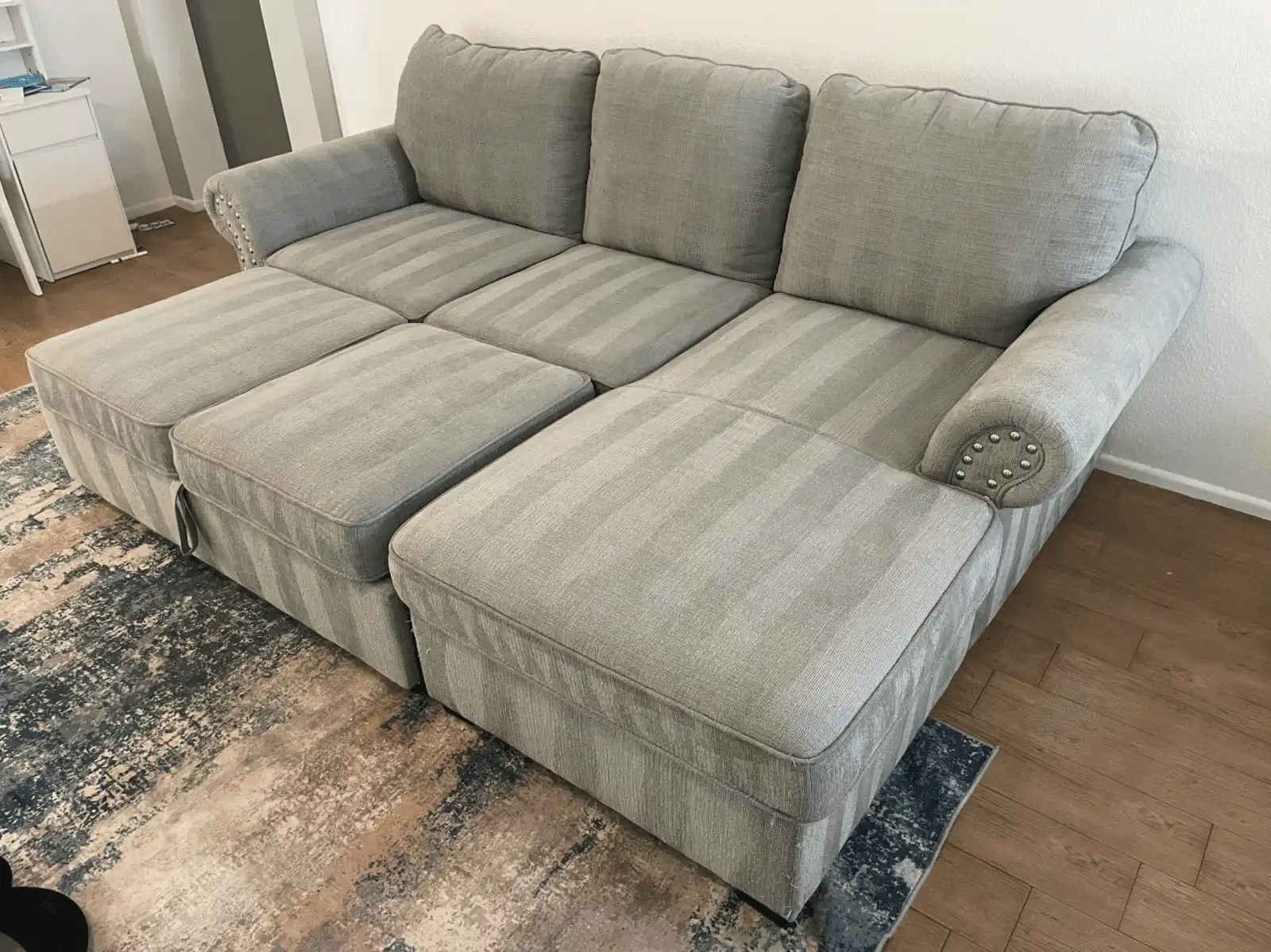
Thorough extraction after each step removes both the deposit and the cleaning chemistry. Incomplete extraction is the primary cause of cleaning residue that creates its own soil-attracting layer. Multiple passes with a clean tool ensure complete removal. Post-cleaning assessment by feel - running a hand over cleaned snack zones and comparing to non-snack sections - confirms the tacky quality has been fully removed. Homes throughout Rancho El Mirage and Dysart Cactus with family sectionals benefit from this confirmation step.
Fabric Type and Snack Zone Behavior
Microfiber shows snack zone deposit through nap disruption and darkening. The fine fiber structure provides excellent surface area for compound coating, making tackiness develop faster. Performance fabric resists initial penetration - the deposit stays at the surface longer, making it more accessible to cleaning. Older or worn fabric on rental sectionals throughout Pueblo El Mirage has reduced surface integrity, allowing deeper penetration even at moderate accumulation stages.
Preventing Snack Zone Buildup
A washable throw over the primary snack seat position is the most effective single intervention. The throw receives the hand contact and crumb landing that would otherwise reach the fabric. Launder weekly. Immediate wipe response to visible snack contact - a barely damp cloth within minutes - removes fresh compound before sugar crystallizes and oil penetrates. Weekly vacuuming of the snack section removes particulate before it bonds to the compound surface.
Professional cleaning every 12 months maintains the compound deposit in the early to moderate stage where treatment produces the most complete result. With consistent throw protection, the interval may extend to 18 months. Without it, 12 months is the right interval for El Mirage family households with active snack use throughout El Mirage Downtown and surrounding neighborhoods.
Two-Chemistry Treatment Addresses Both Components
Single-chemistry approaches leave one component behind - which is why the sticky feel returns quickly after standard cleaning. The enzyme-then-degreaser sequence addresses both the sugar matrix and the oil film, producing a truly neutral fabric surface that doesn't attract soil at the accelerated rate of a residue-loaded surface. Stage assessment at every appointment calibrates treatment intensity to the actual deposit found.
Learn more about our upholstery cleaning services, or explore other cleaning services we offer in El Mirage.

 (602) 429-9602