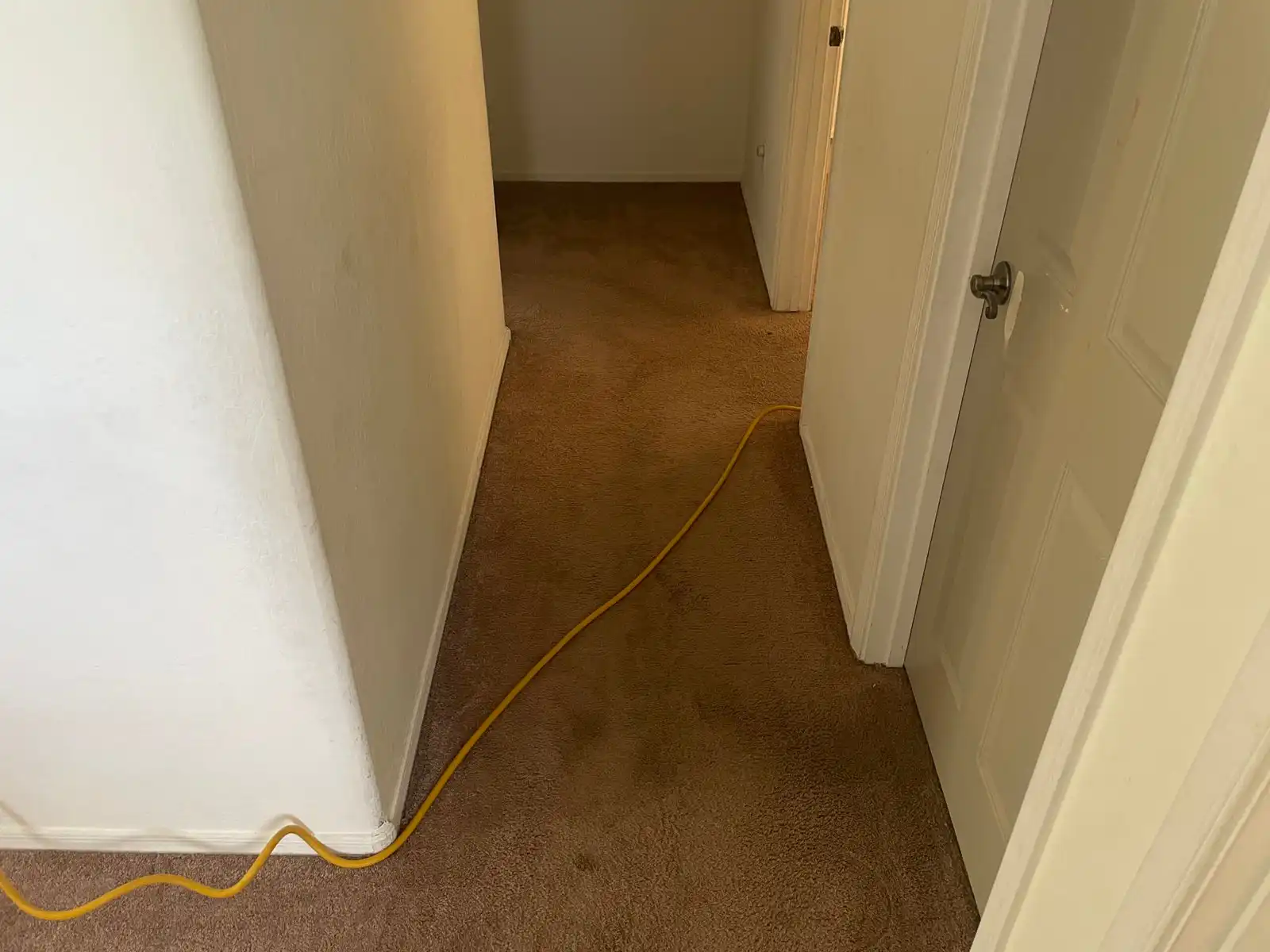
Identifying Seam Telegraphing vs Staining
The straightness and consistency of the line is the first diagnostic. Carpet seams are perfectly straight and run completely across the hallway width from wall to wall. Stains have organic shapes that follow traffic patterns or incident locations. Running your hand along the dark line often reveals the slight gap or backing discontinuity - a tactile confirmation.
The pile direction change at the seam line is a visible confirmation in some carpets. At a seam where two pieces are joined, the pile direction may change - this is only possible at a structural join. The cleaning response test distinguishes further: a stain lightens with appropriate chemistry, while seam telegraphing responds partially, leaving a residual dark line at the seam structure.
What Cleaning Can and Cannot Achieve
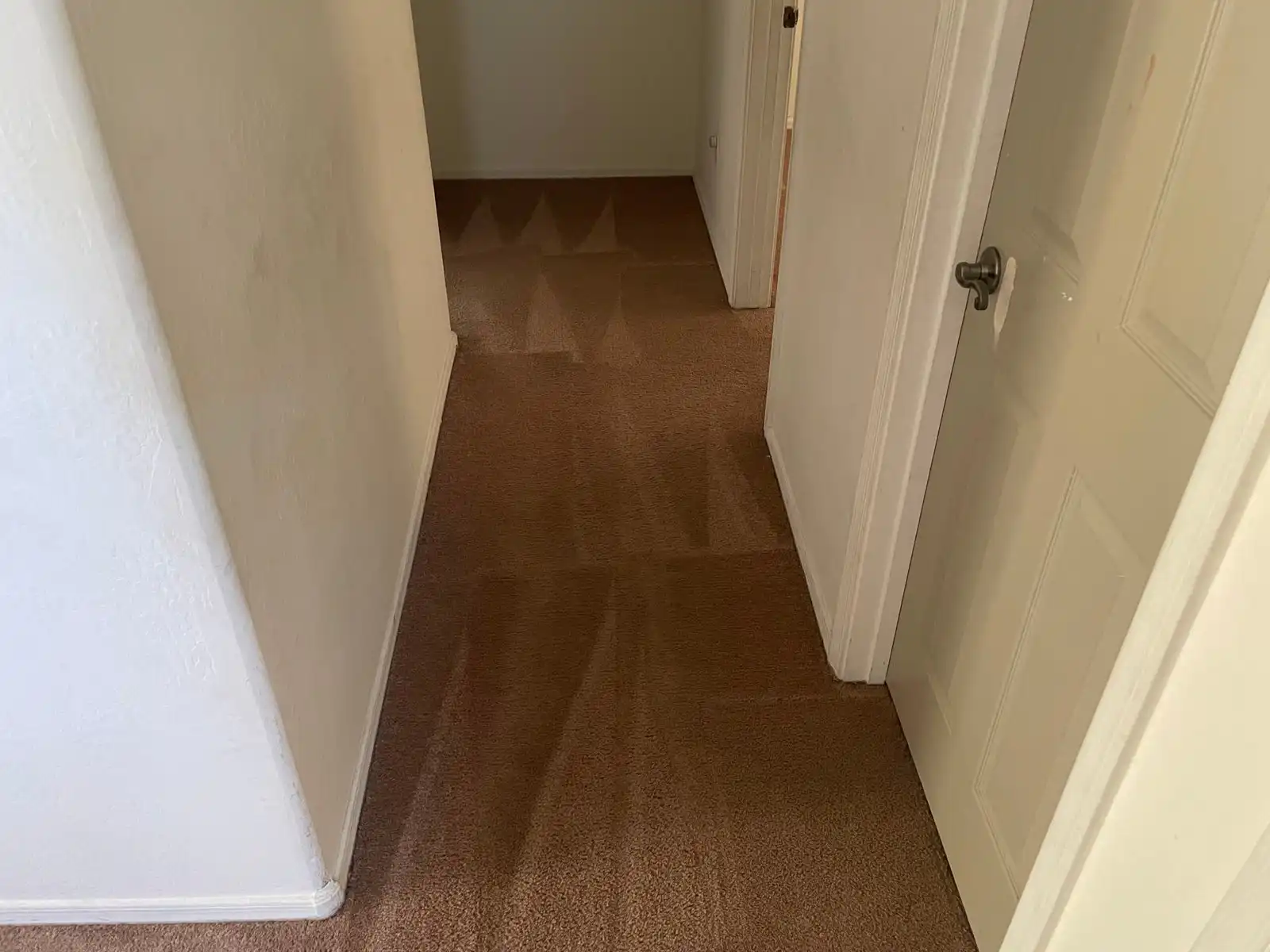
Surface soil removal from the seam zone - cleaning always achieves this. The fine particulate on the pile surface at and near the seam responds to chemistry and extraction. A seam that was darkly visible before cleaning is less visible after because the surface soil contribution has been removed.
Partial gap soil extraction - achievable with seam-specific technique. A crevice tool or narrow extraction head that works into the gap reaches more accumulated soil than standard flat cleaning tools that skim over the gap. Sub-pile backing gap soil is reached only partially - the deep accumulation below the visible pile surface is below where cleaning chemistry easily penetrates.
The practical result: a prominently dark seam is notably less visible after thorough cleaning with seam-specific technique. The seam line is not invisible after cleaning, but it's no longer the visually prominent dark line that dominated the hallway before. The line will return over time because the seam structure continues to accumulate faster than surrounding pile.
Seam Repair and Its Relationship to Cleaning Results
For hallway carpet in Arizona Brisas and Thompson Ranch homes where seam telegraphing is driven by a significantly degraded seam - a pronounced gap, heavily frayed edges, or visible backing separation - seam repair before cleaning produces meaningfully better cleaning results and longer maintenance intervals.
A repaired seam with fresh hot-melt tape and trimmed pile edges eliminates the primary structural mechanisms that drive accelerated soil accumulation. Cleaning a repaired seam produces a more complete result and the seam stays at its cleaned appearance longer. Seam repair is a carpet repair specialist service - I can assess the seam condition at the walkthrough and provide a referral recommendation if repair is warranted.
The Cleaning Process for Seam Telegraphing Hallways
Pre-cleaning seam assessment identifies location, gap depth, and backing condition. Dry pre-extraction at the seam zone with a crevice tool removes loose particulate from the gap before moisture introduction - preventing it from becoming a paste that re-deposits during drying. This is particularly important for El Mirage's mineral-heavy particulate in homes throughout Rancho El Mirage and Dysart Cactus.
Pre-treatment chemistry at the seam zone with extended dwell time of 10 to 15 minutes allows chemistry to work into the gap depth. Seam-specific agitation with a narrow tool that fits the gap geometry applies mechanical action at the gap depth. Seam-specific extraction with a narrow tool head removes loosened soil from the gap. Standard hallway cleaning of the flat pile follows on both sides.
Managing Seam Telegraphing in El Mirage Rental Hallways
Monthly crevice tool vacuuming along seam lines removes loose particulate between professional cleanings and significantly slows the return rate. This takes 30 seconds and is the single most effective between-cleaning maintenance step for managing seam telegraphing in El Mirage's elevated-particulate environment.
A hallway carpet where seam telegraphing is prominent is showing structural age and degradation that will worsen over time. If seams are telegraphing but the tread surface is in good condition, seam repair plus cleaning may extend useful life by several years. If both seams and tread surface are degraded, the carpet is approaching end-of-life. Professional cleaning every 12 months with seam-specific technique maintains the hallway at its best achievable appearance throughout El Mirage Downtown and surrounding neighborhoods.
Why Seam Lines Darken Faster in El Mirage
Fine mineral dust from El Mirage's desert surroundings and combustion particulate from Luke AFB operations create a higher particulate load than most residential environments. This elevated load means more material available to collect in seam gaps per unit time, producing faster and more pronounced seam darkening than equivalent conditions in lower-particulate areas. Monthly crevice vacuuming and annual professional cleaning with seam-specific technique are the maintenance combination that manages this reality.
Learn more about our carpet cleaning services, or explore other cleaning services we offer in El Mirage.

 (602) 429-9602