What Carpet Padding Actually Does and How It Fails Over Time
Carpet padding serves several functions. It provides cushioning underfoot, extends the life of the carpet above it by absorbing impact forces rather than transmitting them directly to the carpet backing, acts as a thermal and acoustic insulator, and gives the carpet pile the resilience to recover from each footstep rather than being permanently compressed by cumulative traffic.
That last function -- providing resilience for pile recovery -- is the one most directly affected by padding age and traffic history. A new polyurethane foam pad is engineered to compress under foot load and then recover to its original thickness when the load is removed. This compression-and-recovery cycle happens thousands of times per day in a regularly used hallway. The foam is able to perform this cycle reliably for some number of years depending on the original foam density, the traffic load it receives, and the environmental conditions it experiences.
In Arizona's climate, polyurethane foam padding faces a specific challenge from temperature cycling. During Glendale's summer months, interior temperatures in rooms without constant air conditioning can reach 85 to 90 degrees Fahrenheit in periods when the AC is off or set high. Elevated temperatures reduce the elastic resilience of polyurethane foam -- the foam becomes more compliant at high temperatures and less able to return to its original thickness after compression. Over years of summer heat exposure, foam in a hallway traffic zone that has been repeatedly compressed at elevated temperatures develops a compression set: a permanent reduction in thickness that persists even after the foam cools. This pattern is particularly common in the older central Glendale homes near the 67th Avenue corridor where original padding has been through thirty or more Arizona summers.
The compression set in polyurethane foam is not reversible. Unlike the fiber compression in carpet pile that moisture-and-grooming treatment can partially address, the foam cell collapse that constitutes padding compression set is a permanent structural change in the foam material. The foam cells that have collapsed cannot be re-inflated or restored to their original configuration. The thickness loss is permanent and the differential between the compressed traffic zone and the less-compressed edge zones remains regardless of what happens to the carpet above.
How Pad Compression Translates Into Visible Carpet Appearance
The connection between pad compression below and darker carpet appearance above operates through two related mechanisms that work together to produce the dark zone appearance.
The first mechanism is pile height differential. When the pad in the traffic zone is compressed to a lower thickness than the pad at the edges, the carpet above the compressed zone sits on a lower foundation. The pile of the carpet in that zone is still the same length -- the carpet fiber has not changed -- but the pile base is sitting lower relative to the floor than the pile base at the edges. This means the pile in the traffic zone has less support beneath it, which allows the pile to be pressed further down with each footstep before the foundation resists.
The second mechanism is light reflection. Carpet pile reflects light most clearly and brightly when it stands upright and uniform -- the fiber geometry in that state produces a clean directional light reflection that reads as the carpet's true color. Pile that is slightly compressed or that lies at a slightly lower angle from vertical scatters light rather than reflecting it cleanly, producing a slightly darker visual tone. A zone of hallway carpet that has been sitting above compressed padding for years has developed a slightly different average pile angle than the adjacent zones above resilient padding, and this difference in pile angle is visible as a slightly darker appearance in the traffic zone.
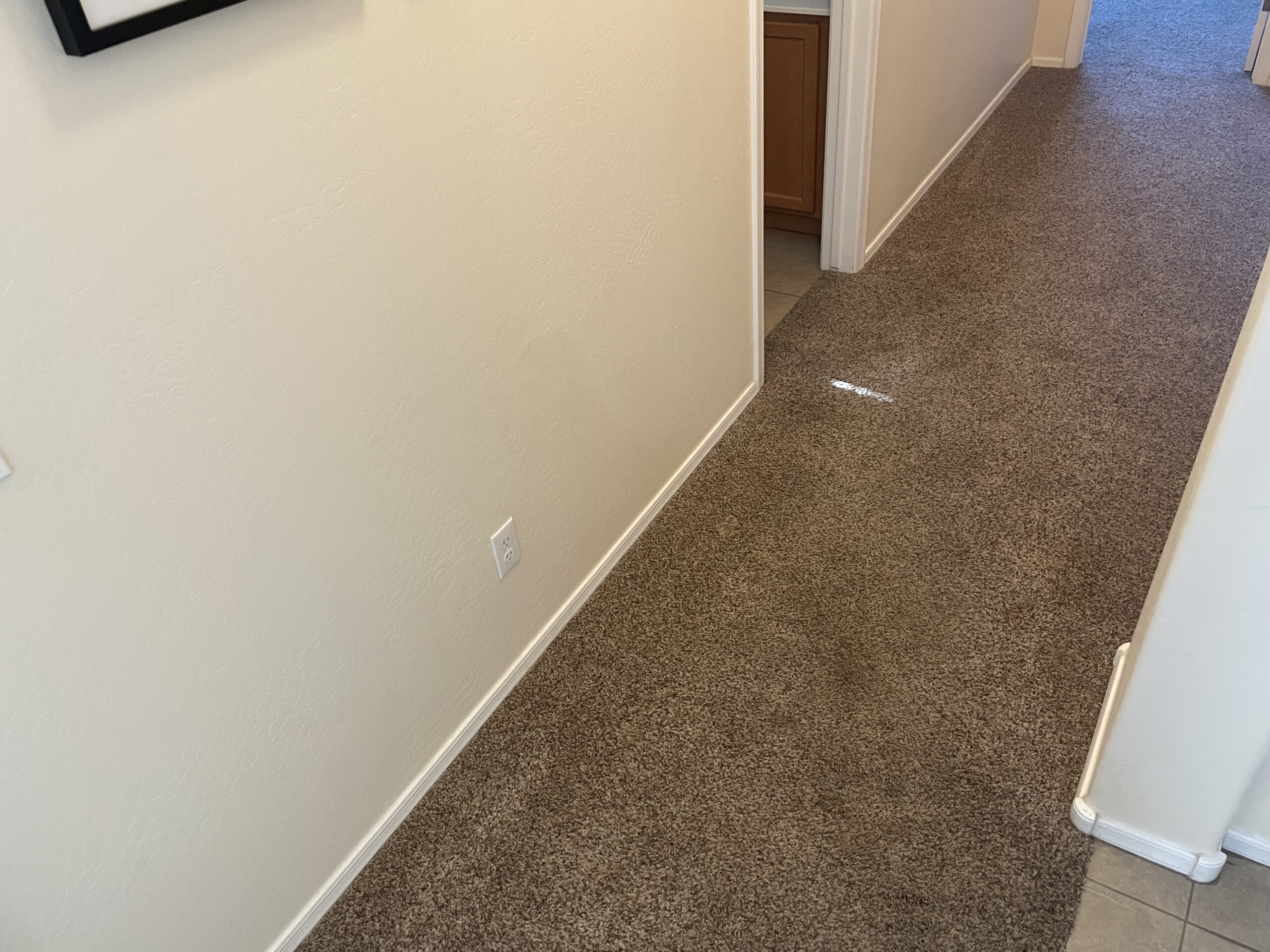
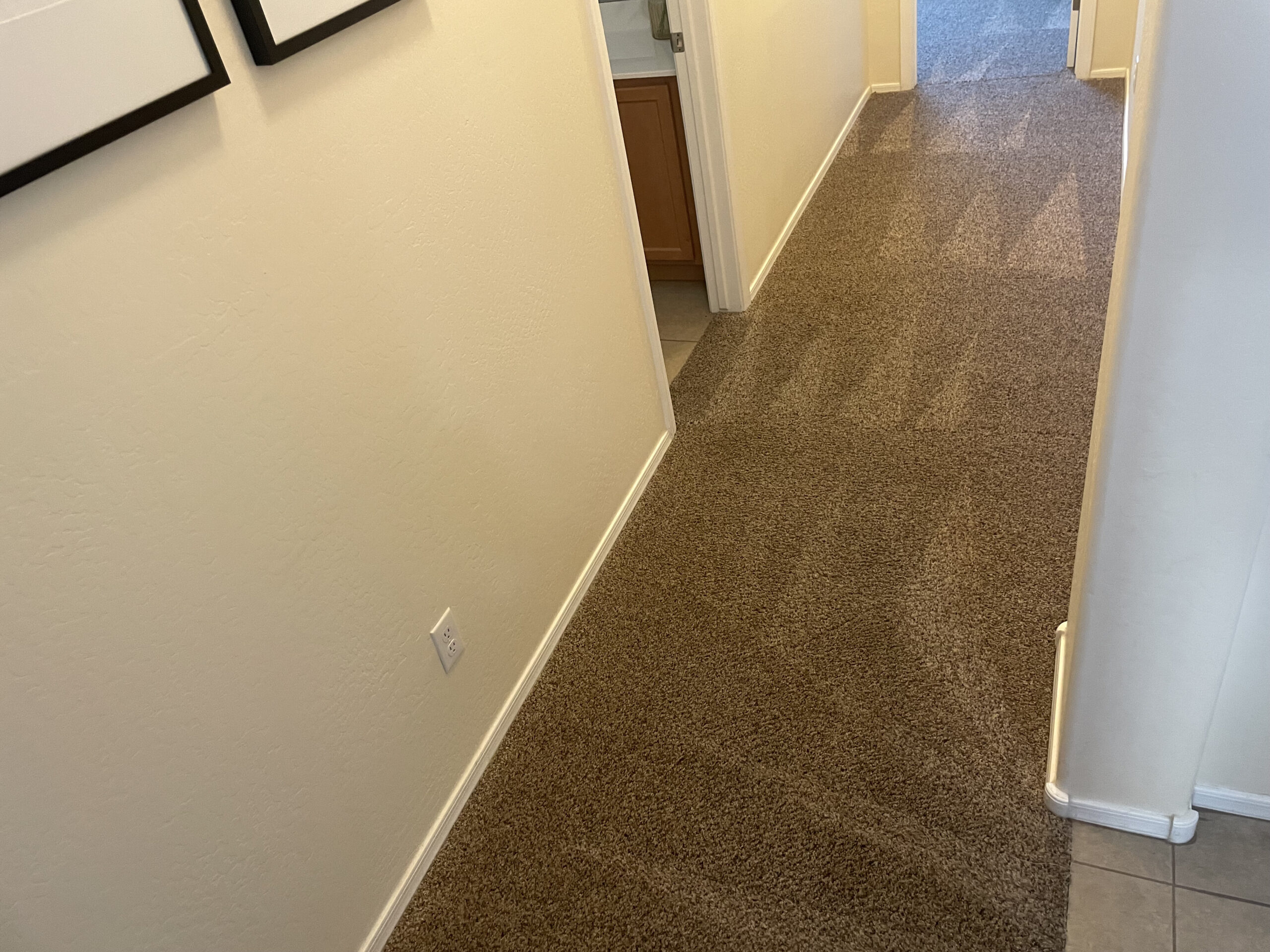
The combination of these two mechanisms produces a hallway dark zone with a specific pattern: it follows the foot traffic path rather than the room edges, it is consistent in width and location from one end of the hallway to the other, and it does not change significantly after cleaning because neither the compressed foam nor the pile angle differential is affected by the cleaning process. This pattern -- dark zone that follows traffic, does not clean away -- is the diagnostic signature of pad compression rather than soil. Homeowners across the Ironwood High School neighborhood who have had hallway carpet cleaned multiple times without the dark zone resolving are frequently dealing with this structural condition rather than a cleaning limitation.
Distinguishing Pad Compression From Soil: the Tests Before Cleaning
The most important assessment before cleaning a hallway with a dark zone pattern is determining how much of the dark zone is soil-driven versus structure-driven. Both conditions are typically present to some degree in older Glendale hallways -- the traffic zone that has accumulated years of foot contact soil is also the zone above compressed padding -- and knowing the proportion of each determines what the cleaning can accomplish.
The grooming test is the most direct diagnostic. Take a clean damp cloth or the back of a spoon and stroke the pile in the dark zone firmly in one direction, then lift and observe whether the pile springs back toward upright or remains compressed. In a hallway with primarily soil-driven darkening, the pile has normal resilience and springs back relatively quickly -- the darkening is from what is in the pile, not from the pile being unable to recover. In a hallway where pad compression is a significant factor, the pile in the traffic zone does not spring back with the same resilience as the pile at the edges.
The edge comparison test checks the pile character at the edge of the dark zone relative to the center. Press firmly on the carpet with a hand at both the center of the dark zone and at the edge zone where the carpet appears lighter. Where soil is the primary factor, both zones compress and recover similarly under hand pressure because the padding beneath both is in similar condition. Where pad compression is a factor in the traffic zone, the center zone may feel slightly softer or less firm because the pad beneath it offers less resistance.
The comparison with a section of carpet in an adjacent room, where the same carpet and pad were installed simultaneously but the traffic pattern is different, is also useful. Pulling back the carpet in a closet or protected corner of an adjacent room and comparing the pad condition to the hallway traffic zone tells you directly whether the hallway pad has compressed relative to the same pad in a low-traffic location. This check is part of what I do during the pre-cleaning assessment when the hallway presents the pattern described on this page.
What Professional Cleaning Accomplishes in a Hallway With Pad Compression
Understanding what cleaning accomplishes and what it does not in a hallway with pad compression history is the honest core of this page, and it is the conversation that needs to happen before the cleaning rather than after.
The soil in the hallway carpet -- the accumulated foot traffic oil, ambient particulate, pet dander in households with animals, and the organic soil from years of daily use -- is fully addressable through professional cleaning. The VLM process with enzyme and degreaser pre-treatment in the heavy-use zones extracts this soil effectively. After cleaning, the traffic zone carpet is genuinely cleaner. The soil that was in the pile and compounding the appearance problem is gone.
What the cleaning does not accomplish is closing the structural appearance gap between the traffic zone and the edge zones if that gap is driven by pad compression. The darker appearance from pad compression in the traffic zone is not soil -- it is a pile geometry difference that the foam thickness differential beneath the carpet creates. Removing the soil from the traffic zone carpet improves the overall appearance meaningfully but does not change the pile geometry relative to the edges, which means a visible difference between the traffic zone and the edge zones may still be present after cleaning if pad compression is a significant contributor.
In practice this means the hallway looks genuinely better after cleaning -- the soil removal is real and visible -- but it may not look as uniformly clean as a hallway with the same cleaning history over a pad that is still in good condition. A homeowner who knows the structural component exists before the cleaning looks at the result and sees clean carpet with a residual structural condition. A homeowner who did not know sees incomplete cleaning. The outcome is identical. The interpretation depends entirely on whether the pre-cleaning conversation happened.
The Options When Pad Compression Is Confirmed
When the pre-cleaning assessment confirms significant pad compression in the hallway traffic zone, the conversation has three possible paths depending on the overall condition of the carpet and the homeowner's priorities.
The first path is cleaning the carpet with accurate expectations. The carpet cleaning produces real improvement in the soil component and makes the hallway look genuinely better -- cleaner, fresher, and with less compound soil in the pile. The structural residual from pad compression remains visible but is less prominent because the soil that was compounding it is gone. This path makes sense when the carpet itself is in reasonable structural condition and the homeowner understands what the cleaning will and will not accomplish.
The second path is pad replacement followed by professional cleaning. If the carpet is in good enough condition to justify continued investment, having a carpet installer replace the compressed padding under the hallway carpet and then having the carpet professionally cleaned after reinstallation produces the best possible result -- a clean carpet over a new resilient pad with no structural differential to create appearance variation. Pad replacement first, then cleaning, because the reinstallation disturbs the carpet and cleaning after installation removes any residual from that process. This is a carpet installation service; I refer homeowners to qualified installers for that work and can schedule a cleaning appointment after the reinstallation.
The third path is carpet and pad replacement if the carpet has reached the end of its useful life. When the carpet itself has accumulated physical wear, fiber damage, or soil history that cleaning cannot adequately address in addition to the pad compression, replacement of the full installation is the honest long-term recommendation. I say this directly when the assessment tells me it is the right answer.
The Hallway Soil Component: What Cleaning Does Address
Whatever the pad condition, hallway carpet in a Glendale home that has been in active daily use for years has accumulated real soil that professional cleaning addresses effectively.
Foot traffic soil in a hallway carpet is concentrated in the same traffic zone as the pad compression, which means the soil and structural conditions compound each other's visual effect. Removing the soil does not eliminate the structural component but it does remove the soil contribution to the darkening, which in many hallways is substantial. A hallway that looks dark from both soil and structural causes looks significantly lighter after cleaning even if the structural gap remains, because the soil component -- which may be the majority of the darkening -- is gone.
Pet dander and hair accumulation in hallway carpet is a consistent finding in Glendale households with animals, and it is one of the most complete cleaning outcomes -- dander extracted from the pile does not return through any structural mechanism. The allergen load in the hallway, which is the path between the main living areas and the bedrooms, is meaningfully reduced by professional extraction regardless of the pad condition beneath.
Odor compounds from accumulated organic soil are also present in hallway carpet organic accumulation and respond fully to professional cleaning. A hallway that carries a background organic smell that regular vacuuming does not address has that odor source in the pile fiber where cleaning reaches it effectively.
Protecting Hallway Carpet and Slowing Pad Compression Between Cleanings
A hallway runner over the carpet in the primary traffic path distributes the foot traffic load across a wider area and through an additional layer that absorbs some of the impact rather than transmitting all of it directly to the carpet and pad. A well-positioned runner does not eliminate the compression load on the pad below it but reduces the peak pressure per square inch at each footstep, which slows the compression set progression in the foam. Runners also intercept the direct soil deposit from foot traffic, which keeps the carpet underneath in better condition and extends the interval between professional cleanings.
Consistent temperature control in the hallway during summer months slows the heat-driven foam compression that Arizona's climate accelerates. Keeping the hallway area air-conditioned during the hottest periods of the year maintains the foam at a temperature where its elastic resilience is higher, which reduces the compression set that develops when foam is repeatedly compressed at elevated temperatures. This is particularly relevant for homes in central Glendale where hallway areas may not have direct AC supply registers.
Vacuuming the hallway carpet regularly -- at least twice weekly in a high-use household -- removes the surface soil before it works into the mid-pile where it compounds with the structural appearance difference from pad compression. Slow vacuuming with adequate suction in the traffic zone produces more complete soil removal per pass than a quick surface sweep. Professional cleaning every 12 months maintains the soil component of the hallway carpet appearance at its best achievable level regardless of the pad condition, and each cleaning visit includes the pad assessment that tracks whether the structural condition is progressing toward the point where replacement makes sense.
On the Assessment Before Cleaning
Every hallway job starts with a walkthrough to identify whether pad compression is contributing to the dark zone appearance and what proportion of the darkening is soil versus structural. That assessment is free, takes a few minutes, and determines the honest expectation for the cleaning outcome before any work begins. The inspection does not change the price.
Learn more about our carpet cleaning services, or explore other cleaning services we offer in Glendale.

 (602) 429-9602