Why Older Rugs Need a Different Approach Than New Ones
A contemporary area rug purchased from a retail source in the last ten years was designed with cleaning in mind. The dyes are modern synthetic acid dyes set in a controlled process and tested for stability. The fibers are either synthetic with well-understood chemistry or wool processed through modern techniques that produce consistent, predictable behavior under standard cleaning conditions. The backing is stable and the construction is uniform.
An older rug, whether vintage or antique, hand-knotted or machine-made, may have none of those characteristics. Dyes from earlier production periods used different chemistry with more variability in how they respond to moisture and pH change. Plant-based dyes, early synthetic dyes from the late 19th and early 20th centuries, and chemical dyes from mid-century production all have dye-to-fiber bonding chemistry that is less predictable under wet cleaning conditions than modern acid dyes.
The fiber condition changes over time as well. Natural fiber, whether wool, cotton, or jute, loses tensile strength through oxidative degradation. This happens at a rate that depends on light exposure, humidity cycles, and the chemical environment the rug has been in throughout its life. A fiber that looks intact to the eye may have significantly less mechanical strength than it did originally. Foundation threads in older woven and flatweave constructions are often the most fragile element. Warp threads that hold the structure together can become brittle with age, particularly in cotton-warped pieces, and they can break during cleaning in ways that are very difficult to repair after the fact.
None of these risks are reasons not to clean an older rug. They are reasons to inspect it properly before cleaning and calibrate the approach to what the specific piece can actually tolerate.
The Dye Testing Process for Antique and Vintage Rugs
Dye stability testing before cleaning any antique or vintage area rug is not optional. It is the step that tells me what the rug will do when moisture and cleaning chemistry contact the pile, and it is the step that most general cleaning services skip because it adds time to a job they are trying to price competitively.
The test involves applying a small amount of water or dilute cleaning chemistry to the pile in a hidden area and pressing a clean white cloth firmly against the wet zone. Holding the cloth for fifteen to thirty seconds and examining it for color transfer tells me whether the dye in that zone is stable under wet conditions. No color on the cloth means the dye is well bonded and the cleaning can proceed normally. Color on the cloth means the dye is at least partially mobile, which changes how that zone needs to be treated.
For a rug with multiple colors, which covers most patterned vintage pieces, the test needs to happen at each major color zone separately. A red that is stable does not tell me anything about whether the adjacent blue or green will behave the same way. Different colors in the same rug may have been dyed with entirely different chemistry, particularly in older pieces where the dyer was working with what was available rather than a consistent palette of modern dyes. The test is also done progressively, starting with plain water and moving toward the cleaning chemistry that will actually be used, because a dye that is stable with water may still show mobility when the cleaning chemistry is applied.
For vintage pieces from the mid-century machine-made category, including the kinds of rugs that might come out of an estate sale in south Glendale neighborhoods or through one of the Grand Avenue corridor antique dealers, the dye chemistry can be harder to predict. These rugs were often dyed with early synthetic dye formulations that are now several generations old and may have degraded in ways that affect stability. Testing is more important for these pieces than for a hand-knotted piece with identifiable natural dye chemistry, because the machine-made mid-century dye history is less documented and less consistent.
Gentle Agitation: What It Means in Practice
Agitation in carpet and rug cleaning works the cleaning chemistry through the pile to reach embedded soil and mechanically dislodges soil particles from the fiber surface so extraction can remove them. The level of agitation that is appropriate varies significantly based on the condition and construction of the piece being cleaned.
For a contemporary synthetic fiber rug in good structural condition, standard agitation levels are appropriate and necessary to produce a thorough cleaning. For an antique or vintage area rug, the agitation level needs to be calibrated to the fiber condition the inspection revealed. A piece where the pile does not spring back with the same resilience as healthy fiber needs agitation that is more conservative than standard. The goal is to get the chemistry into the pile and the soil out of it using as little mechanical force as necessary, rather than applying a standard protocol and hoping the fiber holds up.
In practice this means using the softest appropriate tool, applying less mechanical pressure per pass, and extending the chemistry dwell time to compensate. If the chemistry has more time to work, less mechanical force is needed to dislodge the soil it has dissolved. For very fragile fiber, the chemistry dwell does the majority of the work and the agitation is more of a gentle assist than the primary cleaning mechanism.
For flatweave rugs and kilims where there is no pile to work through, the approach is different again. There is no pile depth to penetrate, so the goal is working the chemistry across the surface and into the interstices of the weave without applying mechanical force that could stress the warp and weft threads of an aged weave structure. A soft bristle brush moving with the weave direction is the appropriate tool, not the agitation equipment designed for pile carpet.
Controlled Drying for Older Rugs
The drying phase is where a lot of problems develop that were not anticipated during the cleaning itself. Browning, backing distortion, pile lay changes, and color shift can all occur during drying rather than during the cleaning, and they are entirely preventable with controlled drying technique.
Browning is the most common post-cleaning problem in natural fiber rugs. It happens when moisture in the wet rug wicks upward through the pile, carrying dissolved compounds from the backing and foundation, particularly lignin compounds in jute backing or natural compounds in cotton warp threads, up to the pile tips where they oxidize as they dry and produce a yellowish-brown discoloration. A rug that looked clean when the cleaning was done can show brown areas concentrated at the pile tips twenty-four hours later.
Preventing browning starts with moisture control during cleaning and continues with the drying position and airflow. A rug that dries pile-side up with airflow at the pile face evaporates faster from the surface, which reduces the wicking window and the browning risk. In Glendale's dry climate the ambient humidity is low enough that airflow without supplemental drying equipment produces a reasonable dry time for most pieces. For thicker pile vintage rugs that hold more moisture, a fan directed across the pile face accelerates the surface evaporation that prevents browning. Dry time for most area rugs is about an hour.
Backing distortion from uneven drying is a specific concern in older rugs with natural fiber backings. A jute or cotton backing that dries unevenly can develop dimensional distortion that changes how the rug lays flat. Flat drying on a consistent surface with even airflow prevents this. A rug draped over a chair or railing to dry, which is common in DIY cleaning attempts, dries unevenly and can develop permanent distortion in the backing.
The Range of Vintage and Antique Rugs This Approach Covers
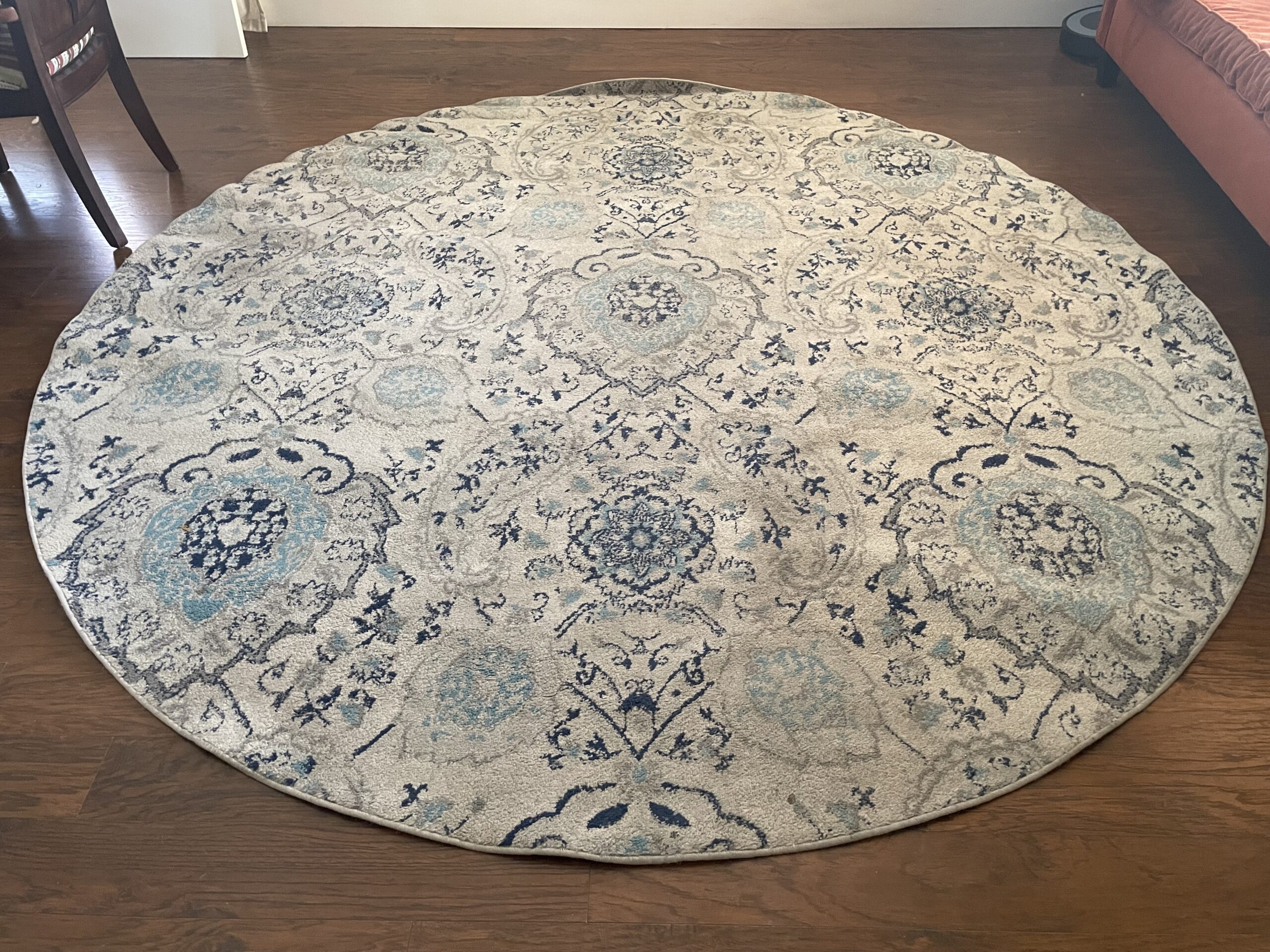
The antique and vintage area rug category is broader than most people think when they hear the term. It is not limited to hand-knotted Persian or Turkish pieces, though those are absolutely included and benefit from everything covered here. It includes any area rug that is old enough to have dye and fiber characteristics that differ meaningfully from contemporary production.
Vintage flatweave rugs, kilims, dhurries, and simpler woven pieces are common in Glendale homes because they show up frequently through estate sales throughout the city and in the shops along the Catlin Court area near historic downtown. These pieces are often cotton-warped with wool pile or entirely cotton construction. The dye chemistry in vintage flatweaves varies enormously by production region and period. Some are remarkably stable. Others show immediate color mobility in testing. The only way to know is to test.
Mid-century machine-made rugs from American manufacturers, the wool Wilton and Axminster constructions from the 1940s through 1970s, have their own specific cleaning considerations. These were produced with wool processed to commercial standards of that era and dyed with synthetic dyes that were state of the art for their time but are now quite old. The wool itself is often still in good condition because those mid-century production standards used quality fiber, but the dye chemistry requires testing regardless.
Inherited rugs of any construction present a specific challenge: the cleaning history is usually unknown. A rug that was cleaned every year with the right chemistry has dye and fiber in better condition than a rug that was occasionally wet-mopped or treated with whatever cleaning product was under the sink. The inspection compensates for the unknown history by testing what is actually there rather than assuming anything about what was done before.
Honest Expectations After a Properly Calibrated Cleaning
A properly inspected and carefully cleaned antique or vintage area rug shows a real improvement in appearance. Accumulated soil, dust, and ambient particulate that was suppressing the clarity of the pile color is removed, and the original color depth comes forward in a way that can be surprising. Pieces that looked flat and dull before cleaning often look meaningfully more vibrant after the soil layer is gone.
The fiber condition after cleaning reflects the fiber condition before cleaning. A rug that had resilient, healthy pile going in has resilient, healthy pile coming out. A rug that had fragile, partially degraded pile going in has the same after cleaning, but now clean. Cleaning removes soil from whatever fiber condition currently exists; it does not restore tensile strength that age has reduced.
Dye degradation from UV exposure is permanent and is not addressed by cleaning. If an older rug has faded in a sun-exposed zone, the cleaning removes the soil from that zone and clarifies what the current dye color actually is, but it does not restore dye that UV has chemically altered. For rugs where the dye testing shows instability in specific color zones, the cleaning of those zones is adjusted to be more conservative, which means those zones may be less thoroughly cleaned than zones with stable dye. A less thorough cleaning that does not cause dye damage is a better outcome than a thorough cleaning that leaves a permanent color change.
Caring for an Antique or Vintage Area Rug Between Professional Cleanings
Vacuuming is the most important ongoing maintenance for any area rug, but the technique matters significantly for older pieces. Use the suction setting without a rotating brush bar. The mechanical action of a beater bar against aged fiber creates abrasion that accelerates the degradation process. Move the vacuum in the direction of the pile lay, not against it, which reduces the stress on the pile tufts or weave structure. For very fragile pieces, a handheld vacuum on the lowest suction setting with a soft brush attachment is more appropriate than a full upright vacuum.
For any liquid spill, blot immediately with a clean dry cloth using direct downward pressure without rubbing. Cold water only if the spill requires any liquid treatment. Never apply consumer spot cleaning products to an antique or vintage rug without knowing the pH of the product and whether the dye chemistry is stable enough to tolerate it. The dye testing that protects older rugs during professional cleaning applies equally to DIY spot treatment. Alkaline spot cleaners on unstable dye can cause immediate and permanent color change.
Rotate the rug every six months if it receives any direct light. UV exposure in Glendale's climate is intense enough that a rug positioned in the same orientation relative to a window for years will develop visible fading in the light-exposed zones. Rotation distributes the UV exposure more evenly across the full rug surface, which does not prevent UV fading but makes it more gradual and more uniform. UV filtering window film in rooms where older rugs are displayed is the most effective single intervention for slowing dye degradation.
Professional cleaning every 18 to 24 months is appropriate for an antique or vintage area rug in regular use. Each cleaning carries some stress for aged fiber, so cleaning less frequently while maintaining it well through vacuuming and careful spot treatment is a reasonable tradeoff. For pieces in low-traffic display situations, a 24-month interval is appropriate.
On the Inspection Before Cleaning
Every job starts with an inspection on arrival to check dye stability, assess fiber condition, and confirm that cleaning is appropriate and achievable for the specific piece. If the inspection reveals conditions that make cleaning too risky, I will say so before starting. That conversation determines what the rug actually needs before any work begins, and the inspection does not change the price.
Learn more about our area rug cleaning services, or explore other cleaning services we offer in Glendale.

 (602) 429-9602