All Ways Organic Citrus Carpet & Upholstery Cleaning - Home
🇺🇸 Made in USA
🍋 Citrus Based
🌵 Eco-Friendly
Hours
Mon – Sat
7AM – 7PM
Book Online
Book
Online
📍 Serving the Greater Phoenix Valley
🕐 Mon – Sat  7AM – 7PM
👨‍👩‍👧‍👦 Family Owned & Operated
🇺🇸 Made in USA
🍋 Citrus Based
🌵 Eco-Friendly
Book Online
Sectional Cleaning in El Mirage Arizona - All Ways Organic
El Mirage, Arizona

El Mirage AZ
Sectional Cleaning

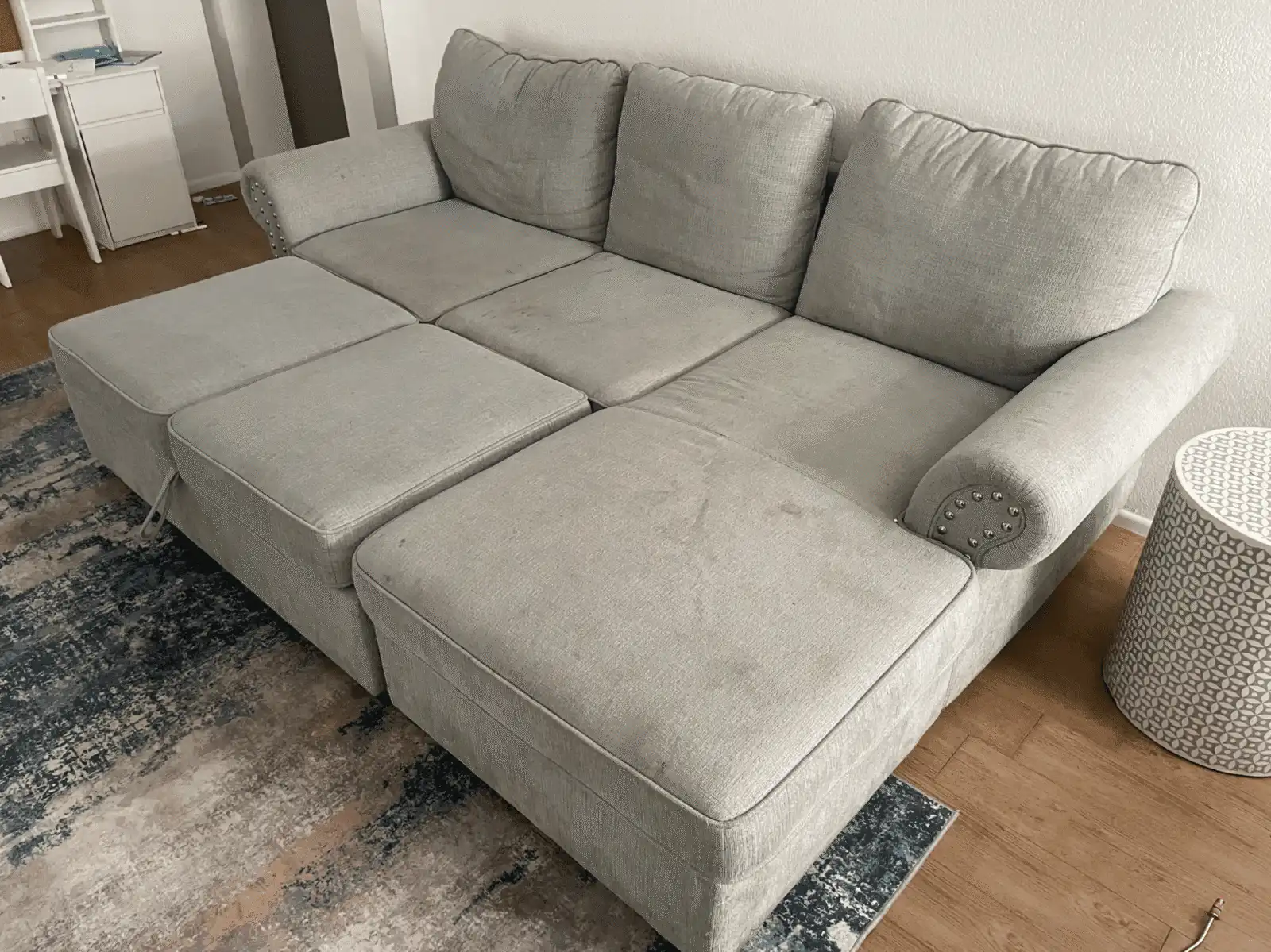
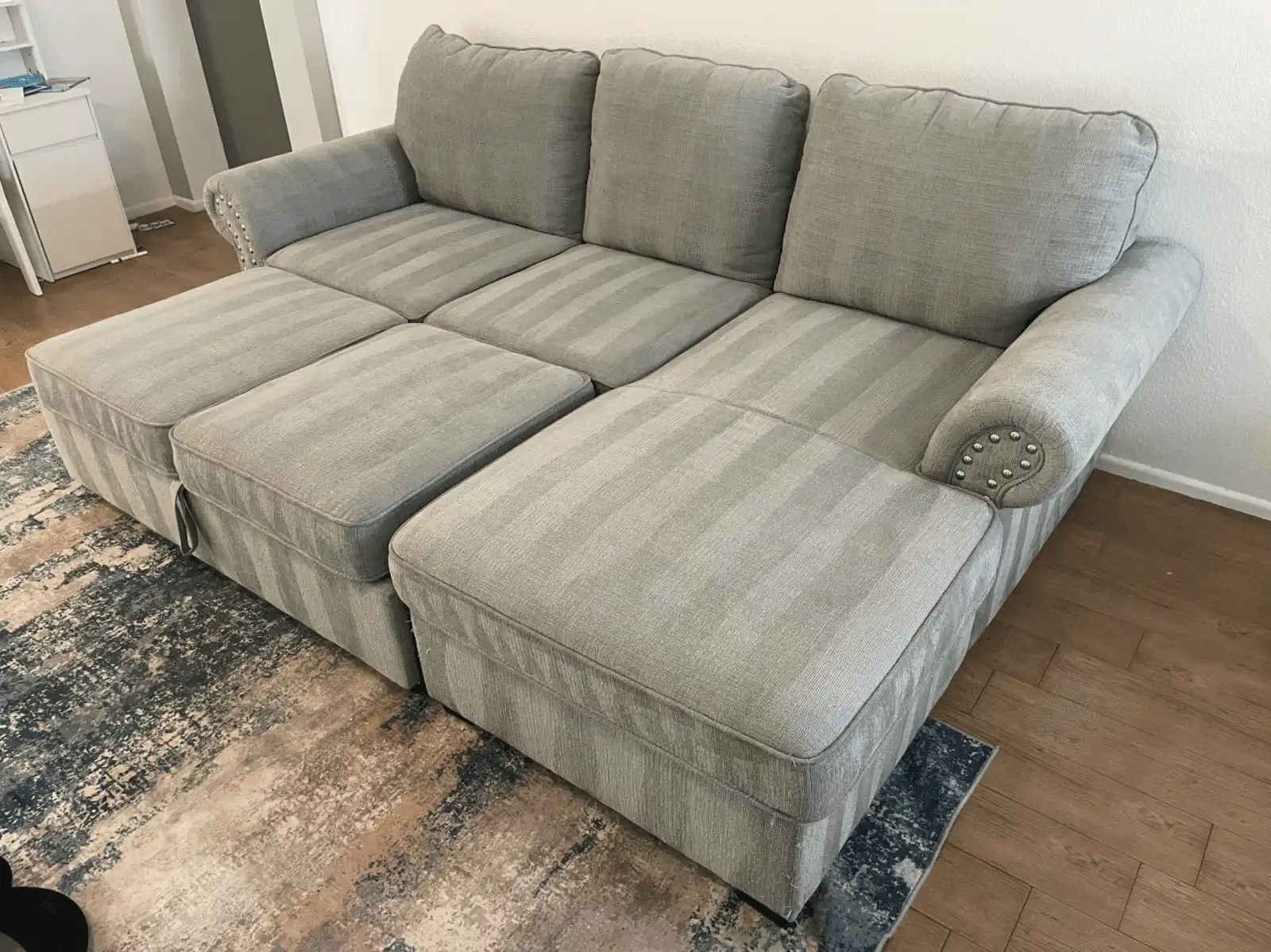
Every family sectional in El Mirage has a snack zone - the section where kids watch television, eat after-school snacks, and settle in for weekend movies. It's identifiable by feel before it's identifiable by sight: slightly tacky to the touch, slightly darker than the surrounding fabric. The reason it resists cleaning is that snack foods combine sugar and oil in the same deposit event, and sugar-oil compound residue behaves differently from either component alone. Each new snack session deposits fresh material onto a base that was already tacky. This is what I encounter across Pueblo El Mirage, Buenavida, and the family neighborhoods along N El Mirage Rd.

Google
5.0 / 5.0
Google Reviews
Organic
100% Organic
Citrus-based products
Owner operated
Owner-Operated
Kyle shows up every time
Quick dry
~1-Hr Dry Time
Low-moisture process
No hidden fees
No Hidden Fees
Price quoted = price paid
Schedule Your Cleaning
Book Your El Mirage Sectional Cleaning
Pick a date, build your clean, and confirm - takes about 60 seconds
1Date
/
2Build
/
3Book
Your Clean
$0

When works for you?

Pick a day and time. We'll handle the rest.

Build your clean

Tap a category, then add what you need.

Need commercial cleaning? Call (602) 429-9602 for a custom quote.

Confirm your cleaning

Almost there. Fill in your details and lock in your spot.

📅
Driveway parking available?
Tap any item above to adjust add-ons or remove it.

You're All Set!

Booking #

Confirmation sent to your email.

What to expect: I'm Kyle, the owner, and I'll be the one showing up. Carpets dry in about 1 hour. Your home will smell like fresh citrus. Safe for kids and pets immediately after cleaning.

Questions? Call or text (602) 429-9602

Need help?(602) 429-9602
SMS Consent: By providing your phone number when booking, you consent to receive appointment reminders and follow-up messages via SMS from All Ways Organic. Msg frequency varies. Msg & data rates may apply. Reply STOP to opt out at any time. Privacy Policy · Terms
Transparent Pricing

No Hidden Fees. No Surprises.

The price you see is the price you pay. Snack zone stage assessment, enzyme and degreaser two-chemistry treatment, and post-cleaning tackiness confirmation included.

3 Seat Sofa
3 Seat Sofa
Three-cushion, all surfaces cleaned
$125
per sofa
Book Now >
Sectional
Sectional
L-shape or standard sectional
$225
per sectional
Book Now >
Modular Sectional
Modular Sectional
Modular configuration, all sections
$295
per sectional
Book Now >
Optional Upgrade Treatments
Available at checkout to customize your cleaning
Deodorizer
Deodorizer
Extra odor elimination for a deeper fresh
High Traffic
High Traffic
Targeted treatment for heavy-wear areas
Pet Treatment
Pet Treatment
Neutralizes pet odors at the source
What Our Customers Say

Real Reviews, Real Results

"Sugar plus oil together is stickier than sugar alone, more soil-attracting than oil alone, and more resistant to water-based cleaning than either alone. That's why single-chemistry approaches leave the tacky feel behind."

About This Service

Why Sugar Plus Oil Together Behaves Differently

The snack foods children commonly eat on sectional sofas - chips, crackers, cookies, popcorn, cheese puffs, granola bars - almost universally combine sugar and oil in their composition. Even foods that don't taste sweet contain sugars in their carbohydrate structure, and virtually all processed snacks contain oil from manufacturing. When these foods contact sectional fabric through hand-to-fabric transfer, crumbs landing on cushions, or leaning against the back with snack-bowl hands, they deposit sugar and oil simultaneously.

Sugar alone dissolves when wet, crystallizes when dry, and cycles between tacky and firm states. Oil alone coats fiber surfaces and creates a soil-attracting film. Sugar plus oil together produces compound behavior more problematic than either alone. The oil creates a hydrophobic layer that protects the sugar from dissolving. The sugar creates a structural matrix that concentrates the oil in thicker deposits. The result is stickier, more soil-attracting, more resistant to water-based cleaning, and more persistent over time.

In El Mirage family homes across Buenavida, Sundial, and Arizona Brisas where the sectional is primary family seating and children's snack access is daily, the compound residue can become a significant fabric condition within weeks of a new sectional being placed.

Why It Matters
The Five-Stage Compound Cycle
Stage 1-2
Stage 1-2: Initial Deposit
Thin compound layer deposited over the first few weeks. Fabric still looks clean - too thin for visible darkening. Subtle tactile change most people wouldn't notice. Easiest to address - cleaning produces essentially full fabric restoration at this stage.
Stage 3
Stage 3: Visible Darkening
Tacky compound surface bonding airborne particulate from El Mirage's elevated-particulate environment. Visual darkening becomes apparent. Each new snack session deposits fresh compound onto the existing layer. The zone starts looking different from surrounding fabric. Standard two-chemistry treatment responds well.
Stage 4
Stage 4: Hardened Matrix
Sugar matrix has partially crystallized around trapped particulate, oil has partially oxidized. A harder, more embedded deposit that resists simple chemistry. Requires extended dwell times and multiple treatment passes. Common in multi-tenancy El Mirage rental sectionals.
Stage 5
Stage 5: Accelerated Re-Soiling
Thickened deposit is now a progressively more effective soil trap. Expanded surface area and increased stickiness captures more particulate per unit time. Re-soils noticeably faster after any cleaning. Requires intensive treatment for less complete results than earlier stages.

Where Snack Zones Develop on a Sectional

Children establish a preferred seat - typically the corner or the section with the best television sight line - and return to it consistently for snack consumption. The seat cushion surface and armrest at this primary position are the highest-deposit zones. The seat front edge accumulates compound deposit from reach-forward snacking - each reach to a snack bowl deposits hand residue at the front 6 to 8 inches, often the darkest zone on the whole sectional.

Sections adjacent to the primary snack position develop lighter deposits from children spreading out while watching television. Sections that adults use at the opposite end may have essentially no snack zone deposit, producing the characteristic condition where one end of the sectional in Dysart Ranchettes and Thompson Ranch family homes looks clearly different from the other.

Why Standard Cleaning Leaves the Tacky Feel Behind

Water-based cleaning alone addresses sugar but not oil. The oil component remains and serves as a foundation for the next sugar deposit. Degreasing chemistry alone addresses oil but not the sugar matrix holding the particulate. Standard upholstery cleaner produces visible improvement but doesn't specifically target either component with the chemistry required for complete removal.

The correct approach combines enzyme chemistry to break down the organic sugar and food-based compounds with degreasing chemistry to emulsify the oil. The sequence matters: enzyme first with 10 to 15 minutes dwell time, extraction, then degreaser with access to the oil component that was previously protected within the matrix. In El Mirage's warm indoor environment, enzyme activity is faster - the warm conditions accelerate the enzymatic breakdown.

The Residue-Free Cleaning Approach

Dry extraction first removes loose surface particulate bonded to the compound deposit. In El Mirage's elevated-particulate environment, removing particulate before wet chemistry prevents it from forming a paste driven deeper into the fabric. Enzyme pre-treatment follows with extended dwell time to work through the matrix depth. Degreaser pre-treatment after enzyme extraction gives better oil access with the organic matrix already broken down.

Thorough extraction after each step removes both the deposit and the cleaning chemistry. Incomplete extraction is the primary cause of cleaning residue that creates its own soil-attracting layer. Multiple passes with a clean tool ensure complete removal. Post-cleaning assessment by feel - running a hand over cleaned snack zones and comparing to non-snack sections - confirms the tacky quality has been fully removed. Homes throughout Rancho El Mirage and Dysart Cactus with family sectionals benefit from this confirmation step.

Fabric Type and Snack Zone Behavior

Microfiber shows snack zone deposit through nap disruption and darkening. The fine fiber structure provides excellent surface area for compound coating, making tackiness develop faster. Performance fabric resists initial penetration - the deposit stays at the surface longer, making it more accessible to cleaning. Older or worn fabric on rental sectionals throughout Pueblo El Mirage has reduced surface integrity, allowing deeper penetration even at moderate accumulation stages.

Preventing Snack Zone Buildup

A washable throw over the primary snack seat position is the most effective single intervention. The throw receives the hand contact and crumb landing that would otherwise reach the fabric. Launder weekly. Immediate wipe response to visible snack contact - a barely damp cloth within minutes - removes fresh compound before sugar crystallizes and oil penetrates. Weekly vacuuming of the snack section removes particulate before it bonds to the compound surface.

Professional cleaning every 12 months maintains the compound deposit in the early to moderate stage where treatment produces the most complete result. With consistent throw protection, the interval may extend to 18 months. Without it, 12 months is the right interval for El Mirage family households with active snack use throughout El Mirage Downtown and surrounding neighborhoods.

Two-Chemistry Treatment Addresses Both Components

Single-chemistry approaches leave one component behind - which is why the sticky feel returns quickly after standard cleaning. The enzyme-then-degreaser sequence addresses both the sugar matrix and the oil film, producing a truly neutral fabric surface that doesn't attract soil at the accelerated rate of a residue-loaded surface. Stage assessment at every appointment calibrates treatment intensity to the actual deposit found.

Learn more about our upholstery cleaning services, or explore other cleaning services we offer in El Mirage.

Common Questions

FAQs About El Mirage Sectional Cleaning

That's snack zone compound deposit - a mixture of sugar and oil from snack foods transferred through hand contact and crumbs over repeated sessions. The oil prevents the sugar from fully crystallizing dry, and the sugar matrix holds the oil in a thicker deposit than it would form alone. The tacky feel is the partially hydrated sugar-oil compound, and the darker color is fine particulate from El Mirage's environment bonded to the sticky surface. Two-chemistry treatment with enzyme and degreaser addresses both components.

Either the cleaning addressed only one component (sugar or oil, not both) leaving the other to maintain the tacky character, or cleaning product residue was left in the fabric creating its own soil-attracting layer. The two-chemistry approach with thorough extraction after each step removes both compound components and the cleaning chemistry itself, returning the fabric to a truly neutral state.

The sugar-oil ratio varies but virtually all processed snacks contain both components. Salty chips have high oil from frying and carbohydrate sugars. Cookies have obvious sugar plus butter or shortening oil. The enzyme and degreaser approach addresses the combined deposit regardless of which snacks contributed. Butter popcorn is one of the most compound-intensive because the butter oil coats the starch sugar matrix before it ever contacts fabric.

Tacky feel only with no visible darkening is stage one or two - easiest to address. Visible darkening with moderate tackiness is stage three - responds well to standard treatment. Visible darkening that's firm to the touch rather than tacky, clearly distinct from surrounding fabric, is stage four - requires extended treatment. The sooner it's addressed the better. Stage one and two clean to essentially full restoration. Stage four and five require more work for less complete results.

For fresh deposits within a day or two, a barely damp cloth wipe removes much of the compound before it fully sets. For dried and bonded deposits, commercial spray cleaners typically leave residue that compounds the problem. The better home approach is a throw cover on the snack section, immediate wipe-up of obvious food contact, and weekly vacuuming. Leave compound removal to professional cleaning.

Worth cleaning first. Multi-tenancy snack zone deposit can look severe but the fabric beneath may still be structurally sound. Intensive two-chemistry treatment produces meaningful improvement in most cases. After cleaning you'll have a clear picture of actual fabric condition beneath the deposit - whether it has remaining useful life or whether replacement is the right call.

Yes. Microfiber's fine fiber structure provides more surface area for compound coating, developing tackiness faster. Performance fabric resists initial penetration, keeping deposits at the surface where they're more accessible to cleaning. Older or worn fabric allows deeper penetration even at moderate accumulation. For all fabric types, avoid commercial spray cleaners between professional cleanings - the residue compounds the problem.

Every 12 months for active snack-use sectionals. The compound deposit reaches stage three to four within approximately 12 months of regular use on an unprotected section. Annual cleaning at the moderate stage produces the most complete results. With a consistent throw cover on the snack section, the interval may extend to 18 months.

Sticky Snack Zone Won't Come Clean? Two-Chemistry Treatment Fixes It.
Same-week availability - No hidden fees - Snack zone stage assessment and tackiness confirmation included
What Our Customers Say

Real Reviews, Real Results

All El Mirage Services
What We Clean in El Mirage
All 14
Carpet
Upholstery
Area Rugs
Tile & Commercial
Decorative desert cactus illustration growing from the desert floor