The Tea-Colored Stain That Appears After Cleaning
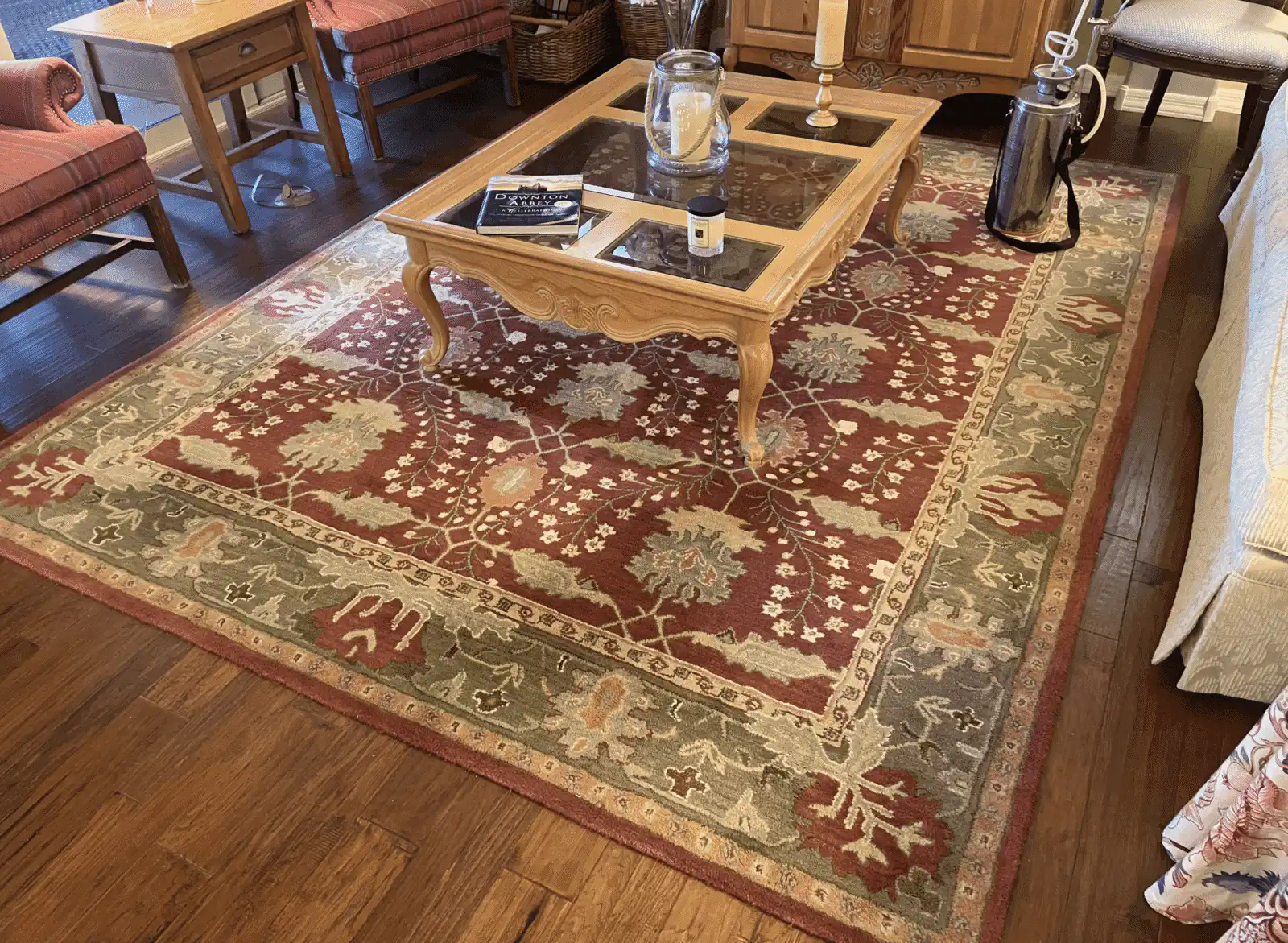
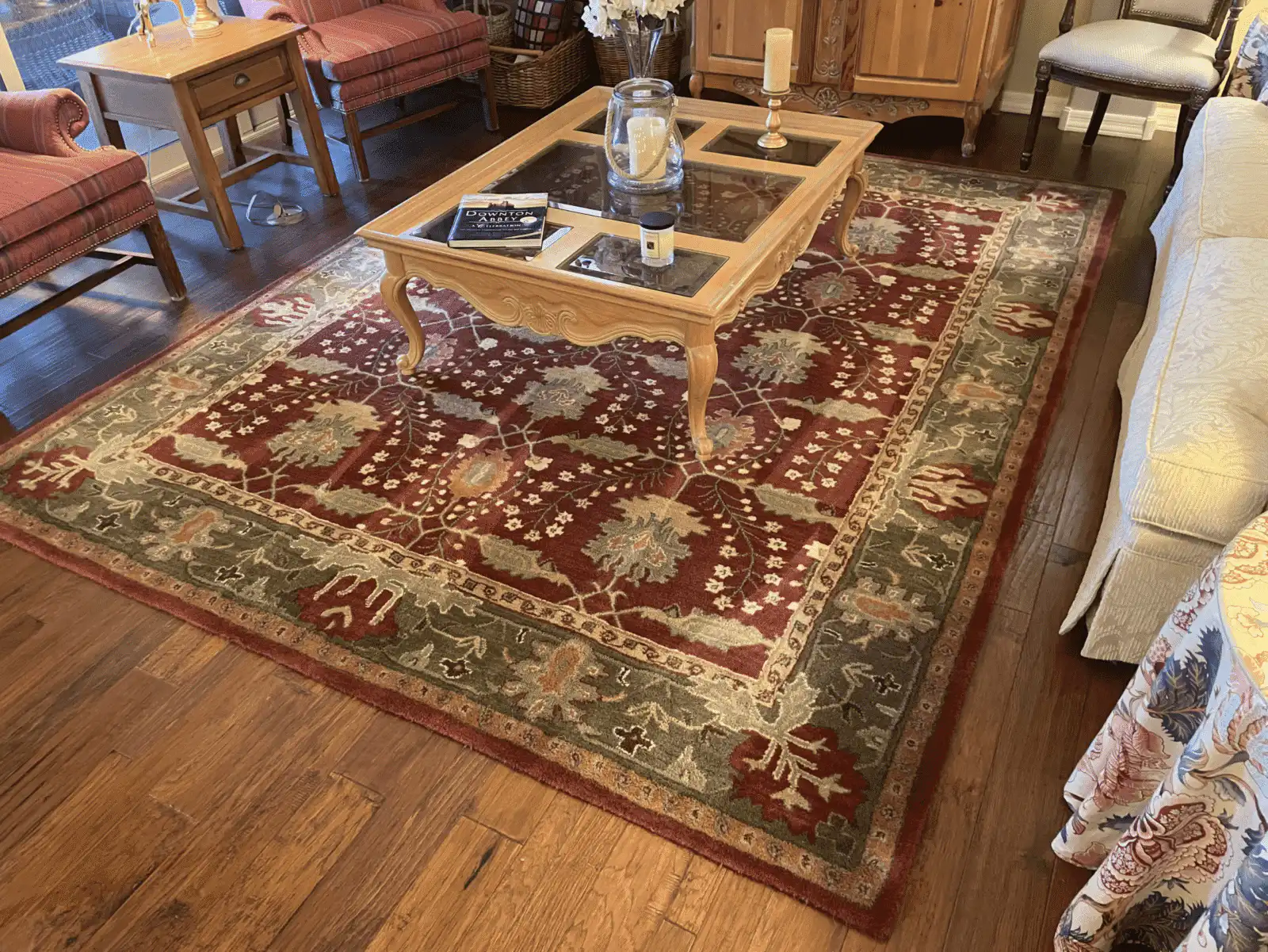
Browning is that yellow-brown or tan discoloration that shows up on wool rugs as they dry after cleaning. It's frustrating because the rug often looks fine right after cleaning - the browning doesn't appear until hours or even a day later.
Here's what's actually happening: when a wool rug gets overwet during cleaning, moisture penetrates deep into the foundation where soil, tannins, and contaminants have been trapped over months or years. As the rug dries, that moisture evaporates upward. And as it rises, it carries those contaminants with it.
When the moisture reaches the surface and evaporates completely, the contaminants get deposited right at the top layer of wool fibers. That creates the brownish discoloration.
Sometimes browning looks like a big soft stain across the center of the rug. Other times it appears as faint outlines or shadowing along traffic patterns. It can show up near edges where the rug dried slower, or in spots where moisture pooled during cleaning.
The tricky part: wool contains natural tannins that can contribute to browning if they're activated by moisture and alkaline cleaners. So even if the rug was relatively clean before, improper cleaning can pull those tannins to the surface and create discoloration that looks like a stain.
I see this constantly in Avondale - especially on wool rugs that have been steam-cleaned or cleaned with rental machines that dump too much water. The homeowner calls me thinking the rug is ruined, but in most cases, the browning is reversible if you use the right correction process.
The key to preventing browning: don't oversaturate the rug in the first place, and control drying speed so contaminants don't have time to migrate.
Why Colors Bleed or Shift During Cleaning
Dye stability is how well a rug's colors stay where they belong when moisture is introduced. Some wool rugs have extremely stable dyes. Others - especially hand-dyed rugs, vintage pieces, or rugs with rich saturated colors like deep reds, navy blues, or blacks - can be more sensitive.
When dyes aren't stable, they become mobile in the presence of moisture and wrong pH conditions. If the cleaning solution is too alkaline, too strong, or left to dwell too long, it can loosen the dye molecules. Those molecules then migrate across fibers, which shows up as bleeding, hazing, or softened edges between pattern colors.
In patterned wool rugs, this looks like colors that used to have crisp boundaries now look blurry or faded. In solid-color rugs, it can show up as uneven tone or lighter patches.
Another problem is wicking - similar to browning, but with dyes instead of soil. When a rug is oversaturated, dye molecules can travel upward during drying and create rings or ghosting on the surface.
I cleaned a wool rug in Harbor Shores last year where the previous cleaner had caused dye bleeding between the burgundy border and cream field. The homeowner thought the rug was permanently damaged. After testing the dyes and using a controlled low-moisture process, I was able to clean it without causing additional bleeding. The existing damage couldn't be fully reversed, but at least it didn't get worse.
The goal with dye-sensitive wool rugs: keep moisture controlled, use pH-balanced chemistry designed for wool, and don't give dyes an opportunity to become mobile.
The Low-Moisture Controlled Process
First, I test dyes before any cleaning - non-negotiable on wool. Second, I apply controlled moisture with pH-balanced wool-safe solution that treats the surface without saturating the foundation. Third, gentle agitation releases embedded desert grit from deep in the foundation. Fourth, full extraction removes suspended soil along with the moisture that could cause browning. Fifth, I control drying with proper airflow for uniform 4-6 hour drying - compare that to 24+ hours with steam cleaning. Sixth, I evaluate edges and borders for any early browning and address it immediately. The whole process is about prevention, not trying to fix problems after they've happened.
Why Your Rug Looks Dull Even Though You Vacuum
Wool rugs don't just hold dirt on the surface. They trap it down in the foundation where vacuuming can't reach. In Avondale, the problem is fine desert grit - microscopic particles that work their way down with every footstep and stay there.
Over time, that embedded grit makes wool rugs look dull, muted, or gray. The colors lose vibrancy. The texture feels less soft. Traffic patterns become more obvious.
Most people interpret this as the rug wearing out or fading from sun exposure. But in many cases, it's just foundation dust weighing down the fibers and changing how light reflects off the surface.
This foundation dust is also a browning risk. When a wool rug full of embedded grit gets overwet during cleaning, all that trapped contamination has a pathway to rise as the rug dries. That upward migration creates the tea-colored discoloration people associate with browning.
Proper wool rug cleaning removes foundation dust without creating the moisture conditions that cause browning. The rug doesn't just look cleaner - it looks more alive because the fibers aren't compressed by embedded grit.
I cleaned a wool rug in Coldwater Ridge that the homeowner thought had faded over the years. After removing the foundation dust, the colors came back so vibrant she thought I'd replaced it with a different rug. The wool hadn't faded - it was just buried under years of fine desert grit that dulled everything.
Why Borders Show Problems First
Edges and borders on wool rugs tend to show discoloration before the center does. That's because edges collect more foot traffic near doorways, more dust and dirt from floor contact, and they dry differently during cleaning.
Border dyes can also be more concentrated or behave differently than field colors. In some wool rugs, the dark border colors are more prone to bleeding if they're overwet.
Edge darkening can also happen from repeated spot-cleaning where the center gets attention but the borders get neglected. Over time, the contrast becomes obvious. Then when the whole rug finally gets cleaned - especially with high moisture - the borders can react and show browning or tide marks.
The fix is treating borders as a priority zone, not an afterthought. Controlled moisture on edges prevents the slow drying that causes discoloration. If a rug has fringe, that needs careful attention too - fringe absorbs moisture like a sponge and shows soil and browning quickly.
When I clean wool rugs in Crystal Gardens or Gateway Pavilions where people have invested in quality pieces, the borders always get the same controlled treatment as the field. That's how you keep the whole rug looking uniform instead of having dark edges and a clean center.
Warning Signs of Dye-Sensitive Wool Rugs
There are clues that tell you a wool rug might be more dye-sensitive. Deep reds, saturated blues, and rich blacks are often riskier than pastels or earth tones. Handmade or vintage rugs can behave differently than modern machine-made pieces.
Another warning sign: if the rug has ever been cleaned before and came back with any hazing, soft bleeding, or shadowing around patterns, that means the previous cleaning method didn't control moisture or chemistry properly.
Even without obvious warning signs, I treat every wool rug as "precision cleaning, not blast cleaning." Wool rewards careful technique, but it punishes shortcuts.
If you've ever had a wool rug that looked worse after cleaning - colors bled, browning appeared, patterns looked muddy - it's usually not because wool is impossible to clean. It's because the method wasn't designed for wool.
The safe approach: assume dyes matter, test before cleaning, use controlled moisture, and manage drying speed. That's how you keep wool rugs looking crisp and stable.
Preventing Browning and Dullness Between Professional Cleanings
Wool rugs don't need constant deep cleaning, but they do need protection from the things that cause dullness and discoloration. In Avondale, the biggest threats are abrasive desert grit and moisture mismanagement.
Use quality doormats outside and inside entryways - this catches grit before it reaches your wool rug. Vacuum regularly with appropriate settings and avoid aggressive beater bars that can damage wool fibers. Rotate your rug every 6-12 months to prevent one traffic lane from becoming permanent.
Address spills quickly but carefully - blot, don't scrub, and use minimal moisture. Don't soak the spot or you risk creating a browning problem when it dries. Never use unknown cleaners on wool - many household products are too alkaline or leave residue that attracts soil.
For Avondale homes with wool rugs in living rooms, dining rooms, or entryways - especially in Harbor Shores, Crystal Point, or Diamond Ridge where people have invested in quality pieces - professional cleaning every 12-24 months keeps foundation dust from building up and prevents the dullness that makes people think their rug is wearing out.
Learn more about our area rug cleaning process, or explore other cleaning services we offer in Avondale.

 (602) 429-9602