Why Edges Are Dark When Nobody Walks There
People get confused between regular traffic wear and filtration lines because they both make carpet look darker. But they're completely different problems that need different solutions.
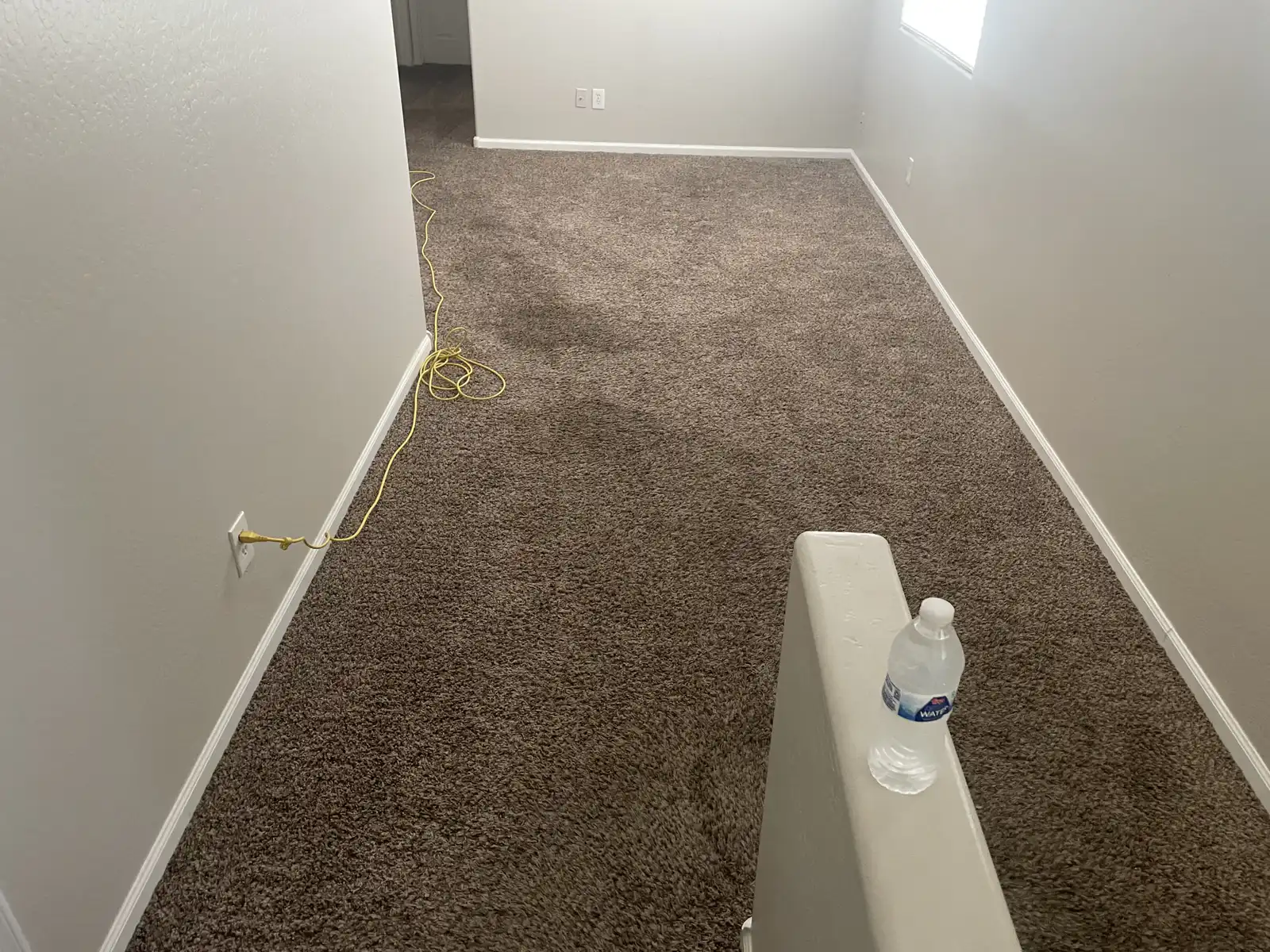
Traffic wear happens where people walk. It shows up as darker patches down the center of hallways, in front of doorways, the path between your bedroom and bathroom. Traffic wear is from dirt being ground into carpet fibers by foot pressure, plus the physical crushing and wearing down of the carpet pile from repeated stepping.
Filtration lines happen where people don't walk. They show up at carpet edges along baseboards, under closed doors, around stair risers, near heating vents, anywhere air is moving through the carpet instead of over it. The carpet in these areas isn't being crushed or worn down - it's being stained by airborne particles.
Here's how you tell the difference: walk down your hallway and look at the traffic pattern down the middle. That's where everyone walks. Now look at the very edge of the carpet along the baseboard. That dark line there, nobody's walking on it. If traffic caused that darkening, the center of the hallway would be way darker than the edges. But it's the opposite.
The other giveaway is that vacuuming does nothing to filtration lines. You can vacuum those edges every single day and they stay dark. Traffic dirt can be vacuumed up because it's sitting on top of the fibers. Filtration soil is embedded in the fibers because air forced it deep in there while moving through the carpet.
AC Usage and Desert Dust Factors
Filtration happens in homes everywhere, but it happens faster in Avondale because of two main factors: how much AC we run and how dusty the outdoor environment is.
Your AC runs April through October minimum, sometimes longer. That's 6-7 months of constant air circulation creating pressure differences and pushing air through every gap in your home. More air movement means more particles getting filtered through carpet edges.
Avondale's outdoor dust is fine and persistent. We get desert winds, construction dust from ongoing development in areas like Gateway Pavilions and Diamond Ridge, agricultural dust from remaining farmland on the west side, and traffic dust from major roads. All of that infiltrates homes through door gaps, window seals, and every time someone opens a door.
The combination of constant AC usage plus dusty outdoor environment means Avondale hallways develop filtration lines way faster than homes in less dusty climates or areas where AC doesn't run year-round.
I've cleaned hallway carpet in homes that are only 2-3 years old with pronounced filtration lines. Not because the homeowner isn't maintaining the carpet - because Avondale's environment creates filtration buildup quickly.
The Process That Actually Removes Embedded Airborne Soil
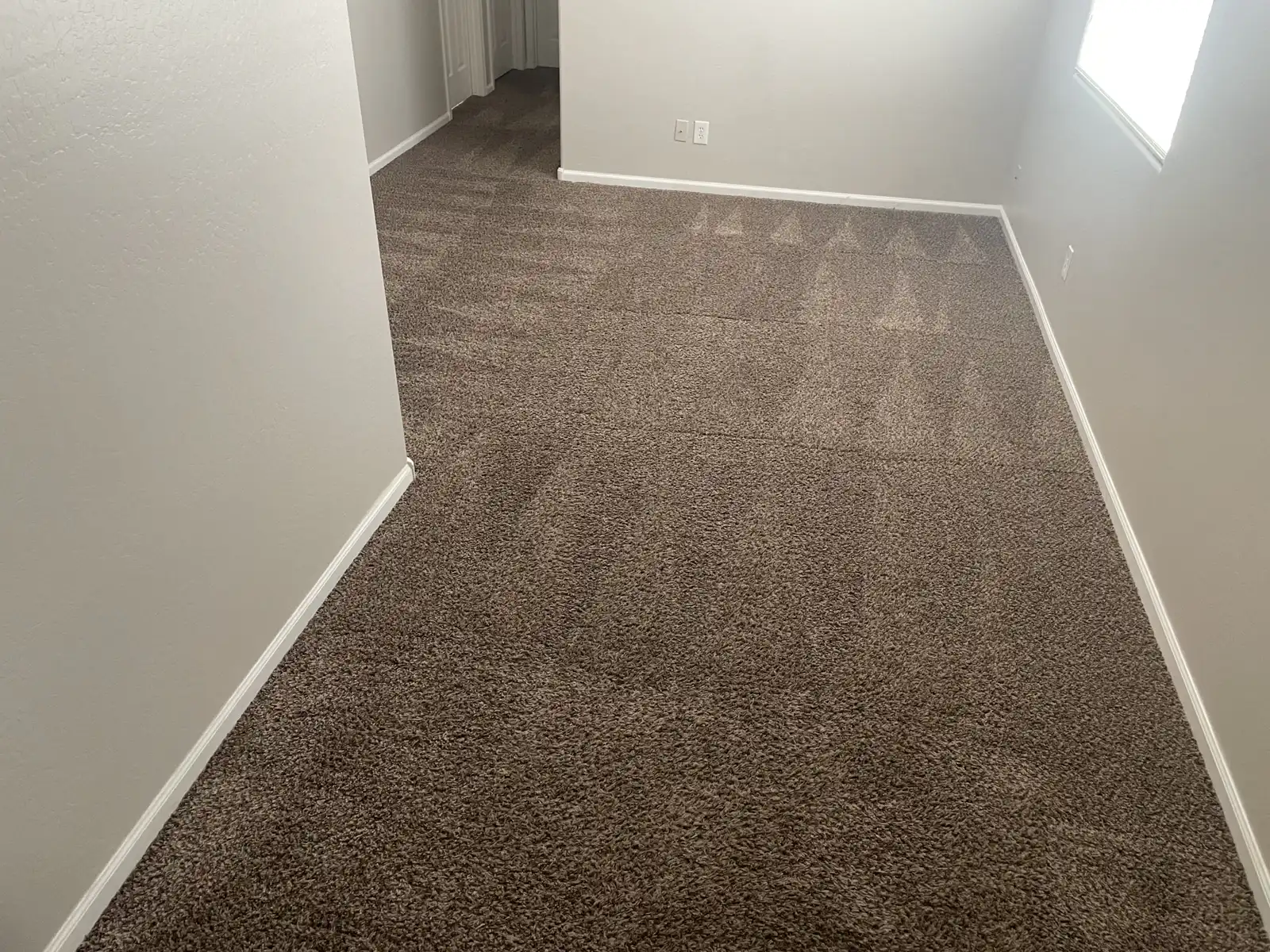
First, I pre-treat filtration lines with a solution designed to break down bonded airborne soil - not regular carpet cleaner. It needs 10-15 minutes of dwell time to break the bonds. Second, controlled mechanical agitation works the pre-treatment into the fiber base where filtration soil sits. Third, hot water extraction with strong suction pulls loosened soil completely out. Fourth, I treat the entire hallway width so you don't get bright clean edges next to a dingier center. The hallway dries in under an hour.
Why You Can't Vacuum Away Filtration Lines
This is one of the most frustrating things for Avondale homeowners - they vacuum those dark baseboard edges every week and nothing changes. The lines stay just as dark no matter how much vacuuming they do.
Here's why: vacuuming removes loose surface soil. It pulls up dirt, dust, crumbs, hair - anything sitting on top of carpet fibers or lightly caught in the pile. That works great for traffic areas where most soil is loose and surface-level.
Filtration soil is different. It's been forced deep into the carpet fibers by air pressure. As air moves through the carpet, it carries particles with it and deposits them at the fiber base. Those particles bond to the fiber surfaces and get packed tighter over time as more air continues moving through.
Your vacuum's suction can't reach that deep, and the beater bar or brush can't agitate deep enough to loosen bonded particles. The vacuum might remove a tiny amount of surface dust, but the bulk of the filtration soil stays embedded.
This is why filtration lines need professional cleaning with pre-treatment, agitation, and extraction. You need chemistry to break the bond, mechanical action to loosen the particles, and strong suction to remove them completely.
Slowing Down Filtration Between Cleanings
You can't completely prevent filtration lines in Avondale - some amount is going to happen as long as your AC runs and you have gaps at baseboards. But you can slow it down significantly.
Change your AC filter every 30-45 days. This is the single biggest factor. A clean filter catches more particles before they circulate through your home. Add door sweeps to bedroom doors and bathroom doors - a lot of air movement happens under doors.
Keep outdoor dust out as much as possible. Use doormats outside and inside entry doors. Take shoes off at the door. Close windows on windy days. Run your vacuum's edge attachment along baseboards weekly - even though vacuuming won't remove embedded filtration soil, it will pick up loose dust before it gets forced into the carpet.
Get professional hallway cleaning every 12-18 months. This removes the filtration buildup before it gets so heavy that it's harder to extract. For homes in Coldwater Ridge, Friendship Park, or areas near ongoing construction, the 12-month schedule makes more sense because dust loads are higher.
Filtration Lines vs Water Damage - How to Tell the Difference
Here's something that comes up more than you'd expect - people see dark lines along their baseboards and worry it's water damage or mold from a leak. Sometimes it is, but usually it's just filtration.
Filtration lines are consistent and crisp. They follow the baseboard edge in a clean line, and the darkness is uniform across the entire length. Water damage stains are irregular and blotchy - darker in some spots, lighter in others, wider in one area and narrower in another.
Smell is a clue. Filtration lines smell like dust or nothing at all. Water damage smells musty, especially if mold's growing. Texture matters too - filtration-stained carpet feels dry and normal, just darker. Water-damaged carpet might feel damp, or if dried out, stiff and crunchy from mineral deposits.
We've had homeowners in Avondale absolutely convinced they had water damage after seeing dark lines along every baseboard. One guy over near Friendship Park called us worried his foundation was leaking. We checked - carpet was bone dry, no moisture readings, no musty smell, lines were perfectly uniform. Classic filtration. He'd been losing sleep over it thinking he had a major foundation problem.
Learn more about our carpet cleaning process, or explore other cleaning services we offer in Avondale.

 (602) 429-9602