What's Actually Trapped Inside Your Rug (Not Just On Top)
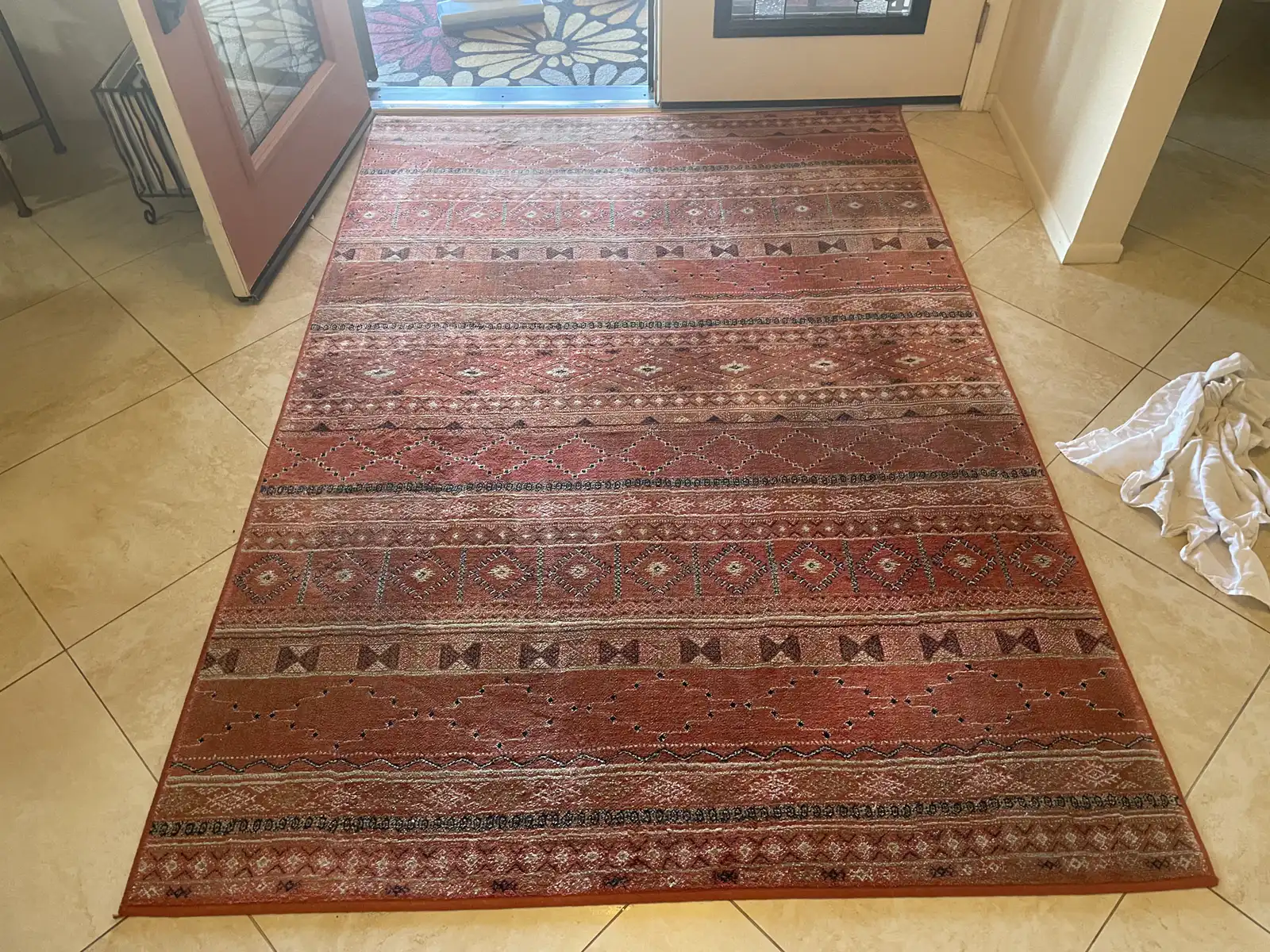
When I pick up an entryway rug for cleaning in Avondale, here's what I find when I agitate it properly: a cloud of fine dust that comes out from the base layers. This isn't the dirt you can vacuum away. It's what's been pushed down into the foundation by foot traffic over months.
Most area rugs - especially the synthetic ones people use at entryways - have a woven backing underneath the visible pile. That backing acts like a filter. Dirt works its way down through the fibers and gets trapped in that foundation layer. Once it's there, a standard vacuum doesn't have enough suction to pull it back out.
This is especially true in Avondale homes with tile floors and area rugs. The tile is easy to sweep or mop, so people focus on that. The rug gets vacuumed but nobody thinks about what's accumulating underneath and inside it. By the time you notice the rug feels gritty or looks gray, there's already a significant amount of embedded soil that needs professional extraction.
💡 CRB Deep Extraction
I use a CRB (Counter Rotating Brush) machine that agitates deep into the rug base - not just surface buffing. The citrus solution breaks down oils and sticky residue that hold the grit in place, and then I extract everything out. That's the only way to actually remove foundation dust instead of just pushing it around.
The Rotation Schedule That Actually Prevents Permanent Wear
Here's the simple truth about entryway rug rotation: if you wait until you see a visible walk path, you've waited too long. By that point, the fibers in that traffic lane are already compressed and the rug will never look perfectly uniform again.
In Avondale, I recommend rotating entryway rugs every 2-3 months if they're at your main entry. If it's a side door or less-used entrance, every 4-6 months is fine. The goal is to distribute wear evenly before any single area gets permanently flattened.
Here's how to actually do it: Most entryway rugs are rectangular. Every 2-3 months, rotate the rug 180 degrees so the end that was near the door is now farther into the house, and vice versa. This spreads foot traffic across different parts of the rug instead of hammering the same 2-foot section over and over.
If you've got a rug in front of a sliding glass door that faces south or west - common in Avondale homes near Gateway Pavilions or Pecan Groves - rotation also helps with sun fading. The side that gets direct afternoon sun will fade faster than the shaded side. Rotating prevents that drastic color difference from becoming permanent.
- Main entry rugs: rotate every 2-3 months
- Side door / low-traffic rugs: rotate every 4-6 months
- South/west-facing sliding doors: rotate every 3-4 months to distribute sun fading
- Rotation prevents uneven wear. Cleaning removes the abrasive grit that causes wear. You need both.
Why Area Rugs Near Avondale's Main Entries Need More Frequent Cleaning
I've cleaned rugs all over the West Valley, and Avondale has a couple of unique factors that make entryway rugs need attention more often.
First, the proximity to agricultural and undeveloped land. If you're in neighborhoods near the western edge of Avondale - anywhere close to the open desert or farmland that hasn't been converted to housing yet - you're dealing with more airborne dust than someone in central Surprise. That dust settles on walkways and porches, and then gets tracked onto your entryway rug.
Second, homes near Phoenix Raceway see periodic spikes in foot traffic during race weekends. If you're in Holly Acres or Alamar Park area and you notice your entryway rug looks worse after NASCAR events, that's not a coincidence. More people coming and going means more dirt getting ground into the rug in a short period.
Third, the decomposed granite landscaping that's popular in Avondale. It looks clean and desert-appropriate, but those tiny granite particles are abrasive. Once they're in your rug fibers, they act like sandpaper with every step. Regular professional cleaning pulls that abrasive material out before it damages fibers.
The Process for Removing Embedded Grit (Not Just Surface Dirt)
First, I inspect the rug and do a dye stability test. I apply a small amount of cleaning solution to check if the colors will bleed. Most modern synthetic rugs are fine, but some older or imported rugs have dyes that aren't stable. If the rug passes the test, we proceed. If it doesn't, I adjust my approach or let you know upfront that cleaning might cause color issues.
For entryway rugs specifically, I focus on removing what's embedded in the foundation - not just what's visible on top. I use the CRB machine with brushes that agitate deep into the base of the rug. The organic citrus solution breaks down the oils and sticky residue that trap grit in place. Then I extract everything out with proper suction.
Most entryway rugs I clean in Avondale are synthetic - nylon, polyester, polypropylene. These clean up well with the VLM (Very Low Moisture) method because they don't absorb much water and they dry fast. Your rug is ready to go back down in 1-2 hours, not sitting damp for days.
For wool rugs or natural fiber rugs in entryways, the process is similar but I use pH-balanced products that won't strip the natural oils from wool. Wool is more absorbent so I use even less moisture and make sure extraction is thorough.
The difference you'll notice: the rug feels softer underfoot, it doesn't have that gritty texture anymore, and colors look brighter because embedded dust isn't dulling them. If there was a visible gray traffic lane, it usually lightens significantly - though if the fibers are already permanently compressed, cleaning won't reverse that structural damage.
Learn more about our area rug cleaning process, or explore other cleaning services we offer in Avondale.

 (602) 429-9602