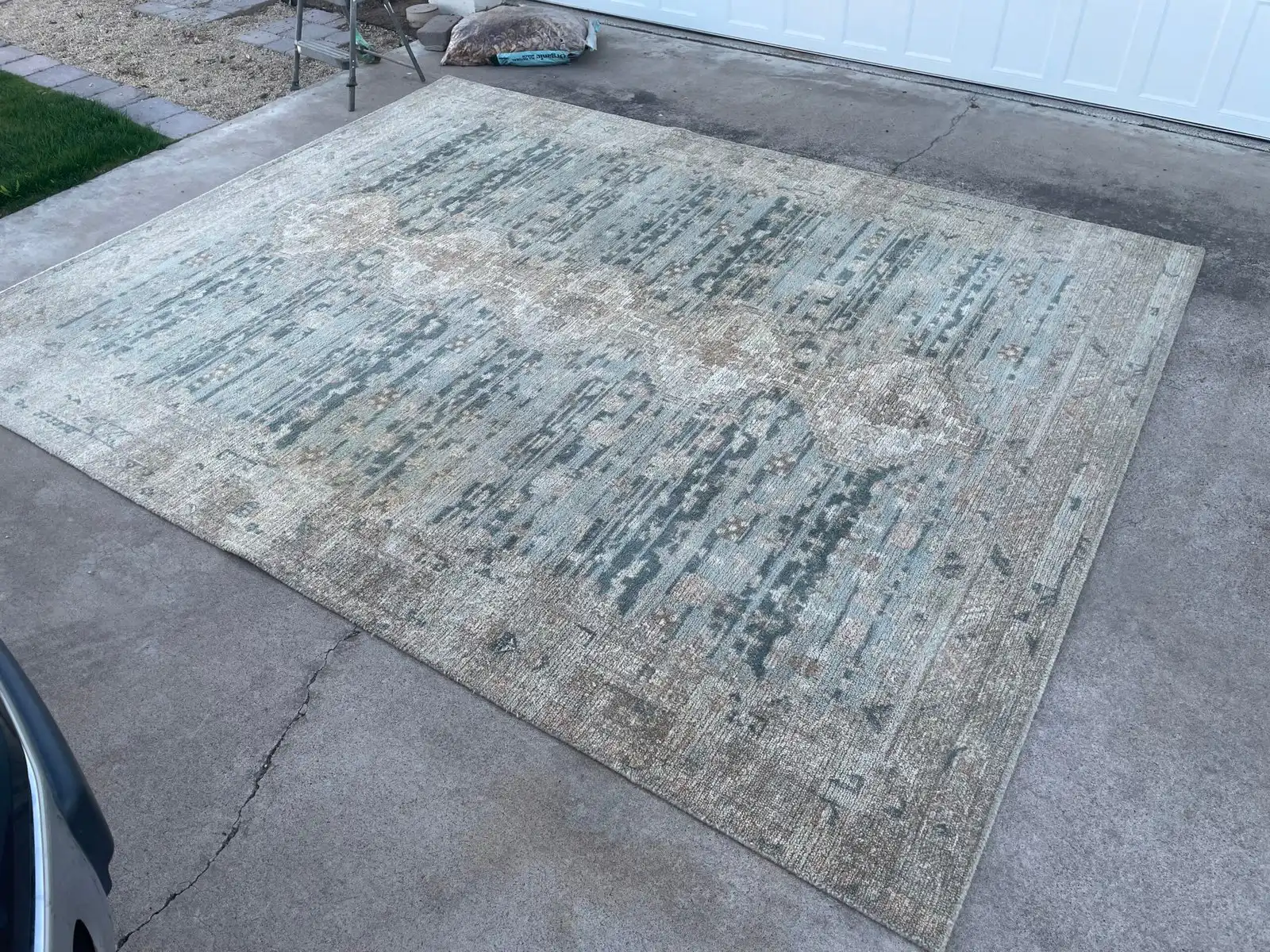
Why Summer Heat Activates Lanolin Odor
Lanolin in wool fibers is stable at normal room temperatures (65-75°) and moderate humidity (30-50%). Surprise summer conditions push wool beyond those thresholds. When rooms reach 85-95° with humidity at 10-15%, heat makes lanolin molecules more mobile while extreme dryness causes wool fibers to release more of their natural oils as a stress response.
This is why the same rug that was fine all winter suddenly smells terrible in July. The lanolin was always there - summer conditions activated it. It's also why the smell is worse in some rooms than others. A downstairs rug with good AC might be fine while the same rug upstairs with afternoon sun smells strongly.
💡 Lanolin Odor vs Actual Contamination
Not every wool rug smell is lanolin. Lanolin odor smells like wet sheep, is worse during hot afternoons, has no visible staining, and the rug is dry to the touch. Contamination (pet urine, mildew) smells constant regardless of temperature, usually has visible staining, and may feel damp. If the smell gets worse on hot afternoons and better at night, that's lanolin. If it's constant with visible staining, that's contamination needing different treatment.
How I Clean Wool Rugs to Control Lanolin Odor
First, I evaluate the odor source. Not all wool rug smells are lanolin. I check for staining, moisture damage, and contamination patterns. Clean rug with sheepy smell = lanolin reactivation.
Second, wool-safe deodorizing pre-treatment that neutralizes volatile compounds lanolin releases - not fragrance that masks odor, but chemistry that breaks down the aromatic molecules.
Third, controlled moisture cleaning at proper pH. Wool is sensitive to alkaline cleaners and oversaturation. pH-balanced solutions with low moisture levels prevent additional fiber stress.
Fourth, thorough extraction. Any cleaning solution or loosened lanolin oils must be removed completely. Residue left behind creates new odor problems or attracts soil.
Fifth, lanolin stabilizer as finishing treatment. Resets natural oils to a more stable state and reduces the likelihood of odor returning when heat conditions occur.
Sixth, positioning recommendations. If the rug was in a hot zone, I suggest moving it to a cooler location or using window treatments to reduce afternoon heat exposure.
New Wool Rugs vs Older Wool Rugs
Newer wool rugs (0-5 years) have higher lanolin content and are more prone to odor during their first few Surprise summers. Older rugs (10+ years) have less lanolin remaining from use and previous cleanings. The sweet spot for lanolin odor is typically 1-7 year old rugs exposed to Surprise summer heat for the first time or two. After several summers with proper stabilization treatment, the odor tendency decreases as lanolin naturally depletes.
Preventing Lanolin Odor Between Cleanings
- Keep wool rugs out of direct sunlight. Close blinds or curtains during afternoon peak sun (2-6pm) to reduce heat exposure.
- Maintain slightly higher indoor humidity - even 20-25% (vs the typical 10-15%) meaningfully reduces lanolin volatility.
- Position wool rugs on cooler floors and in rooms with better temperature control.
- Vacuum regularly with gentle suction without aggressive beater bars. Removes surface particles that mix with oils and worsen odor.
- Air out rugs during cooler months. Hang in shade for a few hours - fresh air helps volatile compounds dissipate naturally.
- Professional cleaning in September/October after summer heat stress resets the rug and prevents odor from becoming chronic.
Learn more about our area rug cleaning process, or explore other cleaning services we offer in Surprise.

 (602) 429-9602