Travertine Pool Decks in Surprise
Travertine is one of the most popular pool deck materials in Surprise - it stays cooler underfoot than concrete and looks beautiful. But it's porous. Under a microscope, it has thousands of tiny pores that absorb calcium-rich pool water once sealer wears down.
Surface calcium can be addressed with the right chemistry. Calcium that's penetrated into stone pores is much harder to remove. This is why early intervention matters - addressing buildup after one or two seasons is much more successful than trying to remove five years of accumulated deposits.
💡 Calcium vs Efflorescence vs Soap Scum
Not everything white on tile is the same thing. Calcium deposits are chalky and rough, appearing wherever water evaporates. Efflorescence is minerals migrating up from mortar beneath - common on new installations. Soap scum feels slippery or waxy, found in showers. Mold feels slimy. Each needs different treatment chemistry, and using the wrong product on the wrong deposit - especially on natural stone - can cause permanent damage.
How I Remove Calcium Deposits From Surprise Pool Decks
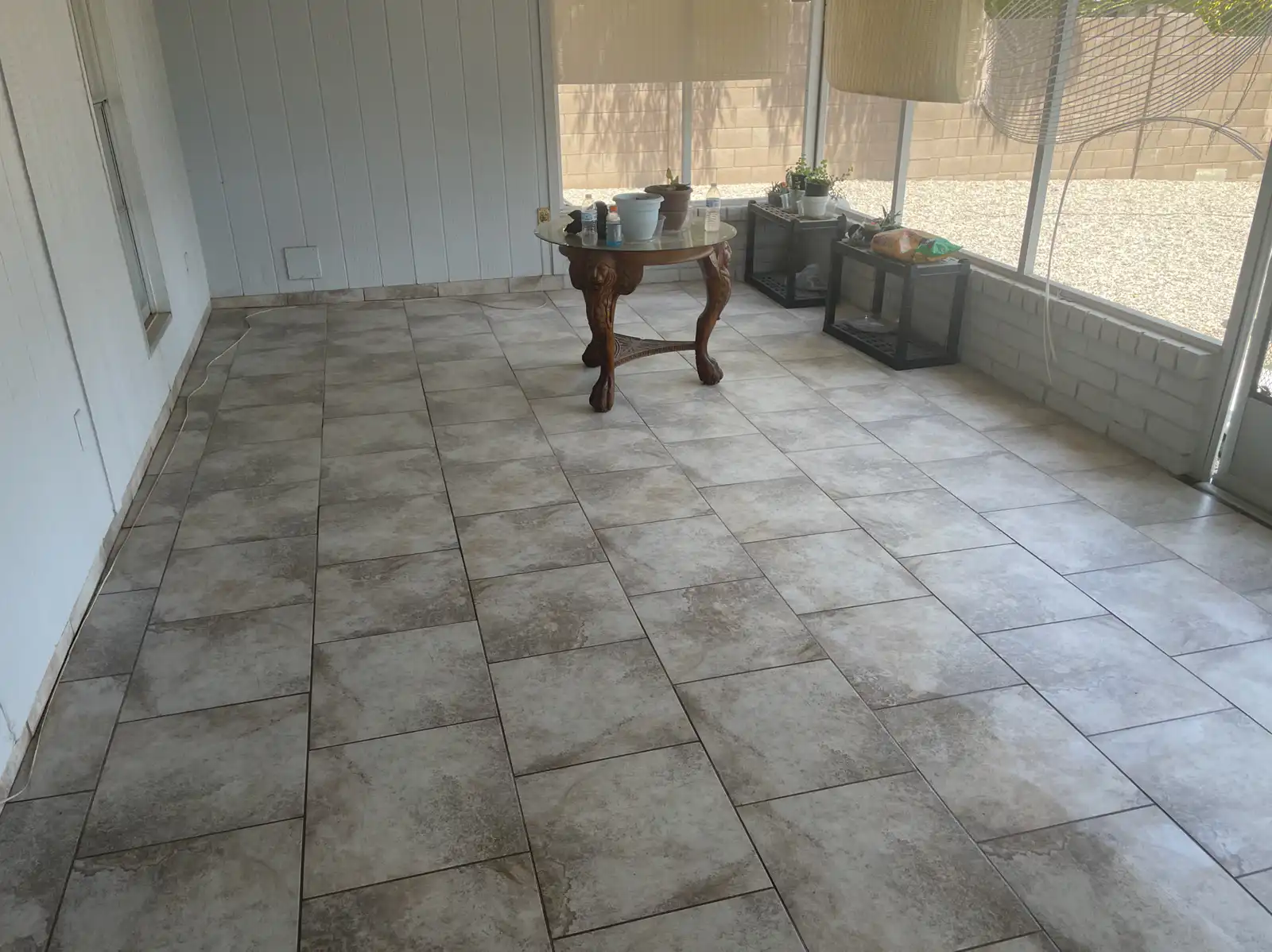
First, I test the stone or tile. Travertine, marble, and limestone are acid-sensitive. Porcelain and ceramic are more robust. Treatment approach differs completely.
Second, I evaluate deposit depth. Fresh buildup on sealer responds differently than years of accumulation in exposed pores. Heavy deposits sometimes need staged treatment.
Third, carefully buffered descaling solution at correct concentration. For natural stone, not industrial acid. The goal is dissolving calcium without attacking the stone's calcium-based structure.
Fourth, precisely timed dwell. Too short and calcium doesn't dissolve. Too long and even buffered acid affects stone. I monitor the chemical reaction as it works.
Fifth, agitate and extract. Dissolved calcium must be physically removed, not just diluted. Proper extraction so dissolved minerals leave the tile entirely.
Sixth, neutralize the surface pH after acid-based treatment to prevent ongoing low-level etching.
Seventh, rinse and evaluate. Heavy deposits may need a second treatment or spot work in areas where buildup was thicker.
Sealing After Cleaning
Once tile is clean, sealing prevents calcium from returning as fast. But in Surprise conditions - intense sun, 6-7 months of heavy pool use, temperature swings from 45° to 115° - sealer degrades faster than in milder climates. Plan for 1-2 years on pool decks. Interior tile near pool entry should be checked annually.
The water bead test tells you if sealer is still working: if water beads up and sits on the surface, you're sealed. If it absorbs within seconds, the sealer is gone and you have exposed stone.
For Surprise Farms, Marley Park, and Mountain Vista Ranch homes with travertine pool decks: professional cleaning in fall after pool season, reseal before winter, and you'll have protected tile going into the next season.
When Tile Can Be Restored vs When It's Damaged
Surface calcium deposits can almost always be removed - even heavy multi-year buildup. Calcium deeply embedded in unsealed pores can usually be significantly improved but sometimes not 100%. Acid etching from previous DIY attempts needs stone polishing, not cleaning. Severe grout deterioration needs regrouting before cleaning makes sense.
I'll tell you which situation you're dealing with during the walkthrough - and if it needs stone restoration or regrouting beyond cleaning, I'll say so clearly.
Learn more about our tile and grout cleaning process, or explore other cleaning services we offer in Surprise.

 (602) 429-9602